Bridges were never the endgame for multi-chain.
Wire Network is building the Universal Transaction Layer.
Now your assets stay native, execution stays coordinated, and fragmented systems operate like one.
The Wire Network team was proud to attend the TechDollar Dinner during NY Tech Week hosted by @introductioncom.
The private event brought together leaders from frontier AI, enterprise technology, fintech, institutional finance, and global banking, including representatives from
One of the least discussed problems in crypto is transaction ambiguity.
Users often don't know:
→ whether a transaction finalized
→ where state actually settled
→ which system is accountable when something fails
Wire is built as a control plane for multi-chain transactions.
Ownership and interoperability are becoming increasingly important as digital assets expand across ecosystems.
Excited to discuss the future of connected chains and what comes next.
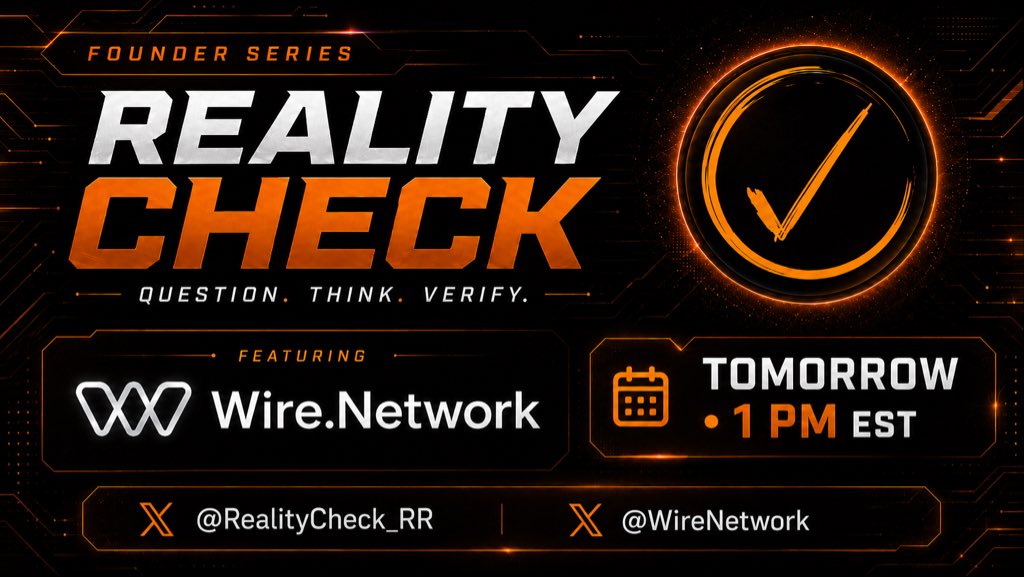
Reality Check: Founder Series goes live tomorrow with @WireNetwork
We’re talking Web3 infrastructure, the vision behind Wire.Network, and what they’re building next.
🗓 Tomorrow
⏰ 1 PM EST
📍 @RealityCheck_RR
Question. Think. Verify.
One of the highest hidden costs in crypto is duplicated infrastructure.
The same applications are repeatedly redeployed, re-integrated, and re-coordinated across separate blockchain environments.
That increases operational complexity, fragments liquidity, and expands trust
Crypto users were told a multi-chain future would create more freedom.
In many ways, it created more fragmentation.
Every additional chain introduced more coordination overhead between systems that were never designed to share state natively.
Instead of connecting fragmented
For years, crypto scaled by adding more chains.
But every new chain also introduced:
new liquidity silos, new integration work, new trust assumptions, and new coordination problems.
The industry kept solving fragmentation with more infrastructure layered on top of
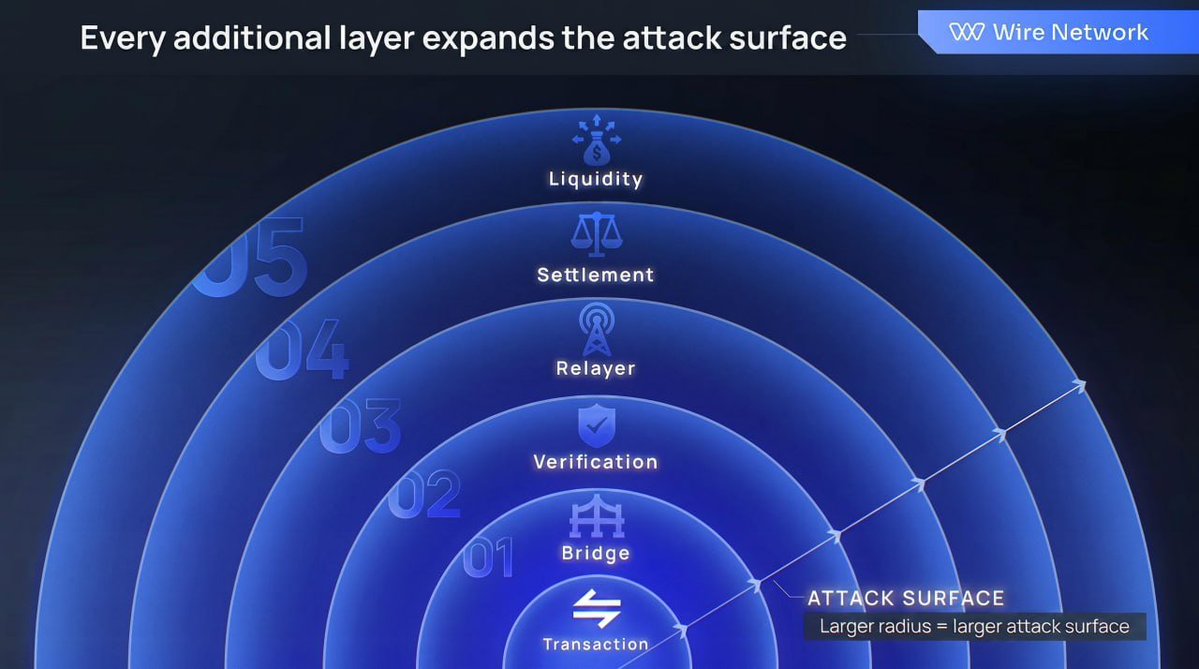
Bridges became one of the most important parts of crypto infrastructure.
They also became one of the largest sources of risk.
That’s because every time value moves between chains, additional infrastructure is needed to coordinate ownership, verify transactions, and keep systems
The next generation of users may not be users at all.
They'll be autonomous systems making decisions based on performance, not preference.
Transaction certainty. Cost. Speed. Reliability.
A gas-free interoperability layer that standardizes transactions and state across
Autonomous systems are already starting to influence how value moves across crypto.
And they don’t care about chains; they care about performance.
They optimize for speed, success rate, cost, and deterministic execution.
But today’s infrastructure wasn’t built for that
Wire Network is designed to eliminate the need for traditional bridging infrastructure in cross-chain systems.
Today, billions of dollars move through bridges every year, but bridges exist for one reason:
Chains don’t share native state.
That creates a system where every
Wire Network is built to solve a core issue:
Multi-chain systems don’t share state. So everything becomes fragmented.
Over 200+ blockchain networks exist today, but apps still have to rebuild logic, liquidity, and integrations across each one.
And as AI agents begin
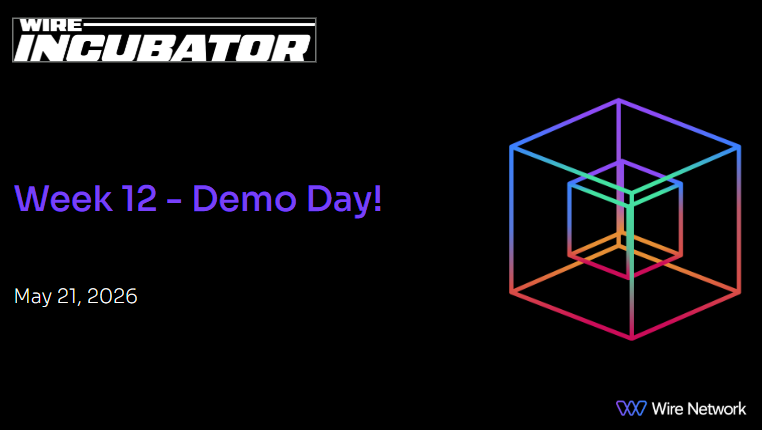
The Wire Incubator Pitch Day was an amazing wrap-up to 3 months of knowledge sharing and collaboration
10 projects spanning web3 business models told their story in 5 min videos that you can watch below.
Take a look and let us know which one(s) you would fund.