
Download Zelscope – Free Spectrum Analyzer & Oscilloscope Tool
Overview of Zelscope
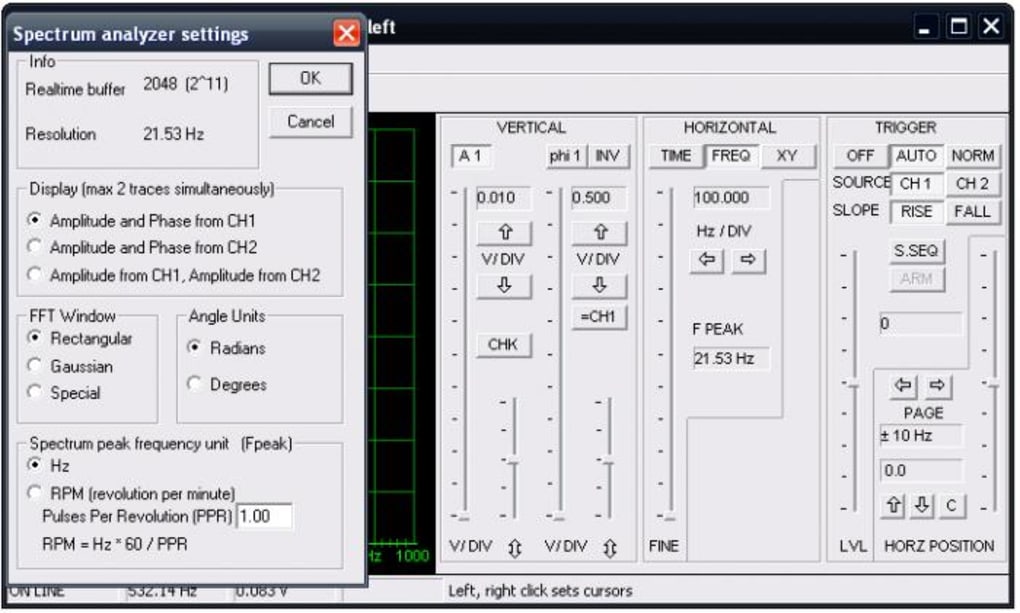
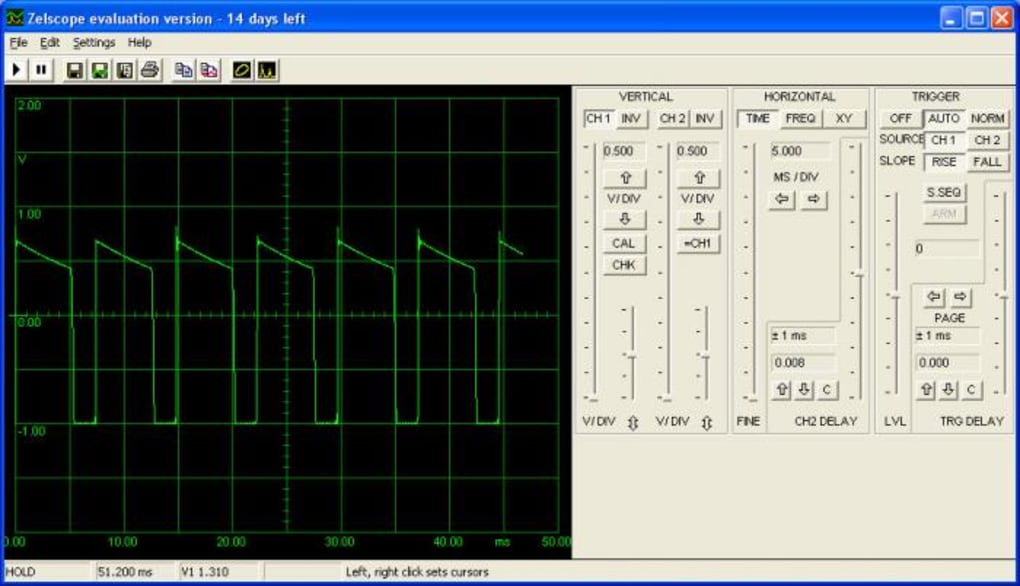
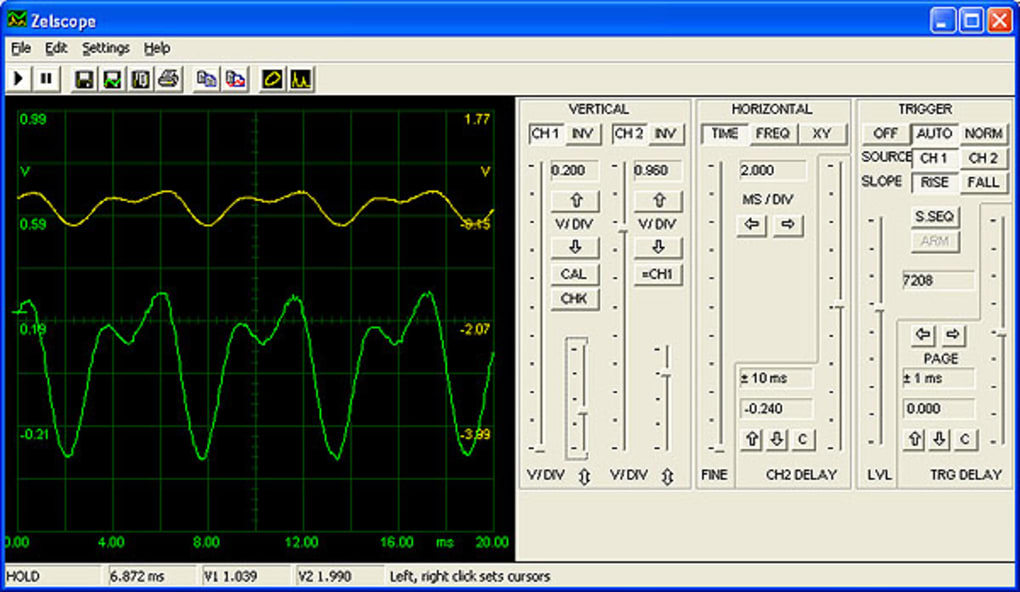
Zelscope transforms any modern computer into a two‑trace spectrum analyzer and storage‑oscilloscope without the need for expensive hardware. By leveraging the audio input of a sound‑card, Zelscope captures the voltage‑level variations of an external signal, then renders them on a responsive, high‑resolution display that mimics a traditional laboratory oscilloscope. The software provides real‑time visualization of both amplitude and phase components across a configurable frequency range, making it ideal for hobbyists, students, and engineers who need a quick, portable measurement solution. Its user‑friendly interface features familiar controls—trigger level, gain, time‑base, and offset—augmented with intuitive sliders and rotary dials that allow fine‑tuned adjustments on the fly. Whether you are analyzing speech, music, or the output of a small circuit, Zelscope delivers clear waveforms and spectral data, all while remaining lightweight and free to download. The program runs on Windows platforms and requires a properly installed sound‑card driver, ensuring that the audio stream can be accessed directly by the application. This design choice keeps the tool affordable yet powerful, positioning Zelscope as a reliable companion for anyone who wants to explore signal analysis without investing in dedicated instrumentation.
Key Features that Set Zelscope Apart
- Dual‑Trace Spectrum Analyzer: Simultaneously display amplitude and phase across the full audio bandwidth.
- Storage Oscilloscope Mode: Capture, store, and replay waveforms for detailed post‑analysis.
- Trigger Controls: Adjustable trigger level, slope, and mode to lock onto specific signal events.
- Customizable Time‑Base & Gain: Fine‑tune horizontal and vertical scaling for precise measurements.
- Interactive UI Elements: Sliders, dials, and on‑screen knobs replicate the tactile feel of a physical oscilloscope.
- FFT Spectrum View: Real‑time Fast Fourier Transform display for frequency domain analysis.
- Export Options: Save screenshots, CSV data, or raw audio files for documentation or further processing.
- Lightweight & Free: No licensing fees; minimal CPU and memory footprint.
- Cross‑Platform Compatibility (Windows): Runs on Windows 7 through Windows 11, 64‑bit editions.
- Driver‑Based Input: Utilizes any standard sound‑card driver, eliminating the need for additional hardware.
Installation & Usage Instructions
Getting started with Zelscope is straightforward. First, download the installer from the official website. The installer is a small .exe file (approximately 12 MB) that guides you through a typical Windows installation wizard. Accept the license agreement, choose the installation folder (the default location works for most users), and click “Install.” Once the process finishes, launch Zelscope from the desktop shortcut or the Start menu.
Before you can analyze a signal, you must connect the audio input of your computer’s sound‑card to the source you wish to monitor. For most DIY projects, a simple 3.5 mm stereo jack works well; connect the signal line to the “Line‑In” port and ensure the volume is set to a safe level to avoid clipping. Open Zelscope, and the program will automatically detect the active sound‑card. In the Settings menu, you can select the desired sampling rate (44.1 kHz or 96 kHz) and the number of bits (16‑bit is standard).
Once the input is configured, switch to the Oscilloscope view to see the raw waveform. Use the time‑base slider at the bottom to zoom in or out on the time axis, and adjust the vertical gain knob on the left to scale the amplitude. To capture a specific event, enable the Trigger function, set the trigger level, and choose the rising or falling edge. The waveform will freeze when the trigger condition is met, allowing you to measure peak‑to‑peak voltage, frequency, and other parameters directly on the screen.
For frequency domain analysis, click the Spectrum tab. Zelscope performs an FFT on the incoming data and presents a live spectral plot. Here you can enable the “Peak Hold” mode to accumulate the highest magnitude points over time—useful for identifying intermittent noise sources. The export button lets you save the current view as a PNG image or export the raw data to a CSV file for further processing in Excel or MATLAB.
The software also includes a Storage Oscilloscope mode, where you can record a segment of data (up to several seconds) and replay it at a slower speed. This feature is handy for detailed inspection of complex waveforms that are difficult to capture in real time. All settings are saved automatically, so the next time you launch Zelscope, you’ll find your previous configuration ready to go.
Compatibility, Pros & Cons
Zelscope is designed for Windows environments. It runs smoothly on Windows 7, 8, 10, and 11 (64‑bit). Because the program relies on the standard audio stack, any PC equipped with a functional sound‑card driver—whether built‑in or external USB—will be compatible. The software does not currently offer native macOS, Linux, Android, or iOS versions, but advanced users can run it under a Windows virtual machine if needed.
Pros
- Free to download and use, no hidden fees.
- Transforms existing hardware into a functional oscilloscope and spectrum analyzer.
- Intuitive, familiar UI that mimics professional lab equipment.
- Low system resource usage; runs on modest laptops and desktops.
- Real‑time FFT and dual‑trace display for comprehensive signal insight.
- Export capabilities simplify documentation and further analysis.
Cons
- Limited to Windows platforms; no native support for macOS or Linux.
- Relies on sound‑card quality; low‑end audio interfaces may introduce noise.
- Maximum frequency limited to the audio bandwidth (≈20 kHz).
- No built‑in calibration wizard; users must manually adjust levels.
- Advanced features like multi‑channel analysis are absent.
Overall Verdict: Zelscope offers a surprisingly capable set of tools for anyone needing a quick, low‑cost oscilloscope or spectrum analyzer. Its free price tag and ease of use outweigh the platform limitation, making it a solid choice for students, hobbyists, and small‑scale engineers.
Frequently Asked Questions
Can Zelscope measure frequencies above the audio range?
No. Zelscope is limited by the sampling rate of a standard sound card, which typically caps the usable frequency range at around 20 kHz. For RF or higher‑frequency applications, a dedicated hardware oscilloscope is required.Do I need a special driver to use Zelscope?
Zelscope works with any standard Windows audio driver that exposes a “Line‑In” or “Microphone” input. Ensure your sound‑card driver is up‑to‑date; no additional proprietary drivers are required.Is Zelscope suitable for professional lab work?
While Zelscope provides many features found in entry‑level lab instruments, its accuracy is limited by the audio hardware. It is ideal for education, prototyping, and quick diagnostics, but professional environments typically demand calibrated, high‑bandwidth oscilloscopes.Can I record and replay signals with Zelscope?
Yes. The Storage Oscilloscope mode lets you capture a segment of the waveform, store it as a file, and replay it at variable speeds for detailed analysis.Is there a portable version for tablets or smartphones?
Currently Zelscope is Windows‑only and does not have Android or iOS builds. However, a Windows tablet or a phone running a compatible emulator could theoretically run the application, though performance may vary.Conclusion – Should You Download Zelscope?
Zelscope delivers a compelling mix of functionality, simplicity, and cost‑effectiveness for anyone looking to turn a PC into a functional spectrum analyzer or storage oscilloscope. Its dual‑trace display, real‑time FFT, and intuitive controls make it a practical teaching aid and a handy troubleshooting tool for small‑scale electronics projects. While the reliance on a sound‑card caps the frequency range to the audible spectrum and the Windows‑only limitation may exclude some users, the benefits far outweigh these constraints for most hobbyists and students. If you need a quick way to visualise audio‑band signals without purchasing expensive lab gear, Zelscope is a solid, free solution that gets the job done.
Ready to explore waveforms on your own computer? Click here to download Zelscope now, install it in minutes, and start capturing the signals that matter to you. Remember to keep your sound‑card drivers updated for the best performance, and enjoy the freedom of a software‑driven oscilloscope at no cost.