
If Air Canada cooperates, I’ll move back home tonight, after spending the last 11 nights up the street, caring for my mother, and the resident cats, as my brother Mike and his partner Karen have been away on vacation.
This has gifted us a lot of time with Mom, and a lot of time with cats. I’m allergic to cats (but not to my mother); Claratin has done a halfway decent job of keeping my allergies at bay.
Also, cats are, I have to admit, occasionally adorable.

CatCamp is halfway between regular everyday life and suspended animation, and I will be happy to sleep in my own bed tonight.
Mita Williams, writing in this week’s University of Winds:
Last week, [Jamelle] Bouie published a 14 minute video on YouTube called Everything is Gender which is “a look at the gender politics of, and gender anxieties behind, MAGA foreign policy in the second Trump term.” It is very good and you should watch it.
You might blanch at the idea that having an understanding of gender politics is critical to better understand both historical politics and this present moment, but consider that reaction is also (likely) gender politics.
It is very good, and you should watch it.
A year ago I wrote this about the book The Salt Path:
Another book I read this month, found, in this case, not by Parnassus, by by Lisa, who noticed it’s been filmed for release later this year, is The Salt Path by Raynor Winn.
I am a sucker for impossible voyage stories, and I was attracted to the book for that reason, and because it’s a story of a couple roughly my age dealing with loss and illness by heading out to walk the South West Coast Path in the U.K.
I feared that the plodding nature of a long distance walk wouldn’t translate well to the page, and that the book we would a series of “walked some more, had lunch, found a campsite” vignettes. And it is that. But Winn is a colourful writer, and her descriptions of both their interior landscapes and the exterior ones they are trudging through, are lovely. I look forward to seeing how it translates to film.
Since I wrote that, the book—which I really did enjoy—and its author have been the subject of scrutiny and controversy, primarily by The Observer (The real Salt Path: how a blockbuster book and film were spun from lies, deceit and desperation) for being at least partially fabricated.
These allegations are explored further in the documentary The Salt Path Scandal (trailer) and, this month, in a podcast series, The Walkers.
A postscript to my Amazon post from earlier: here’s a chart showing my annual order volume and total spend from Amazon from 2001 to 2025:

I generated the chart by requesting my data from Amazon (it’s a link in the “Privacy Centre”), waiting a few hours for it to arrive, and then pulling the CSV file out of the “Retail.OrderHistory.1” folder into a chart.
A year ago, Ton launched a project to stop buying ebooks from Amazon; a few weeks ago he provided an update.
I thought of Ton’s efforts when, in How to fix a Kit Kat clock from Mike Monteiro, I read this:
A few days ago I was sitting in the local dogpark when the ever-popular topic of San Francisco’s downtown came up. Apparently another big store had shuttered. And the Old Men of the Dogpark™ had much to say about “the state of things” including crime sprees and other make-believe bullshit that was keeping people from doing their shopping downtown. As they’re saying this I’m watching various Amazon trucks circle the park. Finally I asked one of them when he’d last bought something at Amazon.
“Last night.”
“Where would you have bought that before Amazon?”
“Downtown.”
My parallel efforts to Ton’s breaking up with Amazon for ebooks was attempting to break up with Amazon completely, for both digital and analog goods.
On the digital side, I’m most of the way there, having reduced my dependence on Amazon Web Services to a small trickle of files on S3.
On the analog side (he logs into Amazon.ca and checks his recent orders), my last order was on June 23, 2025, for a package of “stainless steel #10 button head screw caps” that I was unable to find a local source for. Before that, in 2025, my orders were for:
- “Adjustable Steel Pilaster Shelf Clip Support” (to mount shelves in the print shop; no local source).
- “Furniture Sliders Chair Leg Floor Protectors” (to protect the floors in our dining from from getting scratched; also no local source).
- “Self Seal Rigid Mailer Stay Flat Cardboard Mailers” (to mail out orders from the web store; we’re down to two stationery stores in Charlottetown, and neither had anything similar).
That was it: four orders, about $110 in total. I’ve gone cold turkey since.
I’ve avoided Amazon a number of ways: buying online products directly from manufacturers, buying locally as much as I can, reducing discretionary consumption. Maybe the biggest help to this: I deleted the Amazon mobile app from my phone.
“I’ll just order it from Amazon” has now largely disappeared as a reflex action. It feels good.
See also, Daily Drawings, from Kate Bingaman-Burt.
A highlight of Fridays is the arrival of the latest People and Blogs post in my feedreader. These weekly interviews from Manuel Moreale are a reminder that blogging is still very much alive; the people I meet each week through the feed are fascinating.
This week’s interview is with Yancey Strickler, and I was inspired by his answer to the question “What does your creative process look like when it comes to blogging?”:
Calling what I do a “process” gives it too much credit. All of my writing tends to start with a feeling inside of me. That feeling is often one of agitation combined with curiosity. Something I can’t quite figure out or I’m having a hard time putting my finger on. Writing is how I work through that.
That’s as close as anyone’s ever come to describing my “creative process.”
I followed that stirring of “agitation combined with curiosity” this morning to create1 an OPML file of the blogs of all past People and Blogs interviewees.
Here’s the result, people-and-blogs.opml, an OPML file that you can import into your feedreader to automagically subscribe to all of the blogs.
———
1. For the record, here was the prompt to Google Gemini that I used to generate the list:
I need your help creating an OPML file.
Go to https://peopleandblogs.com — you fill find a list of links to interviews with bloggers. Inside a <span> for each blog you will find a link to each blogger’s website, like:
<span class="archive-site">ystrickler.com</span>You will also find the name of the site in a <span> like:
<span class="archive-name">Yancey Strickler</span>Extract a list of these sites. Then, for each site, visit the site and find the RSS feed URL for that site.
Give me an OPML file of all of the site names, the URL of the site, and the extracted URL of the RSS feed.
 As I write, my mother is in the other room on a Zoom call with a group of longtime friends in Ontario. They know each other from a Burlington YMCA morning fitness class; when the pandemic hit, they moved the class to Zoom, and when Mom moved east to PEI, they just kept on going. They still work out together on Zoom, all these years later, but they spend just as much time chatting. Three mornings a week, it’s 40 minutes of social connection that Mom’s been able to maintain.
When, three months after Catherine died, in January of 2020, COVID hit, regular in-person grief support groups had no way of meeting. Fortunately, the need outweighed any resistance to embracing moving online, and I was able to join the monthly grief support group hosted by the Palliative Care Centre and Hospice PEI.
Through the same period, with my immediate family bunkered down at homes in California, Ontario, and Quebec, we instituted Friday Family Zoom: every Friday night we’d all gather on Zoom and play charades or pictionary, or make a craft together, or do a scavanger hunt. During the darkest loniliness it was a powerful weekly antidote.
Throughout all of this, I was continuing to work remotely with Yankee Publishing in New Hampshire every day, and Zoom was our way of collaborating at a distance. We had a Friday afternoon scrum every week, and, on top of any work utility, that too was an important social anchor for me.
A year later, when I was starting to feel like I needed help at the intersection of grief and loneliness, I got a reference from a social worker to Your Life Design, a PEI-based, online-only counselling service. I found myself a counsellor, and our work together, on Zoom, was transformative.
A few months after that, when Olivia came out, I needed support, and found my way to Transforming Family, an LA-based family support group. After an intake call with a fellow parent of a trans child, I started attending Zoom meetings—TF, like Mom’s fitness class, had also pivoted to Zoom—and, some months later, I became the facilitator of a monthly support group for the parents of neurodiverse trans children, a group I host still.
This past Saturday, Lisa and I joined 400-odd other people from around the world for a Zoom art class with Danny Gregory. In recent years I’ve attended several similar Zoom classes, on topics like letterpress printing in the round.
I’ve attended Zoom folk music concerts, co-hosted a Zoom unconference, set up Zoom fountain pen meetings, given a Zoom lecture at UPEI, and attended a Zoom Publications Committee meeting while walking around the Experimental Farm.
Somewhere in there, we all got “Zoom fatigue,” to the point where, for many, the very hint that something would happen “on Zoom” was anathema. For L., and my distance niblings, “Zoom School” was an unmitigated disaster, and that only served to strengthen the general resistance.
But Zoom changed the world. As a low-barrier-to-entry, cross-platform, free (for 40 minutes) videoconferencing app that, almost all the time, just works, Zoom was one of the (few) lasting gifts that COVID gave us.
Let’s not forget that.
Wes Anderson in conversation with The New Yorker’s Susan Morrison, in An Editor’s Burial:
WES: Well, I’ve had an apartment in Paris for I don’t know how many years. I’ve reverse emigrated. And in Paris, any time I walk down a street I don’t know well, it’s like going to the movies. It’s just entertaining. There’s also a sort of isolation living abroad, which can be good or it can be bad. It can be lonely, certainly. But you’re also always on a kind of adventure, which can be inspiring.
SUSAN: Harold Ross, The New Yorker’s founding editor, was famous for saying that the history of New York is always written by out-of-towners. When you’re out of your element, or in another country, you have a different perspective. It’s as if a pilot light is always on.
WES: Yes! The pilot light is always on.
SUSAN: In a foreign country, even just going into a hardware store can be like going to a museum.
WES: Buying a light bulb.
 Jane Siberry is such an interesting singer-songwriter. I’ve been a fan for more than 40 years, writing about her here for more than 25, and during that time she’s released albums in myriad genres, with myriad collaborators, changed her name to Issa (and back), reinvented her website myriad times, reinvented the way she distributes her music myriad times.
It seems naive to write that she’s “back,” as she never left. But she does have a new album in the offing, In the Thicket of our Own Unconsciousness, with two tracks available for free advance download, Bountiful Beautiful and Bailout.
if one of us is in darkness less bright our light shall be — if one of us is suffering then none of us are free…
The music is interesting in a whole new way, but it also includes longtime collaborators David Ramsden and Rebecca Jenkins, and Rebecca Campbell, whose voices dovetail so beautifully with hers.
In a specific way, it was the Isle of Skye that led me to Whidbey island.
So begins Islands, from Peter Miller, a poingant story that dovetails nicely with Kevin Kelly’s How Will the Miracle Happen Today?
There has been an outcropping of the Shetland Islands in my life of late: Lisa’s midway through reading Storm Pegs, and I fell down a NorthLink Ferries rabbit hole, including learning about the Islander Card, which residents can use to secure a ferry discount.
About This Blog
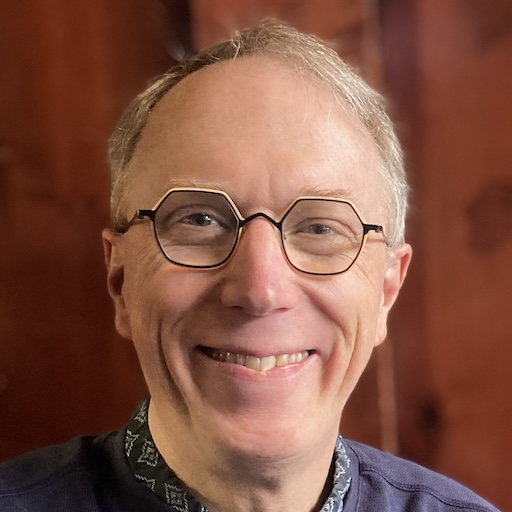 I am Peter Rukavina and this is my blog. I am a writer, letterpress printer, and a curious person.
To learn more about me, read my /now, look at my bio, listen to audio I’ve posted, read presentations and speeches I’ve written, or get in touch ([email protected] is the quickest way).
I have been writing here since May 1999: you can explore the 25+ years of blog posts in the archive.
 You can subscribe to an RSS feed of posts, an RSS feed of comments, or a podcast RSS feed that just contains audio posts. You can also receive a daily digests of posts by email. I also publish an OPML blogroll.
Elsewhere: Instagram • YouTube • Vimeo • ORCID • OpenStreetMap • Internet Archive • PEI.art • Drupal • Github.
