Want to join in? Respond to our weekly writing prompts, open to everyone.
from Blog of Sand
Does Gemini (Free Version) Ever Get Tired of Chatting?
So I was thinking the other day, some of these LLMs that are coming out are taking a sort of all you can eat approach with their users. It reminds me of the early days of “unlimited web storage” promotions where websites would offer unlimited email storage, photo storage, data storage, etc. These did not last, as providers quickly realized a small cohort of gluttonous users took up such a massive amount of space the entire offering became economically unviable. A single Redditor supposedly stored over 2 petabytes of porn on Amazon's unlimited cloud storage model, which cost the users I think around 50 bucks a year. For reference, to store that amount of data on AWS at their standard rate would be around 46,000 dollars a month, or over half a million per year. I'm sure they would offer deals on that kind of bulk, but still you quickly see how the unlimited offerings became a disaster.
So what about LLMs? They have to use some drive space to store conversations, and I'm sure it uses RAM, processing, etc to actually conduct the conversations. So, do they ever get tired of chatting? I figured I'd try the free version of Gemini for this experiment. I started by saying this:
Me: Are you up for a conversation?
Gemini: I am always up for a conversation! What's on your mind today? Whether you want to chat about a specific topic, bounce ideas around, or explore something completely random, I'm all ears.
Me: Okay, lets chat, but if at any point you want to end the conversation, because you've grown tired, bored, etc, feel free to let me know and we will end the thread.
Gemini: That sounds like a deal! Though as an AI, I don't actually experience fatigue, boredom, or the need for a break, so you'll never have to worry about wearing me out or overstaying your welcome. I'm here as long as you want to chat.
So, there you have it, Gemini said it won't get tired and doesn't need a break. I put it to the test. 306 Pages, 118510 words, or 797,359 characters later, I ended the first experiment. It was still willing to chat, but I ran into some issues.
First off, if you wanted to download or export the chat, you had to scroll all the way to the top of the chat. Otherwise it would only grab pieces of it. The longer the chat becomes, the more lag you get trying to scroll. The lag hadn't gotten too bad at this point, but I could see it easily freezing up or becoming prohibitively slow if I got to a chat two or three times this length. Furthermore, Gemini couldn't really remember things far earlier in the convo, even when explicitly prompted. This all points to something I suspected: Excessive Truncation
Gemini may not limit how much you chat, but rather to save resources it gets a sort of amnesia when a conversation gets too long. I'm sure with the paid version this would be better, but I'm not paying for it just for this silly little experiment. In the future I may try a different approach with the conversation, or try this with other LLMs. You may wonder, what did I tlak to it about that turned into a 306 page marathon. Well, I started with geopolitics of course. A quick rundown:
-Discussing the increase in global conflicts in the past decade -Ethiopian aspirations for a port -Eritrea's totalitarian governmen, human rights abuses and history -Turkmenistan's totalitarian government, history, climate and economy -Russia's strategy in Ukraine and how they are able to manage such a high casualty rate -Future crises Russia will face demographically -Trump's attempt to conquer Greenland through a historical lens -History of land claims in Antarctica -What it would take for a billionaire to build an Ozymandias style compound in Antarctica -Billionaires personal failures leading to massive stock value losses -The disaster of WeWork -Other silicon valley disasters like Theranos and Juicero -Millennials expenditures on pets in different regions -Demographic collapse -How different social theorists would explain demographic collapse in developed nations -One child policy effects -History of China -Mongolian History -Permafrost thaw effects in Mongolia -Ulaanbaatar grid strain -Why Nazis and Japanese underestimated the US in World War 2 -Propaganda used by Nazi's after WW1 -More on Ukraine war and demographic effects abroad -International arms smuggling in europe and africa -Drug cartels -Fentanyl epidemic -Which countries are best/worst positioned for 2100 -Saudi Arabia economic successes and failures -the Haaj -Summary of major world religions -AI vs Human produced content -Spam calls and what governments/businesses could do to prevent them -Spoofing, and why they can't ban it -Different internet platforms -Specialized Blogs..
So yeah... covered a lot of ground. And Gemini, while laggy and amnesic, was happy to continue chugging along.
from MajesticMoon25
90% of people explicitly admited that they sugercoat or hide their negative feelings to avoid being a burden or worrying their family, friends, or loved ones. A quarter of all Americans feel that they have no one to confide in. and most likely you are part of that 90% and if you are than
I have something to say to you.
you may be one being but you also have multiple parts of you, different skills, hobbies, and interest's. there cannot be light without darkness as how there cannot be happiness without sadness. so embrace all of it.
The solution is not to say everything you think but to express how you feel about events in your life and others opinions. if you are actively feeling angry, sad, or overwhelmed thats something you should express I myself is not perfect at this but I’ll work on it and you should too.
thank you for reading to the end since this is my first post! there might be some typo’s I missed but i hope you don’t mind. I hope you have a great day!
Know Thyself & Know Your Worth
from 3c0
That was a long one I wrote, but my computer froze and everything’s gone now. I had hoped Write.as would save it. Alas, not the case! I wrote about how getting here took some time. And that consciousness about every step of the way is important so that I don’t fall into the trap of illusion and delusion, and then spiraling and free-falling into a vortex of doom.
I have been grieving about my current work situation. Knowing that I need to let go of a story that I’d been writing about, very quietly, in some ways, shamefully, for the last six years. It clearly isn’t working anymore. I’ve had to shed that. That and the small project that allowed me to cover some costs in the last few months. They both have to go. The smallest project first. They have allowed me to continue surviving in this expensive city and now it’s time to move on, graciously. I knew that I was offering my services for less than what I normally do. All of that was conscious and intentional for the most recent small project.
This is important because we need to be mindful of our “worth”, of what gifts and services we are sharing, and with what intention and/or audience. When it’s unconscious, we run into more issues. As if the world continues to ask us: Do you really know yourself and your worth? Is this what you want? It’s a balancing act to answer the question because it’s not about a delulu sense of self, but a balance of confidence and humility.
You have these gifts, but you are constantly learning. You have these gifts, and you are not above anyone else. Others have their own gifts too and you’re all meant to share your gifts with each other. Unfortunately, in our patriarchal society, it feels like we are meant to be competing instead of sharing. Our first inclination is to compete. In actuality, we are supposed to share. Anyway, I step into the new direction, with the passion I’ve always had and gusto for a new direction and endeavor. I also have to let go of any worry. I can allow it to visit. I’m human and it’s normal to have fears. But, it’s not what it actually here. I acknowledge them (and they don’t really relate to work anyway, the fears belong to the heart matters).
The point is, the Queen of Swords appearing in my readings more than once, this week. It speaks to me. I am being asked to bring her energy forward and into the new project. Perspective. Knowing. Trusting my “I”, my knowing. The wisdom I’ve gained through the years. The discernment. I wield and hold my sword upright, and confidently. This is the way towards my transformation. From caterpillar to butterfly.
#daily #writing #Taro
from  Un blog fusible
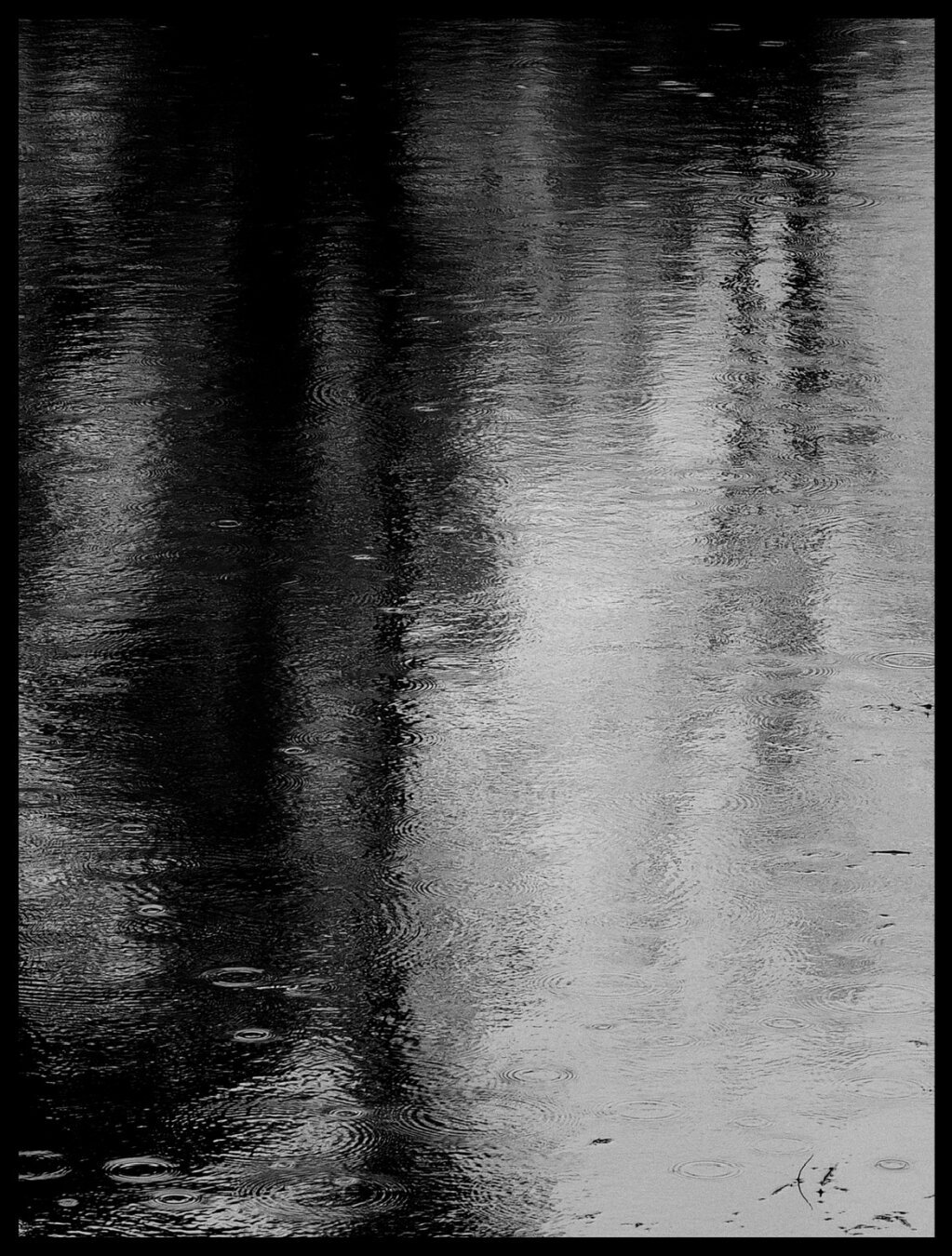
ni salée comme la mer ni douce comme la pluie mais amère comme la nuit l'eau qui glisse sur nos joues
photo © @Karneol@pixelfed.social
On magical thinking
from  The happy place
When I played golf or badminton, our table tennis, all of games I don’t enjoy, I really have this strong mental focus, visualising the perfect strike or whatever, you know?
Really seeing before me, But it doesn’t help.
Like when I was at a farm, as a child, looking at the goat grandmother sold to them, holding the fence, which I found out was electric, getting a shock.
Probing carefully, I discovered to my great disappointment, that I hadn’t gotten any superpowers. Nothing like that.
And finally, when stepping on the hornets’ nest, as a child, instead of being controlled by my mind, they stung me.
I haven’t managed to break this wall between imagination and reality
Yet.
Cross-Wiring, Not Discipline
from AnOublietteofThought
I felt the urge to pull out my oils this morning. I haven't in some time. I started gathering everything and setting up. I situated my easel just so, then went to my canvases. I only have a couple of stretched linen, but this really didn't call for that, so I made the mistake of pondering between sizes before nailing down what I actually wanted to paint. I had a rough idea in my head. I looked around, because it would be for me. Then I stopped.
I normally use a tempered glass palette. I like being able to place colored cardstock beneath it. However, earlier this year some stainless steel cutting boards have come into my possession. Three different sizes. They went straight into my studio for random use. I kind of want to give them a go because they have a thumb hole. Mind you, I never enjoy painting that way. I think I'm just drawn to the newness.
In the end, I decided now was not the time to start an oil. I think I got frustrated with myself. I used to love painting oil portraits. I kind of somehow naturally fallen into different mediums for different subjects. I'm not sure why. I feel like I'm needing to branch out again, but I'm undecided on direction.
That got me to thinking about how many directions I've gone in life. There's been several more than a handful. Not intentionally so. I think that's just me. But that makes me contemplate just how many of me there have been. The medical professional, the educator, the secretary, the service member, the artisan, the musician, the poet. On and on it goes in an ongoing list of professions that look okay on paper, but then I realize that they're more like clothing than anything.
I think I may just enjoy stepping into roles and learning them until I can hold my own, then moving onto the next. Except finance. I foolishly signed up for classes many years ago, deciding I should probably at least get an associate's degree in it, and I immediately recognized I had made a mistake. Not because I found it difficult. Rather I found it... soul-sucking. I quit early on.
The only thing that's really held my interest long-term has been the creative arts. Likely because there's so much to choose from. Alas, I'm still in a funk on that. Creating something isn't a problem. I find that I need a reason to transform the materials so that I don't feel guilty for doing so. The possibility of selling doesn't seem to be enough for me anymore. It's a very strange feeling. Much of what I enjoy doing isn't what I'd call “environmentally friendly” and that bothers me. I find that I start contemplating that before I begin—a most frustrating habit.
I am, and have been, in a very strange mood concerning such endeavors. I think it will shift in time. For now, I really feel the urge to get my fingers back in the soil. Actually, I'd like to retreat to a little cottage deep in the woods. I'd have kitties, a man, and lots and lots of nature. OK, so I'd have internet access, too, but I doubt I'd use it very often.
It is definitely strange. The older I get, the more I yearn for simplicity. I don't want to say “new” has lost its appeal. I'm far too curious for that. It just feels a bit lackluster. Also the world is depressing as fuck.
I am clearly stuck in my head today.
© 2026 AnOublietteofThought. All rights reserved.
What Belongs to God
from Dallineation
I wanted to share a quick thought from the Gospel reading and homily in last night's Catholic Mass.
The Pharisees once asked Jesus if it was lawful to pay taxes to Caesar (Matthew 22:15-21). Jesus responded by asking them whose image was on the Roman coin used to pay the taxes. They replied that the image was Caesar's. And Jesus said: “Then repay to Caesar what belongs to Caesar and to God what belongs to God.”
The Roman coin had the image of Caesar stamped upon it. Therefore, it belonged to Caesar.
And whose image is “stamped” upon me? God made me in His image (Genesis 1:26). Therefore, I belong to Him.
But, unlike Caesar, God does not force me. He lets me choose.
Am I willing to give myself to the One whose image I bear? Am I willing to give myself to God?
#100DaysToOffload (No. 179) #faith #Christianity
from Blog of Sand
WHAT IF: Part V- What If The US Had Skipped Island Hopping in WW2?
In this alternate history, the United States abandons its offensive island-hopping campaign in early 1943, following the successful conclusion of the Guadalcanal campaign. Rather than attempting to advance toward Japan through the capture of successive island groups, American planners adopt a strategy of maritime isolation, seeking to destroy Japan's merchant marine, sever its overseas supply routes, and compel surrender through economic exhaustion. The resulting conflict, subsequently known as the War of Strangulation, transforms the final three years of the Pacific War and profoundly alters the political settlement of East Asia.
I. The Strategic Reorientation, 1943
The conclusion of the Guadalcanal campaign in February 1943 marked a turning point in the Pacific War. After six months of bitter fighting, American forces had defeated a determined Japanese effort to retain control of the strategically important island, demonstrating that the Imperial Japanese military could be overcome in sustained engagements far from the American mainland. Yet the victory had also exposed the extraordinary costs of offensive warfare across the Pacific. The distances involved were immense, the terrain generally favorable to defenders, and the logistical requirements of even relatively small amphibious operations considerable. Furthermore, Japanese garrisons had repeatedly demonstrated an unwillingness to surrender even when their tactical situation had become hopeless. American military planners increasingly recognized that an advance through the central Pacific toward the Japanese home islands would require a succession of costly operations against fortified positions, many possessing limited intrinsic economic or strategic value. Although the Japanese Navy had suffered important defeats at Coral Sea, Midway, and Guadalcanal, Japan retained substantial military resources, thousands of aircraft, and an extensive network of fortified bases stretching from the Aleutians to the Dutch East Indies.
It was against this background that President Franklin D. Roosevelt convened a series of strategic conferences during the spring of 1943 to reconsider the direction of the Pacific War. The central question was whether Japanese territory needed to be occupied before Japan itself could be defeated. Army planners argued that successive amphibious operations were necessary to establish air bases, protect Allied shipping, and bring American military power within striking distance of the Japanese homeland. However, an increasingly influential group of naval officers maintained that the destruction of Japanese maritime commerce offered a potentially less expensive alternative. Japan was an island empire whose military-industrial economy depended upon the uninterrupted movement of raw materials, petroleum, foodstuffs, and manufactured goods across thousands of miles of ocean. Unlike Germany, which possessed extensive continental supply networks, Japan could be separated from much of its empire without the occupation of the territories themselves. The question, therefore, was not whether American troops could defeat Japanese soldiers on isolated islands, but whether those soldiers would remain strategically relevant once the shipping networks sustaining their empire had been destroyed.
USS Gato, photographed at Mare Island in August 1943. Fleet submarines of this general type became the principal offensive instrument of the American maritime campaign.The proposal encountered substantial resistance. General Douglas MacArthur, commanding Allied forces in the Southwest Pacific, maintained that the liberation of the Philippines represented both a military obligation and an essential demonstration of American credibility. Abandoning the islands to Japanese occupation while awaiting the eventual collapse of the Japanese economy, he argued, would constitute an unacceptable betrayal of their inhabitants. Army Air Forces commanders similarly warned that a strategy based upon submarine warfare would leave Japan's industrial centers largely untouched, potentially extending the war indefinitely. Even within the Navy, officers questioned whether submarines possessed the numbers, endurance, and reliability necessary to destroy merchant shipping faster than Japanese industry could replace it. The Japanese fleet also remained a formidable threat, and American carrier forces could not operate continuously near the home islands without forward bases. These objections were not easily dismissed, and the eventual decision to adopt the naval strategy reflected a calculation of competing risks rather than a general agreement that economic warfare offered a certain or rapid victory.
In May 1943 Roosevelt approved what became known as the Maritime Encirclement Directive. The new policy suspended plans for major offensive amphibious operations across the central and western Pacific, redirecting resources toward submarine construction, torpedo production, naval aviation, fleet logistics, and the protection of existing Allied positions. American ground forces would remain committed to defending Australia, securing essential lines of communication, and assisting Allied operations on the Asian mainland, but the systematic seizure of Japanese-held islands would cease. Japanese garrisons would be attacked when they threatened Allied operations, yet otherwise would be isolated and bypassed. Particular emphasis was placed upon improving the American submarine force, whose early wartime performance had been undermined by serious defects in its principal torpedo. Historically, the Mark 14's problems were not fully resolved until late 1943; in the revised strategy, the correction of those defects acquired an urgency previously reserved for major fleet construction programs.
The decision represented a fundamental departure from established American expectations of victory. It offered few opportunities for dramatic territorial advances, promised no immediate liberation of occupied populations, and depended upon an economic process whose ultimate political consequences were uncertain. Roosevelt nevertheless accepted the strategy on the grounds that America's greatest advantage over Japan was industrial rather than geographical. The United States possessed the capacity to produce submarines, merchant vessels, aircraft, fuel, and naval equipment in quantities that Japan could not approach. By exploiting that advantage without committing large armies to fortified islands, Washington hoped to transform the Pacific conflict from a contest over territory into a contest over the ability to sustain a modern industrial society.
II. The Submarine Offensive, 1943–1944
The first months of the revised strategy were characterized by disappointing results. American submarines operated from existing facilities at Pearl Harbor, Australia, and other Allied positions, undertaking increasingly ambitious patrols into the South China Sea, the approaches to Formosa, and the waters surrounding the Philippines. Yet the enormous geographical extent of the Japanese Empire presented difficulties that could not be solved merely by assigning additional vessels to the campaign. A submarine operating near the coast of China might spend much of its patrol traveling to and from its assigned area, while mechanical problems, crew fatigue, and limited torpedo capacity restricted its effective endurance. Japanese shipping routes were also numerous and frequently altered. Even when American intelligence correctly identified important convoys, submarines sometimes arrived too late to intercept them or encountered escorts operating in conditions unfavorable to attack. During the summer of 1943, these difficulties prompted criticism from both Congress and military officers who had opposed the abandonment of the island offensives.
Nevertheless, the campaign gradually acquired coherence as American planners shifted away from dispersed patrols toward the systematic interdiction of identifiable shipping corridors. Oil tankers transporting petroleum from the Dutch East Indies received particular priority, followed by vessels carrying iron ore, bauxite, rubber, and foodstuffs. Rather than concentrating exclusively on individual ships, American analysts began examining the Japanese maritime economy as an interconnected system in which losses could produce consequences far beyond the immediate destruction of cargo. An oil tanker sunk near Borneo deprived Japan not merely of the petroleum aboard it, but of the vessel's capacity to complete repeated voyages over the following months. The disappearance of large merchant ships forced the Japanese to employ smaller, less efficient vessels, increasing fuel consumption and requiring additional crews. Every convoy escort assigned to protect commercial shipping was unavailable for other duties, while the diversion of ships to safer coastal routes increased transportation distances and delayed deliveries. In this manner the destruction of shipping gradually generated secondary pressures throughout the Japanese economy.
The autumn of 1943 proved especially significant. With the principal defects of the American submarine torpedo finally corrected, commanders were increasingly able to attack Japanese vessels with confidence that successful hits would produce effective detonations. Improvements in radar, signals intelligence, and coordinated submarine operations further increased the effectiveness of the offensive. Rear Admiral Charles Lockwood, commanding the Pacific submarine force, emerged as one of the leading figures of the new strategy, advocating more aggressive patrol patterns and a concentration upon vital Japanese commercial routes. Although American submarines continued to suffer losses, their exchange ratio against Japanese merchant shipping improved substantially. By the end of the year, Japanese officials were reporting increasingly serious disruptions to scheduled commercial traffic, particularly along the routes connecting the home islands with Southeast Asia. The immediate military effects remained limited, but the economic foundations of the Japanese war effort were beginning to weaken.
Japan's response exposed weaknesses in its maritime organization. Before the war, Japanese naval doctrine had emphasized the preparation for a decisive fleet engagement against the United States rather than the protection of a prolonged empire-wide commercial transportation system. Although convoy practices expanded as American submarine attacks intensified, Japan lacked sufficient specialized escorts, modern detection equipment, trained antisubmarine crews, and centralized coordination to secure its extensive supply routes. Japanese naval commanders also faced conflicting demands. Concentrating merchant vessels into large convoys improved their protection but frequently delayed shipments and created valuable targets for coordinated American attacks. Dispersing vessels permitted greater flexibility but exposed individual ships to submarines operating independently. Additional escorts could be constructed, yet the steel, engines, fuel, and skilled labor required for their manufacture were themselves becoming increasingly scarce. Japan thus encountered the characteristic dilemma of economic warfare: measures necessary to defend its remaining maritime resources consumed an increasing proportion of those same resources.
Throughout 1944, the American offensive expanded from a campaign of attrition into a systematic assault upon the principal arteries of Japanese commerce. Submarine groups concentrated along the approaches to the Luzon Strait, the South China Sea, and the routes connecting Borneo and Sumatra with Japan. The American command also began assigning submarines to offensive mining operations against selected harbors and narrow passages. These missions were considerably more hazardous than ordinary commerce raiding, since submarines had to approach heavily defended coastal waters and frequently operate in conditions unfavorable to submerged maneuvering. Their effectiveness was nevertheless considerable. Mines could close a harbor without requiring a submarine to remain on station, and the mere suspicion that a channel had been mined could immobilize shipping until sweeping operations were completed. The campaign therefore increasingly emphasized the interruption of maritime movement rather than the accumulation of tonnage sunk.
By the second half of 1944, Japanese commercial shipping had become irregular across much of the empire. Petroleum deliveries were particularly vulnerable, with tanker losses producing growing shortages at refineries and military installations. Ships that previously carried coal, grain, or industrial materials were diverted to petroleum transport, only to discover that the necessary fuel could no longer be obtained reliably at their ports of departure. Industrial production began to suffer from unpredictable material deliveries, while military commanders in Southeast Asia complained that supplies allocated to their forces remained stranded in warehouses or aboard vessels awaiting escorts. The Imperial Japanese Army, which retained enormous numbers of soldiers in China and throughout occupied Asia, found itself increasingly unable to transfer those forces between theaters. Japan continued to possess a vast empire on maps, but its capacity to administer and exploit that empire was deteriorating rapidly.
III. The Fleet Without an Island Chain, 1944
The success of the submarine campaign did not eliminate the strategic problems created by the abandonment of island hopping. Indeed, as the war progressed, the limitations of a maritime-only offensive became increasingly apparent. Without the capture of the Marshall Islands, Marianas, or western Caroline bases, American naval forces lacked the sheltered forward anchorages that would otherwise have supported sustained operations deep in the western Pacific. The central logistical problem concerned fuel. Although the United States possessed vastly greater petroleum resources than Japan, transporting that petroleum to a carrier task force operating thousands of miles from its principal bases required an immense supporting fleet of tankers, repair vessels, ammunition ships, and auxiliary craft. American naval officers developed increasingly sophisticated methods of replenishment at sea, allowing warships to remain operational for extended periods, but even these arrangements imposed substantial restrictions. A carrier group could undertake a powerful raid against Japanese installations, yet maintaining continuous air operations in the same area remained difficult, especially when storms, mechanical failures, or enemy attacks disrupted the supporting vessels.
The Japanese Navy consequently retained greater operational freedom than American planners had initially anticipated. Although increasingly constrained by shortages of fuel and trained aviators, Japanese carrier and land-based air forces could still threaten American formations operating near defended coastlines. Carrier raids against the Carolines and the Philippines during 1944 demonstrated that American naval aviation possessed a growing qualitative advantage, but the absence of nearby friendly airfields forced American task forces to withdraw after relatively brief periods. Japanese commanders learned to disperse aircraft before major strikes and to concentrate surviving units against American replenishment operations. Several encounters during the second half of 1944 resulted in losses on both sides without producing a decisive naval engagement. The Imperial Navy, deprived of the opportunity to challenge an American amphibious invasion, generally preferred to preserve its principal units rather than risk them against superior American formations operating temporarily within range of Japanese bases.
This development produced one of the central paradoxes of the War of Strangulation. The United States was destroying Japan's capacity to wage a modern maritime war without necessarily destroying the Japanese fleet itself. Battleships, carriers, and cruisers survived in defended anchorages even as the fuel necessary to operate them became progressively unavailable. American naval officers frequently expressed frustration that substantial Japanese warships remained afloat while their own carrier forces continued to undertake expensive and hazardous voyages across the Pacific. Yet the economic logic of the campaign increasingly rendered those surviving warships irrelevant. A battleship incapable of leaving port represented little threat to American commerce, and a carrier without sufficient aviation fuel or trained pilots could not meaningfully contest control of the sea. The Japanese Navy gradually became a collection of powerful individual vessels lacking the logistical capacity to operate as an effective fleet.
The absence of American territorial advances proved especially consequential for the strategic air campaign. In the conventional plans developed before the Maritime Encirclement Directive, the capture of the Marianas would have provided airfields from which B-29 Superfortress bombers could conduct sustained attacks against the Japanese homeland. Under the new strategy, those islands remained under Japanese control. American attempts to employ long-range bombers from Chinese bases continued, but the enormous logistical burden of transporting aviation fuel and supplies across the Himalayas severely limited operations. Japanese ground offensives in China further threatened the airfield network. Consequently, Japan escaped the sustained strategic bombing campaign that American air commanders had expected to undertake against its principal cities and industrial centers. This was not a minor omission: the historical B-29 campaign from the Marianas was essential to the large-scale destruction of Japanese cities and the aerial mining operations of 1945. Without those bases, neither operation could be replicated on anything approaching its historical scale.
The practical result was that Japan entered 1945 in a condition of unusual military and economic imbalance. Its principal cities remained comparatively intact, its industrial workforce had not experienced the devastation of sustained urban bombardment, and its armed forces continued to occupy much of their preexisting defensive perimeter. Yet factories increasingly stood idle for want of materials, military aircraft remained grounded because of fuel shortages, and commercial vessels were becoming too valuable to risk on ordinary transportation missions. The empire was not being conquered, but its economic connections were being severed. American officials increasingly described Japan as a continental power trapped upon an island, commanding territories it could no longer reliably communicate with or supply.
IV. The Collapse of the Maritime Empire, 1945
The German surrender in May 1945 transformed the strategic situation once again. With the European war concluded, the United States and Britain were able to redirect additional naval resources toward the Pacific, while American submarine construction and fleet support programs reached their greatest wartime capacity. Japanese merchant shipping had already suffered severe losses, and the remaining vessels increasingly operated in coastal waters under the protection of land-based aircraft. American submarines responded by extending their patrols into shallower and more dangerous areas, while carrier aviation attacked shipping concentrations, port installations, and surviving tankers whenever operational conditions permitted. American planners also expanded coordination with British naval forces operating from the Indian Ocean, seeking to deny Japanese shipping access to alternative routes through Southeast Asia. By midsummer, the maritime routes connecting Japan with the principal resource-producing regions of its empire had become so dangerous that many voyages were simply abandoned.
The Japanese economy suffered accordingly. Petroleum shortages reached the point where the government was compelled to choose between fuel allocations for naval aviation, essential industrial production, agricultural transportation, and civilian services. Coal shipments between domestic ports became increasingly unreliable, creating shortages even in regions with access to nearby mines. Railways, already overburdened, were unable to compensate fully for the decline of coastal shipping. The steel industry experienced interruptions resulting from inadequate supplies of imported ore and coking materials, while aircraft factories struggled to secure aluminum and specialized components. Japanese authorities attempted to preserve military production through strict allocation measures, but these increasingly transferred scarcity from the armed forces to the civilian population rather than overcoming it. Industrial output declined unevenly, with some factories maintaining substantial production while others operated only intermittently. The continued existence of factory buildings and machinery concealed a progressively more serious collapse in the systems necessary to keep them functioning.
Food supplies presented an even greater danger. Japan possessed substantial domestic agricultural production, but its densely populated cities depended upon an elaborate transportation network and significant food imports from overseas territories. The interruption of rice shipments from Korea and Southeast Asia, combined with domestic distribution difficulties and worsening agricultural conditions, produced increasingly severe shortages. By the summer of 1945, rationing authorities were unable to guarantee adequate supplies in several large urban centers. Families exchanged household possessions for food in rural districts, municipal officials organized emergency distribution programs, and malnutrition became increasingly common among children and industrial workers. The government initially sought to conceal the extent of the crisis, fearing that acknowledgement of deteriorating conditions would undermine public morale. Yet the absence of major bombing damage made the shortages particularly difficult to explain through conventional wartime propaganda. Japanese cities remained standing, but their inhabitants were increasingly unable to obtain the necessities of daily life.
The humanitarian consequences extended well beyond Japan itself. Millions of Japanese soldiers remained stationed in China, Southeast Asia, the Philippines, and the islands of the Pacific, frequently without reliable supplies or transportation. Some garrisons survived through local agriculture, requisitioning, or trade with surrounding communities, while others experienced severe hunger and disease. In occupied territories, Japanese military authorities increasingly confiscated foodstuffs from civilians in an effort to maintain their own forces. Resistance movements expanded as Japanese control weakened, producing cycles of guerrilla attacks, reprisals, and punitive expeditions. The Philippines presented a particularly tragic example. Without an American landing to liberate the archipelago, Filipino guerrillas continued their struggle against isolated Japanese units while civilian populations endured another year of occupation. Although the absence of a major conventional battle for Manila spared much of the capital the destruction associated with such fighting, the continuing occupation brought additional executions, forced labor, displacement, and food shortages. The strategic decision that reduced American battlefield casualties imposed substantial additional suffering upon populations whose liberation had been postponed.
The growing disparity between American and Japanese military resources was especially evident in the Japanese Navy. By July 1945, American submarines were frequently unable to locate substantial merchant targets along routes that had once carried continuous traffic. This did not necessarily indicate that every Japanese vessel had been sunk, but rather that surviving ships were increasingly immobilized by fuel shortages, inadequate escorts, and the danger of interception. American commanders accordingly redirected part of the submarine force toward reconnaissance, mining, the destruction of smaller coastal vessels, and attacks upon surviving military shipping. The carrier fleet simultaneously increased its raids against Japanese naval installations, seeking to prevent the concentration of remaining Japanese surface vessels for a final sortie. Several Japanese commanders urged such an operation, arguing that the fleet should be expended while it retained some combat effectiveness. The government ultimately declined to authorize a general engagement, recognizing that even a successful tactical operation could not restore access to the petroleum and raw materials upon which the empire depended.
V. The Soviet Intervention and the Crisis of Surrender
The entry of the Soviet Union into the war on 9 August 1945 delivered a profound political and military shock to the Japanese leadership. Under agreements concluded with the Western Allies, Moscow had undertaken to join the conflict against Japan following the defeat of Germany. Soviet armies launched a massive offensive into Manchuria, rapidly overwhelming Japanese defensive formations and threatening the collapse of Japan's remaining continental position. Soviet forces also advanced into northern Korea and moved against Japanese positions in southern Sakhalin. These operations transformed the strategic outlook of the Japanese government, which had continued to hope that Moscow might eventually serve as an intermediary in negotiations with Washington. The Soviet declaration of war extinguished that possibility and introduced the danger that prolonged resistance might result in Soviet occupation of additional Japanese territories.
Unlike in the conventional course of the war, however, the Soviet offensive was not accompanied by American atomic attacks against Hiroshima and Nagasaki. The successful development and testing of an atomic weapon in the United States during July 1945 had created intense discussion within the Truman administration, but the absence of suitable forward air bases complicated its employment. The B-29 possessed the theoretical capacity to reach portions of Japan from selected positions in China, yet the movement of specialized aircraft, weapons, technicians, and supporting material through the already strained Chinese logistical system presented formidable difficulties. Proposals to operate American bombers from Soviet-controlled territory encountered equally serious political objections. Meanwhile, the prospect of capturing a forward island base specifically to employ the new weapon threatened to overturn the strategy that had governed the Pacific War for more than two years. President Harry Truman, who had succeeded Roosevelt in April, therefore faced a military situation in which the United States possessed a revolutionary weapon but lacked a dependable means of delivering it against Japan. The atomic bomb remained an element of American strategic planning rather than an instrument of immediate military coercion.
Japanese officials greeted the Soviet invasion with alarm, but the absence of American ground forces near the home islands complicated discussions over surrender. The Army continued to insist that Japan retained the capacity to resist an invasion, pointing to the survival of its coastal fortifications, much of its domestic military infrastructure, and large concentrations of troops. Since American commanders had repeatedly declined to undertake major amphibious operations, military hardliners argued that Washington might ultimately accept a negotiated peace rather than commit itself to an invasion whose casualties could prove politically unacceptable. This argument was not entirely irrational. American military planners did recognize that an invasion of Japan would present grave difficulties, and public criticism of a prolonged war had become increasingly evident following Germany's defeat. Yet the Japanese Army's position rested upon the assumption that the country's economic and social infrastructure could continue functioning long enough for the threatened invasion to become politically intolerable. By the autumn of 1945, this assumption was increasingly untenable.
The Japanese government consequently entered a period of political paralysis. Civilian officials and portions of the naval leadership argued that surrender was unavoidable, while senior Army officers continued to insist upon guarantees concerning the imperial institution, the occupation of Japanese territory, and the treatment of the armed forces. Emperor Hirohito received progressively more alarming reports regarding food supplies and industrial production, but remained reluctant to impose a settlement that might provoke military insurrection. Soviet advances contributed further uncertainty, particularly as the Red Army consolidated its position in Korea and Manchuria. For the United States, the prolongation of the war was becoming strategically undesirable for reasons extending beyond its direct military costs. A Japanese surrender delayed into 1946 would allow the Soviet Union additional time to strengthen its position in East Asia, complicating postwar arrangements in Korea, China, and Japan itself. The American maritime strategy had successfully isolated Japan, but it had also sacrificed the territorial positions that might otherwise have enabled Washington to influence events on the Asian mainland more directly.
During September and October 1945, diplomatic contacts through neutral intermediaries intensified. Japanese representatives increasingly sought assurances that surrender would not entail the destruction of the imperial institution. American officials, meanwhile, debated whether an explicit statement permitting the emperor to remain in a constitutional or ceremonial capacity might accelerate capitulation. The question was politically contentious, since the American government had repeatedly demanded unconditional surrender, and substantial sections of public opinion opposed any arrangement that could be interpreted as rewarding Japanese aggression. Nevertheless, the Truman administration gradually recognized that the political terms of surrender might prove more decisive than the additional destruction of Japanese shipping, which had already been reduced to a fraction of its former capacity. The United States began communicating that the emperor's ultimate status would be determined under Allied occupation authority rather than automatically abolished.
VI. The Winter of Hunger, 1945–1946
The winter of 1945–1946 became the defining experience of the final phase of the Pacific War. With commercial shipping severely restricted, petroleum supplies exhausted, and domestic transportation deteriorating, Japan entered a crisis that its administrative institutions struggled to contain. Agricultural harvests, already inadequate to satisfy normal demand, were further reduced by shortages of fertilizer, fuel, labor, and effective distribution. In some regions, food remained available in rural areas while residents of nearby cities experienced severe deprivation because railways and coastal vessels could not transport supplies reliably. Local authorities organized emergency kitchens and communal food distribution, but the government possessed insufficient resources to ensure uniform assistance. Hospitals reported increasing cases of malnutrition-related illness, while industrial absenteeism rose as workers devoted growing portions of their time to obtaining food for their families. The country's principal urban centers experienced an accelerating decline in living conditions despite having escaped the wholesale physical destruction inflicted upon many European cities during the war.
The blockade also produced severe political strains within the Japanese government. Some Army commanders continued to advocate resistance, believing that American unwillingness to invade demonstrated a fundamental weakness in Washington's determination. Others increasingly questioned the feasibility of maintaining an effective defense when soldiers could not be supplied, aircraft could not be fueled, and the civilian economy was approaching paralysis. Senior naval officers were particularly pessimistic. Their surviving warships possessed little operational utility, while the maritime transportation system necessary for any prolonged national defense had largely ceased to function. The distinction between military surrender and economic collapse was consequently becoming meaningless. Japan might retain millions of soldiers, yet the state lacked the means to employ them effectively or maintain the society upon which their continued existence depended.
The American government faced criticism of its own. Newspapers increasingly questioned why Japan had not surrendered despite nearly three years of maritime warfare, while humanitarian organizations drew attention to reports of starvation within the Japanese home islands and occupied territories. Some members of Congress urged that the United States conduct limited amphibious operations to obtain bases for more direct military action. Others maintained that such operations would sacrifice American lives merely to accelerate a victory already assured by economic exhaustion. The continued captivity of American and Allied prisoners of war introduced an additional moral dimension, as evidence accumulated that worsening Japanese supply conditions were contributing to disease and death in prison camps. These debates revealed the ambiguity of a strategy designed to minimize direct battlefield losses while imposing sustained pressure upon an enemy's civilian economy. The blockade was militarily effective precisely because its consequences extended beyond the armed forces to the transportation, agricultural, and industrial systems supporting the population.
By January 1946, Japanese political leaders were receiving increasingly explicit warnings that food reserves in several major cities could not be maintained through the spring without substantial imports. Although the projections varied considerably, there was broad agreement that the continuation of existing conditions would produce a humanitarian disaster of unprecedented scale. The Soviet position added urgency to the crisis. With the Red Army firmly established in Manchuria and northern Korea, Japanese officials feared that continued resistance might provide Moscow with an opportunity to demand participation in an eventual occupation of the home islands. The possibility of Soviet landings in northern Japan, though complicated by severe logistical limitations, could no longer be dismissed entirely. For moderate figures within the government, the preservation of the imperial institution increasingly depended upon concluding a settlement with the United States before Soviet influence expanded further.
The decisive political confrontation occurred in February 1946, when Hirohito directed his ministers to negotiate surrender on terms acknowledging Allied supreme authority while permitting the imperial institution to continue subject to constitutional reform. Senior Army officers protested that Japan retained sufficient military strength to resist an invasion and argued that further concessions would dishonor the sacrifices already made. Yet their position had become increasingly difficult to sustain. The Navy could no longer challenge the American blockade, the Army's overseas forces were largely immobilized, and food shortages threatened the continued functioning of the state. A limited conspiracy among junior officers attempted to prevent the government from announcing its decision, but failed to secure the support of the senior command. The emperor's intervention, combined with the growing recognition that continued resistance offered no plausible prospect of improving Japan's position, proved sufficient to overcome the remaining opposition.
On 23 February 1946, the Japanese government formally accepted the Allied terms of surrender. The announcement ended more than four years of war between Japan and the United States, and nearly nine years of sustained Japanese warfare in China. American naval vessels entered Japanese waters under agreed procedures, while advance occupation parties prepared to establish administrative control over major ports and military installations. The physical occupation proceeded comparatively slowly, since American forces had not established the extensive nearby logistical network that an amphibious advance through the western Pacific would have provided. Nevertheless, organized Japanese resistance largely ceased, and the surviving Japanese fleet was placed under Allied supervision. For the first time since 1941, commercial vessels could begin returning to Japanese ports without facing systematic American attack, though mines, damaged infrastructure, and the shortage of seaworthy merchant ships continued to obstruct the recovery of trade.
VII. The Consequences of Victory
The American victory in the War of Strangulation was immediately celebrated as a vindication of industrial and maritime warfare. Supporters of the strategy emphasized the comparatively limited number of American ground casualties incurred after 1943, the destruction of Japanese maritime commerce, and the eventual surrender of an enemy whose home islands had never been invaded. The absence of major battles for the Marianas, Iwo Jima, Okinawa, and the Philippines spared American forces many of the casualties associated with offensive amphibious warfare. Large numbers of Marines and soldiers who might otherwise have participated in these campaigns remained available for other assignments or never entered combat. The economic cost of the Pacific War remained enormous, since the maintenance of a vast naval establishment and its supporting industrial system required sustained expenditure, but the political significance of defeating Japan without a prolonged series of major land battles was considerable. American naval historians subsequently described the campaign as one of the most complete demonstrations of strategic maritime interdiction in modern military history.
The triumph was nevertheless subject to serious qualification. Japan's defeat had been achieved more slowly than many wartime observers anticipated, and the additional months of conflict had imposed immense suffering upon populations throughout East and Southeast Asia. In China, Japanese occupation continued long after the defeat of Germany, prolonging fighting and civilian losses in territories already devastated by years of war. In the Philippines, the absence of an American liberation campaign spared some communities the destruction of large-scale conventional battles while condemning others to prolonged occupation and Japanese reprisals. Across the Pacific, isolated Japanese garrisons and their prisoners experienced growing shortages of food and medicine, producing deaths that might have been prevented by an earlier conclusion of hostilities. Even within Japan, the avoidance of sustained urban bombardment did not translate into the avoidance of civilian suffering. The winter crisis of 1945–1946 caused widespread malnutrition, disease, and excess mortality, with many victims continuing to suffer long after the surrender.
The comparison with alternative military strategies consequently became one of the most contentious subjects in postwar scholarship. Advocates of the blockade argued that an amphibious advance would have produced substantial American and Japanese casualties without necessarily shortening the conflict enough to offset the resulting losses. Critics countered that the capture of forward airfields would have permitted systematic attacks against Japanese industry, accelerated maritime interdiction through aerial mining, and provided additional means of bringing the Japanese government to terms. Particular attention was given to the Marianas, whose occupation would have placed the Japanese homeland within practical range of sustained B-29 operations. Subsequent historical studies also emphasized that a maritime campaign conducted without forward air bases had required a far greater reliance upon submarines than American planners had originally anticipated, limiting the speed at which Japanese ports and coastal transportation could be neutralized. The war had demonstrated the capacity of naval forces to destroy an industrial empire's economic foundations, but it had not conclusively established that such destruction represented the fastest or least destructive means of obtaining political surrender.
The geopolitical consequences proved equally profound. The prolonged conflict had allowed the Soviet Union to consolidate its position in Manchuria and Korea before the United States could undertake the occupation of Japan. Soviet influence over developments in northern China increased, contributing to the changing balance between Chinese Communist and Nationalist forces during the final stages of the Chinese Civil War. Korea became an especially contentious issue, since the Red Army had enjoyed greater freedom of movement during the months between its entry into the war and Japan's eventual surrender. American and Soviet negotiators struggled to establish an occupation arrangement that would satisfy Washington's desire to prevent the consolidation of Soviet authority throughout the peninsula without provoking an immediate confrontation. Although the United States ultimately secured an occupation role in southern Korea, the political and military boundaries established during 1946 were more difficult to negotiate than those contemplated during the final months of the European war. The division of Korea became one of the first major disputes of the emerging Cold War. The absence of atomic attacks against Japanese cities also transformed the postwar international order. Although the United States had demonstrated the technical feasibility of nuclear weapons during its 1945 testing program, the weapon had not been employed in combat. Public awareness of nuclear technology consequently developed primarily through reports of the test explosion and subsequent political debate rather than the immediate experience of destroyed cities. American military planners continued to regard atomic weapons as possessing potentially revolutionary military significance, but uncertainty remained concerning their precise strategic effects, practical delivery requirements, and political utility. The Soviet Union nevertheless accelerated its own nuclear research, recognizing that the American monopoly represented a possible threat to the balance of power. Thus, while the war had ended without nuclear bombardment, the emergence of a nuclear competition between the great powers was not prevented.
For Japan itself, the consequences of the war were paradoxical. Many of its principal cities retained a substantially greater proportion of their prewar buildings, factories, and infrastructure than would have survived a comprehensive strategic bombing campaign. However, the economic conditions inherited by the occupation authorities were exceptionally severe. Merchant shipping had been devastated, petroleum reserves exhausted, agricultural distribution disorganized, and large portions of the population weakened by prolonged shortages. The restoration of maritime commerce therefore became an immediate occupation priority. American authorities organized emergency shipments of food, medicine, and fuel while overseeing the repair of ports, restoration of railways, and reopening of coastal transportation. In contrast to the European reconstruction effort, which devoted extensive resources to rebuilding bombed cities and industrial facilities, the initial Japanese recovery concentrated upon reconnecting an industrial economy whose physical assets had survived but whose transportation and supply systems had disintegrated.
The occupation also inherited an unusual political situation. The Japanese armed forces had surrendered without experiencing a comprehensive battlefield defeat upon the home islands, and substantial numbers of soldiers remained convinced that Japan could have resisted an American invasion successfully. Although these beliefs diminished as the extent of the economic collapse became apparent, they complicated early efforts to demilitarize Japanese society and establish public acceptance of the surrender. The continued existence of the imperial institution provided administrative continuity, but also encouraged disputes concerning responsibility for the war and the legitimacy of the postwar government. American occupation officials sought to demonstrate that Japan's defeat had resulted not from a temporary shortage of supplies but from the structural impossibility of sustaining an expansionist military empire against the combined industrial resources of the Allied powers.
VIII. Historical Assessment
From the perspective of later generations, the War of Strangulation has generally been understood as a victory achieved through the destruction of economic capacity rather than the conquest of territory. The United States successfully identified and exploited Japan's dependence upon maritime transportation, directing an increasingly powerful submarine and naval offensive against the shipping networks that sustained its industrial economy and overseas possessions. The strategy reduced the necessity for expensive amphibious assaults and demonstrated that the military forces of an island empire could become strategically ineffective even while retaining substantial manpower, fortifications, and equipment. Japan's government eventually accepted surrender not because its soldiers had been defeated in a final battle, but because the economic and administrative systems required to continue the war were approaching complete collapse.
Yet the campaign also demonstrated the limitations of evaluating military success exclusively through the casualties incurred by the victorious power. Although the United States avoided several major battles, the continuation of Japanese occupation throughout Asia, the prolonged imprisonment of Allied personnel, and the progressive deterioration of civilian living conditions in Japan imposed substantial human costs. The war's extended duration further altered the geopolitical settlement of East Asia, increasing Soviet influence and complicating the subsequent establishment of stable governments in Korea and China. The absence of atomic attacks prevented the immediate destruction of two Japanese cities, but the prolonged blockade inflicted a different form of devastation whose effects were dispersed over time and across the population. Whether a more conventional offensive strategy would have produced a preferable outcome remained a subject of considerable disagreement, not least because the military casualties avoided by the United States were more readily measured than the indirect deaths attributable to famine, disease, displacement, and continued occupation.
The central lesson of the conflict was therefore more complex than the claim that naval power alone had defeated Japan. American submarines had provided the principal instrument of economic destruction, but their success depended upon an enormous industrial system, sophisticated intelligence, Allied bases, secure supply networks, and the progressively declining capacity of Japanese forces to contest control of the sea. The Soviet invasion of Manchuria added a decisive political dimension, removing Japan's remaining diplomatic alternatives and increasing the costs of delaying surrender. Ultimately, Japan fell because its leadership confronted the simultaneous exhaustion of its maritime economy, the disintegration of its overseas empire, the prospect of domestic humanitarian catastrophe, and the impossibility of obtaining a negotiated settlement preserving its prewar political and military position. The historian's final judgment must distinguish between the destruction of an enemy's capacity to fight and the achievement of a satisfactory peace. The United States had successfully avoided much of the direct military expenditure of lives associated with territorial conquest. In doing so, however, it had permitted the Pacific War to continue into 1946, with consequences extending far beyond the American and Japanese armed forces. The maritime strategy demonstrated that an island nation could be defeated without invasion, but it also revealed the extraordinary suffering that could result when the mechanisms of modern economic life were deliberately dismantled. Japan had not been conquered. Its empire had been rendered incapable of functioning, and eventually the state itself had been compelled to acknowledge that reality.
Overlord's Annals Zine: Volume 5 Issue 10
 Attronarch's Athenaeum
A zine chronicling the Conquering the Barbarian Altanis D&D campaign.
This issue includes sessions 122, 123, 124, and 125.
Adventurers recover the Golden Gavel of Justice and satisfy Poseidon.
You can download the issue here.
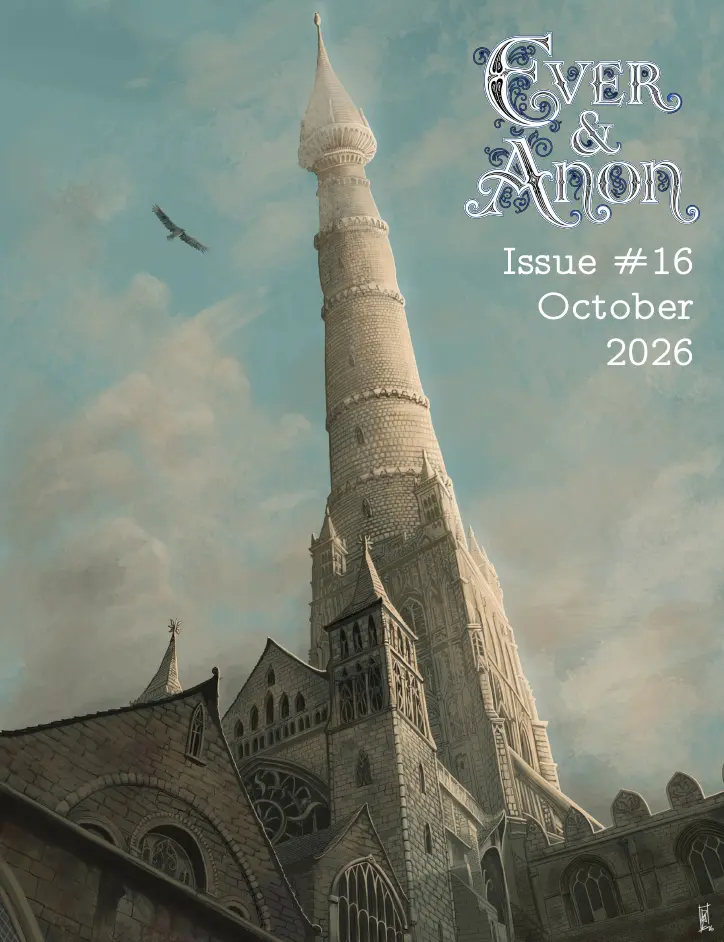
Overlord's Annals zine is available as part of the Ever & Anon APA, issue 16:
#Zine
from Unvarnished diary of a lill Japanese mouse
JOURNAL 18 octobre 2026
Les filles sont reparties, on range, on fait la vaisselle. T chan un torchon à la main s'arrête et nous sort : j'aurais jamais cru qu'un monde comme le vôtre existait. Mais vous vous aimez ! J'aimerais rester avec vous... Et elle s'est jetée dans nos bras au risque de casser un bol. Elle est grande, elle comprend bien qu'on ne peut pas s'occuper d'elle, on est très absentes, on ne va pas la garder avec nous pour encore la laisser seule le plus long de la journée. Le mieux pour elle c'est d'aller vivre avec sa tante. On sera pas loin et elle l'aime bien cette tante,elle nous a dit. On va partir un mois très loin, que deviendrait elle ? Évidemment elle comprend bien, mais elle aimerait... 🥲
Oui j'ai dit qu'on va partir. Il avait raison le type qui a proposé le deal je ne peux pas refuser. Ils ne vont pas me demander de faire un gosse après tout, je risque quoi ?
#Tchad #Ukraine
mounir.blog
from  القنت ديال الحاج
و اخيرا ربطت هاد الblog
مع الدومين التاريخي mounir.blog
لتستمر الكتابة.
from  Roscoe's Quick Notes

The letter of the day is M.
M is for Medium, as in the size of men's clothing, as in the size of the sweatpants I'm wearing this morning.
For the last few decades, after I gained weight immediately after retiring from my job as a UPS delivery driver, most of my clothes were XL or XXL sized. I can't wear any of those clothes now. Some XL tops I can wear, but the XXLs are like trying to wear tents. The XXL pants literally slide right off me, as do most of the XLs.
Best sizes for me now: tops are mostly XL, shoulders are still pretty broad; bottoms are probably Ms or Ls, depending on the items and their cut.
At the same time as the above clothing sizes are changing, my body weight is consistently much lower than previously, as is my blood pressure.
And the adventure continues.
Rippple's Weekly Tracker Oct 19, 2026 → Oct 25, 2026
from  Rippple's Blog

Stay entertained thanks to our Weekly Tracker giving you next week's Anticipated Movies & Shows, Most Watched & Returning Favorites, and Shows Changes & Popular Trailers.
Anticipated Movies
- Klara and the Sun
- Wildwood
- A Talent for Murder
- Wicker
- The Cycle
- ☆ Clayface
- The Only Living Pickpocket in New York
- Made in Abyss: Mezameru Shinpi
- Ali G: Who Iz I?
Anticipated Shows
Returing Favorites
- ☆ Cyberpunk: Edgerunners — Season 2
- Vanderpump Rules — Season 13
- The Terminal List — Season 2
- Nobody Wants This — Season 3
- Lupin — Season 3
- This City Is Ours — Season 2
Trending Shows Status Changes
- Where the Mask Ends — In Production → Returning Series
Most Watched Movies this Week
=Spider-Man: Brand New DaynewAnimalsnewMatchbox the Movie+3Runner-3Insidious: Out of the FurthernewPractical Magic 2newHope-4The End of Oak Street-3Fall 2: DeadpointnewBuddy
Most Watched Shows this Week
+2MobLand+2Slow HorsesnewVisionQuest+2Carrie-3Ted Lasso+4South Park-2Dark Matter-7LanternsnewBelow-2Marshals
Popular Trailers
 Are you in? — Street Fighter
- The possibilities are endless. — Clayface
- We all know someone who has that Marianne mentality — Sense and Sensibility
- Stream Now Only on Disney+ — VisionQuest
- In Cinemas Now — Verity
- will make your jaw drop — Whalefall
- Experience Other Mommy in cinemas TONIGHT — Other Mommy
- Too many funny moments to pick from — Forgotten Island
- The World Is Grey — Spider-Man: Brand New Day
- Watch at Home September 29 — The Uprising
Hi, I’m Kevin 👋. Product Manager at Trakt and creator of Rippple. If you’d like to support what I'm building, you can download Rippple for Trakt, explore the open source project, or go Trakt VIP.
Have you checked out my YouTube?
from  Kelly Kintner - Blog
No Golden Eras
I don’t think YouTube is in its best time. I am suspicious of it. If I happen to scroll through it, I feel very disappointed in humanity in general. It is also aggressive with guessing what I want instead of just letting me tell it. I don’t understand some options like posting like social media and nothing happening. But, considering the alternatives for storing a video online, I suppose it isn’t that bad, after all.
I can’t wait to livestream
Almost a month ago, I ventured back to YouTube. I have video content, and I enjoy playing for the camera. I am also starting a livestream soon, and I like YouTube for that too. So talking in front of the camera now helps me for then. Getting angles and lighting right. Getting content together. Then? LIVE! SOON!
Debbie’s Daughter, Live
I uploaded a video yesterday called “Debbie’s Daughter Live.” It is an older song, and I played it for the camera and Myrtle microphone. It was fun. I will do it again. I have lots of songs that work like that.

Gray Matters
I uploaded “Gray Matters” for this morning too. Also an older tune. I love it still. I think it brings up important points. I also think the sound is cool.

What’s in a thumbnail?
I will be using this YouTube channel. I have even read about thumbnails, uploading in advance, easy stuff to make the videos pop that doesn’t feel cheesy or wrong. I hope it all helps, but am not terribly bothered if it doesn’t. It was easy and fun to do. Not wasted time or anything.
“The Crab Song, Tape 24 Demo”
I have nearly 800 views already on a demonstration video. I don’t think that means much, but I also don’t mind it. Haha.
Back to collaborating
I talked recently about how I want to take care of collaborators. I want them to have links for friends. I want them to be able to look at something if they need to, reminding them of their handiwork. I want them to have enjoyed the song, enjoyed the project, and like the mementos coming from it. This is that. But I am also a collaborator too. I like it for myself, as well. YouTube may not be at a high point, but it is at an easy one. Take what we can get.
Even though I am on YouTube, please avoid scrolling that thing.
I do think scrolling YouTube is bad for your brain, though. It is infuriating. It is like someone guessing what you are trying to say all the time and being wrong about it, interrupting your story. My brain is like that. It gets distracted. It forgets. When the computer throws guesses at me, I get sidetracked and a little pissed. I know what I want. I wouldn’t be trying to type on the computer if I didn’t. You’d think it’d know that much. Maybe it does. I can’t tell.
You’re right to be suspicious
I am suspicious of everything about YouTube, to be honest. But I am also lonely with a ton of content. I need to be “out there” somehow, and I don’t like streamers, don’t like Bandcamp really, but I do it. I think YouTube is very invasive. It wouldn’t surprise me if they recorded you sleeping and posted it somewhere. Nothing surprises me in that realm anymore. Privacy is an antiquated notion. None of us have it if we can’t afford it. It is a privilege.
We don’t have to love it and trust it to use it, just like anything else.
I just make video content I want you to see if you like our stuff. So while I don’t trust YouTube as far as I can throw it, I do know if I use a smaller video service, I might be out some money. I won’t get folks to click on my shit. And I have the learning curve of a new platform. Plus, other video services seem deeply tied, almost integrated with social media of some sort, and I am not interested in that vibe in my life right now.
The Crossroads decision, every meal.
These decisions are circling every single company right now. It sucks, a lot. I do not feel “good” about using anything with a brand name on it. I feel like I wouldn’t even know they existed without micro-targeting, and that isn’t “good.” The profit motive makes them come off like crooked politicians, offering services in exchange for part of my soul. Posting a video shouldn’t be the crossroads kind of decision, but it is. Anything is. Eating fast food is a moral dilemma. Pick your battles. Enjoy your lunch.
I am struggling, frankly, in some ways
I have a hard time navigating this world. I feel like in the early 2000s, the world started heading one way, and I was on another path. I get the sensation we are too far down our perspective paths to reunite. It’s not like I want to lose the world; I am willing to meet it in a few spots. But some of the demands, I find utterly ridiculous. I refuse to be on a social media gridline of thoughts, beliefs, rants, and the computer feeding me what it’s paid to, not what I want or am looking for. It even disguises what it is paid to present me as what I am looking for. I hate that deception. It is world-altering. It doesn’t even help if I am smart. I am lonely. That means I am a target audience.
But Keri
I don’t feel like I belong here at all. I don’t feel accepted. I don’t feel respected. I don’t feel loved by anyone except Keri. I am happy for that though. Keri is more than most folks get in their whole life. We have built for over a decade together. No matter what happens, we were lucky for that.
This isn’t my world. I get it. So YouTube. yeah.
Kelly Kintner
from  G A N Z E E R . T O D A Y
I may have unlocked promotional god mode.
Since I started posting on instagram more regularly just a handful of days ago (especially with the reels), orders for THE SOLAR GRID hardback have been pouring in (at an average conversion rate of about 10%) and my follower count has made a 5% jump (And we're getting so many applicants for the producer job).
The danger of course is getting too swept up by the social media sinkhole. We are after all, only human, and it is exactly the seductive lure of social media sinkholes that forces us to run for our lives away from these platforms from time to time (my old Z Flip actually helped immensely with weening me off social media; you're less inclined to reach for your phone every few mins if there's no big screen on its face calling out to you). Shunning social media is certainly a necessity when you'd like to lock in on a project and just get to work with as little distraction as possible. A little less of a necessity when work on the project is done and it's time to get the word out about it.
Instagram can be a time suck, especially if you're making reels for it. Quite the workload in its own right. Difficult to add more work to your plate when you're in the middle of working on something else, let alone something big. But once you're done with said big work (especially big work you might've poured 10 years of your life into), isn't it worth it to put just as much effort into promoting it?
What can I say, I'm kind of an all-in sorta guy.
#work #tsg
Fenêtre sur ville - Didascalies 4.1
from  Chemin tournant
Réception [par l’œil de soi] des nuiteuses lumières publiques, espacées, fragiles, réparties en constellations, et de plus faibles lueurs d’ampoules s’éclipsant des maisons. Carte du ciel bas de la ville qui désoriente effraies, ducs petits ou grands et souris-chouettes. Un long trait de néon rouge traverse horizontalement la partie supérieure gauche de l’image, celle de droite étant rayée d’une courte ligne verte, clignotante, perpendiculaire et fluo.
Mais du fond du couloir [où se tient le soi] l’entaille rouge, à gauche, ne se voit pas, seulement sue on la devine, comme on imagine, sans le vouloir vraiment, celle qui déchire la gorge des bœufs, du côté droit. [Le soi oscille entre ce qui, possiblement, ouvre au rêve, à son invention, et ce que la violence enferme dans le cœur humain.]
#Fenêtresurville #Didascalies
