Coding agents open PRs in minutes. But on consequential codebases, those PRs still wait days for human review. So we built a verification stack, and on our own repo, it cut time-to-merge by 58% without lowering code quality. Here’s how. 🧵
People have been asking why OpenHands V1 goes the opposite direction from Claude Managed Agents. I finally found the time to write it up.
The production pain points are real, but changing the hosted agent architecture won't solve them for free:
xwang.dev/blog/2026/open…
New on the Engineering Blog:
Building Managed Agents—our hosted service for long-running agents—meant solving an old problem in computing: how to design a system for “programs as yet unthought of.”
Read more: anthropic.com/engineering/ma…
I’ll be at MLSys 2026 in Seattle this week!
We’re presenting our OpenHands Software Agent SDK work — lessons from OpenHands V0, where we ran into the hard parts of scaling software agents to production.
If you’re around, come say hi! Happy to chat about agent infrastructure,
Great work!
This pretty much aligns with what I saw in our PR data as well. Agent-authored code is either mostly accepted, with 90–100% survival, or mostly rejected, with 0–10% survival.
x.com/xingyaow_/stat…
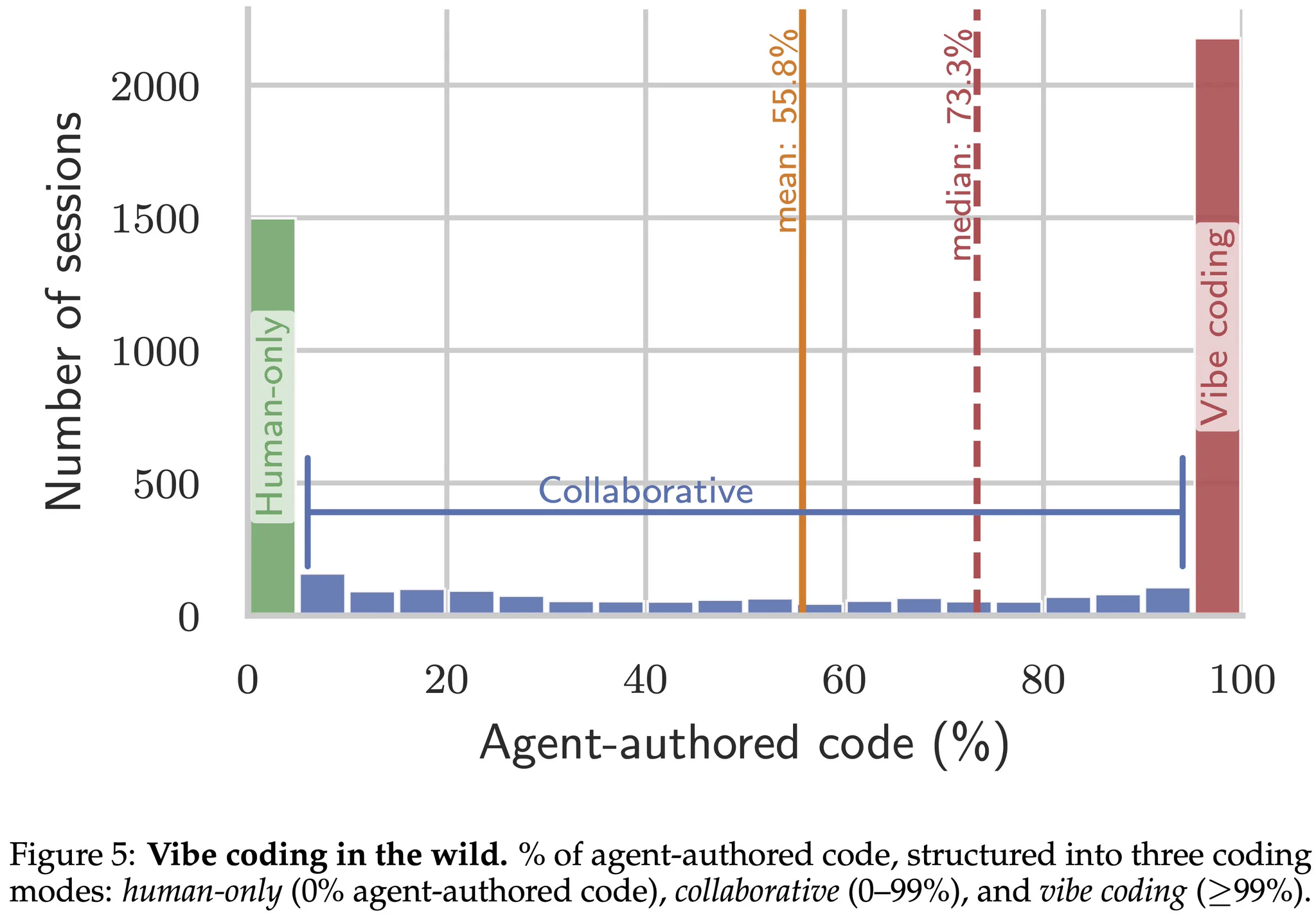
3/ For the first time, we can analyze human (vibe) coding patterns at scale
Vibe coding is taking over: In 40.8% of sessions, the agent writes essentially all committed code (≥99%).