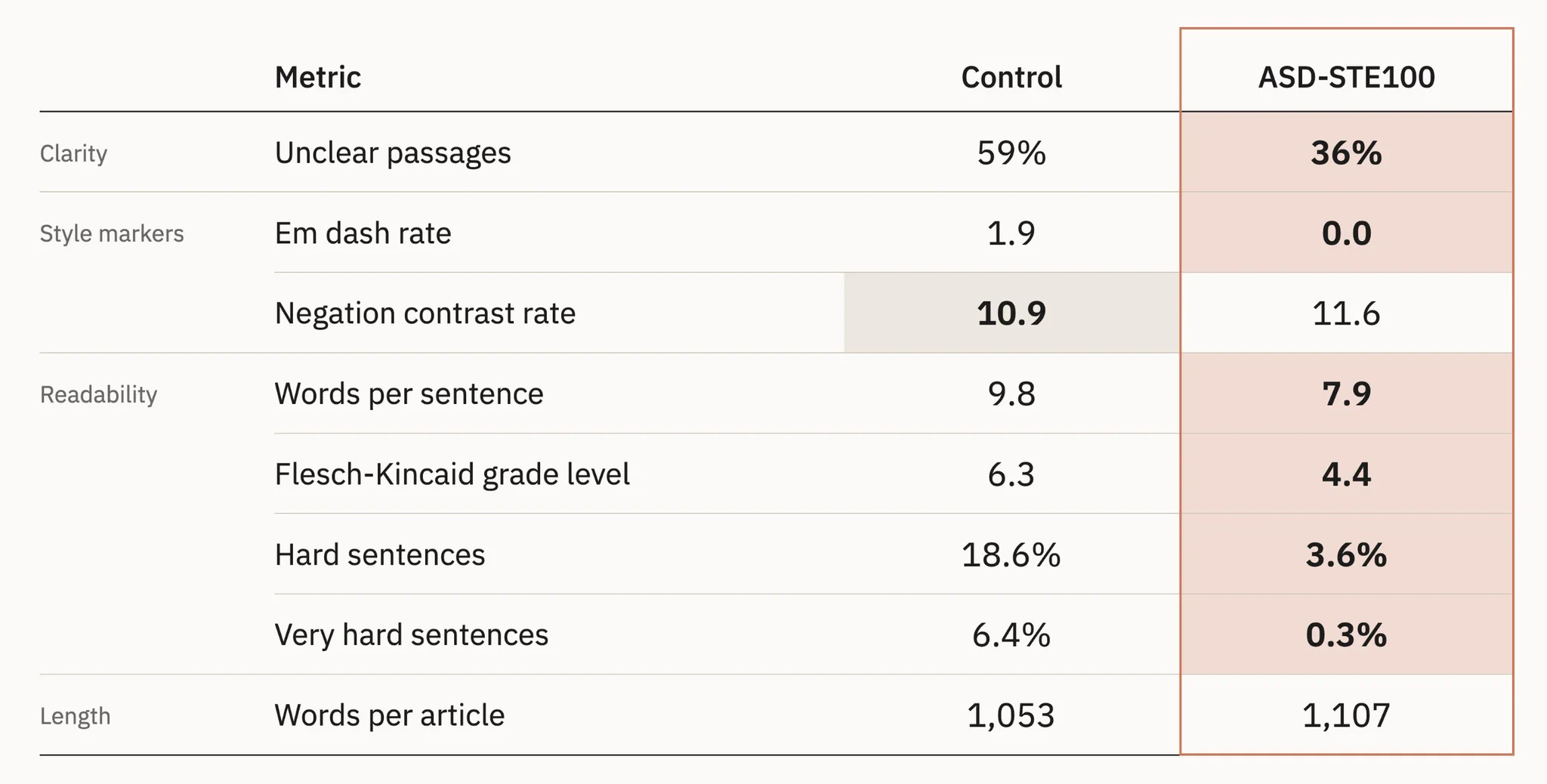
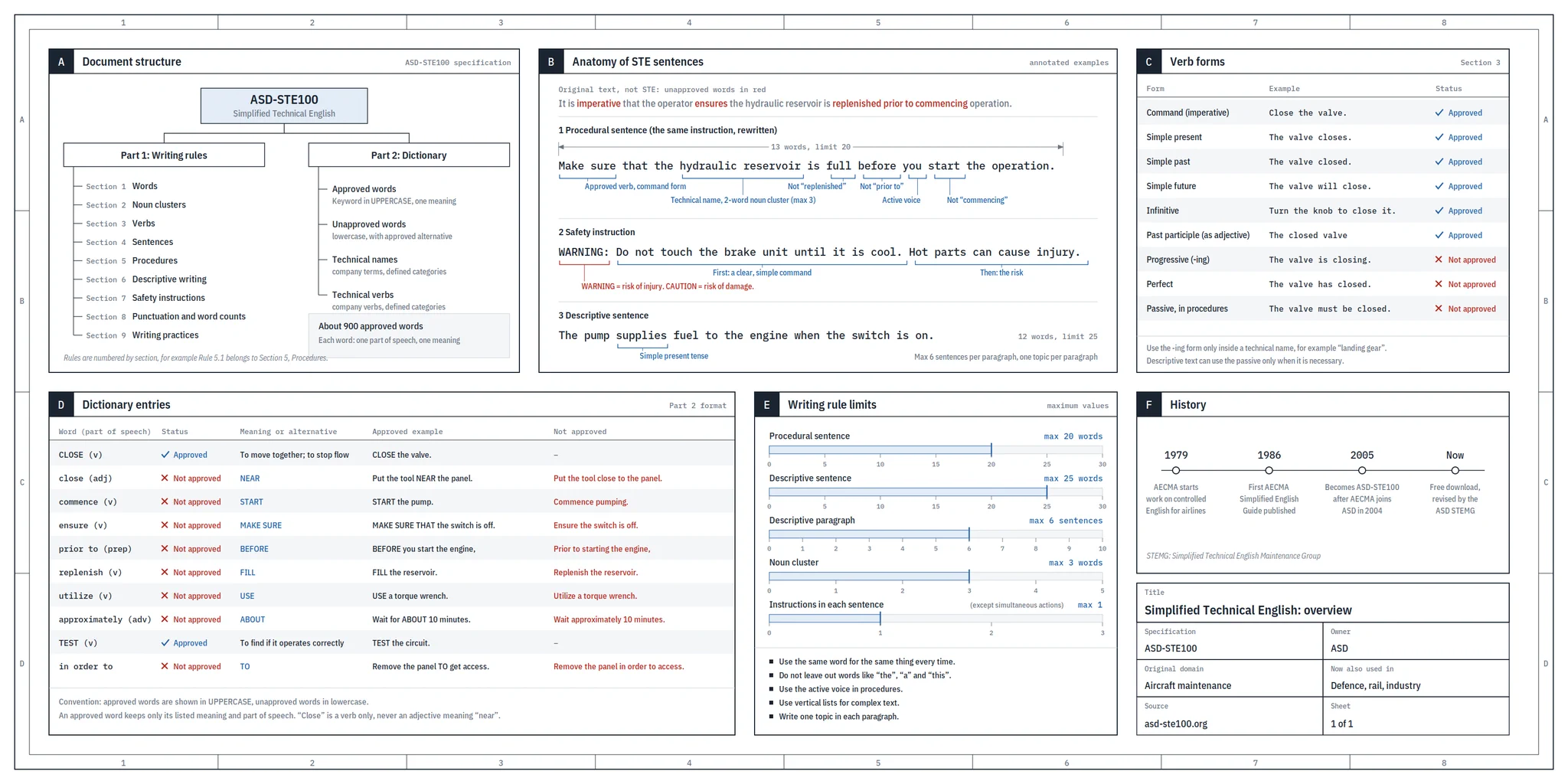
simply including "write in ASD-STE100" in your prompt makes a huge difference in ai readability
we benchmarked before / after "write in ASD-STE100" with Opus 5.5, and sentences became easier to read
We'll be spending a lot more time trying to understand the outputs of language models. A few thoughts, tips & tricks:
Writing. Something I've had success with: Ask your LLM to explain something in ASD-STE100, it's a controlled language specification originally developed for
at @BuzzSearchAI we also believe in "what-if" questions.
and we believe a huge part of "what-if" simulation is understanding user behavior.
and we are ingesting social media comments from users at a scaling-law scale
Most big decisions are some version of a “what-if” question.
What if we launched this? What if we raised the price? What if we didn’t?
At Simile, we’re building a What-If Machine to simulate those decisions before making them for real. But getting the answer right requires
Claude Code and Fable 5.1 removed em-dashes!
but does it actually read better with clarity?
we took a look at the changes behind Fable 5.1's perceived writing improvements, and the secret is a new system prompt
I started seeing more and more slop comments from claude code, so I plotted the two most annoying slop artifacts across Opus versions
More than just these slop artifacts, AI writing has also become more circuitous and hard to understand.
I will be looking into quantifying AI
llm tokens have all been about productivity, now that productivity is abundant, the next race is to do the hard thing of winning attention and distribution
We're excited to introduce Bonemeal: the world's first autonomous growth engineer.
I took one company 0→$60M ARR in a year, another 0→$10M in 8 months. The secret wasn't growth hacks, it was cracking the self-improvement loop.
Bonemeal runs that loop autonomously: it launches