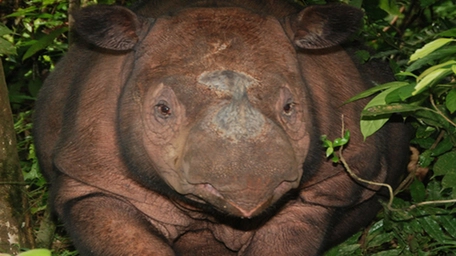
Sumatran Rhinoceros
Dicerorhinus sumatrensis
More than 49,500 species are threatened with extinction
That is still 28% of all assessed species.
Amphibians
41%

Mammals
26%

Conifers
34%

Birds
11%

Sharks & Rays
38%

Reef Corals
44%

Selected Crustaceans
28%

Reptiles
21%

Cycads
71%

Help us make The IUCN Red List a more complete barometer of life.

Nanyuki, Kenya: the IUCN SSC Steering Committee met in Africa for the first time to examine some of the most pressing species conservation challenges and identify opportunities to translate science, partnerships and investment into action.
Read the full article on IUCN
Led by Leonardo DiCaprio's Re:wild and the Bezos Earth Fund, in collaboration with IUCN Species Survival Commission, the project is the largest single philanthropic initiative dedicated exclusively to recovering species classified as Critically Endangered or Extinct in the Wild
Read the full article on IUCN
IUCN joins the global community in mourning the unexpected passing of Dr Kent E. Carpenter, internationally renowned marine biologist, conservation scientist, mentor, and leader whose career transformed marine species conservation.
Read the full article on IUCN
Established in 1964, The International Union for Conservation of Nature’s Red List of Threatened Species has evolved to become the world’s most comprehensive information source on the global conservation status of animal, fungi and plant species.
The IUCN Red List is a critical indicator of the health of the world’s biodiversity. Far more than a list of species and their status, it is a powerful tool to inform and catalyze action for biodiversity conservation and policy change, critical to protecting the natural resources we need to survive. It provides information about range, population size, habitat and ecology, use and/or trade, threats, and conservation actions that will help inform necessary conservation decisions.
The IUCN Red List Categories and Criteria are intended to be an easily and widely understood system for classifying species at high risk of global extinction. It divides species into nine categories: Not Evaluated, Data Deficient, Least Concern, Near Threatened, Vulnerable, Endangered, Critically Endangered, Extinct in the Wild and Extinct.
To date, more than 175,900 species have been assessed for The IUCN Red List.
This is an incredible achievement. However, our work is nowhere near complete. We need to substantially increase the number of wild species assessed, particularly plants, invertebrates and fungi.
Our current goals, based on the IUCN Red List Strategic Plan (2021-2030), are to have 260,000 species assessed and to reassess 142,000 of those species to ensure the information on their status is up-to-date so that we can monitor trends in change of status. Meeting these goals will provide the most up-to-date indication of the health of the world’s biodiversity to guide critical conservation action. This is only achievable with support from people like you.