
Devops Courses
Top 3 Devops Courses for 2026
Ranked by learner rating across our 50 Devops programs
Rank #1

AI-Powered Cloud Computing and DevOps Certification Program
Cohort starts: 21st Oct ’26 2 Days Left


Empowering Millions Through Professional Learning
- switchup4.6
- Trustpilot4.6Excellent
- Course Report4.5
Devops Skills You Will Build
The core capabilities you’ll practice across Devops programs
- Cloud Architecture
- AI Model Deployment
- RAG Systems
- Explainable AI
- Cloud Migration
- AI Powered Cloud Solutions
- MultiCloud Strategy
- Microservices Architecture
- Infrastructure as Code IaC
- Disaster Recovery
- Cloud Storage Management
- Continuous Integration CI
- Cloud Native AI Applications
Universities and Technology Partners Behind These Programs


AI-Powered Cloud Computing and DevOps Certification Program
- 4.8 out of 5
- 2K+ learners
- 8 months
Cohort starts: 21st Oct ’262 days left
- Intermediate to advanced
- Live cohort
View more about AI-Powered Cloud Computing and DevOps Certification Program
AI-Powered Cloud Computing and DevOps Certification Program is a live cohort certificate program offered with IITM Pravartak, rated 4.8 out of 5 by 2K+ learners. Runs 8 months. Best for experienced practitioners.
Cloud Architect Masters Program
- 4.6 out of 5
- 26.5K+ learners
- 4 months
Cohort starts: 22nd Oct ’263 days left
- Intermediate to advanced
- Live cohort
View more about Cloud Architect Masters Program
Cloud Architect Masters Program is a live cohort certificate program, rated 4.6 out of 5 by 26.5K+ learners. Runs 4 months. Best for experienced practitioners.
AI-Enabled DevOps Engineer Masters Program
- 4.5 out of 5
- 23.3K+ learners
- 6 months
Cohort starts: 23rd Oct ’264 days left
- Intermediate to advanced
- Live cohort
View more about AI-Enabled DevOps Engineer Masters Program
AI-Enabled DevOps Engineer Masters Program is a live cohort certificate program, rated 4.5 out of 5 by 23.3K+ learners. Runs 6 months. Best for experienced practitioners.

Certification Program in Cloud Computing and DevOps
- 4.9 out of 5
- 2K+ learners
- 8 months
- Intermediate to advanced
View more about Certification Program in Cloud Computing and DevOps
Certification Program in Cloud Computing and DevOps is an online certificate program offered with IIIT Bangalore, rated 4.9 out of 5 by 2K+ learners. Runs 8 months. Best for experienced practitioners.
Cloud Computing and DevOps Certification Program
- 4.8 out of 5
- 300+ learners
- 20 weeks
Cohort starts: 20th Oct ’261 days left
- Intermediate to advanced
- Live cohort
View more about Cloud Computing and DevOps Certification Program
Cloud Computing and DevOps Certification Program is a live cohort certificate program offered with Virginia Tech, rated 4.8 out of 5 by 300+ learners. Runs 20 weeks. Best for experienced practitioners.




Devops Overview
These courses suit anyone working near software delivery who wants to automate and scale it.
-
Software developers who want to own deployment and shipping, not just write code
-
System administrators and IT engineers moving into automation and cloud
-
Cloud professionals deepening their CI/CD and container skills
-
QA and test engineers adding pipeline and automation expertise
-
Beginners and graduates targeting a high-demand DevOps career
The courses cover the full DevOps toolchain, grouped by what each stage of the pipeline needs.
|
Category |
Tools and Skills Covered |
|
Version Control |
Git and GitHub for source control and collaboration |
|
CI/CD |
Jenkins and pipeline automation for continuous integration and delivery |
|
Containerization |
Docker for packaging applications and Kubernetes for orchestration |
|
Infrastructure as Code |
Terraform, Ansible, Chef, and Puppet for configuration and provisioning |
|
Cloud Platforms |
AWS, Microsoft Azure, and Google Cloud for hosting and scaling |
|
Monitoring |
Prometheus, Grafana, Nagios, and Amazon CloudWatch for observability |
Here are the five distinct project types included in free DevOps courses:
-
Build an end-to-end CI/CD pipeline that tests and deploys an application automatically
-
Containerize a web app with Docker and deploy it to a Kubernetes cluster
-
Provision cloud infrastructure as code with Terraform or Ansible
-
Set up monitoring and alerting with Prometheus and Grafana
-
Automate a release across multiple environments
You can start with the fundamentals before the tools. A practical path begins with a free course to understand the DevOps culture and workflow, then moves to core tools, where the DevOps Tools course introduces Git, Jenkins, Docker, and Kubernetes together.
From there, go deeper into one area at a time, such as containers or CI/CD, and practice by building a small pipeline of your own.
When you are ready to commit, a structured certification or master's program ties everything together with guided, real-world projects. Consistency and hands-on practice matter far more than speed.
Know more about Devops Courses
DevOps has moved from a niche practice to a default way of building and shipping software, and demand for people who can run automated, reliable pipelines keeps climbing. Simplilearn's DevOps programs combine the core toolchain, hands-on labs, and real projects, so learners build skills employers can verify, not just theory.
Market Demand and Industry Relevance
DevOps skills are tied to one of the fastest-growing parts of the job market. The US Bureau of Labor Statistics projects computer and information technology occupations to grow much faster than the average for all occupations through 2034, with about 317,700 openings each year. DevOps is a very important part of this shift, since almost every company now ships software continuously and needs people who can automate builds, deployments, and infrastructure. Cloud adoption, AI workloads, and security pressures only add to the demand.
Career Scope and Opportunities
DevOps consistently ranks among the best-paid software career paths, with salaries rising quickly as you specialize.
|
Job Role |
What They Do |
Avg. Annual Salary (US) |
|
DevOps Engineer |
Automate build, test, and deployment pipelines and manage infrastructure |
|
|
Cloud Engineer |
Design, deploy, and manage applications and infrastructure on the cloud |
|
|
Site Reliability Engineer |
Keep production systems reliable, scalable, and fast through automation |
|
|
DevOps Architect |
Design the end-to-end toolchain and standards for an organization |
|
|
Release Manager |
Plan and coordinate software releases across teams and environments |
Key Skills and Tools Covered
Across the programs, you build the capabilities that define modern delivery.
-
Learn continuous integration and continuous delivery to automate the path from commit to production, often with CI/CD pipelines and Jenkins
-
Package applications with Docker and run them at scale with Kubernetes
-
Manage infrastructure as code using Terraform and Ansible, so environments are repeatable and version-controlled
-
Add monitoring and observability with Prometheus, Grafana, and CloudWatch
-
Secure the pipeline through DevSecOps practices
Underpinning all of it is fluency with a major cloud platform, which is where most DevOps work now runs.
Who Can Enroll
DevOps courses are open to a wide range of backgrounds, with options for complete beginners and experienced engineers alike. There are no strict prerequisites for the beginner and free courses, though basic familiarity with Linux, scripting, or programming makes the tools easier to pick up.
-
Software developers and system administrators move into DevOps naturally, since they already know part of the workflow
-
Cloud and IT professionals, QA and test engineers, and recent graduates also fit well
-
Motivated career changers can begin advanced master's and certification programs in DevOps, as these programs include foundational modules that accommodate those without direct experience
How Simplilearn Makes You Industry-Ready
Simplilearn's DevOps programs are built around hands-on practice, not just watching video lessons. Several features make graduates job-ready:
-
Hands-on labs and real-world projects: building pipelines, deploying containers, and automating infrastructure in realistic settings
-
Curricula aligned to in-demand certifications and the tools employers use in practice
-
Advanced tracks developed with industry and university partners, including programs co-created with IIIT Bangalore
-
Integrated assessments and capstone projects that build a demonstrable portfolio
-
Mentoring, an active community, and career services on select programs
The payoff is a portfolio of practical work and a credential you can show, which matters far more to hiring managers than theory alone.
Connect with our learning consultant to get all your questions answered about programs, faculty, and more
Tools and Platforms Used in Our Devops Courses
Get hands-on with the platforms and tools covered across our Devops programs


















Recommended Learning Materials for Upskilling
Explore free webinars, tutorials, career guides, and practical reads to go deeper
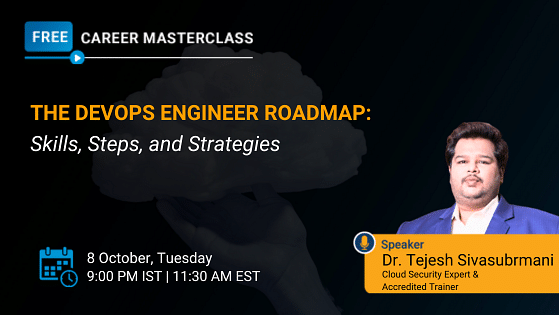
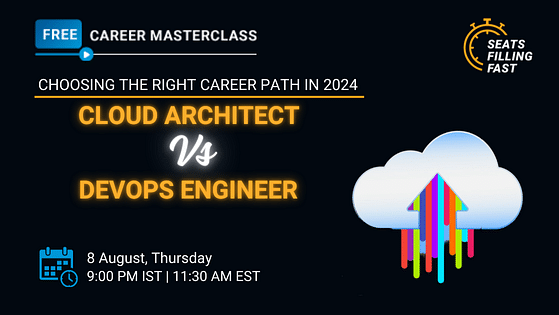
Upcoming Webinars - Free Masterclasses
Articles and Ebooks That You Can Access For Free



Devops Courses: Frequently Asked Questions
DevOps is an evolution of the agile model of software development and refers to the operation of a team collaborating throughout an entire programming production process (i.e., from the design through the development stages). It addresses the gap between developers and operations.
Professionals interested in a DevOps career can prepare themselves for the following job roles:
- DevOps engineer
- DevOps architect
- Release manager
- Kubernetes administrator
- Cloud DevOps engineer
Those aspiring to become DevOps engineers should gain expertise in the following areas:
- Programming languages such as Java, C++, or Python
- Linux fundamentals and scripting
- Source code management tools such as Git, SVN, or TFS
- Build and integration tools such as Maven, Gradle, or Jenkins
- Test, deploy, and configuration tools such as Selenium, Ansible, Docker, Puppet, and Chef
- Monitoring tools such as Nagios or Splunk
- Cloud service platforms such as AWS, Microsoft Azure, or Google Cloud
A DevOps engineer earns an average annual salary of $99,604 in the United States. Those with deep experience have even better salary prospects—up to $146,000.

*All salary figures referenced are based on data reported by employees on Glassdoor. These figures are estimates and may vary depending on location, experience level, company policies, and market conditions. Actual compensation may differ.
