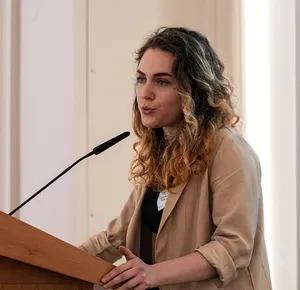
At the first CEE AI Summit in Prague, more than 250 policymakers, researchers, and industry leaders focused on the region’s bigger challenge: turning its technical talent into globally competitive AI companies.
The Recursive’s weekly roundup aims to cover key tech developments across Central and Eastern Europe, as well as the growing impact of CEE-born founders on the global stage. Take a look at the latest news in funding, startup milestones, and emerging trends tied to the region’s innovation potential.
Endeavor Catalyst is increasing its exposure to Europe, where its portfolio companies raised more than $8.3 billion across 2025 and H1 2026. Head of EMEA Pete Benedetto explains why the fund sees particular potential in CEE.
The Warsaw-based biotech behind Miorelaxant Magic™ raised €1.6M, led by 4growth VC with Hard2beat, to scale its recombinant conotoxin platform, a clinically proven, needle-free alternative to botox, and expand internationally.
In this episode of The Recursive Podcast, we sit down with Rakuten Viber CEO Ofir Eyal to discuss how the company is evolving beyond messaging through its partnership with OpenAI, the rise of AI-powered communication, and the long-term vision behind building a "super app."
The conversation explores how the company approaches privacy and responsible AI adoption, and why Europe has yet to embrace the super app model seen across Asia.
Ofir also reflects on his own journey from product manager to CEO, the leadership lessons he learned while navigating one of Viber's most challenging periods after the outbreak of the war in Ukraine.
In this episode:
☑️ Why Viber partnered with OpenAI ☑️ The future of AI inside messaging apps ☑️ Can Europe build a successful super app? ☑️ Privacy, security, and responsible AI adoption ☑️ How Viber makes money beyond messaging ☑️ Leadership lessons from scaling a global platform ☑️ Rebuilding after losing 40% of the business overnight
🎙️ Subscribe to The Recursive Podcast for conversations with the founders, investors, and technology leaders shaping the future of innovation across Central and Eastern Europe and beyond.
Can We Safely Live with Humanoid Robots? 🤖 In this fascinating episode of The Recursive Podcast, we sit down with Emily Kate Genatowski, an AI PhD candidate, historian and domestic robotics researcher who provides a unique, hands-on perspective on our future with machines. Unlike most researchers who work in controlled labs, Emily lives full-time with a humanoid robot named Tova (a Unitree G1) in her apartment in Vienna.
As the founder of PSL (Proportional Stake Liability), an insurtech startup bridging the liability gap in robotics, Emily’s career is dedicated to uncovering the practical, legal, and social friction points that arise when AI gains a physical body. She moves beyond the "AI hype" to explore how humanoid robotics will realistically intersect with our legal regulations, physical infrastructure, and the daily fabric of our communities.
🧠 Why Watch? Whether you’re a tech optimist, a skeptic, or someone worried about the future of work, this conversation offers a grounded, practical look at the challenges ahead. Emily moves the needle from philosophical fear to practical empowerment, showing us that we are still the architects of the future we want to see.
What does AI engineering actually look like inside modern enterprises — and how close are we to truly autonomous software development?
In this episode of The Recursive Podcast, we sit down with Karol Przystalski, Chief Data and AI Officer at Exadel, to explore how organizations are moving beyond AI experimentation and into AI-native operations.
We discuss the evolution from AI copilots and coding assistants to fully orchestrated engineering systems, why many companies are measuring AI success incorrectly, and how enterprise leaders should think about ROI, productivity, and organizational change in the age of autonomous engineering.
Karol also shares insights into Exadel Colleague — an AI-powered engineering teammate designed to support entire software teams—and explains why the future of AI isn't about replacing humans, but helping them focus on higher-value work.
In This Episode:
🔹 Why AI adoption is shifting from experimentation to real business value How enterprises have moved beyond AI proof-of-concepts and are now focused on productivity, efficiency, and measurable outcomes.
🔹 The difference between AI-enabled development and AI-native engineering Why coding assistants are only the first step—and how autonomous systems are transforming entire software development lifecycles.
🔹 How to measure AI ROI beyond token usage The metrics that actually matter, including productivity gains, human-equivalent hours saved, accuracy, and business impact.
🔹 The future of autonomous engineering and the role of humans Why AI won't replace software engineers, but will fundamentally change how teams work and what skills will matter most.
🧠 Whether you're an engineering leader, CTO, product executive, or simply curious about the future of software development, this conversation offers a practical look at where enterprise AI is headed next.
More than a decade of building without outside funding has brought its share of lessons. The guest piece reflects on what worked, what didn’t, and what other founders might learn from the experience.
After 20 years building Poland's startup ecosystem, AIP Seed CEO Dariusz Zuk says the missing piece is density at the top: founders who have scaled, private capital and big exits. He is building a VC platform rather than a bigger fund, with a planned Warsaw Stock Exchange listing.
The Recursive’s weekly roundup aims to cover key tech developments across Central and Eastern Europe, as well as the growing impact of CEE-born founders on the global stage. Take a look at the latest news in funding, startup milestones, and emerging trends tied to the region’s innovation potential.
Ahead of Prague’s municipal elections, the Czech Startup Association brought together the city’s main political candidates to discuss its startup future, securing broad support for stronger innovation infrastructure, closer university ties, startup-friendly procurement, and a flagship tech event.
Based Collective co-founder Jonas Bartasius on why fundraising is over-glamorized, what Europe can learn from Silicon Valley without copying it, and why stronger founder networks could help the continent build bigger companies.
Forget the decade-long SaaS slog: AI startups are hitting $100M ARR in under three years. An analysis of 17 industry darlings reveals a shared playbook rewriting B2B growth, and it’s not just tech hype.