

News Search:

Wednesday, September 9th 2026
Today's Reviews
Desktop PC
Harddisks
Keyboards
Mouse
NAS
Speakers

Bosgame M5 Review
The BOSGAME M5 is expensive, but it backs that price up with a Ryzen AI Max+ 395, Radeon 8060S, and 128 GB of LPDDR5X-8533. Strong productivity performance, excellent 1080p gaming, dual USB4, and useful performance modes make it an easy recommendation for creative professionals.

Windows 11 Finally Adds Automatic Dark Mode
Automatic dark and light mode theme switching has been a built-in feature in macOS, Android, iOS, and even many Linux desktop environments for a good long while, but for some reason has been lacking in Windows. Now, it appears as though automatic theme switching will be coming to Windows 11 in an upcoming Insider build, as spotted by @phantomofearth on X, who shared some strings of text in a recent Experimental Windows build. These strings are accompanied by a new DLL, "Windows.Shell.AutoDarkMode.dll," that appears in the OS's System32 files.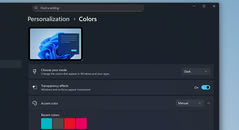
"Schedule auto mode"
"Mode only changes when PC is idle"
"This prevents the mode from changing while you're working or in meetings"
"Turn on location services to automatically schedule dark mode. When location services are turned off, dark mode is active from [START] to [END]."


Apple Unveils iPhone Duo, the First Foldable iPhone
Apple today introduced iPhone Duo, the first foldable iPhone. Opened, it is the thinnest iPhone ever, with a 7.6-inch inner display that provides a large canvas for viewing content, gaming, and multitasking, and a special nano-texture finish that minimizes glare for an unparalleled viewing experience. Closed, the 5.4-inch outer display delivers 90 percent of the screen area of iPhone 18 Pro in a compact, pocketable design. Both displays share the same aspect ratio, so content scales proportionally, ensuring visual continuity. iPhone Duo is built to last with an innovative hardware design and a precision hinge that offers a smooth, satisfying feel with every use. Powered by the new A20 Pro, iPhone Duo features an advanced thermal management system with a custom-designed vapor chamber and a dual-battery architecture, delivering pro performance and impressive all-day battery life. The advanced camera system takes stunning photos and videos, with the folding design unlocking fun new ways to use the camera that aren't possible on any other iPhone. iOS 27 is reimagined, remaining familiar and intuitive while adapting to the versatile ways users can interact with iPhone Duo. And with Apple Intelligence and Siri AI, iPhone Duo brings powerful AI capabilities together with a user's personal context.
iPhone Duo is available in two refined colors: star white and night sky. Pre-orders begin Friday, October 16, with availability beginning Friday, October 23.


iPhone Duo is available in two refined colors: star white and night sky. Pre-orders begin Friday, October 16, with availability beginning Friday, October 23.



Intel-Backed "Hypertune" PC Overlocking Tool Reportedly Boosts FPS by Up to 60%
A new tool called Hypertune has emerged after being in early testing with 60,000 PC DIY enthusiasts. According to exclusive launch coverage from GamesBeat, a Miami-based gaming company announced a new automated overclocking platform named Gaming Performance Engineering, which is said to deliver a significant FPS performance boost of up to 60%. While that figure sounds impressive, it is not expected to become the norm, as most systems will see only a few percentage points of improvement. The company states that Hypertune is based on Intel's Extreme Tuning Utility (XTU) software development kit (SDK) and was developed in partnership with Intel, which supported the project with engineering resources.
The tool itself includes automated overclocking for your CPU and GPU and optimizes RAM settings for improved latency, frequency, and overall performance. Once downloaded, the tool analyzes hardware configuration, drivers, Windows settings, and other elements. The company refers to this as a Smart Optimization Engine, which first monitors and observes your system's configuration to deliver an optimization preset. After applying this preset, users should notice immediate differences. For example, Hypertune demonstrated two systems: one featuring an Intel Core Ultra 9 285K and an NVIDIA GeForce RTX 5090 GPU, and the other with a Core i7-14700K and an RTX 3080 GPU. The first system showed performance gains ranging from 18.9% to 28.2%, while the second saw a boost in frames per second ranging from 4.3% to 9.8%.

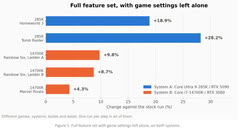
The tool itself includes automated overclocking for your CPU and GPU and optimizes RAM settings for improved latency, frequency, and overall performance. Once downloaded, the tool analyzes hardware configuration, drivers, Windows settings, and other elements. The company refers to this as a Smart Optimization Engine, which first monitors and observes your system's configuration to deliver an optimization preset. After applying this preset, users should notice immediate differences. For example, Hypertune demonstrated two systems: one featuring an Intel Core Ultra 9 285K and an NVIDIA GeForce RTX 5090 GPU, and the other with a Core i7-14700K and an RTX 3080 GPU. The first system showed performance gains ranging from 18.9% to 28.2%, while the second saw a boost in frames per second ranging from 4.3% to 9.8%.



1,900 Blizzard Workers Secure Union Contract Covering Gen AI, Layoffs, and Remote Work
The recent layoffs at Xbox Game Studios, which saw Microsoft cull 3,200 positions, sparked a mass wave of protests from various studios inside the Xbox collective, including powerhouses like Bethesda. It was clear following the layoffs that staff remaining at Microsoft-owned studios were concerned about their future, and following the layoffs, the Communications Workers of America has announced that it has officially ratified a new contract for "nearly 1,900 workers across Blizzard."
The actual contract has not been made public, but, as per the announcement, the new union contract secures wage increases, a hybrid workweek with two remote work days per week, remote work and disability accommodations, and protections against generative AI. Blizzard isn't the only game studio looking to union bargaining as a solution to issues in the gaming industry. Rockstar workers recently formed the Rockstar IWGB Game Workers Union in response to alleged unjust and retaliatory firings of 31 workers and fears of layoffs following the launch of GTA VI.
 Game Developer reports that Blizzard responded to the contract ratification with the following statement:
The actual contract has not been made public, but, as per the announcement, the new union contract secures wage increases, a hybrid workweek with two remote work days per week, remote work and disability accommodations, and protections against generative AI. Blizzard isn't the only game studio looking to union bargaining as a solution to issues in the gaming industry. Rockstar workers recently formed the Rockstar IWGB Game Workers Union in response to alleged unjust and retaliatory firings of 31 workers and fears of layoffs following the launch of GTA VI.


Johanna Faries, President, Blizzard EntertainmentWe appreciate the dedication and engagement of our represented employees and the bargaining committees throughout this process, as well as every Blizzard employee whose work continued alongside it. The ratification of these agreements marks a significant milestone and reflects our shared commitment to continuing to work together in support of our teams and our players.
Apple Debuts iPhone 18 Pro and iPhone 18 Pro Max
Apple today announced iPhone 18 Pro and iPhone 18 Pro Max, delivering the most advanced pro camera system in an iPhone, and huge leaps in battery life and performance. The new 48MP Fusion Main camera, now with variable aperture, brings creative control that wasn't possible before, and new Pro controls let users customize their experience in the Camera app. Both models feature a smaller and even more useful Dynamic Island, as well as A20 Pro and a next-generation vapor chamber that together deliver the highest sustained performance in iPhone history. iPhone 18 Pro Max also delivers the largest increase in battery life ever on iPhone, thanks to advancements in Apple silicon and a larger battery. Featuring iOS 27 with Apple Intelligence and Siri AI, iPhone 18 Pro models bring powerful AI capabilities together with personal context to become an intelligent personal hub with privacy and security at its core.
iPhone 18 Pro and iPhone 18 Pro Max are available in four elegant finishes: black, silver, glacier, and an all-new burgundy. Pre-orders begin Saturday, September 12, with availability beginning Friday, September 18.


iPhone 18 Pro and iPhone 18 Pro Max are available in four elegant finishes: black, silver, glacier, and an all-new burgundy. Pre-orders begin Saturday, September 12, with availability beginning Friday, September 18.



HP Launches ZGX Fury AI Station Powered by NVIDIA GB300 Grace Blackwell and Red Hat
HP Inc. today announced a collaboration with Red Hat, the world's leading provider of open-source solutions, to give organizations more choice in where AI workloads run, whether locally, in the cloud or across both environments. In collaboration with Red Hat, HP is developing an open, enterprise-grade AI platform to deliver purpose-built AI infrastructure powered by Red Hat AI Factory with NVIDIA.
HP's open enterprise-grade AI platform aims to help companies maximize local AI inference throughput with up to 20 PFLOPS FP4 AI performance, reduce environment setup time and deployment risk, and improve GPU utilization through optimized CUDA libraries, scheduling, and multi-GPU workload orchestration. Red Hat AI Factory with NVIDIA is an integrated AI platform, built on the industry-leading infrastructure of Red Hat Enterprise Linux and Red Hat OpenShift, for deploying and managing AI models, agents and applications across the hybrid cloud.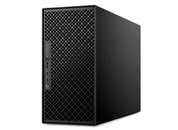


HP's open enterprise-grade AI platform aims to help companies maximize local AI inference throughput with up to 20 PFLOPS FP4 AI performance, reduce environment setup time and deployment risk, and improve GPU utilization through optimized CUDA libraries, scheduling, and multi-GPU workload orchestration. Red Hat AI Factory with NVIDIA is an integrated AI platform, built on the industry-leading infrastructure of Red Hat Enterprise Linux and Red Hat OpenShift, for deploying and managing AI models, agents and applications across the hybrid cloud.


Mobile Intel 12 Xe "Nova Lake" May Support Upgradeable DDR5-8000 Memory
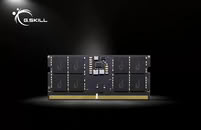
Intel's next-generation Nova Lake mobile chips with 12 Xe-core graphics may support DDR5-8000 memory through CSODIMM modules, according to leaker Golden Pig Upgrade Pack on Weibo. If that pans out, it would be the first mobile Nova Lake variant to officially support DDR5, a notable departure from the soldered LPDDR memory that dominates thin-and-light laptops right now. Current Panther Lake systems with 12 Xe cores, like the Core Ultra X7 358H, don't officially list DDR5 support, though ASRock Industrial already ships mini PCs with two DDR5 SO-DIMM slots running at DDR5-7200 on that platform, and Intel itself includes this configuration among its Core Ultra Series 3 developer systems.
Nova Lake-S, the desktop version, has already been tied to DDR5-8000 through leaked B960 chipset details and platform documents, so Intel appears to be pushing that same memory ceiling down into at least part of the mobile lineup too. Unlike soldered LPDDR5X, CSODIMM support would let OEMs offer upgradable RAM again in these systems, an option that's grown rare in slimmer laptop designs built around battery life and board space. Despite the leaker's solid track record, this is still a single leak rather than anything Intel has confirmed, so I'd hold off treating the exact speeds as final. If it checks out, it suggests Intel is willing to give at least some mobile Nova Lake configurations more memory flexibility, even as most of the market keeps drifting toward soldered memory for efficiency.
Nova Lake-S, the desktop version, has already been tied to DDR5-8000 through leaked B960 chipset details and platform documents, so Intel appears to be pushing that same memory ceiling down into at least part of the mobile lineup too. Unlike soldered LPDDR5X, CSODIMM support would let OEMs offer upgradable RAM again in these systems, an option that's grown rare in slimmer laptop designs built around battery life and board space. Despite the leaker's solid track record, this is still a single leak rather than anything Intel has confirmed, so I'd hold off treating the exact speeds as final. If it checks out, it suggests Intel is willing to give at least some mobile Nova Lake configurations more memory flexibility, even as most of the market keeps drifting toward soldered memory for efficiency.



Ubisoft Games Silently Join Xbox Disc-to-Digital Program
When Xbox previously announced its Disc-to-Digital attestation program, it said that many publishers were working to bring their games to the insider program, and, thanks to tests by gamers, it has been confirmed that Ubisoft is one of those major publishers to join D2D. One specific post on X says that Trials Fusion, Assassin's Creed: The Ezio Collection, Assassin's Creed Syndicate, and Far Cry Primal were all able to be registered via the Disc-to-Digital program.
The gamer who shared their results also notes that it does not appear that those games are playable on PC via the Xbox Backward Compatibility on PC program. Corroborating the post on X, the changelog on Xbox Collection Tracker (XCT) shows pages on pages of new Ubisoft franchises confirmed to be part of the D2D program, including Watch Dogs, Assassin's Creed, Far Cry, and the Tom Clancy franchise. These include titles published on both the Xbox Series consoles and the Xbox One. So far, the community-driven XCT lists 1,478 games confirmed as being part of the Disc-to-Digital program.
The gamer who shared their results also notes that it does not appear that those games are playable on PC via the Xbox Backward Compatibility on PC program. Corroborating the post on X, the changelog on Xbox Collection Tracker (XCT) shows pages on pages of new Ubisoft franchises confirmed to be part of the D2D program, including Watch Dogs, Assassin's Creed, Far Cry, and the Tom Clancy franchise. These include titles published on both the Xbox Series consoles and the Xbox One. So far, the community-driven XCT lists 1,478 games confirmed as being part of the Disc-to-Digital program.



NVIDIA Releases GeForce 616.92 WHQL Game Ready Drivers
NVIDIA has released its latest GeForce Game Ready Drivers, version 616.92 WHQL, bringing support for important titles. This release optimizes GeForce graphics cards for the path tracing upgrade in 007 First Light, adds support for PUBG's upcoming DLSS Super Resolution update, and prepares Game Ready for Active Matter, Aniimo, and WARDOGS, three new DLSS games launching soon. Specifically, for BULKHEAD and Team 17's WARDOGS game, launching on September 10 as an all-out warfare first-person shooter, NVIDIA has included optimizations ahead of the launch to ensure the game runs smoothly. The list of fixed issues includes screen flicker in the browser when certain websites display content, as well as issues with virtual displays. However, issues with power management mode and Virtua Fighter 5 R.E.V.O. crashing persist.
DOWNLOAD: NVIDIA GeForce 616.92 WHQL.


DOWNLOAD: NVIDIA GeForce 616.92 WHQL.


NEOGEO AES+ Delayed to September 2027 Amid Manufacturing Expansion
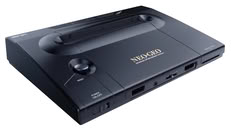
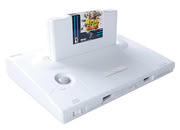
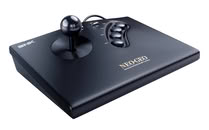
PLAION REPLAI today confirmed that the worldwide release date for the NEOGEO AES+ range will move to Thursday 16th September 2027. This series of new products, which are being independently developed and published by PLAION REPLAI under license from SNK, will remain available for pre-order across retailers worldwide and on plaionreplai.com.
The decision to delay follows an extraordinary response to the announcement of the NEOGEO AES+ earlier this year. Demand from fans, collectors and retail partners has prompted PLAION REPLAI to expand manufacturing, increase investment in the platform and broaden its long-term software roadmap.
The decision to delay follows an extraordinary response to the announcement of the NEOGEO AES+ earlier this year. Demand from fans, collectors and retail partners has prompted PLAION REPLAI to expand manufacturing, increase investment in the platform and broaden its long-term software roadmap.


AAEON Releases MAX-Q870A and MAX-H810A microATX Industrial Motherboards
AAEON (Stock Code: 6579), today announced the release of two new microATX industrial motherboards featuring Intel Core Ultra 200S Series Processors (formerly Arrow Lake-S), the MAX-Q870A and MAX-H810A.
The two boards are compatible with a range of Arrow Lake-S CPUs, with the MAX-Q870A supporting up to 125W SKUs and the MAX-H810A supporting up to 65 W SKUs. This difference reflects the market positioning of the two boards, with the former marketed for advanced AI and machine vision use and the latter for more cost-efficient industrial automation and HMI applications.
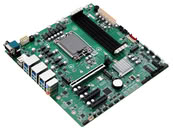

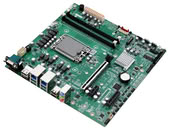

The two boards are compatible with a range of Arrow Lake-S CPUs, with the MAX-Q870A supporting up to 125W SKUs and the MAX-H810A supporting up to 65 W SKUs. This difference reflects the market positioning of the two boards, with the former marketed for advanced AI and machine vision use and the latter for more cost-efficient industrial automation and HMI applications.



CXMT Reportedly Struggles With HBM3E, Yields Are Only 25%
Chinese memory giant CXMT is reportedly facing difficulties with HBM3 production, according to South Korean media. Late last month, it was revealed that CXMT had begun risk production of HBM3E memory, lagging two generations behind Samsung, SK hynix, and Micron, who are already progressing with HBM4E sampling. At that time, it was known that the company was conducting HBM3E risk production in limited runs, but details were scarce. However, today we learn that three out of four HBM3E stacks are defective, indicating that CXMT currently operates at a 25% yield. Stacking DRAM is a complex task, as the technology required is much more intricate than planar DRAM manufacturing, an area where CXMT reportedly excels.
The low yields are reportedly due to the immaturity of the through-silicon via (TSV) technology that CXMT employs. In front-end manufacturing, CXMT achieves around 30% yields, while back-end processing yields about 70% on top of the original 30%. For instance, Samsung uses about 5,000 TSVs per layer on HBM2, and SK hynix uses more than 8,000 TSVs per layer on its HBM3. However, data suggests that CXMT is attempting to achieve HBM3E with only 3,000 TSVs per layer and is trying to pack 8 layers in the regular 8-Hi HBM3E configuration. Given these challenges, the company is unlikely to transition to a higher-capacity 12-Hi HBM in the near term as it addresses engineering challenges.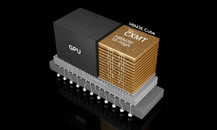
The low yields are reportedly due to the immaturity of the through-silicon via (TSV) technology that CXMT employs. In front-end manufacturing, CXMT achieves around 30% yields, while back-end processing yields about 70% on top of the original 30%. For instance, Samsung uses about 5,000 TSVs per layer on HBM2, and SK hynix uses more than 8,000 TSVs per layer on its HBM3. However, data suggests that CXMT is attempting to achieve HBM3E with only 3,000 TSVs per layer and is trying to pack 8 layers in the regular 8-Hi HBM3E configuration. Given these challenges, the company is unlikely to transition to a higher-capacity 12-Hi HBM in the near term as it addresses engineering challenges.

Modders Unlock DLSS Multi Frame Generation For RTX 30-Series "Ampere" GPUs
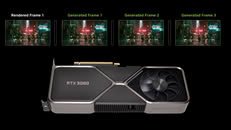
After porting DLSS 5 to every recent NVIDIA generation, the modding community now seems to be turning its focus to Frame Generation. A new mod called DLSSG SM86 lets GeForce RTX 30-series owners run DLSS Multi Frame Generation in 2X and 4X modes, a feature NVIDIA officially reserves for RTX 50-series "Blackwell" GPUs. Unlike earlier workarounds that swap in AMD's FSR Frame Generation, this project keeps NVIDIA's own DLSS models intact. It works by creating a proxy backend for the RTX 30-series' SM86 architecture that runs alongside the game and redirects frame generation calls to a bundled DLSSG 310.1 runtime, without touching the game's own files.
The developer's documentation lists the RTX 3080 Ti as the tested card, running driver 591.86 under Windows with D3D12. Reported gains include Black Myth: Wukong climbing from 50 FPS to 150 FPS at 4X Frame Gen, and Cyberpunk 2077 with path tracing going from 35 FPS to 100 FPS. That said, the developer is upfront that formal frametime, latency, and long-duration stability testing hasn't been done yet, so real-world smoothness don't fully match those raw numbers. A YouTube video by fogoticus also shows the feature being tested on an RTX 3080, with Cyberpunk 2077 jumping from around 42 FPS to 74 FPS in 2X mode, then to 120 FPS in 4X mode.
The developer's documentation lists the RTX 3080 Ti as the tested card, running driver 591.86 under Windows with D3D12. Reported gains include Black Myth: Wukong climbing from 50 FPS to 150 FPS at 4X Frame Gen, and Cyberpunk 2077 with path tracing going from 35 FPS to 100 FPS. That said, the developer is upfront that formal frametime, latency, and long-duration stability testing hasn't been done yet, so real-world smoothness don't fully match those raw numbers. A YouTube video by fogoticus also shows the feature being tested on an RTX 3080, with Cyberpunk 2077 jumping from around 42 FPS to 74 FPS in 2X mode, then to 120 FPS in 4X mode.


Modder Brings NVIDIA's Canceled 16GB RTX 3070 Ti Back to Life
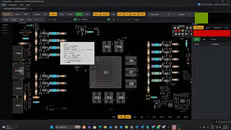
A Brazilian modder going by fmklab has built a working RTX 3070 Ti with 16 GB of memory, a configuration NVIDIA reportedly planned years ago but never brought to market. Instead of bolting bigger memory chips onto a retail 3070 Ti board, Fabio, aka fmklab, started with an ASUS TUF RTX 3070 PCB, which already runs on regular GDDR6 rather than the GDDR6X found on the real 3070 Ti. The RTX 3070 GPU was pulled and replaced with an actual 3070 Ti chip, and the original Samsung HC14 (8 Gb) memory modules were swapped for HC16 (16 Gb) units to double capacity. GPU-Z still reported 8 GB after the swap, so fmklab used NVIDIA's BIOS Reader tool to work out which memory straps needed rewiring. A few tweaks later, the full 16 GB buffer was showing up.
Once that was sorted, MATS testing came back clean, and the card ran a local LLM using nearly the full 16 GB pool. Moreover, Call of Duty: Warzone paired with a Ryzen 7 9800X3D was pulling over 13 GB with no signs of instability. NVIDIA had reportedly explored a 16 GB RTX 3070 Ti as far back as 2020, and the idea resurfaced through leaked engineering samples before NVIDIA reportedly shelved it. Fabio's Superposition score landed a bit below typical retail 3070 Ti runs, likely because GDDR6 is slower than GDDR6X, a fair tradeoff for doubling the memory this way. The base RTX 3070 has seen similar VRAM mods before, but this looks like the first working recreation of this specific 16 GB 3070 Ti variant.

Once that was sorted, MATS testing came back clean, and the card ran a local LLM using nearly the full 16 GB pool. Moreover, Call of Duty: Warzone paired with a Ryzen 7 9800X3D was pulling over 13 GB with no signs of instability. NVIDIA had reportedly explored a 16 GB RTX 3070 Ti as far back as 2020, and the idea resurfaced through leaked engineering samples before NVIDIA reportedly shelved it. Fabio's Superposition score landed a bit below typical retail 3070 Ti runs, likely because GDDR6 is slower than GDDR6X, a fair tradeoff for doubling the memory this way. The base RTX 3070 has seen similar VRAM mods before, but this looks like the first working recreation of this specific 16 GB 3070 Ti variant.


Windows 11 Will Get Faster Boot Times and More Optimizations for 8 GB RAM Systems
At IFA 2026 in Berlin, Germany, Microsoft confirmed that the company is listening to user feedback on various aspects of the Windows experience, including boot times, Windows Hello, and optimizations for PC systems with 8 GB of RAM. Speaking at the event, Mark Linton, Corporate Vice President of Windows & Devices at Microsoft, stated that the company is making a series of decisions that will impact Windows 11 users, and many of these changes will be rolled out over the next few builds.
Mark Linton, MicrosoftWe've made significant gains on things like boot time, Windows Hello responsiveness… We're continuing to improve on the fundamentals... We're listening to customer feedback, continuously improving Windows, and you'll see those updates as Windows just gets better as the updates come through... We're optimizing so that 8 gig of RAM runs great on machines as well.



G.Skill Launches Trident Z5 Royal NeoX Series DDR5 Memory with AMD EXPO-ULL
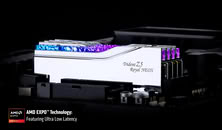
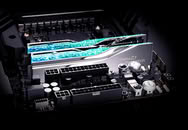
G.SKILL International Enterprise Co., Ltd., the world's leading brand of performance overclock memory, is excited to announce the launch of the new Trident Z5 Royal NeoX series DDR5 memory, featuring "AMD EXPO Technology: Featuring Ultra Low Latency", with specifications ranging from DDR5-6000 CL36 to DDR5-6000 CL26. Building on G.SKILL's long-standing dedication to memory overclocking and high-performance memory, the Trident Z5 Royal NeoX series DDR5 is a flagship masterpiece that merges luxury craftsmanship with overclock performance hardware. Supporting the latest AMD EXPO Technology: Featuring Ultra Low Latency, also known as AMD EXPO-ULL, the Trident Z5 Royal NeoX series overclock profile leverages fine-tuned memory sub-timings for advanced performance with supported AMD CPU, motherboard, and BIOS version.
"AMD EXPO Technology: Featuring Ultra Low Latency" is the newly announced memory overclocking technology released by AMD. Compared to existing G.SKILL DDR5 memory kits that include AMD EXPO support, the new Trident Z5 Royal NeoX series come with AMD EXPO-ULL that includes multiple extra-tuned memory sub-timing settings in the overclocking profile, which help deliver better latency performance at the same memory speed. PC enthusiasts can experience the enhanced performance by enabling the AMD EXPO-ULL memory overclock profile on a system with compatible AMD CPU, motherboard, and supported BIOS version.

"AMD EXPO Technology: Featuring Ultra Low Latency" is the newly announced memory overclocking technology released by AMD. Compared to existing G.SKILL DDR5 memory kits that include AMD EXPO support, the new Trident Z5 Royal NeoX series come with AMD EXPO-ULL that includes multiple extra-tuned memory sub-timing settings in the overclocking profile, which help deliver better latency performance at the same memory speed. PC enthusiasts can experience the enhanced performance by enabling the AMD EXPO-ULL memory overclock profile on a system with compatible AMD CPU, motherboard, and supported BIOS version.



AMD Radeon RX 9070 XT is AMD's Most Popular Discrete GPU on Steam Survey
According to the latest Steam Hardware and Software Survey update, in August, AMD's Radeon RX 9070 XT, the flagship of the RDNA 4 family, became the company's most popular discrete graphics card. With a share of 1.46% among surveyed Steam gamers, the Radeon RX 9070 XT ranks 24th in the graphics card popularity and market share list. From an immeasurable market share in April, Steam is seeing growth to about 1.33% in May, 1.35% in June, 1.40% in July, and finally reaching 1.46% in August. Currently, this places AMD's top RDNA 4 card just above NVIDIA's GeForce RTX 3080 and below the GeForce GTX 1660 SUPER.
In comparison, NVIDIA's current GeForce RTX 50-Series "Blackwell" generation shows a strong presence, with the GeForce RTX 5070 ranking third on the list with a 3.77% share, the GeForce RTX 5060 at 3.16%, and the RTX 5060 Ti at 2.55% among gamers. NVIDIA's discrete GPUs appear to have significantly higher market penetration with the current "Blackwell" family, as even the high-end GeForce RTX 5080 holds a 1.71% share. It's worth noting that AMD still commands a large percentage of integrated graphics solutions, but when focusing on discrete GPUs, the second-best RDNA 4 share is the Radeon RX 9060 XT with a 0.80% share.
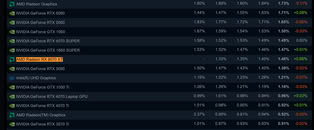
In comparison, NVIDIA's current GeForce RTX 50-Series "Blackwell" generation shows a strong presence, with the GeForce RTX 5070 ranking third on the list with a 3.77% share, the GeForce RTX 5060 at 3.16%, and the RTX 5060 Ti at 2.55% among gamers. NVIDIA's discrete GPUs appear to have significantly higher market penetration with the current "Blackwell" family, as even the high-end GeForce RTX 5080 holds a 1.71% share. It's worth noting that AMD still commands a large percentage of integrated graphics solutions, but when focusing on discrete GPUs, the second-best RDNA 4 share is the Radeon RX 9060 XT with a 0.80% share.


Tuesday, September 8th 2026
Today's Files
Today's Reviews
Game Controllers
Graphics Cards
Notebooks

EZDIY-FAB Alpha TS13 Review - Watching Your 16-Pin
EZDIY-FAB's Alpha TS13 is a U-shaped 12V-2x6 adapter with a built-in TFT screen that reports GPU power draw and connector temperature with no software involved, with an 85°C alarm. We put 600 W through it, then pointed a heat gun at it to see whether the alarm actually does its job.

Fractal Design Refine 2 Review - Nearly perfect, but worth the price?
Fractal Design's Refine 2 improves the original gaming chair with better foam, smoother casters, and a split lumbar system that feels more supportive in daily use. Its premium materials, wide adjustability, and clean Scandinavian look make it one of the more polished gaming chairs around.
Attack Shark Teases Mega B2 Mouse As Logitech G Pro X2 Superstrike Competitor
Since the launch of the Logitech G Pro X2 Superstrike, there has been a flood of Hall effect and other analogue gaming mice that claim to offer similar performance and customization benefits, from Keychron's G6 HE to RAWM's budget-friendly Leviathan V4 GT. Now, it looks as though Attack Shark will be joining the fray with the new Mega B2, which was recently teased in a post on X.
While other manufacturers chasing Logitech's HITS system are using switches that have analogue input but still use a traditional click leaf to generate auditory and tactile feedback, that may not be the case with the Attack Shark Mega B2. The post is accompanied by text that reads "No metal. No fatigue. No friction," suggesting that there is no physical contact happening at all inside the switch, which would make it the only other major peripheral brand so far that has gone a similar route to Logitech.
While other manufacturers chasing Logitech's HITS system are using switches that have analogue input but still use a traditional click leaf to generate auditory and tactile feedback, that may not be the case with the Attack Shark Mega B2. The post is accompanied by text that reads "No metal. No fatigue. No friction," suggesting that there is no physical contact happening at all inside the switch, which would make it the only other major peripheral brand so far that has gone a similar route to Logitech.

LattePanda Launches the LattePanda Mu Ultra: A Micro x86 Compute Module for On-Device AI
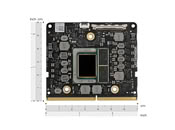
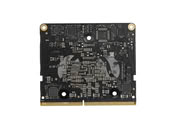
LattePanda Team today launched LattePanda Mu Ultra, a micro x86 compute module purpose-built for on-device AI. Powered by Intel Core Ultra 5 226V and Ultra 7 256V processors, it delivers up to 115 TOPS of AI performance in a compact 69.6 mm × 60 mm form factor. Built to address the hardware, compute, and software challenges of running AI locally, LattePanda Mu Ultra brings powerful AI computing to engineering teams, system integrators, and OEMs across robotics, industrial automation, portable instruments, vision AI, and a broad range of intelligent edge applications.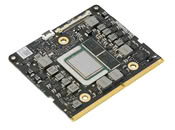


The Blood of Dawnwalker 2 Already in the Works
The Blood of Dawnwalker has been a notable success for Rebel Wolves, with the game crossing 1 million sales mere days after launch, and it seems as though the studio is looking to double-down on that success with Blood of Dawnwalker 2, which is seemingly already in development. This is confirmed in a recent LinkedIn post by Rebel Wolves Narrative Director, Jakub Szamalek, who says the studio is hiring a lead writer for "the next chapter in the Dawnwalker saga."
Obviously, if Rebel Wolves is still hiring the lead writer for the role, it means not much has been set in stone regarding the sequel, although the listing on the Polish job board, Skillshot, specifies that the writer should have the "ability to create interactive, non-linear stories and dialogues," and "familiarity with the history and folklore of Central and Eastern Europe." This suggests that the game will once again take a non-linear approach to story-telling and return to the Carpathean Mountains and perhaps further into the center of Europe.


Obviously, if Rebel Wolves is still hiring the lead writer for the role, it means not much has been set in stone regarding the sequel, although the listing on the Polish job board, Skillshot, specifies that the writer should have the "ability to create interactive, non-linear stories and dialogues," and "familiarity with the history and folklore of Central and Eastern Europe." This suggests that the game will once again take a non-linear approach to story-telling and return to the Carpathean Mountains and perhaps further into the center of Europe.



Redditor's AMD Ryzen 9 9950X3D Reportedly Dies Shortly After Changing Motherboards
A Ryzen 9 9950X3D has reportedly died just an hour after being moved into an ASUS ROG Crosshair X670E Hero motherboard. According to Reddit user SpecialistConcept423, posting in r/GamersNexus, the chip had been running fine for about a year and a half in an ASRock X670E Taichi Carrara before the swap. After switching to the new board, no manual overclocking or voltage tweaks were applied; only one of the board's built-in memory presets was enabled for a set of SK hynix 6200 MHz modules. After saving that setting and rebooting, the board threw a "00" Q-Code and refused to post. Pulling the CPU and inspecting it revealed two brown marks on its contacts, which all but confirmed the catastrophic failure.
Things got stranger when the user resorted to an older Ryzen 5 8500G that had previously worked fine on the same board. That chip apparently now throws a "4D" code too, pointing at the motherboard itself as the culprit, not just the CPU. There's no confirmation yet on whether a faulty BIOS, a bad batch of boards, or something else is to blame, and ASUS hasn't commented on this specific case. It is worth noting that the ASUS board was not new, and it had undergone USB-related repairs and a BIOS rewrite. The user has since contacted AMD in Brazil for an RMA, but has shared no updates yet.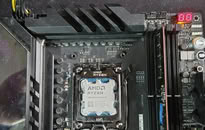
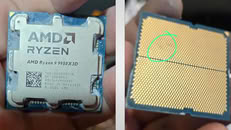
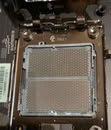
Things got stranger when the user resorted to an older Ryzen 5 8500G that had previously worked fine on the same board. That chip apparently now throws a "4D" code too, pointing at the motherboard itself as the culprit, not just the CPU. There's no confirmation yet on whether a faulty BIOS, a bad batch of boards, or something else is to blame, and ASUS hasn't commented on this specific case. It is worth noting that the ASUS board was not new, and it had undergone USB-related repairs and a BIOS rewrite. The user has since contacted AMD in Brazil for an RMA, but has shared no updates yet.


Framework Updates Laptop 13 Pro Pre-Orders Yet Again: Cheaper RAM Comes With Pricier Core Ultra X9 CPUs
Framework, the maker of repairable laptops and mini PCs, previously stirred up some controversy when it increased pre-order pricing on its Laptop 13 Pro after promising that the announced pricing would hold throughout pre-orders. Following that July price increase, however, Framework has revealed that it has once again dropped the price of pre-orders on the Framework Laptop 13 Pro, after it was able to secure a batch of LPCAMM2 memory at a lower price.
According to the latest update to Framework's RAMpocalypse tracker and updater page, the new Laptop 13 Pro pricing will not be lower than the original pre-orders, but it will be lower than the adjusted pricing after the previous price increase—that is to say, buyers will still be paying a higher price than expected, but it will not be as much higher. Framework will not only be reducing prices for currently available pre-orders, but it will be retroactively applying a discount to existing pre-orders and issuing partial refunds for pre-orders that have already been shipped at the higher price.
According to the latest update to Framework's RAMpocalypse tracker and updater page, the new Laptop 13 Pro pricing will not be lower than the original pre-orders, but it will be lower than the adjusted pricing after the previous price increase—that is to say, buyers will still be paying a higher price than expected, but it will not be as much higher. Framework will not only be reducing prices for currently available pre-orders, but it will be retroactively applying a discount to existing pre-orders and issuing partial refunds for pre-orders that have already been shipped at the higher price.

Keychron Updates K4 HE and K10 HE Wireless Keyboards with Wider Magnetic Switch Compatibility
The Keychron K4 HE and K10 HE have been go-to keyboard recommendations for those who want a decent combination of full-size or near full-size layout, magnetic switches, sleek design, and reasonable pricing, with the only caveat being that the K4 HE and K10 HE have always only been compatible with S-pole magnetic switches, coming equipped with Gateron Double-Rail Magnetic Nebula switches. Meanwhile, Keychron's more recent HE and TMR keyboards have switched to N-pole magnetic switches—the difference being that keyboards with N-pole switch compatibility offer significantly more choice, because they have seen much greater adoption among both switch and keyboard makers.
Now, Keychron has officially seemingly begun the switch to N-pole switches on its older models, with both the K4 HE and the K10 HE now offered with Keychron's Ultra-Fast Lime Magnetic switches as a default. This means that buyers of the new, revised version of the K4 and K10 HE keyboards will not only have a newer switch by default, they will also be able to use aftermarket HE switches from the likes of Wooting, Gateron, TTC, OwLab, Wuque Studio, and MMD, to name but a few. The caveat here is that existing K10 HE and K4 HE owners will not benefit from the updated SKU, and buyers will now need to be careful to buy the correct switch type when buying the updated keyboards.



Now, Keychron has officially seemingly begun the switch to N-pole switches on its older models, with both the K4 HE and the K10 HE now offered with Keychron's Ultra-Fast Lime Magnetic switches as a default. This means that buyers of the new, revised version of the K4 and K10 HE keyboards will not only have a newer switch by default, they will also be able to use aftermarket HE switches from the likes of Wooting, Gateron, TTC, OwLab, Wuque Studio, and MMD, to name but a few. The caveat here is that existing K10 HE and K4 HE owners will not benefit from the updated SKU, and buyers will now need to be careful to buy the correct switch type when buying the updated keyboards.



Pexar Launches PexarBolt Ultra TBT5 Dock With a 5-Inch Visual Dashboard on Kickstarter
Pexar, a smart device brand powered by Lexar, today launched its Kickstarter campaign for the PexarBolt Ultra TBT5 Dock, a 5-inch touch control dashboard designed with a simple goal: see your workflow, control your desk. Powered by Thunderbolt 5 and compatible with both macOS and Windows systems, the PexarBolt Dock provides up to 80 Gbps of bidirectional bandwidth, with Bandwidth Boost delivering up to 120 Gbps of transmit bandwidth for display-intensive workflows. A single Thunderbolt 5 cable connects to all 22 ports, including 10GbE, an NVMe slot, and CFexpress Type B.
The world's first touch control dashboard on a Thunderbolt 5 dock
The PexarBolt Dock integrates a 5-inch touch control dashboard that displays real-time status for every connected device. Users can monitor connection status, transfer activity, storage information, real-time power readings on supported ports, and the dock's temperature and fan status at a glance. Keeping this information directly on the dock makes it easier to check device activity and identify unexpected transfer slowdowns without interrupting the workflow. A precision metal dial enables tactile navigation and, within AI Status, lets users approve or reject requests from supported AI coding agents directly from the dock.
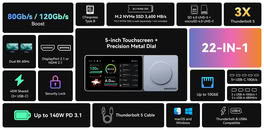
The world's first touch control dashboard on a Thunderbolt 5 dock
The PexarBolt Dock integrates a 5-inch touch control dashboard that displays real-time status for every connected device. Users can monitor connection status, transfer activity, storage information, real-time power readings on supported ports, and the dock's temperature and fan status at a glance. Keeping this information directly on the dock makes it easier to check device activity and identify unexpected transfer slowdowns without interrupting the workflow. A precision metal dial enables tactile navigation and, within AI Status, lets users approve or reject requests from supported AI coding agents directly from the dock.


FEVM Intros New Mini PCs With Desktop AMD or Intel CPUs and RTX 5090 Mobile GPUs
The latest mini PC maker to get in on the high-powered mini PC trend is FEVM, who, to its credit, previously launched a mini PC powered by AMD's impressive Strix Halo platform, with the new FA80G packing up to both an AMD Ryzen 9 9950X3D and an NVIDIA GeForce RTX 5090 Mobile into a mere 2.6 L chassis, while the FN80G swaps out the AMD Ryzen CPU for up to an Intel Core Ultra 7 270KP. What's more, the mini PC maker says that the cooling solutions in the FN80G and FA80G are capable of keeping both versions at below 85 °C on the CPU and 80 °C on the GPU while generating less than 42 dB of noise.
The new FEVM mini PCs, which measure 180 × 168 × 88 mm, both start with NVIDIA's RTX 5060 GPUs, with other configs including the desktop RTX 5060 Ti and 5080 Laptop GPUs. In the 5090 Mobile variants, the GPU is limited to 150 W, with combined CPU and GPU power topping out at 250 W. Both models ship as barebones unit, meaning buyers will need to bring their own RAM and SSDs, but the rest of the mini PC is also nothing to scoff at.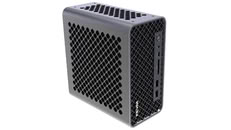
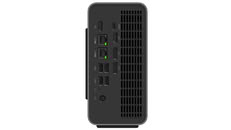
The new FEVM mini PCs, which measure 180 × 168 × 88 mm, both start with NVIDIA's RTX 5060 GPUs, with other configs including the desktop RTX 5060 Ti and 5080 Laptop GPUs. In the 5090 Mobile variants, the GPU is limited to 150 W, with combined CPU and GPU power topping out at 250 W. Both models ship as barebones unit, meaning buyers will need to bring their own RAM and SSDs, but the rest of the mini PC is also nothing to scoff at.



SteelSeries Introduces Aeon Pro, the World's First Quickswitch Dock System and Controller for Xbox and PC
Today's gamers play on multiple systems, including next-gen consoles and handhelds, custom PC gaming rigs, and the latest mobile devices, and they need the right gear to keep them in the game. They also need revolutionary advancements in innovation and technology to get the ultimate experience across their devices. Today, SteelSeries, the original esports brand that fuses gaming and culture, unveils the Aeon Pro - a new generation of luxury controllers for dual-threat players.
Featuring the world's first QuickSwitch Dock System for PC and XBOX (Patent Pending), an Infinite Power System with dual hot-swappable batteries so players are always ready to play, first-rate triggers and Hall Effect Thumbsticks that provide drift-free precision, complemented by mechanical switches throughout for fast, tactile inputs, and an Onboard OLED Screen that provides easy access to customized profiles. By fusing the perfect combination of intelligent design and features, elite performance, and a premium build, the Aeon Pro Controller is bringing harmonic control to PC and XBOX gamers.




Featuring the world's first QuickSwitch Dock System for PC and XBOX (Patent Pending), an Infinite Power System with dual hot-swappable batteries so players are always ready to play, first-rate triggers and Hall Effect Thumbsticks that provide drift-free precision, complemented by mechanical switches throughout for fast, tactile inputs, and an Onboard OLED Screen that provides easy access to customized profiles. By fusing the perfect combination of intelligent design and features, elite performance, and a premium build, the Aeon Pro Controller is bringing harmonic control to PC and XBOX gamers.



Xeron Launches New NEX A61 ARGB CPU Air Cooler
XERON, a technology brand guided by its "From Origin, Beyond Boundaries" philosophy of returning to first principles through purposeful design and user-focused innovation, introduces the NEX A61 ARGB, a next-generation single-tower air CPU cooler engineered around the thermal characteristics of AMD AM5 processors. Combining direct-touch heatpipes, triple-parallel-pipe precision coverage, and dual silent ring-blade fans, the NEX A61 ARGB is designed to manage concentrated heat from high-performance CPUs while maintaining low noise and broad platform compatibility.
The offset single-tower design provides improved memory clearance, allowing tall-profile RAM to be installed without compromise. Full-spectrum ARGB lighting, a magnetic top cover, and motherboard ARGB synchronization add a distinctive visual element, making the NEX A61 ARGB a versatile cooling solution for performance-focused and aesthetically driven PC builds.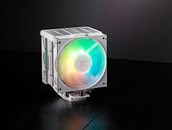


The offset single-tower design provides improved memory clearance, allowing tall-profile RAM to be installed without compromise. Full-spectrum ARGB lighting, a magnetic top cover, and motherboard ARGB synchronization add a distinctive visual element, making the NEX A61 ARGB a versatile cooling solution for performance-focused and aesthetically driven PC builds.



Corsair Launches New TC80 Gaming Chair
Corsair is delighted to announce the worldwide availability of the TC80, a comfortable gaming chair built for gamers, creators, and everyday users. Backed by more than 30 durability and safety tests, the TC80 combines ergonomic comfort with long-lasting reliability, giving users confidence that their chair will perform day after day.
The TC80 Gaming Chair meets BIFMA X5.1 and EN 1335 standards, reflecting its focus on safety, durability, and ergonomic support. A generously wide and flat seat, plush padding, and breathable fabric upholstery with leatherette accents provide lasting comfort during long gaming sessions, workdays, and everything in between. A detachable neck pillow adds optional support, while self-leveling armrests help maintain a comfortable position as users recline. Underneath, a steel 5-star base, 50 mm casters, and a steel Class 4 gas lift provide a strong and stable foundation for years of reliable use. The TC80 offers 100 mm of height adjustment alongside a smooth recline from 90° to 115°, allowing users to lock the chair at their preferred angle rather than being limited to preset angles. Adjustable recline tension lets users tailor the chair to their preference, while quick and easy assembly ensures users can get set up and start gaming in no time.
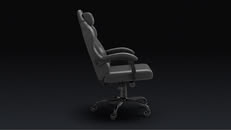


The TC80 Gaming Chair meets BIFMA X5.1 and EN 1335 standards, reflecting its focus on safety, durability, and ergonomic support. A generously wide and flat seat, plush padding, and breathable fabric upholstery with leatherette accents provide lasting comfort during long gaming sessions, workdays, and everything in between. A detachable neck pillow adds optional support, while self-leveling armrests help maintain a comfortable position as users recline. Underneath, a steel 5-star base, 50 mm casters, and a steel Class 4 gas lift provide a strong and stable foundation for years of reliable use. The TC80 offers 100 mm of height adjustment alongside a smooth recline from 90° to 115°, allowing users to lock the chair at their preferred angle rather than being limited to preset angles. Adjustable recline tension lets users tailor the chair to their preference, while quick and easy assembly ensures users can get set up and start gaming in no time.


GOG Preservation Program Adds Printable 3D Game Boxes and 5 New Games
GOG's Game Preservation Program has just surpassed 300 games in its support roster, as of September 8, when it officially added five new games to its list of preserved games. The new additions are Star Trek: 25th Anniversary, Armikrog, Descent, Hitman: Codename 47, and Myst. This means that those games will not only be preserved on GOG's servers, but that GOG will put actual software development resources towards making those games playable on modern systems—this often includes support for modern CPUs and GPUs, higher frame rates, and modern display aspect ratios and resolutions that were all previously unsupported.
In addition to the new games, which bring the GOG Preservation Program's library up to 304 total, GOG has announced a partnership with Big Box Collection, another preservation program that aims to preserve physical game art by 3D scanning game boxes and other physical media inside the boxes and storing it online as both a 3D model and a printable format that can be used to recreate the game art. As part of GOG's partnership with Big Box Collection, GOG's new games will also come with those 3D models for viewing on a PC or as printable versions for papercraft recreations. GOG has confirmed that the five new games will have Big Box Collection's art, but it's unclear how far this support extends at the time of writing.

In addition to the new games, which bring the GOG Preservation Program's library up to 304 total, GOG has announced a partnership with Big Box Collection, another preservation program that aims to preserve physical game art by 3D scanning game boxes and other physical media inside the boxes and storing it online as both a 3D model and a printable format that can be used to recreate the game art. As part of GOG's partnership with Big Box Collection, GOG's new games will also come with those 3D models for viewing on a PC or as printable versions for papercraft recreations. GOG has confirmed that the five new games will have Big Box Collection's art, but it's unclear how far this support extends at the time of writing.



Logitech Unveils MX Keypad for Developers: The Customizable Multi-App Control Center
Logitech (SIX: LOGN) (NASDAQ: LOGI) today announced MX Keypad, the AI control center designed for multi-app, multi-agent coding to put developers in command of their evolving workflows.
Unlike other solutions on the market, MX Keypad offers cross-app compatibility with major coding platforms, allowing for unlimited customization tailored to each individual workflow. This unique level of versatility and personalization allows coders to unify their AI workflows, complex prompts, and dev tools, for a continuous, uninterrupted flow across their entire stack. MX Keypad includes a selection of plugins, created and tested by developers, for GitHub Copilot and Claude Code.



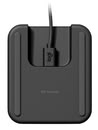
Unlike other solutions on the market, MX Keypad offers cross-app compatibility with major coding platforms, allowing for unlimited customization tailored to each individual workflow. This unique level of versatility and personalization allows coders to unify their AI workflows, complex prompts, and dev tools, for a continuous, uninterrupted flow across their entire stack. MX Keypad includes a selection of plugins, created and tested by developers, for GitHub Copilot and Claude Code.


Manli Intros UF (Unlimited Firepower) GeForce RTX 50 Graphics Cards Series
Manli is marking its 30th anniversary with the launch of the UF (Unlimited Firepower) series, a new graphics card lineup that joins its existing Nebula, Stellar, Polar Fox, and Gallardo families. Currently, it seems that two models are available at launch, both based on NVIDIA Blackwell architecture: the Manli UF GeForce RTX 5060 OC and the UF RTX 5060 Ti OC. Both are 2-slot cards measuring 324 x 143 x 42 mm with triple 92 mm fans, an aluminium baseplate, large radiators, and three 6 mm composite copper heatpipes. Idle fan stop is supported. Both graphics cards have 8 GB GDDR7 memory with a 128-bit interface, 28 Gbps speed, and 448 GB/s bandwidth. For connectivity, three DisplayPort outputs and one HDMI are available. On the GPU side, the RTX 5060 OC has 3,840 CUDA cores at 2280/2550 MHz base/boost and draws 145 W. The RTX 5060 Ti OC steps up to 4,608 CUDA cores at 2407/2632 MHz base/boost and a 180 W TDP.
A notable feature on both cards is G-Sense, a built-in tilt sensor that monitors GPU alignment in real time and sends alerts through a new Manli App if abnormal sag is detected. The app also handles ARGB customization and hardware monitoring. No pricing or store availability has been announced yet.


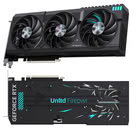

A notable feature on both cards is G-Sense, a built-in tilt sensor that monitors GPU alignment in real time and sends alerts through a new Manli App if abnormal sag is detected. The app also handles ARGB customization and hardware monitoring. No pricing or store availability has been announced yet.


Valheim 1.0 Launches After 5 Years in Early Access
Valheim launched into Steam Early Access in February 2021 and quickly garnered attention, launching with over 500,000 peak concurrent players on Steam and still counting over 20,000 daily concurrent players at the time of writing. Now, over five years after the Early Access launch, the open-world survival-craft game is finally launching out of Early Access, with a slew of new content and a new biome in-tow.
Aside from new content, including weapons, new traversal options, a new dungeon type, and a new mount, among others, Valheim 1.0 also sees the game get an official Nintendo Switch 2 and PlayStation 5 launch, and it makes cross-play available for all platforms. The update officially launches on September 9 on all platforms, including Windows, Linux, macOS, the Xbox One, Xbox Series X|S, PlayStation 5, and Nintendo Switch 2.



Aside from new content, including weapons, new traversal options, a new dungeon type, and a new mount, among others, Valheim 1.0 also sees the game get an official Nintendo Switch 2 and PlayStation 5 launch, and it makes cross-play available for all platforms. The update officially launches on September 9 on all platforms, including Windows, Linux, macOS, the Xbox One, Xbox Series X|S, PlayStation 5, and Nintendo Switch 2.


Modders Rework DLSS 5's Rendering Pipeline For a Big Performance Boost
Modders have found a way to cut the huge performance cost of NVIDIA's DLSS 5 Neural Rendering. The fix involves reworking the DLSS 5 rendering order so that neural rendering runs before upscaling. The mod, called Neural Upstream and built by matiasLombo, now works through DLSS5-Autopilot, a community tool similar to DLSS 5 Swapper, that runs Neural Rendering in games NVIDIA never officially supported. A Redditor tested this fix on an RTX 4080 in Assassin's Creed Shadows at 4K with DLSS Performance. Switching from NVIDIA's standard pipeline to Neural Upstream reportedly pushed frame rates from 31 FPS up to around 50 FPS, compared to 63 FPS with the effect off entirely.
The trick comes down to where NVIDIA placed Neural Rendering in the pipeline. It normally runs last, on the fully upscaled 4K frame, which is why the cost balloons at higher resolutions. This is an issue the modders already ran into when they first got Neural Rendering working on RTX 40-series cards. Neural Upstream instead applies it to the lower-resolution frame before DLSS Super Resolution scales it up, similar to how Performance and Quality presets already work for regular upscaling. It looks like NVIDIA leaned toward image fidelity in the standard application, so the trade-off is a further hit to visual quality on top of DLSS 5's existing "uncanny valley" issues.
The trick comes down to where NVIDIA placed Neural Rendering in the pipeline. It normally runs last, on the fully upscaled 4K frame, which is why the cost balloons at higher resolutions. This is an issue the modders already ran into when they first got Neural Rendering working on RTX 40-series cards. Neural Upstream instead applies it to the lower-resolution frame before DLSS Super Resolution scales it up, similar to how Performance and Quality presets already work for regular upscaling. It looks like NVIDIA leaned toward image fidelity in the standard application, so the trade-off is a further hit to visual quality on top of DLSS 5's existing "uncanny valley" issues.


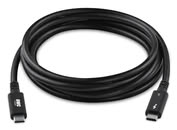
OWC Announces Thunderbolt 5 Dock With Dual HDMI and New 1.5-Meter Thunderbolt 5 (USB-C) Cables
Other World Computing (OWC), a trusted leader in high-performance storage, memory, connectivity, software, and accessories that empower creative and business professionals to maximize performance, enhance reliability, and streamline workflows, today announced two important additions to its unrivaled roster of Thunderbolt 5 solutions: the OWC Thunderbolt 5 Dock with Dual HDMI, and the Thunderbolt 5 (USB-C) Cable now available in a 1.5-meter length.
With the OWC Thunderbolt 5 Dock with Dual HDMI one connection provides the displays, storage performance, networking, power, and connectivity of an enterprise-class desktop workstation - without the need for a pile of adapters and workarounds. Its key features include:
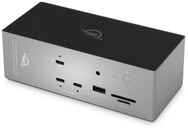

With the OWC Thunderbolt 5 Dock with Dual HDMI one connection provides the displays, storage performance, networking, power, and connectivity of an enterprise-class desktop workstation - without the need for a pile of adapters and workarounds. Its key features include:
- No More Adapter Hunting: Two HDMI 2.1 ports built right in. Any monitor that has HDMI plugs directly into the dock with zero compatibility guesswork.
- Everything Through One Cable: A single Thunderbolt 5 connection delivers dual displays, wired networking, storage, card readers, and full laptop charging simultaneously.
- 140 W Power Delivery: Keeps MacBook Pros and high-performance Windows laptops fully charged at peak performance while running the entire connected setup.
- Fast Device Charging: The front USB-C port delivers up to 30 W of charging for your smartphone or tablet while you work.



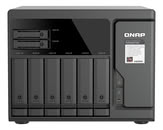
QNAP Unveils TVS-hx77AX Enterprise Hybrid ZFS NAS Series With AMD Ryzen 7000
QNAP Systems, Inc., a leading computing, networking, and storage solution innovator, today announced the new TVS-hx77AX enterprise hybrid ZFS NAS series. Comprising the 16-bay TVS-h1677AX, 12-bay TVS-h1277AX, and 8-bay TVS-h877AX, this lineup is powered by AMD Ryzen 7000 series processors and DDR5 memory. Featuring native NFS over RDMA support, the series is engineered for high-load AI model training, virtualization, and 4K video collaboration, setting a new performance benchmark for desktop NAS form factors.
Compute Core: Zen 4 Architecture and DDR5 Synergy
Powered by AMD Ryzen 7000 series processors based on the cutting-edge Zen 4 architecture, the TVS-hx77AX series delivers a significant boost in Instructions Per Clock (IPC) performance. Paired with up to 192 GB of DDR5 memory (ECC optional), the NAS effortlessly handles concurrent virtual machines (VMs), containerized application development, and high-throughput data decompression workloads.


Compute Core: Zen 4 Architecture and DDR5 Synergy
Powered by AMD Ryzen 7000 series processors based on the cutting-edge Zen 4 architecture, the TVS-hx77AX series delivers a significant boost in Instructions Per Clock (IPC) performance. Paired with up to 192 GB of DDR5 memory (ECC optional), the NAS effortlessly handles concurrent virtual machines (VMs), containerized application development, and high-throughput data decompression workloads.



Razer Introduces the Reclusa X Mini 65% Mechanical Gaming Keyboard
Razer, the leading global lifestyle brand for gamers, today announced the Razer Reclusa X Mini 65%, the first mechanical gaming keyboard in the new Reclusa lineup designed for enthusiasts who care about how every keystroke sounds, feels, and performs.
Built around the philosophy of "Your Board. Your Rules.", the Reclusa line marks a new chapter for Razer keyboards: a satisfying out-of-box experience with the freedom to personalize and evolve over time.


Built around the philosophy of "Your Board. Your Rules.", the Reclusa line marks a new chapter for Razer keyboards: a satisfying out-of-box experience with the freedom to personalize and evolve over time.


Wooting Officially Announces 80HE+ Gaming Keyboard With Split Spaces and Myriad Upgrades
Wooting has been teasing a number of updates to its 80HE TKL gaming keyboard for a number of months, including a split space layout and the giant knobs that were shown off as early as May 2025. Some of the upgrades to the 80HE+ are carry-overs from the 60HE V2, like the new FR4 plate and the option to have split space bars in the same 2.75/1.25/2.25 u configuration, but others are unique to the 80HE+. The new 80HE+ and the Lekker Large knob will be available for pre-order on September 17, but shipping is expected to start in mid-October.
[Editor's note: Our in-depth review of the Wooting 80HE is live]
Pricing will remain the same as the current 80HE line-up, with the exception of the module, which will be slightly cheaper than before and includes a daughterboard for custom builds. Wooting also says that the zinc case models have been made more durable, following the slew of issues Wooting previously faced with the coating, and the preassembled zinc model now ships as standard with the 4 u Lekker Large knob. The zinc module SKU, will not be sold with a knob included, but the knob will be available to module buyers at a discounted price.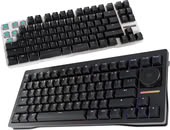

[Editor's note: Our in-depth review of the Wooting 80HE is live]
Pricing will remain the same as the current 80HE line-up, with the exception of the module, which will be slightly cheaper than before and includes a daughterboard for custom builds. Wooting also says that the zinc case models have been made more durable, following the slew of issues Wooting previously faced with the coating, and the preassembled zinc model now ships as standard with the 4 u Lekker Large knob. The zinc module SKU, will not be sold with a knob included, but the knob will be available to module buyers at a discounted price.



Samsung Electronics and ASML Expand Collaboration for Next-Generation Semiconductor Manufacturing
Samsung Electronics and ASML today announced an expansion of their long-standing strategic partnership, deepening collaboration on High NA EUV lithography and advanced semiconductor manufacturing technologies that will help drive the next generation of innovation in the AI era.
Building on years of successful cooperation, the companies will work together to accelerate the development and deployment of technologies that support the increasing performance and efficiency requirements of advanced semiconductor manufacturing.
Building on years of successful cooperation, the companies will work together to accelerate the development and deployment of technologies that support the increasing performance and efficiency requirements of advanced semiconductor manufacturing.


TSMC and ASML Announce Initiative to Pioneer Industry Transition to Large-Format Photomasks for High NA EUV
ASML Holding N.V. (Euronext: ASML, Nasdaq: ASML) and Taiwan Semiconductor Manufacturing Company (TWSE: 2330, NYSE: TSM) announced a collaborative initiative to lead the semiconductor industry's transition to a larger-format Extreme Ultraviolet (EUV) lithography photomask.
While High NA EUV will be adopted for production using the current, 6-inch masks, the transition to larger, 12-inch masks is expected to further increase fab productivity, lower chipmaking costs and remove stitching constraints, benefiting the entire semiconductor industry. It will enable advanced chip manufacturers to fully leverage the advantages of High NA EUV, making future generations of leading-edge chips more cost-effective.
While High NA EUV will be adopted for production using the current, 6-inch masks, the transition to larger, 12-inch masks is expected to further increase fab productivity, lower chipmaking costs and remove stitching constraints, benefiting the entire semiconductor industry. It will enable advanced chip manufacturers to fully leverage the advantages of High NA EUV, making future generations of leading-edge chips more cost-effective.


Phanteks Introduces the EX5 PC Chassis Series
Phanteks is proud to introduce the EX5 lineup, the first chassis models announced in the new EX Series. First showcased at Computex 2026, the EX5 lineup features an innovative compartmentalized architecture that delivers a fresh approach to PC chassis design, combining distinctive aesthetics with purposeful airflow. As the cost of building a high-performance PC continues to rise, the EX5 lineup is designed to help builders reduce overall system costs while maintaining efficient cooling.
Breaking away from the traditional "fish tank" layout, the EX5 organizes key components into dedicated chambers, delivering fresh airflow directly where it is needed while efficiently exhausting heat throughout the chassis. This optimized airflow design reduces the need for excessive fan configurations, helping builders reduce the number of additional case fans required while maintaining efficient airflow throughout the chassis. A strategically positioned rear mainboard fan provides direct airflow to the VRM and RAM while helping direct GPU heat away from surrounding components.



Breaking away from the traditional "fish tank" layout, the EX5 organizes key components into dedicated chambers, delivering fresh airflow directly where it is needed while efficiently exhausting heat throughout the chassis. This optimized airflow design reduces the need for excessive fan configurations, helping builders reduce the number of additional case fans required while maintaining efficient airflow throughout the chassis. A strategically positioned rear mainboard fan provides direct airflow to the VRM and RAM while helping direct GPU heat away from surrounding components.


NVIDIA Reportedly Preparing GeForce RTX 5070 Variant With Bigger GB203 Die
NVIDIA appears to be preparing a new variant of the RTX 5070, this time built on the bigger GB203 die instead of the GB205 chip the card has shipped with since launch. The information comes from leaker hongxing2020, who also mentioned a new driver arriving on September 9, though it's not clear if that's tied to this specific SKU. This wouldn't be the first time NVIDIA has done this. The GeForce RTX 5060 normally runs on the GB206 die, but some retail units turned up with GB205 silicon instead, cut down to match the same specs. The jump to GB203 is a much bigger one for the RTX 5070, though. It's the same chip used in the RTX 5070 Ti and RTX 5080, measuring 378 mm² against the GB205's 263 mm².
To match the RTX 5070's 6,144 CUDA cores and 12 GB of GDDR7 on a 192-bit bus, NVIDIA would need to disable nearly 43% of the GB203's cores and shut off two of its eight memory channels. The likely explanation for this change is binning. GB203 dies that fall short of RTX 5070 Ti or RTX 5080 requirements probably still work fine at RTX 5070 specs, so NVIDIA gets to use them instead of scrapping them. There's no indication the GB203 variant will actually perform any better than the current GB205-based RTX 5070, since the specs are expected to stay the same either way. Board partners haven't said anything yet, so it's still worth treating this as a rumor until a retail card or driver listing actually confirms it.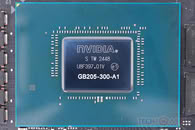
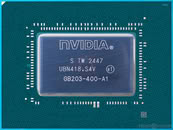
To match the RTX 5070's 6,144 CUDA cores and 12 GB of GDDR7 on a 192-bit bus, NVIDIA would need to disable nearly 43% of the GB203's cores and shut off two of its eight memory channels. The likely explanation for this change is binning. GB203 dies that fall short of RTX 5070 Ti or RTX 5080 requirements probably still work fine at RTX 5070 specs, so NVIDIA gets to use them instead of scrapping them. There's no indication the GB203 variant will actually perform any better than the current GB205-based RTX 5070, since the specs are expected to stay the same either way. Board partners haven't said anything yet, so it's still worth treating this as a rumor until a retail card or driver listing actually confirms it.


Intel Foundry Achieves Milestone with One Million High-NA EUV Wafers
Intel has officially processed one million 300 mm silicon wafers using High Numerical Aperture (High NA) Extreme Ultraviolet (EUV) lithography, as confirmed by the company yesterday. Using High-NA in silicon manufacturing presents many challenges due to the additional complexity it introduces, but for Intel, the opposite is true. Initially, Intel installed ASML's TWINSCAN EXE:5000 High-NA EUV systems in 2024 for research and testing of the 14A node. However, since then, Intel has found more useful ways to employ High-NA tools beyond the 14A node, extending their use to the 18A node, which was previously believed to be exclusive to 14A.
For a select subset of "Panther Lake" SKUs, Intel is etching a few layers of silicon using High-NA exposure, instead of solely relying on Low-NA. Furthermore, Intel is offering this High-NA setup to external customers, as it could be beneficial for them as well. In collaboration with ASML, Intel has completed acceptance testing at Intel Foundry for its 14A node to enhance wafer output. This is done using TWINSCAN EXE:5200B, which is ASML's second version of High-NA EUV scanners, following the TWINSCAN EXE:5000 that Intel initially used for its 14A trial runs. Intel previously reported processing over 30,000 wafers in a single quarter, achieving simplified manufacturing by reducing the steps needed for a specific layer from 40 to fewer than 10, resulting in significantly faster cycle times.
For a select subset of "Panther Lake" SKUs, Intel is etching a few layers of silicon using High-NA exposure, instead of solely relying on Low-NA. Furthermore, Intel is offering this High-NA setup to external customers, as it could be beneficial for them as well. In collaboration with ASML, Intel has completed acceptance testing at Intel Foundry for its 14A node to enhance wafer output. This is done using TWINSCAN EXE:5200B, which is ASML's second version of High-NA EUV scanners, following the TWINSCAN EXE:5000 that Intel initially used for its 14A trial runs. Intel previously reported processing over 30,000 wafers in a single quarter, achieving simplified manufacturing by reducing the steps needed for a specific layer from 40 to fewer than 10, resulting in significantly faster cycle times.


CXMT and YMTC Stockpile ASML Tools for Three-Year Expansion Plans
Chinese memory and storage makers have reportedly stockpiled enough lithography tools from ASML to ensure their expansion plans for the next three years, even if they are cut off from the supply chain. According to a report from the Financial Times, memory maker CXMT and storage giant YMTC have secured sufficient DUV lithography tools from ASML to support their growth plans for the next three years, despite increasing tensions and potential bans on exporting these older DUV tools to China. The United States government is reportedly pressuring the Dutch government to completely halt tool exports to China.
In a new bipartisan bill called the Multilateral Alignment of Technology Controls on Hardware (MATCH) Act, the US government is considering forcing allied countries to implement a technological ban on exporting even the older DUV machines. This could mean that ASML might nearly cease all exposure to China, as the older DUV tools are targeted by US export restrictions. For ASML, this means that nearly one-fifth of its projected revenue for this year could suddenly disappear if the bill is passed.
In a new bipartisan bill called the Multilateral Alignment of Technology Controls on Hardware (MATCH) Act, the US government is considering forcing allied countries to implement a technological ban on exporting even the older DUV machines. This could mean that ASML might nearly cease all exposure to China, as the older DUV tools are targeted by US export restrictions. For ASML, this means that nearly one-fifth of its projected revenue for this year could suddenly disappear if the bill is passed.

Mod Revives Multi-GPU Gaming With Dedicated DLSS 5 GPU for Impressive FPS Gain
If you were around during what many consider the golden age of PC gaming, back when SLI was still possible, and, going back even further, when gamers put dedicated PhysX cards into their PCs, the latest trick shown off by modder, Marcelo Guibout, on YouTube. Guibot showed off a gaming setup using two NVIDIA RTX 5060 Ti 16 GB GPUs in tandem to split the rendering and Neural Rendering workloads.
[Editor's note: Our in-depth analysis of the DLSS 5 model leaked in the NBA2K27 and in use here is now live]
Similarly to the example of PhysX cards, the idea is to split the workloads between two GPUs, theoretically allowing for improved performance on the GPU doing the primary rendering, since it will be able to use resources on raster or ray tracing rendering that might otherwise be used for DLSS 5 Neural Rendering. With the Neural Coprocessor enabled using the multi-GPU processing setup, frame rates improved anywhere from 59% to 125% compared to running DLSS 5 on the same GPU—performance was still down compared to DLSS 5 off, however.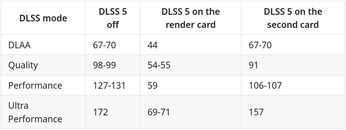
[Editor's note: Our in-depth analysis of the DLSS 5 model leaked in the NBA2K27 and in use here is now live]
Similarly to the example of PhysX cards, the idea is to split the workloads between two GPUs, theoretically allowing for improved performance on the GPU doing the primary rendering, since it will be able to use resources on raster or ray tracing rendering that might otherwise be used for DLSS 5 Neural Rendering. With the Neural Coprocessor enabled using the multi-GPU processing setup, frame rates improved anywhere from 59% to 125% compared to running DLSS 5 on the same GPU—performance was still down compared to DLSS 5 off, however.

Monday, September 7th 2026
Today's Reviews
CPU Coolers
Gaming PC
Graphics Cards
Monitors

Gigabyte MO27Q28GR Review - Gloss Without the Glare
Gigabyte's MO27Q28GR pairs a 280 Hz fourth-generation tandem WOLED panel with a RealBlack Glossy coating that finally makes a glossy OLED workable in a normally lit room. It also hits the highest peak brightness we have measured on an OLED monitor, and there's an even better feature.

FSP Dagger PM 1200W Review
FSP has crammed a 1200 W power output into an SFX-L enclosure using 0.7 mΩ Infineon MOSFETs and direct casing heat dissipation. On paper, it packs full ATX 3.1 compliance, a native 12V-2x6 cable, and dual 8-pin CPU support into a size usually reserved for lower-power builds.
Japanese Retailer Predicts Further GPU Price Hikes
We recently reported that NVIDIA's RTX 50-series GPU prices rose by a median 41% between August and July 2026, putting the RTX 5090 at a whopping $4,700+. However, it seems as though the DRAM and GPU crisis is not quite done emptying the pockets of gamers just yet. According to one Japanese retailer, Applied Group (アプライド), GPU prices are slated to rise in the coming months or weeks yet again.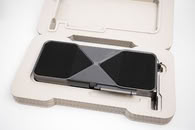
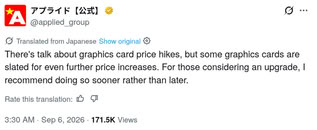
Applied Group on X (machine translated)There's talk about graphics card price hikes, but some graphics cards are slated for even further price increases. For those considering an upgrade, I recommend doing so sooner rather than later.


Intel Set to Raise CPU Prices by Another 10% in October
Intel is reportedly planning another 10% price increase on PC CPUs in October, according to DIGITIMES. This would be the latest in a string of price hikes made in stages over the past year. The report doesn't specify whether this price increase will affect only desktop CPUs or whether mobile CPUs will also be included. Industry sources cited by the outlet say the goal is to improve gross margin rather than growing market share. That would be especially important, since global PC shipments are expected to dip slightly from 260 million to about 250 million units in 2027, even as prices continue to climb. If Intel can push CPU shipments back up toward 200 million units, DIGITIMES estimates its market share could recover to roughly 78%.
The report also claims Intel is considering ending its low-margin Small Core product line entirely, which could open the door for Qualcomm and MediaTek to expand further into the industrial PC and IoT chip markets that Intel currently leads. On staffing, sources suggest another 5% to 10% of the workforce could be cut, following Intel's trim of its Data Center and AI group in July. Headcount reportedly sits around 75,000 now, though the same sources say Intel plans to keep hiring alongside any cuts, and that its current size is already reasonable.
The report also claims Intel is considering ending its low-margin Small Core product line entirely, which could open the door for Qualcomm and MediaTek to expand further into the industrial PC and IoT chip markets that Intel currently leads. On staffing, sources suggest another 5% to 10% of the workforce could be cut, following Intel's trim of its Data Center and AI group in July. Headcount reportedly sits around 75,000 now, though the same sources say Intel plans to keep hiring alongside any cuts, and that its current size is already reasonable.


Rockstar May Move GTA 6 PC Launch in Response to Expected Console Shortages
It has long been thought that there would be a long delay between the console and PC launches of Grand Theft Auto VI—GTA V launched to consoles a whole two years ahead of the PC port—however, the unprecedented times facing the PC and console hardware markets may be enough to pressure Rockstar into moving the PC launch of GTA VI ahead, according to recent rumors.
In a recent appearance on the VGC Podcast, Andy Robinson mentioned during a discussion about the ongoing gaming hardware situation that he thinks "they'll push the PC version up," referring to GTA VI. He went on to say that "There's a bit of noise about that. That perhaps the PC version might arrive sooner than some people might expect, just because of everything that's going on," suggesting high demand—some of which is induced by GTA VI itself—may drive Rockstar Games to release the PC port sooner.
In a recent appearance on the VGC Podcast, Andy Robinson mentioned during a discussion about the ongoing gaming hardware situation that he thinks "they'll push the PC version up," referring to GTA VI. He went on to say that "There's a bit of noise about that. That perhaps the PC version might arrive sooner than some people might expect, just because of everything that's going on," suggesting high demand—some of which is induced by GTA VI itself—may drive Rockstar Games to release the PC port sooner.


Xbox Game Pass Appears to Be Testing Dynamic Pricing
Xbox Game Pass Ultimate is apparently getting a personalized price test, at least for some subscribers. A Reddit post from user synthlov3r on r/XboxGamePass shows an offer of $16.09 per month for Game Pass Ultimate, locked in for 12 months before reverting to the standard $22.99 rate. That works out to $193.08 for the year, roughly $82.80 less than paying the regular monthly price the whole way through. Other users replying to the same thread reported different numbers, with some seeing offers closer to $18 or $20 a month. One commenter mentioned that their secondary account received the discount while their main account didn't, which suggests account-level targeting.
Xbox Game Pass Ultimate dropped from $29.99 to $22.99 back in April, after subscriber numbers reportedly took a hit following the earlier price hike. Under CEO Asha Sharma, Xbox has already signaled interest in making Game Pass pricing more flexible, so personalized discounts aimed at lapsed or price-sensitive subscribers would fit that direction. Microsoft hasn't confirmed any of this as an official pricing program yet, so treat these figures as anecdotal for now, even if the pattern checks out across multiple reports.

Xbox Game Pass Ultimate dropped from $29.99 to $22.99 back in April, after subscriber numbers reportedly took a hit following the earlier price hike. Under CEO Asha Sharma, Xbox has already signaled interest in making Game Pass pricing more flexible, so personalized discounts aimed at lapsed or price-sensitive subscribers would fit that direction. Microsoft hasn't confirmed any of this as an official pricing program yet, so treat these figures as anecdotal for now, even if the pattern checks out across multiple reports.


League of Legends MMO Still in Development Despite 2XKO's Ill Fate
It's no secret that Riot Games has been working on an MMO set in the League of Legends universe, but there have been questions surrounding the fate of that game, given the poor performance and subsequent cessation of development of 2XKO, its League of Legends-flavored tag-team fighting game. In a new panel at PAX West, Riot Games co-founder, Marc Merrill, addressed a fan question about the future of the League MMO, shedding light on its future.
Merrill basically confirmed that the game is still in development, but his comments also suggest that it hasn't been the easiest genre to develop. "We know what players' hopes and dreams are, and it's on us as a team: Can we exceed in the execution, you know?" He goes on to suggest that the MMO is "the Holy Grail," and that it may be a difficult path, but that "the future's incredibly bright." The YouTube video with the full panel appearance at PAX is embedded below.
Merrill basically confirmed that the game is still in development, but his comments also suggest that it hasn't been the easiest genre to develop. "We know what players' hopes and dreams are, and it's on us as a team: Can we exceed in the execution, you know?" He goes on to suggest that the MMO is "the Holy Grail," and that it may be a difficult path, but that "the future's incredibly bright." The YouTube video with the full panel appearance at PAX is embedded below.

Windows 11 Seems to Be Getting a Battery Widget for the Lock Screen and Widgets Board
Microsoft appears to be working on a battery status widget for Windows 11 that would show the charge level of your PC alongside any connected wireless accessories in one place. First spotted on Discord, references to the battery status widget were found in recent preview builds, though the feature isn't functional yet. The widget is designed to appear on both the Widgets Board and the lock screen, with light and dark theme variants already present in the build's assets. It would list the PC's own battery at the top, followed by connected peripherals like Bluetooth mice, keyboards, or headphones, each shown with its own icon, name, and battery percentage. It also looks like it will indicate the charging status and whether Energy Saver is enabled for a given device.
It's a fairly obvious addition and, honestly, quite overdue. Android and iOS have offered similar battery overviews for years, so Windows 11 catching up here isn't exactly groundbreaking. The Widgets Board has struggled to find a real purpose since launching in 2021, with only a handful of apps, such as Phone Link, OneDrive, and Weather, making good use of the space. A genuinely helpful system widget like this one might finally give people a reason to open it. Since none of this is live yet, there's no word on when Microsoft plans to ship it, or whether the lock screen version will roll out at the same time as the Widgets Board one.
It's a fairly obvious addition and, honestly, quite overdue. Android and iOS have offered similar battery overviews for years, so Windows 11 catching up here isn't exactly groundbreaking. The Widgets Board has struggled to find a real purpose since launching in 2021, with only a handful of apps, such as Phone Link, OneDrive, and Weather, making good use of the space. A genuinely helpful system widget like this one might finally give people a reason to open it. Since none of this is live yet, there's no word on when Microsoft plans to ship it, or whether the lock screen version will roll out at the same time as the Widgets Board one.

Loading more posts, please wait...
Sep 9th, 2026 15:16 EDT
change timezone
Latest GPU Drivers

New Forum Posts
- My impression after a quick read of my first Network Cyber Security book and questions. (1)
- X299 Owners Club (235)
- Guidance on new build (270K Plus / ATX motherboard) (14)
- need an ide to sata adapter that lets me burn cds on an ide cdrw drive (that doesn't power down while burning or copying) (45)
- Building my nephew's new PC (72)
- DLSS 5 - Examples and discussion (428)
- DTS DCH Driver for Realtek HDA [DTS:X APO4 + DTS Interactive] (2749)
- Logitech G903, sticky LMB even after switching. (28)
- 9800x3D in a custom loop, insanely high temperatures (139)
- Thanks for not plastering ads everywhere (8)

Popular Reviews
- EZDIY-FAB Alpha TS13 Review - Watching Your 16-Pin
- Gigabyte MO27Q28GR Review - Gloss Without the Glare
- Fractal Design Refine 2 Review - Nearly perfect, but worth the price?
- The Blood of Dawnwalker Handheld Performance Review
- FSP Dagger PM 1200W Review
- NVIDIA DLSS 5 Technical Preview - Neural Rendering is Here
- Upcoming Hardware Launches 2026 (Updated Jul 2026)
- Star Wars: Zero Company Performance Benchmark Review - 35 GPUs Tested
- Fractal Design Summit Ambience Blackout TG Review
- Bosgame M5 Review
TPU on YouTube
Controversial News Posts
- DLSS 5 Testing Ends in a Melted RTX 5090 Connector, Power Shoots Past 600 W (307)
- NVIDIA RTX 50 Series Median Prices Jump Up to 41% in August, with MSRP Now a Distant Dream (195)
- AMD Ryzen 7 7800X3D Swells and Burns Again, This Time on an ASUS Crosshair X670E Hero (160)
- Sony Legally Argues That Digital Game Ownership Is Not Plausible (143)
- Leaked DLSS 5 Reaches RTX 30 Series "Ampere" GPUs, But Performance Falls Apart (143)
- AMD Gains Ground as Intel x86 Market Share Goes Back to 1995 Levels (119)
- AMD Confirms Radeon RX 9050 4 GB Has Smaller Infinity Cache, Lower Memory Bandwidth (118)
- Intel "Nova Lake-S" 28-Core SKU With bLLC to Draw Nearly 300 W at PL2 (112)
