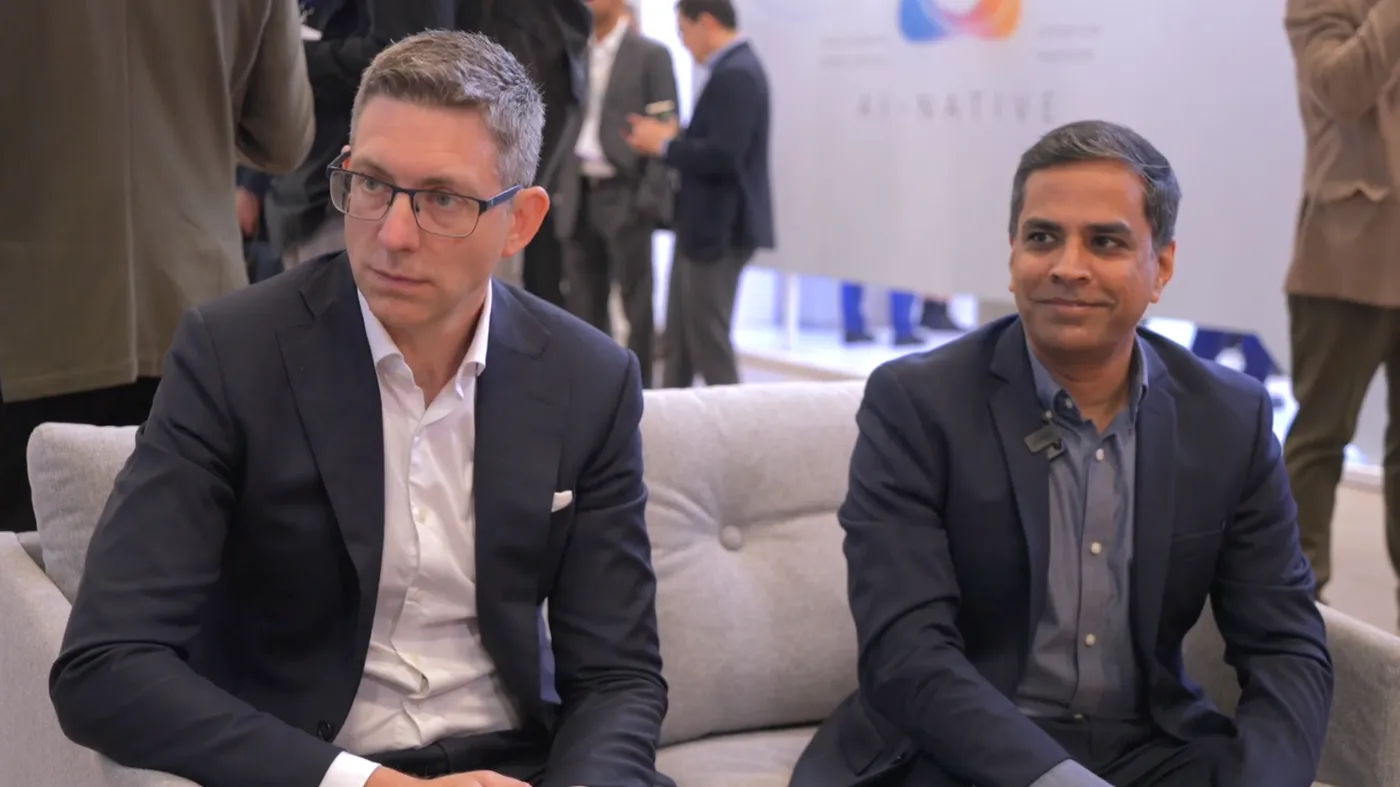
The legacy of Börje Ekholm, who officially steps down from the CEO job at Ericsson this week, will forever be linked to the resuscitation of the Swedish company for the subsequent rollout of 5G. But his successor, Per Narvinger, might not ultimately thank him for describing 6G as a mere "evolution" of that technology in early 2025.
Until 5G, each new mobile generation was supposed to be revolutionary, as different from its forerunner as millennials are from boomers, to justify the necessary spending – mass-market voice and texts with 2G, basic Internet services with 3G, a new waveform and high-speed video with 4G, and so on. The suggestion 6G is just a network improvement, like bigger screens or longer-lasting batteries are in smartphones, could be a major dampener that brings the famous/infamous upgrade cycle to a close.
Ekholm, of course, would have been conscious of customer surliness about 5G. Before launches, it was dressed up as a technology that would aid remote surgery and be needed in self-driving cars. Used in all varieties of objects, it would be far too economically and societally critical for Chinese vendors to be allowed anywhere near it, said US politicians. It has ended up as nothing more than an improvement on 4G, providing new spectrum and extra capacity on clogged mobile networks. The operators that spent billions on it are dissatisfied with the returns.
Related:For Ericsson boss, 'evolutionary' 6G puts end to Gs cycle
The remarks of the Ericsson boss can, therefore, be seen as a response to customers who are in no mood for another generational splurge. Several years ago, when 6G was still an unfertilized egg, academics dreamt of networks that would convey smell, taste and touch – as well as sight and sound. Parts of the industry still chatter excitedly about the need for 6G to connect robots and AI. But these increasingly seem like 5G's remote surgery, a wacky use case unlikely to be realized at scale. The bolder visions are fading. Voicing their demands through the Next Generation Mobile Network Alliance (NGMN), many telcos are instead asking for a modified technology on the same basic engine.
Caring about sharing
Accordingly, a recent plenary meeting in Madrid convened by the 3GPP, the umbrella group for the world's standards bodies, was all about the somewhat banal practicalities of introducing 6G into the networks of operators that have soured on generational change. Various options are still being discussed. But stakeholders appear to have agreed on a "baseline" for 6G's rollout that is already producing some friction.
Related:6G talks raise more questions about 5G migration options
That baseline would use a system called multi-RAT spectrum sharing (MRSS), where RAT stands for radio access technology. Essentially, it would allow 6G to be deployed in 5G spectrum bands, dynamically allocating frequency resources between the two generations. "Because it's dynamic, you can reuse your 5G spectrum as 6G or 5G, depending on how many devices there are," said Gabriel Brown, a principal analyst with Omdia, a Light Reading sister company.
One of the big concerns of telcos is that MRSS will end up like the earlier dynamic spectrum sharing (DSS), an option for allocating resources between 4G and 5G that was heavily criticized for its perceived shortcomings. "The problem with DSS was that when you put 5G in the 4G band in the first versions, it increased the amount of signaling overhead a lot, and that used up resource blocks and so you had less capacity," explained Brown. "It was inefficient."
In that regard, the results of MRSS testing shared in Madrid look encouraging. Measured in percentage terms, the extra signaling overhead shown by multiple vendors was at a low single-digit rate – low enough for MRSS to work effectively, in Brown's opinion, and much lower than DSS managed in its early days.
But an unresolved worry is whether operators will be able to introduce 6G via MRSS by upgrading software on existing equipment. This determination to avoid replacing hardware seems paramount for some of the western world's biggest telcos. "If you look at the fundamental rationale for doing this, it's to avoid the need to go and replace radio infrastructure," said Luke Ibbetson, the head of R&D for Vodafone, during a recent interview.
Related:6G might not be such an easy upgrade from 5G after all
A software-upgradable 6G sounds potentially troubling for network vendors that are still primarily seen as equipment providers. Even if it is a more profitable activity for the likes of Ericsson and Nokia, it could leave a big hole in revenues. It also seems to conflict with the current strategy of Nokia, which is partway through a pivot from Marvell Technology's custom silicon to Nvidia's graphics processing units (GPUs) in its portfolio of radio access network (RAN) products.
The message from Nokia is that current GPUs will be able to support 6G software for many years, unlike today's application-specific integrated circuits (ASICs). But none of the 5G networks that have been commercially deployed so far includes a GPU for RAN compute. Among Nokia's customers, that makes an initial pre-6G or 6G outlay on hardware look unavoidable.
What's also still unclear is how much of the 5G equipment already deployed by Ericsson will be able to cope with 6G. "Hopefully, quite soon, we can say which of the hardware that's in the field before 6G will be 6G-ready, so then you could have a software-upgradable introduction on certain hardware," said Marie Hogan, Ericsson's head of 6G portfolio strategy, when she met with Light Reading in the summer at the Swedish company's Stockholm headquarters.
One possibility is that only later-generation 5G equipment turns out to be 6G-compatible, according to Brown. "We don't really understand where the cutoff point is going to land," he said. Vendors cannot provide assurances to their customers until they know exactly what the specifications will include, said the analyst.
The challenge is recognized by Vodafone's R&D boss. "We've got multiple generations of hardware from multiple vendors, and some of the hardware is going to be older than other bits of hardware," said Ibbetson. "A six-year-old radio that we might be trying to upgrade in three years' time might not be worth upgrading to 6G because it wouldn't be compatible with the software. It wouldn't have the horsepower to run it. That's kind of understood."
Higher spectrum, worse results
Related to all this is some concern that a 6G software upgrade might come with few benefits. As an evolution of 5G, 6G may reuse much of the same underlying technology, including the essential OFDM (orthogonal frequency division multiplexing) waveform. Even if it is more efficient than 5G, it is unlikely to move the needle very much, especially after accounting for the MRSS signaling overhead.
"Are you going to get any extra features that would be highly noticeable? I don't think it would amount to a whole lot," said Brown. "There are things that are going to make it better, but are you actually going to notice that as a phone user? Probably not."
But to assess MRSS on that basis is to miss the point, he added. MRSS is necessary because operators eventually deploying new 6G radios in new spectrum bands will have to pair those with their older frequencies for coverage and signaling purposes. "MRSS lets you add the new band and then gradually reuse some of your other spectrum at the same time," Brown said. "MRSS helps you introduce 6G, and that's why it's a migration path."
The problem is that many of the new spectrum bands identified for 6G deployment are not very useful. "Really good when you're outdoors, rubbish when you're indoors" is how Brown described the experience for some customers on the 3.5GHz midband spectrum allocated to 5G. Lower frequencies offer greater coverage and are better at penetrating walls, but they are already heavily occupied. That has forced the industry to look at 6GHz and even higher bands for 6G.
On the plus side, the availability of more spectrum in those higher bands means they can support much faster connections. Within Ericsson and Nokia, there is also some optimism about mapping 6GHz coverage to a 5G midband grid so that an operator does not have to build new sites. To achieve it, the vendors are investigating more advanced massive MIMO technologies that would add an even bigger number of antenna elements to each radio unit. Beamforming, a related technology, would guide signals to user devices.
Not everyone is convinced. Those massive MIMO units are also likely to be expensive, and the technology has drawn some recent high-profile criticism. Marcus Weldon, a former chief technology officer at Nokia, told Light Reading that "massive MIMO has sort of dropped out of sight a bit, because the costs of the radios and the complexity of managing that beamforming didn't prove in reality to be manifestly better."
In its latest Mobility Report, published in June, Ericsson put 5G midband coverage at just 60% of Europe's population more than seven years after the launch of the region's first 5G network. Amid the current gloominess, few would be surprised to see the coverage of 6GHz fall below that figure at a similar stage of 6G development.
"Will 6G move as quickly as 5G has? We don't know," said Brown. "At the moment, there is not really any application we can think of that can't be satisfied with 5G." In such a fast-evolving technology market, a lot could obviously happen in the next decade. For Ericsson, Nokia and mobile technology's other key stakeholders, a world of 6G-hungry robots might tick all the right boxes.