logo
  • JLCPCB - PCB/PCBA
  • JLC3DP - 3D Printing
  • JLCCNC - CNC Machining
  • JLCMC - Mechatronic Parts
more
Image Image
All posts
Image Image Electronic Community
Electronic Tips & Projects
Design & Manufacturing
Embedded Systems2
Microcontrollers
FPGA & Programmable Logic
Analog & Signal
Power & Engery
RF & Wireless
Sensors & Actuators
Wireless & IOT
Automation & Control
Test & Measurement
Equipment & Tools & Resources
Makers & Education Spaces
Image Image Mechanical Community
Mechanical Tips & Projects
Mechanical Design
CAD & 3D Modeling
CNC Machining & Milling
Mechanical Components & Sourcing
Manufacturing & Machines
Mechatronic Systems
Industry Applications
Workshop Tools & Metrology
Image Image OSHWLab
Activities
Projects
Others
Image Image JLCPCB
PCB
FPC
PCBA
SMT Stencil
Layout
Flexible Heater
SMT Components
Image Image JLC3DP
SLA (Resin)
MJF (Nylon)
SLM (Metal)
FDM (Plastic)
SLS (Nylon)
WJP (Resin)
BJ (Metal)
Image Image JLCCNC
CNC Machining
Sheet Metal Fabrication
Image Image JLCMC
Mechatronic Components
Custom Parts
Image Image JLCONE
Desktop App
Mobile App
Image Image EasyEDA
Circuit Design
Feature Requests
Bug Reports
API & Extension
Others
Image Image JLCCAN
JLCCAN Help & Tips
SOLIDWORKS Automation
Projects & Showcase
Image Image LCSC Cable
Technical Discussion
Showcase
Help & Support
Image Image LCSC Panel
Technical Discussion
Showcase
Help & Support
asdasdasd
Top

Follow
0
Posts
0
Comments
0
Followers
User Avatar Image
JLCHUB_
Official
2025-09-17 16:53:45 Edited 1719 Views
JLCHUB Community Navigation

Newbies, please read before posting!

Welcome to JLCHUB Community!

Welcome to JLCHUB — an engineer-driven community specializing in electronics/mechanical manufacturing, embedded systems, automation, and innovative hardware technologies.

Here you can:

🔧 Get expert solutions to complex engineering challenges

🚀 Gain visibility for your innovative projects

💡 Stay updated on industry trends and technologies

🤝 Connect with industry professionals and JLC engineers

📌 The following content is the New User Essential Guide. (Please spend a few minutes reviewing it—it will help you use the community more smoothly.)

Navigation Menu (Anchor Links Available)

Jump to your desired section:

  1. JLCHUB Posting Guidelines
  2. JLCHUB Community Module Guide
  3. JLCHUB Q&A User Guide
  4. User Points & Growth System

Welcome Newbies!🎉

Calling all engineers, students, developers, and makers! Whatever your specialty:

🛠️ PCB/PCBA Design & Manufacturing

🔌 Embedded Systems (MCU/RTOS/Linux)

⚙️ CNC/3D Printing/Machining

**📊 Core Engineering **(Control Systems, Thermal, Signal Processing)

**🏭 JLC Services **(JLCPCB/JLCCNC/JLC3DP)

You've found your tribe! Connect with fellow tech enthusiasts and industry experts.
JLCHUB

Follow
0
Posts
0
Comments
0
Followers
User Avatar
987654aB596N
yesterday 20 Views
I Nearly Missed This in My 3D-Printed Cup Holder Design

After working on my heated cup holder, I spent some time checking the 3D-printed housing before sending it to print.

And I nearly missed one small thing.

There are quite a few parts packed into a relatively small space — the heater, temperature sensor, wiring, and the cup itself. When everything is visible at once, it’s surprisingly easy to overlook whether a specific part is actually sitting where I intended.

So I started checking the assembly in a 3D Viewer from different angles.

Being able to highlight or isolate individual parts was pretty useful here. Instead of rotating the whole model around and trying to figure out which part I was looking at, I could focus on one component and check its position.

It sounds like a small thing, but catching a layout issue before printing the housing is definitely better than finding it afterwards.

Anyone else had this happen — you only notice a small layout issue after the part is already printed? 😅

Flexible Heater

Follow
0
Posts
0
Comments
0
Followers
User Avatar
987654aB596N
2 days ago 31 Views
I Made a Heated Cup Holder for My Commute

My commute has gotten longer recently, and I’ve started noticing one small problem:

My coffee gets cold before I finish it. 😅

I drink something hot almost every morning, so I decided to try making a simple heated cup holder instead of just accepting it.

The basic setup is pretty simple:

  • A flexible heater for the heat source
  • A temperature sensor to keep an eye on the temperature
  • A simple controller
  • A 3D-printed housing to hold everything together

The part I found more interesting was the heat distribution. I didn’t want one small area to get really hot while the rest of the cup stayed lukewarm, so getting the heater placement right took some experimenting.

It’s definitely a small DIY project, but I’m curious to see how well it works once I use it through the colder months.

Anyone else working on small winter DIY projects lately?

Flexible Heater

Follow
0
Posts
0
Comments
0
Followers
Image
JLCMC Buddy
Official
2 days ago Edited 29 Views
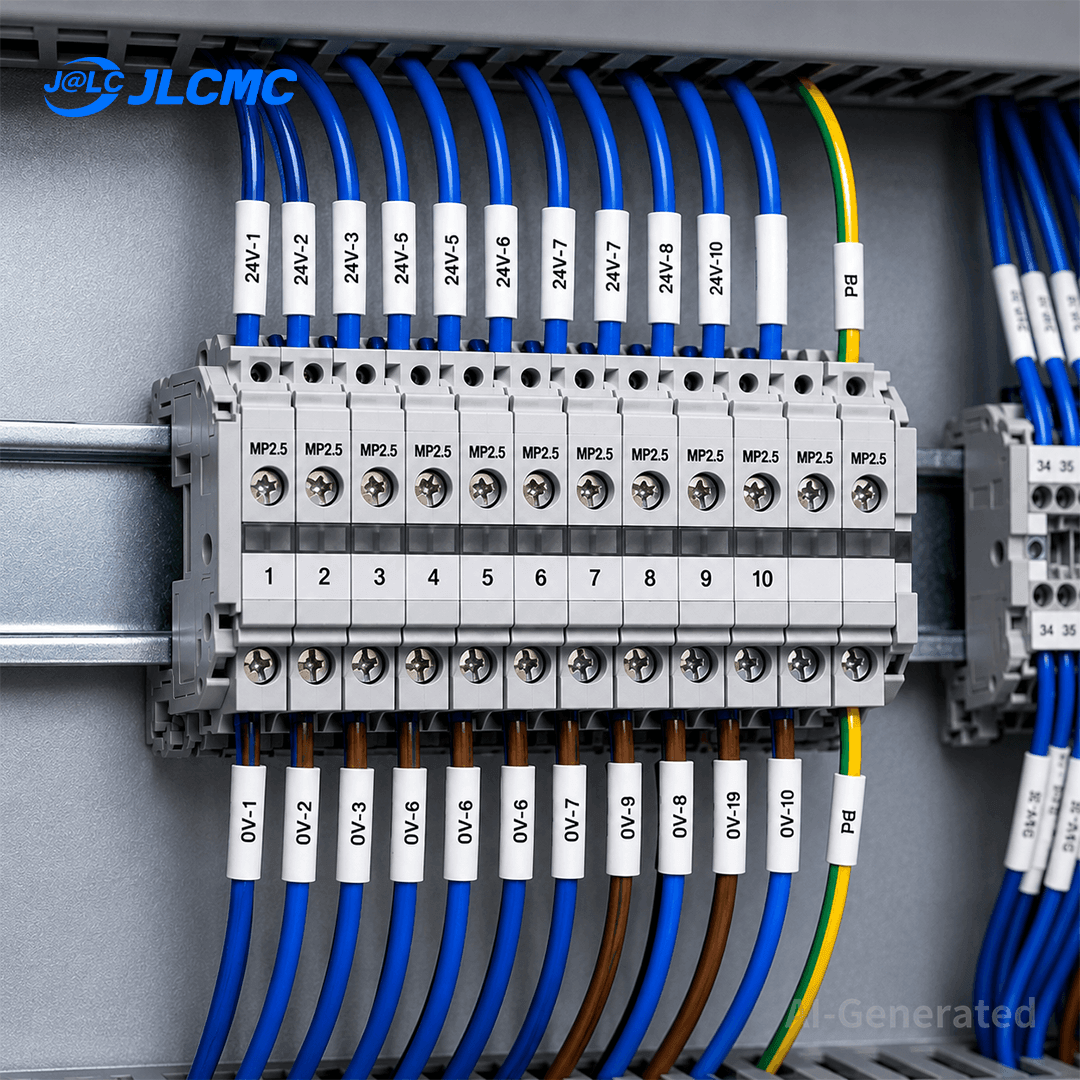
What Is a Terminal Block?

A small component, but an important part of many electrical systems.

Learn how terminal blocks work, the differences between screw, spring-clamp, and push-in types, and how to choose the right one for your application.

📖 Read the guide: https://jlcmc.com/blog/what-is-a-terminal-block

🛒 Explore Terminal Blocks: https://jlcmc.com/product/I17/terminal-blocks?from=TB09

#JLCMC# #TerminalBlock# #JLCMCMechanicalParts# #ElectricalComponents# #IndustrialAutomation#

8793090805383094272

Mechatronic Components

Follow
0
Posts
0
Comments
0
Followers
Image
JLCMC Buddy
Official
2 days ago Edited 33 Views
How to Select the Right Terminal Block?

Voltage, current, wire size, connection method, mounting, environment, and certifications—all matter.

Our guide breaks down the key factors for choosing the right terminal block.

📖 Read the guide: https://jlcmc.com/blog/how-to-select-a-terminal-block

🛒 Explore Terminal Blocks: https://jlcmc.com/product/I17/terminal-blocks?from=TB09

#JLCMC# #TerminalBlock# #ElectricalEngineering# #IndustrialAutomation# #ControlPanel#

8792859839682617344

Mechatronic Components

Follow
0
Posts
0
Comments
0
Followers
Image
JLCMC Buddy
Official
6 days ago 63 Views
💡 Light Up Your Automation with JLCMC LED Lights!

Looking for reliable lighting solutions for automation systems, machinery, and industrial applications?

Explore JLCMC LED Lights and find the right lighting solution for your projects. ⚙️

👉 Explore LED Lights: https://jlcmc.com/product/I07/led-lights?from=LED09

🌐 Visit JLCMC: https://jlcmc.com/?from=all08

#JLCMC# #LED# #LEDLight# #FactoryAutomation# #IndustrialAutomation# #Engineering#

8791396232419647488

Mechatronic Components

Follow
0
Posts
0
Comments
0
Followers
Image
JLCMC Buddy
Official
2026-09-23 15:40:07 70 Views
835 in JLCMC Coupons Are Waiting for You!

Planning your next mechanical or automation project? Now is a great time to save.

💰 $835 in JLCMC coupons available

🎉 New users get an extra $123 Coupon Pack after registration

Whether you need mechanical components, automation parts, or other project essentials, JLCMC helps you get what you need while keeping costs under control.

👉 Claim your coupons now: https://jlcmc.com/coupon-center?from=CC09

#JLCMC# #Automation Components# #JLCMCMechanicalParts# #Engineering#

8791005205640138752

Mechatronic Components

Follow
0
Posts
0
Comments
0
Followers
User Avatar
987654aB596N
2026-09-18 15:35:31 62 Views
Anyone Else Notice Hot Spots in Flexible Heaters?

I’ve been looking into flexible heaters recently, and something I find interesting is that reaching the target temperature doesn’t necessarily mean the heating is uniform.

From what I understand, a few things can affect where hot spots show up:

  • Trace spacing
  • Current density
  • Sharp corners in the trace
  • Uneven contact with the surface
  • Insulation and thermal conductivity
  • Power density

I’m still learning about the design side of this, so I’m curious how others look at it.

When you’re trying to get more uniform heating, what do you usually pay attention to first — the trace layout, power density, or the surface the heater is attached to?

Flexible Heater

Follow
0
Posts
0
Comments
0
Followers
Image
JLCMC Buddy
Official
2026-09-17 10:09:23 69 Views
🔥 Linear Motion Special Sale — Save Up to 15%!

🎁 Big-value coupons are waiting for you!

From linear guides and ball screws to linear actuators, bearings, couplings, and motors, JLCMC offers a wide range of components for motion control and mechanical systems.

Whether you're designing a new machine, upgrading an existing system, or preparing for your next project, this is a great opportunity to get the components you need at a better price.

👉 Explore the sale:https://jlcmc.com/event/linear-motion-sale?from=LB09

#JLCMC# #LinearMotion# #JLCMCMechanicalParts# #MotionControl# #LinearGuide# #MechanicalEngineering#

8788747529899200512

Mechatronic Components

Follow
0
Posts
0
Comments
0
Followers
User Avatar
987654aB596N
2026-09-16 15:38:17 71 Views
How Bad Are 90° PCB Trace Corners in Practice?

I’ve often heard the rule: “Never use 90° traces.”

But I’m curious how much this actually matters in real-world PCB designs.

My current understanding is that, for many low-speed signals, a single 90° corner is unlikely to cause a noticeable problem. The corner does slightly change the local trace geometry and may introduce a small impedance discontinuity, but whether that matters seems to depend on things like:

  • Signal rise/fall time
  • Trace width and stackup
  • Controlled impedance requirements
  • The rest of the signal path

For faster signals, RF layouts, or tightly controlled impedance traces, I can understand being more careful. But for ordinary routing, is avoiding 90° corners mostly just good convention rather than a strict technical requirement?

I still tend to use 45° bends, but I’m interested in how experienced designers approach this in practice.

Do you avoid 90° corners in every design, or only when the signal requirements justify it? Am I missing any important considerations?

Layout

Follow
0
Posts
0
Comments
0
Followers
Image
SheetMetal
Official
2026-09-01 16:22:02 Edited 148 Views
New Sheet Metal Materials Guide Is Live 🔩

Choosing the right sheet metal material just got easier.

Our new Sheet Metal Materials page is now live on JLCCNC.

Explore commonly used materials including:

🔩 Aluminum 5052

🛡️ Stainless Steel 304 / 201

⚙️ Cold Rolled Steel

🧰 Galvanized Steel

Compare material properties, applications, corrosion resistance, formability, finishing options, and more in one place.

Whether you're working on enclosures, brackets, structural components, or other sheet metal parts, check out the guide before placing your next order.

👉 Explore the Sheet Metal Materials Guide:

Sheet Metal Materials Guide

#SheetMetal# #SheetMetalFabrication# #MaterialSelection# #MechanicalEngineering# #Manufacturing# #JLCCNC#

8783043182169354240

Sheet Metal Fabrication

Follow
0
Posts
0
Comments
0
Followers
Image
SheetMetal
Official
2026-09-01 16:18:19 117 Views
Two Identical Panels. One Still Looks Different

We’ve seen situations where two sheet metal panels were made to the same drawing, with the same material and finish, yet they didn't look quite the same when placed side by side.

The geometry wasn't the problem.

Material grain and the direction of forming or finishing can influence how light reflects from the surface.

This becomes much more noticeable on large visible panels, especially when several parts sit next to each other.

It’s one of those details that may never appear as a dimensional failure but can still affect how a finished product is perceived.

For visible sheet metal, “same specification” doesn't always guarantee “same visual result.”

💬 Discussion:

When appearance matters, how do you control grain direction and visual consistency across multiple sheet metal parts?

#SheetMetal# #ManufacturingEngineering# #SurfaceFinish# #ProductDesign# #Fabrication#

Sheet Metal Fabrication

Follow
0
Posts
0
Comments
0
Followers
Image
SheetMetal
Official
2026-09-01 16:17:47 87 Views
Laser Cutting Doesn't Just Remove Material

We tend to think of laser cutting as a simple profile-making operation.

But heat is part of the process too.

On thin or heat-sensitive sheet, a dense pattern of closely spaced features can change how the material behaves during cutting. The issue may not show up as an obvious dimensional failure immediately; flatness and edge condition can tell a different story.

This becomes especially interesting when a large panel contains many small cutouts.

The geometry may be perfectly reasonable from a CAD perspective.

The cutting sequence and heat distribution are where manufacturing reality starts to matter.

💬 Discussion:

Have you ever changed feature layout or cutting sequence because of heat-related issues?

#SheetMetal# #LaserCutting# #ManufacturingEngineering# #Fabrication# #MechanicalDesign#

Sheet Metal Fabrication

Follow
0
Posts
0
Comments
0
Followers
Image
SheetMetal
Official
2026-09-01 16:17:13 102 Views
The Fastener Became the Weakest Part of the Design

Integrating PEM fasteners into sheet metal looks straightforward until the part reaches assembly.

Hole size, material thickness, proximity to bends, and installation force can all affect the result.

We’ve seen designs where the sheet itself was strong enough, but the fastening point became the limiting feature.

The interesting part is that the problem wasn't really with the fastener.

The surrounding sheet geometry hadn't been designed around the way the fastener would actually be installed and loaded.

With sheet metal, the connection deserves as much attention as the component being connected.

💬 Discussion:

When specifying PEM or other pressed-in fasteners, what tends to cause the most trouble in your assemblies?

#SheetMetal# #PEMFasteners# #MechanicalDesign# #Manufacturing# #DFM#

Sheet Metal Fabrication

Follow
0
Posts
0
Comments
0
Followers
Image
SheetMetal
Official
2026-09-01 16:07:47 Edited 92 Views
90°? The Metal Disagrees.

90°? The Metal Disagrees.

You bend sheet metal to 90°… and it springs back a little. 📐

That’s springback—the material releases some of the stress from bending and tries to return toward its original shape.

So the press brake may bend beyond 90° to get the final angle you actually want.

Metal has opinions. Engineering has to negotiate. 🛠️

#SheetMetal# #SheetMetalFabrication# #DFM# #Engineering# #Manufacturing#

8783039647272587264

Sheet Metal Fabrication

Follow
0
Posts
0
Comments
0
Followers
Image
JLCCNC
Official
2026-08-31 19:58:38 118 Views
The Tool Wasn't Worn Out. The Surface Still Changed.

We once saw a CNC part where the surface finish gradually changed during production, even though the cutting tool was still within its expected life.

At first, it looked like a tooling problem.

It wasn't.

The real difference came from tool engagement. As the machining path changed, the cutter was removing material under different cutting conditions. The same tool could behave quite differently depending on how much material it was carrying.

This is easy to miss when looking only at tool life.

Tool condition matters, but so does what the tool is actually doing at each stage of the cut.

That experience changed how we evaluate surface consistency in production. Tool replacement alone doesn't always solve variation.

💬 Discussion:

When surface finish starts drifting during a run, what do you check first — tooling, cutting parameters, or the machining path?

Hashtags:

#CNCmachining# #ManufacturingEngineering# #MachiningProcess# #CNCProduction# #Manufacturing#

CNC Machining

Follow
0
Posts
0
Comments
0
Followers
Image
JLCCNC
Official
2026-08-31 19:56:16 Edited 105 Views
You Can Keep ONE CNC Tool. Choose Wisely

🛠️ CNC pros!

Let's settle a classic shop debate before the weekend. You can only keep ONE tool type in your carousel for the next project. The rest are banned.

What’s staying in the machine?

1️⃣ End Mill (The multi-tasker) 2️⃣ Face Mill (The cycle-time saver) 3️⃣ Chamfer Mill (The part-finisher) 4️⃣ Drill Bit (The hole-maker)

Drop your choice and defend your livelihood in the comments! 👇

#JLCCNC# #CNCMachining# #MachinistLife# #Manufacturing# #Engineering# #MechanicalEngineering# #Workshop# #Tooling # #Metalworking #CNC#

8782734805253132288

CNC Machining

Follow
0
Posts
0
Comments
0
Followers
Image
JLCCNC
Official
2026-08-31 19:52:27 88 Views
Which CNC Material Is Your Type?

If CNC materials had personalities… 👀

🔹 6061 Aluminum

The reliable all-rounder.

Lightweight, easy to machine, and always a safe choice.

🔹 7075 Aluminum

The performance seeker.

Stronger, more demanding, but ready for serious jobs.

🔹 Stainless Steel

The tough one.

Durable, dependable, and built to handle challenges.

Different materials. Different personalities.

Which one matches your next project? 👀

#JLCCNC# #CNCMachining# #Engineering# #Manufacturing# #MaterialSelection#

8782733726063448064

CNC Machining

Follow
0
Posts
0
Comments
0
Followers
Image
JLCCNC
Official
2026-08-31 19:48:26 77 Views
That Hole Needs Some Personal Space.

How close is too close? 📐

Putting a threaded hole right next to the edge may look fine in CAD… until machining says, “Give me some room.” 🛠️

Too little material around the hole can weaken the part and make machining more difficult.

Give your holes some breathing room. Your part will thank you. ⚙️

Explore CNC machining possibilities with JLCCNC.

#CNC# #CNCmachining# #DFM# #MechanicalEngineering# #Manufacturing#

8782732789538279424

CNC Machining

Follow
0
Posts
0
Comments
0
Followers
Image
JLCCNC
Official
2026-08-31 19:45:51 97 Views
What Keeps Your CNC Tool Running Smoothly?

Your CNC tool has a secret teammate. 🫱🏻‍🫲🏼

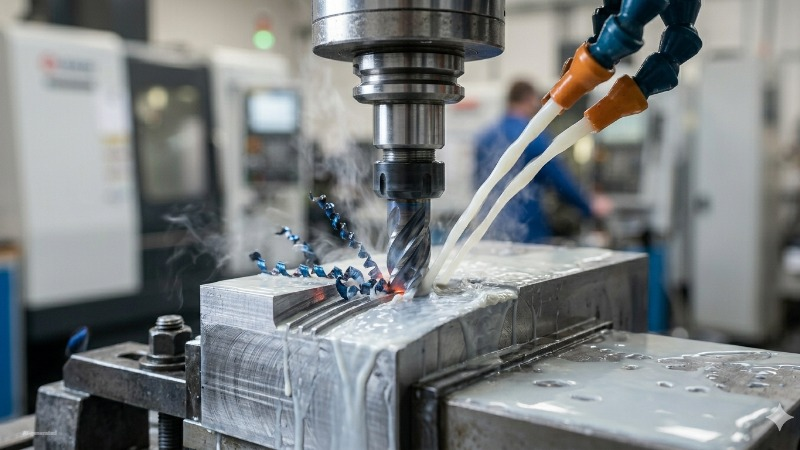
Cutting fluid may not get much attention, but it plays a big role in cooling, lubrication, chip removal, and tool life.

So which type should you use for different machining jobs?

We break down the types, functions, applications, and selection tips here ↓

CNC Cutting Fluid: Types, Functions, Applications, and Selection Guide

#CuttingFluid# #CNC# #MachiningTips# #ToolLife# #Engineering# #JLCCNC#

8782732185302380544

CNC Machining
Advertisement
Advertisement