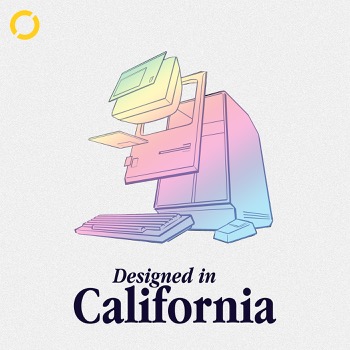


Hosted by Jason Snell and Myke Hurley.
Expertly-told stories about the 50-year history of Apple and the world it created, from Jason Snell and Myke Hurley. We cover the entire range of the last half-century, from Apple's earliest days in a garage, to the rise of the Mac, to the return of Steve Jobs and the creation of some of Apple's most iconic products. Apple's history is also our shared tech history, and these are all stories worth telling.
Subscribe


Get in touch
Submit FeedbackNavigation
Links
Audio editing by Jim Metzendorf.
Video edition produced by Jamie Snell.
Theme song composed and performed by Christopher Breen.
Subscribe
Support this show
Get early access to full series, ad-free listening, and bonus episodes by becoming a member.Get in touch
Submit FeedbackSupport this show
Get early access to full series, ad-free listening, and bonus episodes by becoming a member.Latest Episodes
#10: Apple's Mac OS Crisis: The Bake-Off (Part 6)
September 30th, 2026 · 47 minutes
Torn between Be and NeXT, Gil Amelio tries to analyze it all scientifically, including final demos from both teams. But was the end result a foregone conclusion?
#9: Apple's Mac OS Crisis: Who's NeXT? (Part 5)
September 23rd, 2026 · 44 minutes
Just up the road from Apple in Redwood City, Steve Jobs's NeXT is fading and flailing, but has a modern operating system just like the one Apple desperately needs to buy to replace Mac OS. An unlikely person makes an unlikely phone call to save the day.
#8: Apple's Mac OS Crisis: To Be, or Not? (Part 4)
September 16th, 2026 · 45 minutes
Apple desperately needs a replacement for Mac OS, but negotiations with Jean-Louis Gassée's Be are at the breaking point. But does CEO Gil Amelio have any other options?
#7: Apple's Mac OS Crisis: Plan Be (Part 3)
September 8th, 2026 · 54 minutes
A possible replacement for Mac OS arrives in the form of a company founded by a charismatic former Apple executive--but not the one you're thinking of.
#6: Apple's Mac OS Crisis: Copland (Part 2)
September 2nd, 2026 · 48 minutes
Apple's homegrown next-generating operating system fails to launch, leaving the company in dire straits and searching for a lifeline from outside the company.
#5: Apple's Mac OS Crisis: The End of the Road (Part 1)
September 2nd, 2026 · 51 minutes
In the mid-1990s, Apple knew the classic Mac OS was running out of time. As the company's most important product sped toward a cliff, Apple began an increasingly desperate attempt to build a replacement.
#4: Road to the Apple II: Computer Faire (Part 4)
August 25th, 2026 · 29 minutes
The Apple II makes its public debut at a landmark event in the history of personal computers, and Steve Jobs truly comes into his own.
#3: Road to the Apple II: A Complete Computer (Part 3)
August 25th, 2026 · 35 minutes
Under the watchful eye of Steve Jobs, the Apple II takes form at last. It's an integrated color computer created by Steve Wozniak, powered by a groundbreaking power supply designed by Rod Holt, and wrapped in a plastic shell designed by Jerry Manock.
#2: Road to the Apple II: The Partnership (Part 2)
August 25th, 2026 · 32 minutes
We travel to the summer of 1976, as Apple travels to Atlantic City for a computer trade show, the Apple II begins to form, and the fellowship between the two Steves shows signs of breaking.
#1: Road to the Apple II: Apple for Sale (Part 1)
August 25th, 2026 · 32 minutes
We take you back to 1976 and recount Steve Jobs's numerous attempts to sell Apple or, at the very least, get someone to make an investment in the fledgling company.
