2666: insomniac cd (Default)
bestrockphotos- Mike Leach
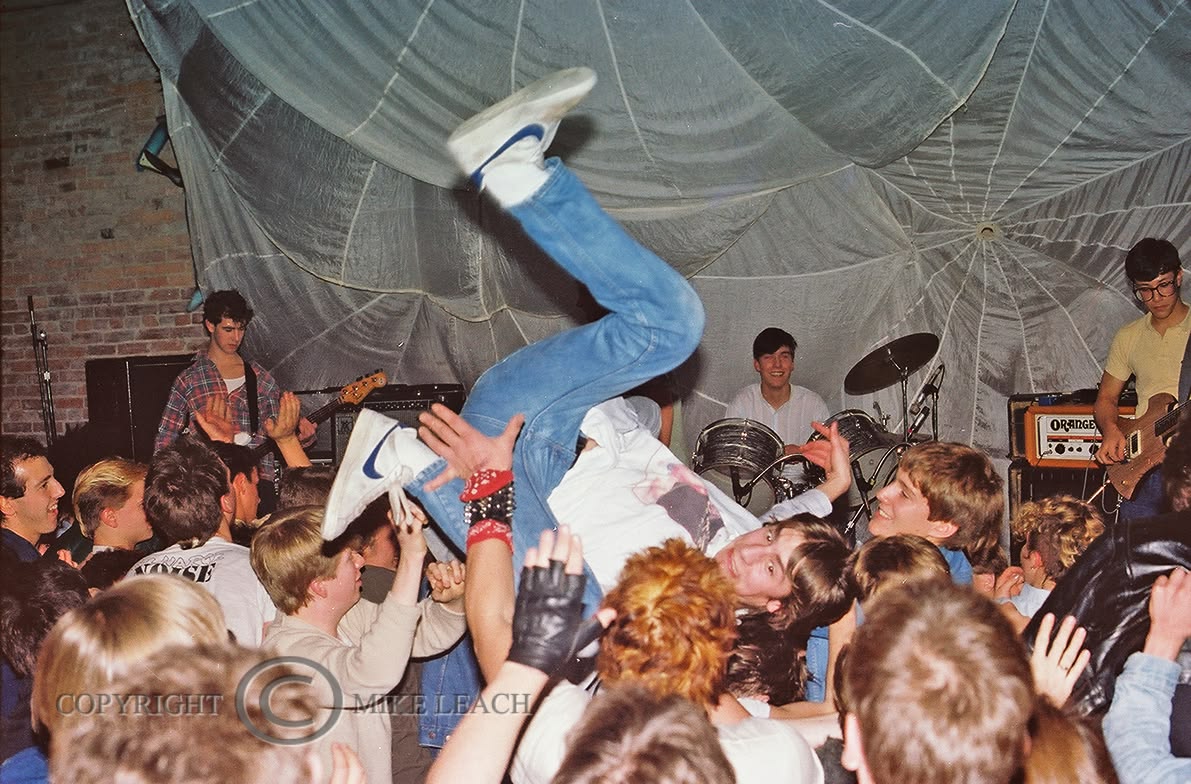
A 30- year archive of Mike Leach's concert photography. Contains a ton of photos of a ton of bands in a ton of different sub-genres. I stumbled onto it while I was trying to figure out what the hell the guys in Meat Beat Manifesto looked like. pretty weird is the answer.
My favorite section is all the way at the bottom, under "ZZ-Misc". It's a bunch of random crowd shots from a bunch of random concerts:
What it sounds like :P 
Budassi custom designs celestial maps for Wikipedia. His Celestial Zoo map is my favorite- preview below, but you really need to go to the fullres on Wikimedia to explore it all. The map is logarithmic! 
 The Celestial Zoo map

 
Scans of fashion magazines. I like to use it to study composition/clothing folds.

Will Connolly- Caterpillars of the Commonwealth
it's a good indie album, possibly one of my favorites, and a crime that it's got so few bandcamp supporters. I bought the album probably four years ago and I'm the second most recent supporter...

That's all for tonite. Hope DW doesn't think im SEO spamming. 


2666: insomniac cd (Default)
Reading one good fanfic after three years of pure academic paper hell is like smoking crack after a decade of eating only gluten free non GMO organic farm raised spinach leaves. Back to work I guess...

In other news, I deleted my Spotify account for good. For the past couple years I'd been using it less and less in favor of my local music library, but them advertising me that dog-killer's audiobook about killing dogs was the final straw. Got all my data, backed up a couple playlists to Youtube, and got out. I think the playlists were what kept me hanging around so long, since some of them were so old I actually felt a bit sentimental about them, but it's no good being sentimental on a subscription platform and besides the fix to transfer them was so easy I felt stupid for not doing it earlier. I was on a family plan so it's not like I'll be putting a dent in the revenue stream by deleting, but whatever. Even just using the platform here and there felt grimy. In addition to the glaring artist rights issues, I think it promotes a more scatterbrained way of listening to music. Even though it's still all digital music, I listen deeper & with more focus when it's through a local music player. I have a couple of theories why: 
1. I primarily listen to full albums when I'm using a music player, and don't tend to buy/coughdownload single tracks, since then those single tracks would clog up the nice album collection display screen i've got going on. Listening this way sets a scene for each song as part of a greater whole, and presents the song in the way the artist intended it to be heard. I'm not anti-playlist and I don't think that all music listening has to be serious business sitting in the armchair smoking and contemplating, but I do think more focused ways of listening to music are starting to fade out a bit. Spotify really over-emphasizes single-track listening and algorithmic decisions over conscious decision, and so it turns music-listening into a more passive and sporadic process. I think I saw a headline somewhere about how the 'single' culture on spotify and tiktok was changing how music was produced, but don't quote me. I'll follow up on it when i don't have fifteen million zillion pages of the ecocide-genocide nexus to read

2.Since the Spotify song library feels near-infinite, I tend to think about what else I could be listening to in the moment rather than just listening to the song that's playing. Could be me being scatterbrained, but there could be something better out there that I could be listening to at this moment! When it's just me and my mp3 hoard I have to pick something and stick with it or think of something better in my collection to put on if I'm tired of it. I'm forced to be intentional about what I put on instead of letting the algo decide, even if that intentional decision is to just hit 'play all songs in library' and see what comes up. 

3. Spotify keeps shoving stupid bullshit in my face and it's annoying. The only one I'm vaguely okay with is the nearby concerts banner, and even then, it stopped being "oh hey you're looking at this artist's page? they're playing nearby in a month" and started being "you just opened spotify? DRAKE PAID TO PUT THIS ADVERTISEMENT IN YOUR FACE."  Smart shuffle might have been tolerable if it was some niche setting you had to enable first, but the thought that I would ever want an algorithm to fuck up my carefully crafted playlist so badly that I would need smart shuffle to be the first shuffle option pisses me off. And then the youtubeslop video podcasts invaded- if woke up one day and wanted to watch some unshaven white guys sit around a table and talk about marvel movies I would check myself into a psychiatric hospital. And then of course, the endless pestering to buy Listening Hours so that I can sit enraptured while our esteemed overlady of homeland defense brags about killing her own dog to get those cool girl points with the GOP. awesome world.

And then I think that others think I'm too easily frustrated (why do you care? just scroll past it) . I read every single calvin and hobbes strip as a kid, i mean every single one, and i grew up to be just like calvin's dad. it's the principle of the thing. i want to listen to my music and not be bothered by stupid bullshit. it's an infohazard! white dudes with horrible beards is an infohazard! drake existing is an infohazard! i shouldn't have to see it if i don't want to! stop making me look at it! It's all the little things that make the experience collectively worse. All that to say that when I'm using my local music player, it feels so, so much quieter and calmer, because I can actually do what I came here to do and get on with my day. Spotify does all the above bullshit to keep you tapping around and staring at their paid advertisements for longer and longer, they don't want you to just pick an album and go.

Anyways, I bought that new Xiu Xiu album. Best drop of 2026. 

P.S. more to say on algorithmic music selection. i have found some good shit off of spotify recommendations, but I also think that it's something that removes both the intentional choice out of music selection and the potential for deeper bonding with others. Music is such a big part of identity formation and something gets lost when that identity formation is left to a machine- the potential to truly branch out and listen to something radically different, maybe. Not even in an anarchist punky way- Spotify will serve you up some Choking Victim if you listen to Dead Kennedys-- but i think the sorting method of recommending what other people who listen to this artist also listen to creates an infinite regression loop- creating an artificial subculture in its own right, where people's tastes are extremely similar (whether or not they've communicated with each other) and cordoned off. I can't find the words to describe it without sounding like I'm re-inventing the word "genre". 

P.P.S. Or maybe you lose the ability to listen to more of the same? Read a paper on intergenerational transmission of music taste (in non egghead speak, parents passing down music taste to their children) and thought about how I didn't get into Hole because it's one of my mom's favorite bands, but because Spotify rec'd me Celebrity Skin when I was in my riot grrl era. 
2666: insomniac cd (Default)
I stayed up until 2 in the morning and slept through my 8AM class this morning, but it's finished. I have my problems with the book but I am glad I didn't abandon it. It's unfortunate that the final ~100 pages of the book is where flaws in the writing really start sticking out.  With so much time having passed since I last read it, the flaws are mostly what I am left thinking about. 2666 was published posthumously, and Bolaño knew he didn't have much time left when he wrote it. The final hundred pages have a more frantic, stream of consciousness flow to them. For better and worse. There's only so many times you can read "and then they fucked" and remain engaged in the characters' romantic exploits. On the other hand, it would be hard for any 900 page book to not have a few pages of stuff someone doesn't like. So whatever. There's a whole other fifty posts that can be made about male-sexuality-as-gospel in literary circles; for now I'll say that there is also a lot of the book to like, and a lot that will stay with me for a while. I've been trying to write out my thoughts on it for a while, but the book's epigraph does it the most justice: "an oasis of horror in a desert of boredom". The novel has a slow, meticulously detailed pace, but you're given the feeling of a build-up to a horrible realization. Certain parts of the novel, especially The Part about the Crimes, do an incredible job of filling you with pure dread. The book's thesis is unique & well presented, no matter how wildly different each part of the novel was, they all came together to illustrate the same point. Roughly, it's about literature & concealment. 

Bolaño also writes dreams well. Never too on-the-nose, never entirely random. The dreamlike quality bleeds into other aspects. One of my favorite sections is about a professor of literature at the University of Santa Teresa who finds a poet's book on geometric principles that he doesn't recall ever buying. He hangs it from a clothesline and starts to go insane.


28yrs

Jan. 18th, 2026 09:54 pm
2666: insomniac cd (Default)
Went to go see the zambie movie last night (28yrs part 2). There's been a lot of internet wank around the series for the last few years, the whole youtuber "is this the WORST movie ever MADE?" kind of shit. I'm not a huge fan of the Years sequels either (I didn't even finish watching Part 1), but I am glad that weird movies can still hit the big screen. I know it's not 961 Pinocchio tier, underground art film weird, but there were a lot of out-there creative decisions that I wouldn't have expected from the series. While it's not a perfect film and has a good amount of total cornball moments (memento.... mori. .... ), I'm glad they didn't iron out the weirdness in order to play it safe. The worst thing that could have happened to the series is it getting rebooted into some Marvel-slop tier cash machine. Like: "Erm... did that zombie just talk?"

I was also reminded that night that the correct pronunciation of Cillian is 'Kill-ian", not "Sill-ian". sigh


2666: insomniac cd (Default)
Well, the second book in the series is about Hole. But still.

I grabbed this one randomly even though I knew I shouldn't be spending money on random shit. I was on a post-Christmas spree at the record shop, you know how it goes. I also got a CD player that did not work. Exchanged it for a Twin Peaks vinyl & of course a Live Through This vinyl. there's really no other album in the entire world apart from Live Through This.

But for the book-  Live Through This, part one is a biography about Kurt Cobain & Nirvana, written by Everett True. True was a music journalist, one of Cobain's close friends and knew him before Nirvana skyrocketed to fame. I didn't know that and thought the book was a comic biography about Nirvana because the cover features an ink illustration of the band playing. So when I opened it to see pages full of Times New Roman and the occasional spot illustration I felt incredibly scammed but calmed down and read it anyways. Turns out it's good. 

I don't listen to Nirvana much, I was raised in a Hole household (my mom's an og fan). From a zoomer perspective, Nirvana is such an omnipresent part of modern college/grunge/alt culture that I forget that it was a real band with real people in it. Does that make sense? It's not like everyone at college is still talking about Nirvana, it's like Nirvana is such a standard building block of the culture that it's like air. Or a brand. Like how I can't really get into Fleetwood Mac because when I was a kid the rock radio station used Dream On's riff as their station's tagline, so it's the 94.5FM song to me forever. And you know the age old H&M Nirvana T-shirt boomer joke.

Now it feels weird to listen to Nirvana because of the intimacy of some of the stories True shares in the biography. I remember being, like, nine, and probably Teen Spirit was on the radio (probably 94.5) and my mom was talking about how everyone was interviewing Cobain and asking what the lyrics meant, and everyone was convinced they were full of deep meaning if you could decode them, but Cobain always asserted they meant absolutely nothing. I think this conversation also influenced what I thought of Nirvana from then on. But True's biography puts it in a different light, now it seems more like an angry retort to a press invading his life and trying to dissect not just his songs but everything about him. The songs mean nothing, fuck off.

The book hasn't gotten me into Nirvana. Maybe it's gotten me even less into Nirvana. Reading about MTV Unplugged, how the suits were threatening to fuck things up between the band and their friends on the label if Nirvana didn't perform, it just makes it more uncomfortable to listen to. And True mentioning how the cheers you hear in the background of the performances are from management. I think it is a really interesting book about fame. True mentions how rock stars either conform to the fame or lose their minds completely. I've always been interested in rock stars, I think they're a fascinating little part of American culture and I can't really put it into words. Lots to do with the spectacle of the whole thing, lots to do with its production and overproduction, fifteen foot high stages, and a bunch of dipshits becoming caricatures of themselves as time goes on. How it's an absolute cash-cow. Is it possible to make rock music just because you like rock music anymore? Is there going to always be a desire to be a rock star in the back of your mind? Rock music is mostly about being a rock star, which is less about music and more about acting like an archetype (the archetype of the Rock Star). Of course there's a lot of writing on the internet about parasocial relationships, and celebrities are people too, but watching some of the big ticket performances i'm always wondering if a real person still exists back there. I mostly think this about Green Day. See: BJA 2004 iHeartRadio incident- Billie is shafted, given four minutes total to perform. He loses it. "I'M A ROCK STAR!" he yells, and then he smashes his guitar. Nirvana was infamous for destroying their equipment at nearly every show. But in 2004 it's tired, and at the iHeartRadio event its tired, he has no control, and the guitar smashing might be interpreted less as pure rage and more as a desire assert oneself as a rockstar, because there’s not much left. 

True starts off the book by saying that he hates rock music, he hates the macho shit, he hates how it's the music taste of playground bullies, fake revolutionaries, people who dream of being tough but know they aren't. But he loves rock and roll. "How can  I despise anything that has given my life such validity and direction, that has enabled me to communicate with so many others over the years? It’s not rock music’s fault that most people are dumb.” In Scorched Earth*, Jonathan Crary briefly notes that, while music as a whole is commodified, it is one of the last ways youth can construct an organic self-image and connect in a community. Everything else is shopping malls and social media and the Internet. And Green Day keeps putting out bullshit for the tenth year running, making them the absolute epitome of sellout fake-revolutionary corporate slop-rock, and some of it’s even cleverly marketed. The music is shit, but they know what aesthetics to draw on when designing the music videos.  We all hate Green Day for what they’ve turned into. In True’s words, they conformed to the fame, like Aerosmith and Metallica and everyone else. All the same, I love Green Day because I’m an uptight loner loser always fucking things up with my short temper, and I’m also always picking scabs off my face, and I love rock music for making my everyday boring apathy into something pretty good to listen to.


*You should read Scorched Earth. And then you should read 24/7. Both are short and absolutely worth it. 

introo

Jan. 16th, 2026 10:01 pm
2666: insomniac cd (Default)
named after the roberto bolaño book, which i'm maybe 80 pages away from finishing. I will finish it soon, and probably moreso now that i started this blog. if i was going to give up, it should have been one page into 'the part about the crimes.' preferably even earlier. i both love and hate 2666, and i don't mean that those two feelings mix together into a lukewarm meh feeling, its more like oil and water. I love 2666, it may be one of my favorite books, and at the same time i do genuinely hate it. not in a quirky tumblr kind of "i heckin hate my skrungly!" way. i loathe a lot about it. i think i loathe most of it. i think bolaño would be proud to have elicited this reaction, but then i don't know much about the man.

i saw this book in the bookstore by my college and i knew i had to read it, had to read it, even though i didn't actually buy it just then or for a long time after. but for months i would go into the bookstore and walk around and look at the cover and think about it. i do things in weird ways, i guess. what i'm saying is that the book had a weird pull on me and it only intensified once i actually bought it. when you read it, you know what is coming. 351 pages in is 'the part about the crimes' : a 200 page section which lists the hundreds of women murdered in Santa Teresa over the course of a decade. i wanted to put the book down and give up, but i knew i couldn't, i had to keep reading, it was almost like a responsibility. i think giving in the middle of the part about the crimes would have made me feel worse. i wouldn't know what the point of it all was and there wouldn't be closure. i felt compelled to read it in the most lovecraft sense of the word.

2666 is a book about books, and femicide, and all the lives & deaths that are omitted from the world narrative. i think the best description of what 2666 is about is on page 266 (!?) of the novel:
"In the nineteenth century...society tended to filter death through the fabric of words. Reading news stories from back then you might get the idea that there was hardly any crime, or that a single murder could throw a whole country into tumult. We didn't want death in the home, or in our dreams and fantasies, and yet it was a fact that terrible crimes were committed, mutilations, all kinds of rape, even serial killings....Everything was passed through the filter of words, everything trimmed to fit our fear....Maybe it's because polite society was so small back then. Most human beings existed on the outer fringes of society...take a look at the French. During the Paris Commune of 1871, thousands of people were killed and no one batted an eye. Around the same time a knife sharpener killed his wife and his elderly mother and then he was shot and killed by the police. The story didn't just make all the French newspapers, it was written up in papers across Europe, and even got a mention in the New York Examiner. How come? The ones killed in the Commune weren't part of society, the dark-skinned people who died on the ship weren't part of society, wheras the woman killed in a French provincial capital and the murderer on horseback in Virginia were. What happened to them could be written, you might say, it was legible. That said, words back then were mostly used in the art of avoidance, not of revelation. Maybe they revealed something all the same. I couldn't tell you."
.
it's also misogynistic. there are only 2 female characters out of the cast not defined primarily by their sexual relationship to a main male character. one is an elderly seer, the other is a reporter who shows up briefly. at times details about these sexual relationships are inserted in ways that feel weirdly voyeuristic. background women are referred to pretty much exclusively as 'whores'. there are points in the book where bolaño is writing about misogynistic things because he is making a point about misogyny. but these this isn't that. it is really disheartening because i think the core message of the novel is very impactful: in a misogynistic world, the daily murders of women become background noise. the part about the crimes is a hard read but worth it, it's the point of the novel to death-by-death, foreground what's uncomfortable and ignored. so it is honestly a bit heartbreaking to read the other female characters reduced down in the same way by the same author in the same book. bolaño does point out how misogyny dehumanizes women but he also does it himself. it undermines the themes of the story and really erodes at its heart. with this and a lot of literature, you sometimes get the sense that the soul of the story and the messages and heart-opening experiences are not intended for you if you are female (or not white). Dostoevsky falls into this, David Foster Wallace falls into this, especially on the racial front. I think that 2666 is going to be the last male author i read for a while, and i'm probably going to take a break from the pretentious literature student canon for the foreseeable future.

so maybe i'll change my blog name, but i kind of like the nonsensical-seeming url. ive never really figured out how to pronounce the book title. i always refer to it as "twenty-sixty-six". saying "two thousand, six hundred, and sixty-six" is a bit of a mouthful though.

my other favorite book is Transit by Anna Seghers. i want everyone to know that i did in fact finish infinite jest, but im only telling you this so that you picture me in a newsboy cap with a horrible millennial-male hipster beard. get excited for my upcoming post about race in infinite jest & how when (usually white male) authors write racist things, people want to assume it's an intentional social commentary. on the other hand sometimes i wish i could have the blind total love for the books i read back before i went to uni and got the woke mind virus. but in the end it is better to know than not know, and to not blindly fangirl-follow an author who does not respect your kind. yanno?

other than finishing 2666, my reading list is looking like:
- a lot of ward churchill books. i really really need to read more of A Little Matter of Genocide because my prof loaned it to me two semesters ago and i havent given it back yet because i've only read a chapter and a half because my life is a disaster. i actually have two copies of this book, the one my prof loaned me, and the one i bought on thriftbooks so i could annotate it. both are staring me down from the bookshelf above my desk right now. i am going to have to write that 'lets catch up' email and then speedread. Every day that I wait it just gets worse because so much time has passed that when we do meet up i should have had more than enough time to finish the damn book already. this whole situation has been causing me appreciable mental strain.

-well anyways i also got churchill's Perversions of Justice: Indigenous Peoples and Angloamerican Law on the list alongside it. And we can't forget about finishing Dunbar-Ortiz's An Indigenous People's History of the United States, and Fanon's Wretched of the Earth. gonna be a scholarly year for me. the sociology department here is so white and i have to take matters into my own hands. the sociology department here had me reading 90 pages of Marx's treatise on grain economics instead of a single nonwhite author.

-Who Owns the Future? by Jaron Lanier: [social] media studies used to be my number one scholarly interest, excited 2 get back to my roots


So I guess books will feature heavily on this blog. Maybe music, maybe social science stuff, maybe art stuff.

cya 🫡


Profile

2666: insomniac cd (Default)
2666

February 2026

S M T W T F S
123 4 567
891011121314
15161718192021
22232425262728

Syndicate

RSS Atom

Most Popular Tags

Style Credit

Expand Cut Tags

No cut tags
Page generated Feb. 22nd, 2026 08:17 pm
Powered by Dreamwidth Studios