





Save on pre-loved TVs
Enjoy fast, free delivery, exclusive deals, and award-winning movies & TV shows.
Buy new:
$18.00
FREE delivery Wednesday, February 25 on orders shipped by Amazon over $35
Ships from: Amazon.com
Sold by: Amazon.com
$18.00
Get Fast, Free Shipping with Amazon Prime
FREE delivery Wednesday, February 25 on orders shipped by Amazon over $35
Or Prime members get FREE delivery Tomorrow, February 21. Order within 6 hrs 29 mins. Join Prime
In Stock
$$18.00 () Includes selected options. Includes initial monthly payment and selected options. Details
Price
Subtotal
$$18.00
Subtotal
Initial payment breakdown
Shipping cost, delivery date, and order total (including tax) shown at checkout.
Shipper / Seller
Amazon.com
Amazon.com
Shipper / Seller
Amazon.com
Returns
FREE 30-day refund/replacement
This item can be returned in its original condition for a full refund or replacement within 30 days of receipt.
Read full return policy
Payment
Secure transaction
Your transaction is secure
We work hard to protect your security and privacy. Our payment security system encrypts your information during transmission. We don’t share your credit card details with third-party sellers, and we don’t sell your information to others. Learn more
$6.93
May have limited writing in cover pages. Pages are unmarked. ~ ThriftBooks: Read More, Spend Less May have limited writing in cover pages. Pages are unmarked. ~ ThriftBooks: Read More, Spend Less See less
FREE delivery March 2 - 4. Details
In stock
$$18.00 () Includes selected options. Includes initial monthly payment and selected options. Details
Price
Subtotal
$$18.00
Subtotal
Initial payment breakdown
Shipping cost, delivery date, and order total (including tax) shown at checkout.
Access codes and supplements are not guaranteed with used items.
Ships from and sold by ThriftBooks-Atlanta.
Added to

Sorry, there was a problem.

There was an error retrieving your Wish Lists. Please try again.

Sorry, there was a problem.

List unavailable.
Kindle app logo image

Download the free Kindle app and start reading Kindle books instantly on your smartphone, tablet, or computer - no Kindle device required.

Read instantly on your browser with Kindle for Web.

Using your mobile phone camera - scan the code below and download the Kindle app.

QR code to download the Kindle App

Follow the authors

Get new release updates & improved recommendations
See all
Something went wrong. Please try your request again later.

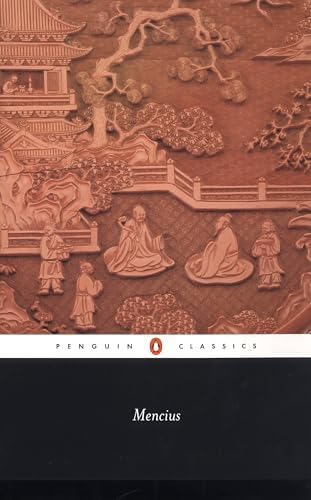
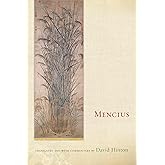
Mencius (Penguin Classics) Paperback – June 28, 2005

4.3 out of 5 stars (170)

{"desktop_buybox_group_1":[{"displayPrice":"$18.00","priceAmount":18.00,"currencySymbol":"$","integerValue":"18","decimalSeparator":".","fractionalValue":"00","symbolPosition":"left","hasSpace":false,"showFractionalPartIfEmpty":true,"offerListingId":"Nfp%2B6Bfph8MuejCtR2eRDITj1ZjiZ%2FmjYdoRT524zLQ07suuZ%2BmUxdqBB2yKIWSXUIF7u%2F7%2FFVsVxqlJuapAUW3wB8B1nHQ5oeRQRT2D79xbT0MxqsV718P9h4acf6x8Rl%2BZWOvkBqg%3D","locale":"en-US","buyingOptionType":"NEW","aapiBuyingOptionIndex":0}, {"displayPrice":"$6.93","priceAmount":6.93,"currencySymbol":"$","integerValue":"6","decimalSeparator":".","fractionalValue":"93","symbolPosition":"left","hasSpace":false,"showFractionalPartIfEmpty":true,"offerListingId":"Nfp%2B6Bfph8MuejCtR2eRDITj1ZjiZ%2Fmjv4qJUukjSfiyWjal7tF4QA%2FUrP6r3NboBszAU0BhFrwxZYHp1vf93L%2FoUOwE0o3hJDPF0BlBt0DDGxhpGDsTk%2BKpuuldjYd8j5TsbfySGi12CqOIs83xHGeMYahGuTM45UwMzMo4B%2Bw%3D","locale":"en-US","buyingOptionType":"USED","aapiBuyingOptionIndex":1}]}

Purchase options and add-ons

Mencius was one of the great philosophers of ancient China, second only in influence to Confucius, whose teachings he defended and expanded. The Mencius, in which he recounts his dialogues with kings, dukes and military men, as well as other philosophers, is one of the Four Books that make up the essential Confucian corpus. It takes up Confucius's theories of jen, or goodness and yi, righteousness, explaining that the individual can achieve harmony with mankind and the universe by perfecting his innate moral nature and acting with benevolence and justice. Mencius' strikingly modern views on the duties of subjects and their rulers or the evils of war, created a Confucian orthodoxy that has remained intact since the third century BCE. 

For more than seventy years, Penguin has been the leading publisher of classic literature in the English-speaking world. With more than 1,700 titles, Penguin Classics represents a global bookshelf of the best works throughout history and across genres and disciplines. Readers trust the series to provide authoritative texts enhanced by introductions and notes by distinguished scholars and contemporary authors, as well as up-to-date translations by award-winning translators.
Sponsored

Frequently bought together

This item: Mencius (Penguin Classics)
$18.00
Get it as soon as Wednesday, Feb 25
In Stock
Ships from and sold by Amazon.com.
+
$12.00
Get it as soon as Wednesday, Feb 25
In Stock
Ships from and sold by Amazon.com.
+
$6.33
Get it as soon as Wednesday, Feb 25
In Stock
Ships from and sold by Amazon.com.
Total price: $00
To see our price, add these items to your cart.
Details
Added to Cart
Choose items to buy together.

Customers also bought or read

Loading...

Editorial Reviews

About the Author

Mencius (372-298 BC) was one of the greatest Chinese philosophers, focusing on political theory and practice. Mencius, like Confucius, believed that rulers were divinely placed in order to guarantee peace and order among the people they rule. Unlike Confucius, Mencius believed that if a ruler failed to bring peace and order about, then the people could be absolved of all loyalty to that ruler and were justified to revolt.

D. C. Lau is a Professor at the University of Hong Kong.

Product details

  • Publisher ‏ : ‎ Penguin Classics
  • Publication date ‏ : ‎ June 28, 2005
  • Edition ‏ : ‎ Reprint
  • Language ‏ : ‎ English
  • Print length ‏ : ‎ 304 pages
  • ISBN-10 ‏ : ‎ 014044971X
  • ISBN-13 ‏ : ‎ 978-0140449716
  • Item Weight ‏ : ‎ 7.9 ounces
  • Reading age ‏ : ‎ 18 years and up
  • Dimensions ‏ : ‎ 7.82 x 5.86 x 0.76 inches
  • Grade level ‏ : ‎ 12 and up
  • Best Sellers Rank: #136,157 in Books (See Top 100 in Books)
  • Customer Reviews:
    4.3 out of 5 stars (170)

About the authors

Follow authors to get new release updates, plus improved recommendations.
Sponsored

Customer reviews

4.3 out of 5 stars
170 global ratings
Sponsored

Customers say

Customers find the book easy to read and appreciate its helpful introduction. Moreover, they value the philosophical content, with one customer noting Mencius is a deeper thinker than Confucius. However, the translation quality receives mixed feedback.
AI Generated from the text of customer reviews

Select to learn more

9 customers mention readability, 7 positive, 2 negative
Customers find the book readable, with one noting it is easy to understand and another mentioning it is more accessible.
...He tells short tales with a moral. To that extent he is easier to understand. The same ideas appear with different emphasis in tales....Read more
...It's stylistically almost archaic, but worth slogging through.Read more
This book is well translated. It is clear and easy to read. The intro is pretty helpful too....Read more
great classic to have though it is not an easy read.Read more
7 customers mention philosophy, 6 positive, 1 negative
Customers appreciate the philosophical content of the book, with one noting that Mencius is a deeper thinker than Confucius, and another mentioning that the appendices provide valuable insights.
Book is a timeless classic and a cornerstone of Confucian thought. The seller however, leaves much to be desired....Read more
...his work is unquestionably part of the intellectual and philosophical legacy of Confucianism....Read more
...I enjoyed Mencius. I felt it was worth while and gave me insight into Chinese thought....Read more
Written by Confucius's main follower, it clarifies his outline of Philosophy. Good.Read more
6 customers mention information content, 5 positive, 1 negative
Customers find the book informative, with one noting it serves as a great supplemental reader to Confucianism.
Introduction isn't very well written, but it is loaded with plenty of useful information....Read more
First of all, this is an excellent edition of Mencius. The introduction is great, the translation is seamless, and the appendices are insightful as...Read more
...It also includes extensive supporting material: an interpretive introduction, a glossary, and appendices on events in the life of Mencius, early...Read more
...A helpful introduction by scholar D.C. Lau of the Chinese University of Hong Kong...Read more
9 customers mention translation quality, 5 positive, 4 negative
Customers have mixed opinions about the translation of the book, with some finding it good while others report issues such as misspellings and lack of definitions.
...Buy this book and you'll get a fine translation of a classic of world literature and philosophy....Read more
With respect to the actual material, this translation was full of misspellings. The typing and basic spelling/punctuation was amateur at best....Read more
Great translation!Read more
...What I received is the completely bare James Legge translation, stripped and denuded of any and all of the considerable scholarship that Legge...Read more

Top reviews from the United States

  • Reviewed in the United States on January 19, 2001
    Very few people in the West have heard of Mencius. However, in East Asia he is known as "the second sage" of Confucianism -- second only to Confucius himself. The eponymous _Mencius_ is a collection of his sayings and dialogues with disciples, rulers, and rival philosophers. It is unfortunate that this work is not more widely read outside of Asia. It is more accessible than the often cryptic _Analects_ of Confucius. Furthermore, Mencius is arguably a deeper philosophical thinker than Confucius. Buy this book and you'll get a fine translation of a classic of world literature and philosophy.
    Mencius is most famous for his claim that human nature is good. He illustrates this by asking us to imagine a person who suddenly sees a child about to fall into a well. Anyone, Mencius claims, would have a feeling of alarm and compassion at this sight. This feeling is a manifestation of our innate tendency toward benevolence. Mencius is aware that, despite having this innate tendency toward virtue, most people fail to act in a benevolent manner. But he claims that this is due to bad environmental factors, as well as a failure to cultivate one's "sprouts" of virtue. (Lau translates "sprout" as "germ," a minor infelicity.)
    Lau's _Mencius_ is probably the best complete translation of this work in English. It also includes extensive supporting material: an interpretive introduction, a glossary, and appendices on events in the life of Mencius, early traditions about Mencius, the text of the _Mencius_, ancient history as understood by Mencius, and Mencius's method of argumentation.
    James Legge also did a complete translation, _The Works of Mencius_, which is a little dated (it was completed in the late 19th century), but it is still a good translation, and includes the Chinese text, along with extensive notes. I did a partial translation of the _Mencius_ for _Readings in Classical Chinese Philosophy_.

    66 people found this helpful
    Report
  • Reviewed in the United States on January 9, 2016
    Format: PaperbackVerified Purchase
    Men and women go through their lives asking themselves “What is the right thing to do?”, and trying to live good lives. And some of the very best answers to those questions of how to live a good life and do the right thing come from a Chinese philosopher who lived 2400 years ago. Many people in the West do not know Mencius and his work, but everyone everywhere should.

    Mencius, Meng Ke, 孟子, lived about a century after Confucius, and his work is unquestionably part of the intellectual and philosophical legacy of Confucianism. Mencius’ declaration that “Holding on to the middle is closer to being right, but to do this without the proper measure is no different from holding to one extreme” (VII.A. 26, p. 151) sounds very Confucian, and recalls the inscription above the entrance to the temple of Apollo at Delphi: μηδὲν ἄγαν, meden agan, nothing in excess. At the same time, however, Mencius offers something new and different from the work of Confucius. And it is in that difference that Mencius’ work – known simply as "The Mencius" – becomes wonderfully modern.

    For all the profundity of Confucius’ "Analects," there sometimes seems to be something a bit self-interested about it all. Confucius calls upon his disciples to practice benevolence, to be sure; but to what end? Some readers of "The Analects" may feel that Confucius overemphasizes benevolence as a path toward being a gentleman rather than a “small man,” and gentlemanly status as the means by which one can secure an Imperial post equal to one’s talents. Is the whole point of benevolence that it helps one get a really good job? Such would be a gross oversimplification of "The Analects," in my opinion, but "The Mencius" does not leave itself open to such charges. Mencius, rather, engages in some fruitful speculations on the source of human benevolence itself.

    In Mencius’ view, all people come into this world with what he calls “the germ of benevolence,” a predisposition to do good on behalf of others for others’ sake, with no self-interest involved. Mencius explains this concept in one of the most famous passages from "The Mencius":

    ”Suppose a man were, all of a sudden, to see a young child on the verge of falling into a well. He would certainly be moved to compassion, not because he wanted to get in the good graces of the parents, nor yet because he disliked the cry of the child. From this it can be seen that whoever is devoid of the heart of compassion is not human….The heart of compassion is the germ of benevolence” (II.A.6, p. 38).

    That impulse toward compassion, Mencius argues, is natural to us; it is a predisposition. “Human nature is good just as water seeks low ground. There is no man who is not good; there is no water that does not flow downwards” (VI.A.2, pp. 122). Yet if all people come into the world with that predisposition toward empathy for all living things, how is it that people are able to behave cruelly? In Mencius’ view, the human tendency toward compassion is something that must be exercised and nurtured, because otherwise it can be lost. If one develops those innate qualities of compassion and ethical awareness, then “When these are fully developed, he can tend the whole realm within the Four Seas; but if he fails to develop them, he will not be able even to serve his parents” (II.A.6, pp. 38-39).

    The system of morality that Mencius sets forth is eminently practical and sensible. When one of his disciples suggests that an unjust tax cannot be abolished immediately, Mencius compares that to a man making a “reduction” from stealing his neighbor’s chickens daily to stealing them only once a month and adds, “When one realizes that something is morally wrong, one should stop it as soon as possible. Why wait for next year?” (III.B.8, p. 71).

    In this time of wars that seem to go on without end, there is something only too modern in Mencius’ declaration that there are “no just wars. There are only cases of one war not being quite as bad as another” (VII.B.2, p. 157). And an observer of the contemporary political scene might shake his or her head in rueful agreement with Mencius’ observation that “A good and wise man helps others to understand by his own clear understanding. Nowadays, men try to help others understand by their own benighted ignorance” (VII.B.20, p. 161).

    A helpful introduction by scholar D.C. Lau of the Chinese University of Hong Kong (who also translated Penguin Books editions of the "Tao Te Ching" and "The Analects") situates "The Mencius" in its social and historical context. Along with a glossary of personal and place names, Lau also includes four appendices: one on events in the life of Mencius, a second that examines early traditions about the philosopher, a third on the text of The Mencius, a fourth that focuses on Mencius’ understanding of ancient history, and a fifth on Mencius’ use of analogy in argument. It is like taking a seminar in Chinese history and philosophy, all in the course of a 246-page book.

    I read "The Mencius" while my wife and I were on a trip to Shanghai. Not far from the towering skyscrapers of the Pudong and the neon-lit commercialism of the Nanjing Road shopping district, one can walk quietly in Old Shanghai, amidst the serenity of the 16th-century Yu Garden. It is easy to imagine people of earlier times walking among the rockeries and pavilions of Yu Garden, and then sitting down by a pond to read from "The Mencius." Walking in Old Shanghai, experiencing the friendly smiles and the quiet courtesy of the Shanghainese people, even amidst the modern busy-ness of one of the world’s largest cities, I could not help thinking that the compassionate and benevolent spirit of Mencius lives on in the land of his birth.
    8 people found this helpful
    Report

Top reviews from other countries

Translate all reviews to English
  • Pedro Coelho
    5.0 out of 5 stars Mencius series
    Reviewed in Spain on September 19, 2024
    tudo ok.
    Report
  • prziloczek
    5.0 out of 5 stars Review of Mencius
    Reviewed in the United Kingdom on February 25, 2014
    Format: PaperbackVerified Purchase
    I love this book because it is really down to earth theology.
    It is written by a thoughtful man who is at the top of politics and goes round trying to improve the awful dictators he was working with, very patiently.
    He has not really got much of a religion, but that does not stop him.
    And it is a good translation too.
  • Johannes
    5.0 out of 5 stars A joy of reading.
    Reviewed in Germany on September 5, 2024
    Format: PaperbackVerified Purchase
    In the reviews there are many complains about other translations. The edition I bought in summer of 2024 was by D.C. Lau exactly as advertised by Amazon.
    Does Mencius need my recommendations? Still, what a pleasure to read...
  • John Harbord
    5.0 out of 5 stars intreguing perspective
    Reviewed in the United Kingdom on July 11, 2013
    Format: PaperbackVerified Purchase
    I read this book in conjunction with the analects of Confucius to round out an area of philosophy I needed to become more familiar with. I heartily recommend this approach to the text as the Mencius fleshes out and provides contextual understanding of the core tenets laid out in the analects. It is an enjoyable read and gives much pause for thought, it is well worth returning to earlier sections for a second look once you have read the controversy notes towards the rear of the text.
  • Bernardo Sutter
    5.0 out of 5 stars Exactly what you would expect
    Reviewed in Germany on March 24, 2018
    Format: PaperbackVerified Purchase
    It's a good translation of a classic with a very useful introduction. If you feel like reading Mencius, you might as well buy this version. You should probably have read up about how to read chinese philosophy though, a western approach won't yield many sensible results.