











Learn more
These promotions will be applied to this item:
Some promotions may be combined; others are not eligible to be combined with other offers. For details, please see the Terms & Conditions associated with these promotions.
Your Memberships & Subscriptions
Download the free Kindle app and start reading Kindle books instantly on your smartphone, tablet, or computer - no Kindle device required.
Read instantly on your browser with Kindle for Web.
Using your mobile phone camera - scan the code below and download the Kindle app.
Follow the author
OK
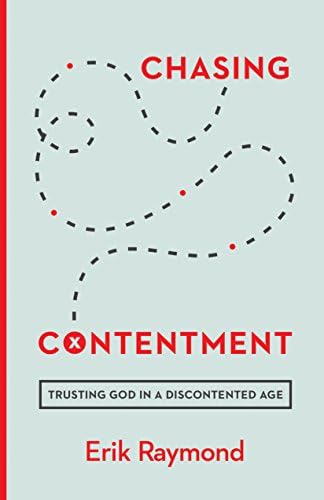
Chasing Contentment: Trusting God in a Discontented Age Kindle Edition
Recovering the Lost Art of Contentment
The biblical practice of contentment can seem like a lost art—something reserved for spiritual giants but out of reach for the rest of us. In our discontented age—characterized by impatience, overspending, grumbling, and unhappiness—it’s hard to imagine what true contentment actually looks (and feels) like. But even the apostle Paul said that he learned to be content in any and every circumstance. Paul’s remarkable contentment was something grown and developed over time.
In Chasing Contentment, Erik Raymond helps us understand what biblical contentment is—the inward gracious spirit that joyfully rests in God’s providence—and then how we learn it. Giving us practical guidance for growing in contentment in various areas of our lives, this book will encourage us to see contentment as a priority for all believers. By God’s grace, it is possible to pursue the high calling of contentment and anchor our joy in God himself rather than our changing circumstances.
- LanguageEnglish
- PublisherCrossway
- Publication dateMarch 16, 2017
- File size1.4 MB
Products related to this item
Customers also bought or read
- The Power of Christian Contentment: Finding Deeper, Richer Christ-Centered Joy
Kindle Edition$10.21$10.21 - Finishing Our Course with Joy: Guidance from God for Engaging with Our Aging
Kindle Edition$9.99$9.99 - Found: God's Peace: Experience True Freedom from Anxiety in Every Circumstance
Kindle Edition$5.99$5.99
Editorial Reviews
Review
“Just about every day, I wake up and read Erik Raymond’s insights on pastoral ministry, discipleship, and everyday living as a Christian. He always challenges me to love Jesus as I trust in the sufficiency of his work on the cross. As someone who struggles with contentment, I need his wise counsel to walk with Christ in freedom and joy.”
―Collin Hansen, Vice President for Content and Editor in Chief, The Gospel Coalition; Host, Gospelbound podcast
“Contentment may not be as elusive as we think it is. Erik Raymond’s enthusiasm in explaining the biblical text regarding contentment really shines in this book. Whether you’ve been wearied by trying to squeeze contentment out of the world or you’re happy right where you are, Chasing Contentment will refresh your perspective as you marvel at the sovereign joy of Jesus.”
―Gloria Furman, author, Labor with Hope and Missional Motherhood
“Erik Raymond is one of my favorite writers. Discontentment is one of my deepest struggles. What a joy, then, to have this author speak wisely, biblically, and pastorally about the value, the importance, and the pursuit of contentment. If you struggle as I do, you’ll find help and hope in the pages of this book and, ultimately, in the Book of books it points to.”
―Tim Challies, author, Seasons of Sorrow; coauthor, From the Rising of the Sun
“Too often our search for contentment leads us to sources unable to bear the weight of our desires. We trust in money, relationships, and circumstances, only to find ourselves increasingly dissatisfied. This book helps to clarify our understanding of contentment, as well as redirect our hopes to the One who is able to provide lasting joy. Raymond combines wisdom from church fathers with modern insights and examples that make this book readable, applicable, and needed.”
―Melissa B. Kruger, author; Vice President of Discipleship Programming, The Gospel Coalition
“Erik Raymond is the right man to write the book Chasing Contentment. I was immensely blessed and challenged by this fine work. You will be too as you read and apply it.”
―Jason K. Allen, President, Midwestern Baptist Theological Seminary and Spurgeon College
“For decades, when asked for a book recommendation on Christian contentment, I always had to reference books by Puritans like Burroughs and Watson. I knew of no solid modern book on the matter―until now. Erik Raymond’s Chasing Contentment is that modern work I have longed to see and use. This book contains the wisdom and insights of the timeless Puritan works, yet brings a culturally relevant pastoral sensitivity that will make this the go-to book on this subject―thoroughly biblical, immensely practical. I highly commend this book and the faithful man who wrote it.”
―Brian Croft, Executive Director, Practical Shepherding
“In this book, my friend Erik Raymond isn’t saying anything new―he’s reminding us of some very old wisdom that has gone unheeded and unheralded in our discontented age. Drawing from the prophets, the Puritans, and his own personal experience, he puts his finger on our malaise and offers us gospel medicine. I need the truth in this book―and I’m betting you do, too.”
―Robert H. Thune, Lead Pastor, Coram Deo Church, Omaha, Nebraska
About the Author
Erik Raymond is the senior pastor at Redeemer Fellowship Church in Watertown, Massachusetts. He is the author of Chasing Contentment: Trusting God in a Discontented Age and a frequent contributor to many websites and periodicals. He blogs regularly at Ordinary Pastor, hosted by the Gospel Coalition.
Senior Pastor, Redeemer Fellowship Church, Watertown, Massachusetts
Excerpt. © Reprinted by permission. All rights reserved.
Chasing Contentment
Trusting God in a Discontented Age
By Erik RaymondGood News Publishers
Copyright © 2017 Erik J. RaymondAll rights reserved.
ISBN: 978-1-4335-5366-0
Contents
Preface, 11,Introduction, 15,
Part 1 DEFINING CONTENTMENT,
1 Understanding Contentment, 21,
2 The God Who Is Content, 34,
Part 2 LEARNING CONTENTMENT,
3 Better Than I Deserve, 51,
4 Left, Right, Left, 64,
5 See Through the Shiny Wrappers, 81,
6 Just Say No!, 97,
7 Be Still and Know, 112,
8 Be a Faithful Bride, 129,
9 You Are Not Yet Home, 146,
Conclusion, 162,
General Index, 167,
Scripture Index, 168,
CHAPTER 1
Understanding Contentment
Tom Brady is one of my favorite athletes of all time. He is an ardent competitor, a practical joker, and a flat-out sensational quarterback for my hometown team. One of the things I appreciate about Brady is his candor. In a 2005 interview with 60 Minutes the quarterback said:
Why do I have three Super Bowl rings and still think there's something greater out there for me? I mean, maybe a lot of people would say, "Hey man, this is what is [important]." I reached my goal, my dream, my life. Me, I think, "God, it's got to be more than this." I means this isn't, this can't be what it's all cracked up to be.
Brady is absolutely not satisfied. Prior to the 2015 season and coming off of a 2014 Super Bowl championship (his fourth), he released a video in which he said, "You know what my favorite ring is? The next one." Let's remember that he says these things from the top of a social mountaintop. From an achievement standpoint, he has it all. He has plenty of money, fame, success, and respect from his peers. He is married to a supermodel, has healthy and happy children, and lives in a mansion. But when you listen to him, he sounds like a guy who just watched an overhyped movie. He's never satisfied.
Some might interpret his words as showing how driven he is. I'm sure that's part of it. But there's more. He is restlessly searching. He is scratching his head with his hand adorned with four championship rings and asking, Is there more than this?
Many of Tom Brady's experiences are unique to an All-Pro NFL quarterback, but discontentment is common to us all. We relativize and minimize our impatience. We laugh and joke about big splurge purchases that "we just had to have." Complaining is second nature for us. Instead of running to the Lord in prayer or being content to be wronged, we often grumble and complain.
Have you ever noticed that people say they're very busy, yet everywhere they go they're on their phones scrolling through social media? When you post something online, have you noticed how many people ask you about it? Often these are the same people who are so busy!
Some cultural observers have noted a growing phenomenon called fear of missing out (FOMO). With so much information at our fingertips we become restless wondering what our friends are doing, whether we have any emails, what is happening in politics — anything other than what we are doing at the moment. FOMO may explain our constant connectedness, but discontentment explains FOMO. Discontent comes because we are restless, unhappy, unsatisfied, and curious. It seems that within a few decades of technological development, many can scarcely engage in the menial tasks of life for very long without checking their phones. It's as if we're saying, "I have learned in whatever situation I am in to be discontent."
Contrast this with the words of the apostle Paul in Philippians 4:11: "I have learned in whatever situation I am to be content." The cry of the hearts of all people, whether rich or poor, is for more. They are discontent. The heartbeat of Paul in this text is that whether he has a lot or not very much, he has what he needs. He is content. We all naturally fall into the first group. We thirst for and pursue more. But as Christians we are called to live in the company of the apostle, to say we've tasted and are satisfied — we have what we need. We are to be after the elusive but ever-prized jewel of contentment.
Before going further, we need a clear definition of contentment. After all, we want to know where we are going and when we arrive there. So, what exactly is contentment? Leaning heavily upon others, I offer this definition: contentment is the inward, gracious, quiet spirit that joyfully rests in God's providence.
Have you been to an orchestral performance and witnessed the tuning process? It almost seems like part of the performance itself as the musicians allow each other to go ahead and tune their instruments prior to beginning. As I sit in the audience I am fascinated by the carefulness and patience exhibited by the musicians to ensure that they are on the same page. This is what this chapter aims to do. It is a "sync up" or tuning, if you will, to a biblical understanding of contentment. As we walk through the definition, we will certainly identify some areas that are out of tune. That's okay. The goal is to build the foundation and then learn this art of contentment.
Contentment Comes Inside Out
Think with me about Paul and Silas sitting in a Philippian jail. The authorities had ordered them to be bound in the "inner prison" or dungeon, as we might say. Their feet were fastened in the stocks. These were the same stocks often used to torture prisoners in the ancient world. But to get an accurate picture we must remember how Paul and Silas got there.
The book of Acts tells us that earlier in the day, they were preaching the gospel in the town of Philippi and seeing fruit. In fact, the impact of their preaching was such that the local industry of fortune-tellers feared for their business. Feeling desperate, they attacked Paul and Silas and dragged them into court. Soon a mob of people began physically attacking them, and the rulers tore the evangelists' clothes, stripped them naked, and ordered that they be beaten with rods. After Paul and Silas had been sufficiently beaten, the magistrates ordered that they be thrown into the dungeon and locked in the stocks (Acts 16:19–24).
By all accounts this was a rough day. If there was ever a day when we would expect Paul to complain or at least grumble a bit, this was it. But we don't see that at all. In fact, we see quite the opposite. "About midnight Paul and Silas were praying and singing hymns to God, and the prisoners were listening to them" (Acts 16:25).
What we read in verse 25 is astounding in light of what we read in verse 24. Paul and Silas, after being stripped and publicly beaten with rods, were hauled off to prison and thrown into the dark, musty basement where they were fastened in the stocks. If this were a movie, the camera would zoom in on the missionaries and then fade out. They would look pitiable. These are horrible circumstances. The film would let us know that a few hours have passed when guards come in to check on the poor, beleaguered evangelists. Expecting to find them either dead or groaning, we'd discover them praying and singing hymns to God!
These guys not only had enough strength to live, but they had the will, the desire to sing and pray to God. When we read of them together like this, we can almost see the narrator's smile as he includes this nugget: "and the prisoners were listening to them" (Acts 16:24). I bet they were.
Here's the million-dollar question: How could people who had been through what they'd been through and then endured the circumstances they were enduring find it in themselves to lead a prayer meeting and a hymn sing? Here's the simple answer: they were content. Paul says as much in a letter to the church he planted in this same town, "Not that I am speaking of being in need, for I have learned in whatever situation I am to be content. I know how to be brought low, and I know how to abound. In any and every circumstance, I have learned the secret of facing plenty and hunger, abundance and need" (Phil. 4:11–12).
Contentment is not based upon circumstances. It can't be. Paul and Silas were content in some of the worst circumstances imaginable. Their singing in the midst of terrible circumstances shows that contentment works inside out. But doesn't this seem counterintuitive? So often we think that if we could just change our circumstances, we could be happy. We are restless because of what we perceive as difficult circumstances. We focus our attention on our jobs, health, relationships, children's behavior, problems at church, physical appearance, and so on. "If this would just change, then my life would be so much better."
This is where we see that contentment is far more powerful than a change of circumstances. Instead of being sourced on the outside and subject to changing circumstances, biblical contentment comes from within and endures through the spectrum of circumstances. How else can we explain the singing that filled the Philippian dungeon?
This is part of the tuning process that we need to undergo. If at the very outset we misunderstand contentment, then we can't possibly come to fully enjoy its immense blessing. On the other hand, if we realize that at its heart contentment is not primarily about what's outside us but about what's inside of us, we will be well on our way toward learning this lost art.
Contentment Is Quiet
Just as we can learn a lot about people by listening to them talk, we can learn a lot about ourselves by doing the same thing. When you talk about other people, are you generally charitable or complaining? When you discuss your job or church, are you prone to grumble or to emphasize what is good? If you are comfortable enough to cut through the fog of superficial politeness with people and answer the question How are you doing? do you tend to be negative? Jesus taught us that what we say comes from our heart (Matt. 12:34). What is in the well comes up in the bucket. If your heart were a body of water, would it be a peaceful lake or a stormy sea? A contented heart showcases itself by not grumbling or complaining (Phil. 2:14).
I should nuance this a bit, because there is a type of biblical complaining that is healthy. I am not saying that we should be numb or insensitive to the difficulties of life. Contentment does not mean ignoring problems or pretending they don't exist. Quite the opposite! A contented spirit is one that realizes the difficulty but can nevertheless rest in God in the midst of it.
Second, contentment does not mean that we don't voice our complaints to God. The Scriptures are full of prayers from godly people who cry out and complain to God (e.g., Pss. 3:4; 34:6; 55:16–17; 77:1; 142:1–3). In fact, we are commanded to cast our cares upon the Lord (1 Pet. 5:7). The motive for this is that he cares for us. But mark the contrast; there is a difference between complaining to God ("How long, O Lord?") and complaining about God. The first is supported by an enduring trust that God hears and loves. The second is betrayed by an eroding trust that God hears and loves. It is a privilege for Christians to bring their burdened hearts to their Father for soul medicine.
Finally, contentment is not opposed to seeking help from others for deliverance out of present afflictions by lawful means. Jeremiah Burroughs makes this point clearly when he shows that contentment is not at odds with using God's means to find relief from affliction: "And so far as he leads me I may follow his providence." We seek help in such a way that we are submissive to God's will and how God wills. In this, says Burroughs, "our wills are melted into the will of God. This is not opposed to the quietness which God requires in a contented spirit." The complaining of discontentment includes grumbling. The grumbling is a distrust of God, an anxious concern that the future won't work out the way we want it to. Discontentment can also be characterized by bitterness. This is a frustration that the past has not gone the way we'd like. Further, discontentment can be characterized by distraction in the present. Unable to focus on what should be prized and prioritized today, the discontented heart rages amid its busyness and worldliness (1 John 2:16-17). Whether explicitly or implicitly, this type of grumbling is directed at the One who is sovereign over such things. Grumbling and complaining, then, are a theological issue that casts God as incompetent, unfair, or irrelevant. We can see why discontentment is considered unchristian.
It may be helpful, when thinking about contentment, to ask those close to you if they think you often complain. Consider what you talk about. Inventory what you think about. Are you consistently embracing God's goodness in the valleys as well as the mountaintops? Contentment knows how to sing in the stocks as well as at the banquet feast.
Contentment Is a Work of Grace
Earlier we saw that contentment works inside out. Now I want to push that a bit further along. The inward working of God upon the heart is the work of grace. How else can we explain such strange behavior?
If we are honest, at first blush this discourages us. "You mean I can't do this? I can't gin up the effort to get it done?" It's true — you can't. In fact, if you try to, you will fail miserably and even fuel further discontentment. But as we begin to think about this inability, it's actually quite encouraging. The fact that Paul (and so many others) lived with contentment can give us hope. In other words, God has a track record of making people like you and me content in him. As we will see in the next chapter in more detail, one of the functions of the gospel is to fix our hearts upon God. We move from restless to resting, from hurting to healed, and from hungry to satisfied. God makes otherwise restless people content in him (Ps. 73:26). This is a work of grace.
When the Philippian Christians first got the apostle Paul's letter, they would have recognized Paul's call to contentment as revolutionary. In their culture, contentment was a key topic of ethical discussion from the time of Socrates.
In Stoic philosophy it [contentment] denotes the one who "becomes an independent man sufficient to himself and in need of none else." The goal for the Stoic was that "a man should be sufficient unto himself for all things, and able, by the power of his own will, to resist the force of circumstances." ... By the exercise of reason over emotions, the Stoic learns to be content. For the Stoic, emotional detachment is essential in order to be content.
What a stark difference for the Christian. Instead of achieving contentment through being strong in reason, the Christian learns contentment by being weak enough to be strengthened by grace.
At this point you might be saying, "I'm not much of a complainer; I'm involved in my church, and I think overall I'm fairly content." The challenge is to look honestly at the evidence in our lives. Can we be sure we've learned contentment by grace? Has this worked inside out? Or are we simply consoled by having the things we want? This is an important question.
Think about a crying baby who finds consolation when given a toy. Is she content from the inside out? Of course not. Take away the toy and you'll discover soon enough the source of her contentment! The same is true for grown men and women. We have a smile and a peace when work is going well, the bills are being paid, and the kids are minding. But what happens when something goes awry? Has this contentment been worked inside out by means of grace? Or is this happiness similar to a baby's with a toy? The source of our quietness is revealed by how we respond when God brings a trial.
Contentment Joyfully Rests in God's Providence
Embracing the doctrine of providence is vital for learning the art of contentment. In chapter 7 we will look into this further, but for now we should at least set the table a bit. Providence teaches us that God is not disconnected from what is happening in the world today. There is no such thing as chance, luck, or fate. Rather, an all-wise, loving, powerful God is upholding, governing, and ordering all things as if they come from his very hand. The Heidelberg Catechism says it very well on Lord's Day 10:
God's providence is his almighty and ever present power, whereby, as with his hand, he still upholds heaven and earth and all creatures, and so governs them that leaf and blade, rain and drought, fruitful and barren years, food and drink, health and sickness, riches and poverty, indeed, all things, come to us not by chance but by his fatherly hand.
A biblical example of where this doctrine reveals contentment is the story of Joseph. He was one of the twelve sons of Jacob. Joseph's older brothers became jealous of him because of their father's favored treatment of him. Jacob had made him a special coat that Joseph no doubt proudly wore before his brothers. What's more, Joseph had a dream in which his brothers were all bowing down before him. And to make matters worse, he told his brothers about the dream. This led to their plotting to kill him. When cooler heads prevailed, they decided instead to sell him into slavery and tell their father that Joseph was tragically killed by an animal.
After all of this plotting, Joseph ended up in Egypt, where he was promoted through the ranks and became the lead guy for Pharaoh. Things were looking up for Joseph until the king's wife falsely accused Joseph of attempted rape after her failed efforts to seduce him. As a result, he was thrown into prison. While there he interpreted dreams for some other prisoners and made a name for having wisdom. Later, Pharaoh called on him for this same purpose. Joseph shined in the moment and was given great honor in Egypt.
Meanwhile there was a famine in the land, and Joseph's brothers all felt its impact. So they made their way down to Egypt to ask for food. Through a series of events Joseph, while keeping his identity veiled to his brothers, provided for them and persuaded them all to come to Egypt. At last he revealed his true identity to his brothers, and they were gripped with fear of his revenge. But Joseph spoke something profound in reply: "As for you, you meant evil against me, but God meant it for good, to bring it about that many people should be kept alive, as they are today" (Gen. 50:20).
(Continues...)Excerpted from Chasing Contentment by Erik Raymond. Copyright © 2017 Erik J. Raymond. Excerpted by permission of Good News Publishers.
All rights reserved. No part of this excerpt may be reproduced or reprinted without permission in writing from the publisher.
Excerpts are provided by Dial-A-Book Inc. solely for the personal use of visitors to this web site.
Product details
- ASIN : B01M6599PZ
- Publisher : Crossway
- Accessibility : Learn more
- Publication date : March 16, 2017
- Language : English
- File size : 1.4 MB
- Screen Reader : Supported
- Enhanced typesetting : Enabled
- X-Ray : Not Enabled
- Word Wise : Enabled
- Print length : 188 pages
- ISBN-13 : 978-1433553684
- Page Flip : Enabled
- Best Sellers Rank: #789,573 in Kindle Store (See Top 100 in Kindle Store)
- #6,640 in Christian Spiritual Growth (Books)
- #7,052 in Christian Spiritual Growth (Kindle Store)
- #13,297 in Religion & Spirituality (Kindle Store)
- Customer Reviews:
About the author

Erik Raymond is the senior pastor at Redeemer Fellowship Church in Metro Boston. He is a frequent contributor to many websites and periodicals, and blogs regularly at Ordinary Pastor, hosted by the Gospel Coalition.
Products related to this item
Customer reviews
Customer Reviews, including Product Star Ratings help customers to learn more about the product and decide whether it is the right product for them.
To calculate the overall star rating and percentage breakdown by star, we don’t use a simple average. Instead, our system considers things like how recent a review is and if the reviewer bought the item on Amazon. It also analyzed reviews to verify trustworthiness.
Learn more how customers reviews work on AmazonCustomers say
Generated from the text of customer reviewsSelect to learn more
Top reviews from the United States
There was a problem filtering reviews. Please reload the page.
- Reviewed in the United States on March 20, 2018Format: PaperbackVerified PurchaseI really enjoyed reading this book. I resonated much with the author-his emphases, his way of saying things, the way he spoke about the gospel, and sometimes his writing. And overall, his insights on contentment were really well researched and helpful.
I was tempted to give it 4 stars instead of 5 because it was less about contentment head on, and rather was more a really good primer on the Christian gospel-with contentment thrown in (in a good way) here and there. But since all his gospel talk and application was so solid, I did not want to make it look like less of a book. It just was not exactly what I was expecting.
The book was split up into two major sections. Part 1 is entitled "Defining Contentment." Here, Raymond does an excellent job explaining what contentment is in two chapters. This was excellent, and very insightful and helpful. His first chapter is about what contentment is, and then his second is showing that God himself is content. More on this later.
The second part is about "Learning Contentment." This was full of solid, gospel-driven insights and applications about how to think and live in the world. It really was great. However, it wasn't specifically about contentment. Rather, it was about living for and loving Jesus supremely, and finding joy in him (all excellent stuff!), but less about the idea of contentment specifically itself. Contentment was explained only every once and a while as more of a result of living steadfastly, trustingly, and joyfully in Christ. That being said, his comments, suggestions, and applications about living more joyfully in Christ were really gospel-driven and helpful-it just wasn't as much about contentment itself head on as I hoped it would be.
But back to the book's beginning. In the introduction, he begins by helpfully stating that "contentment is something attainable" and that it "is something that God commands and provides the grace to experience" (15).
Then in the first chapter of the book-which I thought was by far the best chapter of the entire book on contentment-he defines contentment using four ideas: "Contentment is the inward, gracious, quiet spirit that joyfully rests in God's providence" (23). This whole chapter is clear, insightful, and well organized. I would write more on it here, but I wrote a whole blog post about it on my site under the title "4 Characteristics of Contentment" (here: https://www.seekingformore.com/posts/...). In short, it was a wonderful chapter really explaining what contentment is (and is not).
From there he explains how God is content and made us for contentment in chapter 2, and then the rest of the book is basically about gospel living. I will not summarize all these chapters here. They were very helpful and well written, both theologically and pastorally. Instead, I will give my favorite quotes and ideas:
His first chapter is about realizing that we are treated way better than we deserve. Meaning, that we find more joy/contentment in being humble. On this, Raymond writes, "The point is clear: Jesus came for weak people who are looking for someone strong to lean upon in faith. He did not come for apparently strong people who are looking for congratulations on their awesomeness" (58).
Concerning dwelling on sin for the sake of contentment, Raymond cites Owen and says, "John Owen helps us here as a doctor of sanctification. He cautions us about moving too quickly from sin to the banquet table of forgiveness. He is attempting to produce in us contrite, humble, grateful heart…As Christians, we should be familiar with mercy but never presume upon it. Mercy is a costly divine gift that should inflame our hearts with love even as it melts our pride" (60-61).
Concerning forgetting self, he writes, "Contentment comes not from focusing on ourselves or feasting on stuff but by focusing and fearing on Jesus Christ (Phil. 4:13)."
And more on humility: "We all come to God as dependent children who need to grow in our godliness. We need to have our minds renewed and reformed to thik God's thoughts after him. One of the main hindrances to giving ourselves to regular reading and study of the Scriptures is the folly of thinking that we are wise. Rather, God would have us become fools (1 Cor. 3:18) that we would become wise in him through the instruction of the Bible" (70).
Concerning quotes about denying sinful things which appear to give us joy, but really don't, I wrote a whole blog post on it because of some of his quotes. It is entitled "Learning to Deny the 'Shiny Wrappers'" and can be found here: https://www.seekingformore.com/
Concerning contentment in God supremely: "God wills that he be the source of your contentment…It is one of the many ironies of the gospel: deny yourself and be found content in Christ; deny Christ and find yourself restless lost in yourself" (104).
He says, "To see your need of Christ and his willingness to save you creates an explosion of happiness in the soul" (107).
And practically, in practicing self-denial for the sake of our contentment, he says to 1) remember what self-indulgence brings; 2) remember what you really need; 3) remember what Jesus died to bring; 4) remember the practice of self-denial; and 5) reduce your desires to fit your circumstances. All of these are helpful ideas and can be found on pages 107-110.
Concerning finding contentment and rest in God's reality and supremacy no matter what comes our way, he cleverly points out: "Instead of giving us what we might consider a sufficient explanation, Scripture gives us an all-sufficient person" (120). And he says, "Instead of interpreting God's character in light of our circumstances, we must do the opposite and interpret our circumstances in light of God's character" (127).
Concerning the church in this chase for contentment, he states, "The church is the most important organization on the planet. Its importance and inherent value are dependent not upon size but on substance" (130).
He then reminds us that we are not yet home in the last chapter. He beautifully shows that contentment is more to come in beauty. He writes that suffering here "propels our hearts and minds toward Immanuel's land, where the gospel song will be on everyone's lips" (158).
And in the conclusion he asks whether we show the fruits of someone who is content. Those fruits, from Thomas Watson, are a silent (not complaining) spirit, a cheerful spirit, a thankful spirit, a contended spirit not bound by circumstances, and a contented spirit that will not avoid trouble by means of sin.
Finally, the last paragraph of his book actually sums it all up very well. Raymond finished by writing, "Is [contentment] a lost art? Of course not. Contentment is gospel art, crafted by the Holy Spirit in the lives of Christ's people. Ever since the garden of Eden the world ahs been discontent, and ever since then God has been pursuing people to make them content in him We have the privilege of not only knowing this but experiencing it first hand" (166). Amen.
I recommend the book wholeheartedly. It wasn't amazing with abundant new thoughts or insights, but it was solidly gospel. I enjoyed it a lot.

- Reviewed in the United States on July 15, 2017Format: PaperbackVerified PurchaseOh man! This is book has such rich truths in it. I love that this book is saturated with the gospel--whether it is describing how we get discontented (sin, failure to believe God's promises or His character)--or discontentment's remedy--knowing we don't deserve anything, but we've been granted everything through Jesus! He weaves pastoral experience and wisdom in the chapter "Be still and know" as he puts his arm around his reader and encourages them to see the sufficient one, God-who promises His love and presence, though everything else is stripped away. The scripture that has resonated with me after reading this book, and definitely this chapter is Hebrews 13:5 …”And be content with what you have, for he has said, I will never leave you nor forsake you.” He says, ”The reason you can truly be content in God is that you have this precious promise; he will not leave you. This reality did not come cheaply, Jesus Christ, our Savior and God’s Son, was forsaken upon the cross. He was abandoned in judgment so that you would never be. He cried out, “My God, my God, why have you forsaken me?” so that you could say, “My God, my God, you have never forsaken me!” Contentment rooted in God’s presence is costly and therefore gloriously precious….” Amen brother!!
Contentment rooted in God’s presence is costly and therefore gloriously precious! (pg 125) That quote would be one of those enlarged ones on a blog in a little rectangle if I was an editor.
I like that he included "Be a faithful bride" as well. In a culture that is individualistic and admittedly entitled (me especially!), staying at a church when it's no longer "flashy and honey-moon-ish" is part of practicing that very faithfulness that God wants in us…and is hard to attain. In relationships, when the going gets tough, there’s always temptation to leave. I have learned so much from staying at our local church. Things that, you don't really learn--unless you experience true real life with people for years at a time. God has used faithful and true friends from our church to minister to me when I was brought low. People to speak truth into my life, people who were there to "Believe" for me, when it was hard to believe on my own--and pray for me, when my prayers were weak. People to say hard things, when I didn't want to hear them--but needed to hear them. Through our local church, He has provided me friends who have invited me out when I wanted to isolate myself [also mentioned in this chapter]. I've been pushed and encouraged "as iron sharpens iron" in real time, face to face ways. I have a friend who has taught me so much,- regarding stewardship of my body, patience with my children, practical things on homeschooling. This list goes on and on. One might find that the chapter “Be a faithful bride” would be surprising in this book on contentment, but the truth is, christians need true and real community. We were made to meet often, encourage one another, love one another…and all the other one anothers.
Last thoughts. As I write this, I’m encouraged just by meditating on the deep, life and attitude transforming truths heralded in this book. I’m also reflecting on how unique and rare contentment is. And I think it’s because it’s a miraculous thing. Everyone wants it, and few have it. God grants contentment to us as we hold on to Him by faith. I love love this part when Erik recounts what happens to Paul and Silas in prison. After they are arrested, stripped, beaten, these guys were singing and praying. Raymond points out “and the prisoners were listening to them” Acts 16:24, and quips, “I bet they were.” No one does that! No one can do that, apart from knowing the gospel! Who rejoices when they’re beaten, humiliated, imprisoned? It makes me think of the verse in Phil 2, “ Do all things without complaining and disputing, that you may become blameless and harmless, children of God without fault in the midst of a crooked and perverse generation, among whom you shine as lights in the world, holding fast the word of life.” Singing and worshipping, despite hardship, is out of this world. Well, and honestly, in our kushy first-world-problem lives, it’s seems ironically, even more unattainable. And yet, as Christians, we are called to it—because Pauls seems to define children of God, shining as lights, as non grumblers! What should set christians apart from non believers, is our abundance of praise and paucity of discontentment! Ouch! What a kick in the pants, and yet a reminder to remember remember remember the gospel when we want to open our mouths and bemoan our lives to those around us. We have so much to be grateful for. “But I have trusted in your steadfast love; my heart shall rejoice in your salvation. I will sing to the Lord, because he has dealt bountifully with me.” Psalm 13:5-6 Indeed, we can “sing in the stocks as well as at the banquet feast”!
Grateful for this little book, and all the thought and prayers and time and energy that went into it!
- Reviewed in the United States on May 27, 2017Format: PaperbackVerified PurchaseDiscontentment is something I struggled with a lot in past recent years. Lately, I have been getting better at it but realize I am still extremely weak in contentment and need more guidance and knowledge on how to maintain it. That is why I decided to read Erik Raymond’s book on the less discussed topic.
Raymond often uses Jeremiah Burroughs and Thomas Watson as references for his thoughts on contentment. These two men - who have written books on the subject - were also mentioned by Jim Berg in his book, Quieting a Noisy Soul. I read that earlier this year and I would like to recommend reading Berg's book around the same time you read this one as it corresponds well with many of the things Raymond discusses in this book.
Through works of others and many Scriptural references, Raymond defines contentment and tells us some ways we can learn contentment. Being content is easier said than done – one really has to work at contentment, especially when faced with difficulties such as pain, loss, or injustice. There were many things in this book that inspired me yet overwhelmed me because some of the things God commands us to do are difficult (due to our sinful nature). However, Raymond supplies readers with an abundance of encouraging Scripture that gives us hope and strength to do God’s work.
Since reading this, I have been training my mind to think more God-centered thoughts and perceive circumstances that come my way through my knowledge of who God is and what He does for us. I think everyone deals with discontentment at some point(s) in their life; I recommend this book to everyone as I hope it will also encourage them to have contentment, "the inward, gracious, quiet spirit that joyfully rests in God's providence" (p. 23)
Top reviews from other countries
miss shopperReviewed in the United Kingdom on July 11, 20204.0 out of 5 stars A very good read
Format: KindleVerified PurchaseThis book helped keep me grounded during lockdown 2020. Thank you for encouraging your readers to rest content in The Lord.
mjReviewed in Canada on January 23, 20245.0 out of 5 stars good heavry mind read
Format: PaperbackVerified Purchasegood book to digest and read, has a great trusting view towards God
ACReviewed in Canada on May 23, 20194.0 out of 5 stars A book that will leave you content and no less.
Format: KindleVerified PurchaseThis book is written in a very clear, biblical, and persuasive manner, reminding the readers the need to pursue contentment. Lots of practical applications included. Will benefit any person who desires to count the world as loss in order to enjoy their all in Christ.
Mrs J M W NealReviewed in the United Kingdom on August 2, 20173.0 out of 5 stars Three Stars
Format: KindleVerified Purchasenot finished reading it yet but good so far