Dealing with Distractions During Prayer

Distractions during prayer

If you’re like me, settling down to pray triggers all kinds of distractions. It’s not so much that other people interrupt me, though that happens occasionally. The problem is usually in my own mind going a dozen different directions.

Here are some practices that have helped me:

Allow for quiet time during the day. I think one reason our thoughts scatter so much is that we don’t often have quiet time to just think any more. If I am cooking or cleaning in the kitchen, I turn the Christian radio station on. If I am driving or getting ready for the day, I listen to music or an audiobook. All of those things can be edifying in themselves. But especially if you are an internal processor like me, your mind needs time to think things through. So allowing for some quiet thinking time during the day helps our thoughts not to go so far afield when we sit down to pray.

Keep a notepad nearby. If I suddenly remember an item I need to add to the grocery list or a blog idea or an appointment I need to make while I am praying, I jot it down to take care of when I am done. That way my mind isn’t struggling to remember those things while also praying. You could also use the notes app on your phone, if the phone itself wouldn’t be a distraction.

Deal with your phone. You may want to silence your phone, depending on whether someone might need to get in touch with you. I have some prayer prompts on my phone, but otherwise I put it in my pocket or turn it face down on my desk. I have most notifications turned off anyway because I don’t like my phone dinging all day. I check my email and social media often enough that I don’t need my phone to tell me every time something comes through for me.

Pray out loud. Depending on whether or not I am alone, praying aloud or in a whisper can keep me focused.

Walk or do something active while praying. Sitting with head bowed and eyes closed makes some of us sleepy. I know many people who like to pray when they take a walk.

Integrate prayer with Bible reading. We often divide prayer and reading into two separate activities. But we can pray as we read. When we come to a passage about praise, we can praise the Lord right then. If something from the Bible convicts us, we can confess that o the Lord immediately and ask for His help.

Use prayer lists. I didn’t always like prayer lists. I felt that if prayer is just talking to my Father, then wouldn’t it seem weird to bring Him a list instead of just talking to Him normally? But then I realized I do use lists when I talk to people. I always jot down things I want to discuss with the doctor before I see him. I might even do the same before calling or FaceTiming my son–even though we can text or email, some things that are better discussed when we’re actually talking. I think God knows our frailties and doesn’t mind if we use aids to prayer.

Pray throughout the day. In my early Christian life, I felt like I hadn’t officially prayed for something unless I prayed about it during my devotional time. But that can result in a ridiculously long prayer list. Plus I might forget a request I heard during the day. Now I try to pray for a request immediately when I hear or see it. With all our other relationships, we have shorter conversations throughout the day and then longer, one-on-one times. It can be that way with the Lord, too: we don’t have to confine all our prayer to our devotional time.

Divide up requests. Some people pray for their country one day, their church another day, their family another day, missionaries one day, and so on. Others pray through their church directory a few people at a time.

Use prayer prompts. I like to use Scriptural prayers to start off my prayer time. Most often I use what we call “the Lord’s prayer.” For instance, I might start, “Our Father . . . Thank you for being My Father. Thanks for making me Your child. Thank you for giving us a picture of a loving Father and child to understand your care of us.” And I go through the rest of that prayer in like manner.

I also like to use prayers like Paul’s in Colossians 1:9-12 or Ephesians 3:14-19 for myself and others. I’ve made a list of them in my notes app as I have found them.

Though I am not quite as fond of prayer acronyms, I did find them helpful in keeping me focused when I first started praying. One is PRAY:

Pray
Repent
Ask
Yield

Another is ACTS:

Adoration
Confession
Thanksgiving
Supplication

Confess and carry on. When I find my thoughts miles away while praying, I just usually say, “I’m sorry, Lord,” and get back to it. Sometimes the thing my mind runs to is something to stop and pray about.

Let distractions remind us of our need. Elisabeth Elliot once wrote in A Lamp For My Feet:

Distractions can be useful. They provide constant reminders of our human weakness. We recognize in them how earthbound we are, and then how completely we must depend on the help of the Holy Spirit to pray in and through us. We are shown, by a thousand trivialities, how trivial are our concerns. The very effort to focus, even for a minute, on higher things, is foiled, and we see that prayer–the prerequisite for doing anything for God–cannot be done without Him. We are not, however, left to fend for ourselves. The Spirit too comes to help us in our weakness.

What about when people distract us? Jesus faced that as well. He took care to pray alone at night or early in the morning, but people still found Him and interrupted Him. A Sunday School teacher from years ago once said that when someone called his home during family devotions, he wanted to answer the phone by saying, “Do you realize you’re being used of the devil right now?” But Jesus never responded in such a way when His time with His Father was interrupted. He always responded graciously. It is taking me a long time to learn that God is over even our interruptions.

I think one of the most important things to remember about prayer is that it is not a performance or a ritual. We’re talking to our loving Father when we pray. We can lay our hearts bare in all our humanness and imperfection, knowing He loves us and wants what is best for us.

Romans 8:26

(I often link up with some of these bloggers.)

Laudable Linkage

Laudable linkage

Some of the good reads fond this week:

Petty Annoyances and Minor Insults. “I wonder if you are like me in that, as you look back on your life, you realize that most of the circumstances that have troubled you, most of the annoyances and disgruntlements, were produced by circumstances that were hardly worth noticing. In retrospect, most of the situations that stirred you to anger, kept you tossing and turning at night, or caused you to lash out in retaliation, were minor rather than major, little peeves and provocations more than grave injustices.”

Is a Quiet Life Consistent with the Culture Wars? HT to Challies. “The challenge here is that legitimate issues are at stake underneath the logic of the culture war. . . . If the culture wars involve (in part) a constant need to comment on political . . . and social issues and degregrate your neighbor, I wonder if we can honestly say that participation in the culture war is consistent with what Paul calls us to in 1 Thessalonians 4:11: a quiet life.”

5 Habits for Better Prayer in 2026, HT to Challies. “A healthy prayer life involves a steady stream of shorter communications (brief prayers throughout the day), paired with more intimate and extensive conversations (unhurried times of solitude with God). Jesus modeled both forms.”

We Have Dusty Bibles and New iPhones, HT to Challies. “This blog is not meant to condemn but to be a wake-up call to us all, myself included. I accidentally came across Josiah Queen’s song, ‘Dusty Bibles,’ which the algorithm providentially brought to my playlist. In the song, Josiah asks, ‘We’re too busy and can’t find the time. Are we busy or is it all a lie?’ and I could totally relate. I had spent countless hours on my phone, scrolling and watching reels on social media, but did not have time to read even a chapter of the Bible. Those words hit me hard!”

Helping Students Read the Bible for Themselves, HT to Challies. “A few years ago, a former student came up to me with a question that sounded simple, but clued me into a deeper problem. He said, ‘Hey, I’ve been reading the book of Mark like you told me to… but now what? I don’t really know what to do after that.’ He wasn’t lazy. He was trying, but like so many students today, he didn’t have a framework for how to read the Bible – no direction or understanding of what he was even looking for. That moment stuck with me because it reminded me: opening their Bibles is not the same as reading it well. So how do we help them read the Bible for themselves?”

The Key to Finding the Author’s Emphasis When You Read the Bible, HT to Knowable Word. “Often, however, we do not work hard to actually find the structure of the biblical passages that we study. We simply read them and ask general questions—or make general comments—about them, or we focus on the impressions or feelings that biblical passages give us. When we study this way, failing to pay attention to the structure of the passages we are focusing on, we run the risk of making incorrect interpretations and applications.”

The Courage in Encouragement, HT to Challies. “To encourage isn’t just to soothe; it’s to put courage into someone—to strengthen the will, to stiffen the spine, to remind a weary saint why the path is worth walking and how to keep going.”

Christians Bear Fruit, HT to Challies. “If you are sitting beneath live-however-you-wish-after-you-have-raised-your-hand-and-repeated-this-prayer-after-me type of preaching, run. Your soul is in danger.”

Fruitful to the End, HT to Challies. “Slowing down feels like fading away. Thankfully, the gospel tells another story. Output and speed do not equal fruitfulness. Old age is not a winding down—but a deepening. Productivity is reframed, not as busyness, but as rootedness; not as the accumulation of achievements, but as the cultivation of character and blessing.”

The Freedom of a Lower Reading Goal, HT to Challies. Much of this resonates with me. I set my reading goals realistically to allow time to be selective and spend as much time as I want with a book rather than racing through them just to reach a number.

Martin Luther quote

If I did not see that the Lord kept watch over the ship, I should long since have abandoned the helm. But I see Him! – through the storm, strengthening the tackling, handling the yards, spreading the sails – yes more, commanding the very winds! Should I not be a coward if I abandoned my post? Let Him govern, let Him carry us forward, let Him hasten or delay; we will fear nothing! –Martin Luther

Update

I’m sorry there was no Friday’s Fave Five here today. I know some of you particularly enjoy that feature.

Last week I had an ablation for atrial flutter and atrial fibrillation. But the procedure triggered an episode of atria fibrillation (afib) that hung on despite three cardioversions.

The doctor had me go home and resume the medications I’d had to be off of for the procedure, thinking that might help get my heart back in rhythm. It didn’t. So today (Friday) I went in for another cardioversion.

Thankfully, God allowed it to work this time with just one shock. Even though the procedure itself doesn’t take long, with all the preparation and then staying for observation afterward, we were at the hospital most of the day.

Thankfully, I had the same two nurses I liked so much last time!

We also had good talk with the cardiologist. I had not seen him personally in a while except for just a minute before the ablation last week. Usually when I go to the office, I see his P.A.–which is fine–I like him well enough. But we were able to discuss what the options were if the cardioversion didn’t work. I’m glad there were options, but even more glad that we didn’t have to go those routes at this time.

Now Jim is out getting take-out, and I am supposed to rest for 48 hours. Which sounds good to me. 🙂

Thanks so much for praying about this with me!

Review: Mercy Mild

Image

Mercy Mild: A 25-Day Christmas Devotional Tracing Christ’s Love from Eden to Eternity by Josh Taylor is a 25-day Advent devotional book leading up to Christmas. Though the author discusses some of the usual Christmas passages and topics, he expands his focus to show that Christ is foretold and pictured in Scripture long before the gospels tell of His birth. And His coming shapes what is taught in the rest of the Bible.

Taylor starts in Genesis, moves to Abraham and the tower of Babel, David, Solomon, the kings, the gospels, the epistles, and Revelation.

Each chapter ends with a prayer, reflection questions, and possible conversation starters from the chapter to spark a spiritual conversation with unbelievers.

I have a multitude of quotes marked in this book. Here are a few:

Your worth isn’t earned. Scripture speaks honestly about our condition—sinners by nature, hostile to God. And yet God’s love reaches across the divide, not because we deserved it, but because love is who He is (p. 3).

How often do we miss God because He shows up differently than we expect? We look for raw power, and He gives us willing sacrifice. We seek a warrior-king, and He sends a servant. We expect a throne, and we get a manger (p. 24).

It’s fascinating how the word “worship” breaks down—“worth-ship.” It’s not about what we get; it’s about declaring what God is worth (p. 49).

God’s writing poetry with geography. The town where David started his search for a place to house God’s presence is exactly where God chose to show up in person (p. 51).

Sometimes the biggest act of courage isn’t doing more; it’s standing still and remembering who God is (p. 56).

This promise didn’t depend on Ahaz’s faith, didn’t need his permission. God was writing a story bigger than one king’s fears or failures (p. 58).

Peace isn’t just about ending wars; it’s about healing what starts them—pride, fear, broken relationships, sin. That’s why surface solutions never last; we need peace that goes soul-deep (p. 67).

He takes our deepest wounds, our darkest chapters, and writes redemption right through them (p. 92).

Sometimes the biggest moments in God’s plan don’t look big at all. Just one person, being faithful, speaking words that heaven whispered first (p. 98).

God didn’t send Jesus because He was lonely or incomplete. He came because that’s what love does—it gives itself away, draws near (p. 104).

A mother’s heart shatters as heaven’s plan unfolds through her Son’s broken body. Being chosen, being blessed—it didn’t spare Mary from this moment. It led her straight to it (p. 131).

The same God who spoke light into existence now arrives as a baby, bringing a different kind of brightness. Not the kind that hurts your eyes, but the kind that helps you see everything more clearly. The kind that shows you the way home (p. 169). 

Yet here we are, still acting sometimes like we don’t have a home. Still trying to earn what’s already ours. Still carrying ourselves like orphans when we’re children of the King (p. 168).

I enjoyed this book quite a lot. A couple of passages sparked blog posts. I’m sure I’ll visit this book again in the future. 

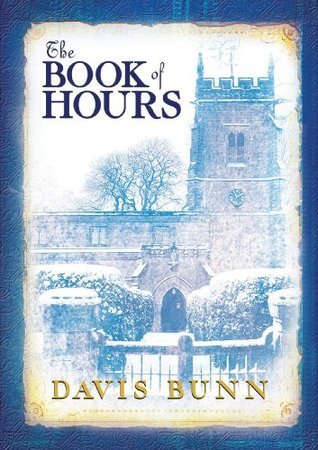
Review: The Book of Hours

Book of Hours

In Davis Bunn’s novel, The Book of Hours, Brian Blackstone has been traveling aimlessly for the past two years, grieving the death of his wife. After a harrowing illness in Sri Lanka, and still not completely well, Brian lands in Oxfordshire at Castle Priory, where his wife had grown up. Her aunt had passed away and left the property to him.

The aunt had been elderly and unable to keep up with repairs, plus, the property had sat untouched for some time. It needed a lot of work in addition to an enormous amount of death duties owed. Though Brian would like to keep the place for his wife’s sake, he can’t afford it. The real estate agent in charge of the property already has it set up to be sold at auction.

The people in the small town around the castle mistakenly think Brian is only after the money the estate will bring, not realizing their won’t be any money left after the sale. One who is particularly frustrated with Brian is Cecilia Lyons, an American doctor whose dream has been to practice in an English village. Plus, she loves her home, Rose Cottage, which is one of the buildings on the castle property, and doesn’t want to lose it.

In addition to the castle drama, the local vicar is facing a battle on another front. The church bells had been taken down to be repaired. But some people don’t want them put back up. They used to chime every hour, which annoyed many people. But the vicar insists it’s not just about the bells–the chimes were a call to prayer.

When Brian finds a letter from his wife’s aunt with a clue to finding another message, he, Cecilia, the vicar, and a couple of others discover that the castle problem and the bell problem might be intertwined. But will they find the solution in time?

I am not sure of the time frame of this story. I don’t think one was mentioned. There are cars and phones, but no mention of cell phones, computers, the internet, etc.

Though most of the book takes place in the weeks before Christmas, that’s almost incidental. The connection with Christmas isn’t mentioned until the last chapter.

I really enjoyed the story a lot. I loved how so many people had to overcome their mistaken impressions about each other. There was quite a lot of suspense in the latter half of the book. And I really loved a lot of side characters, particularly an older couple who are Brian’s neighbors. I found the spiritual journeys of the characters quite touching.

The only odd thing about the story was frequent mention of proceeding with an action or conversation because it “felt right.” That’s not so unusual in itself, but it was mentioned so often it began to stand out.

Overall, I loved the book.

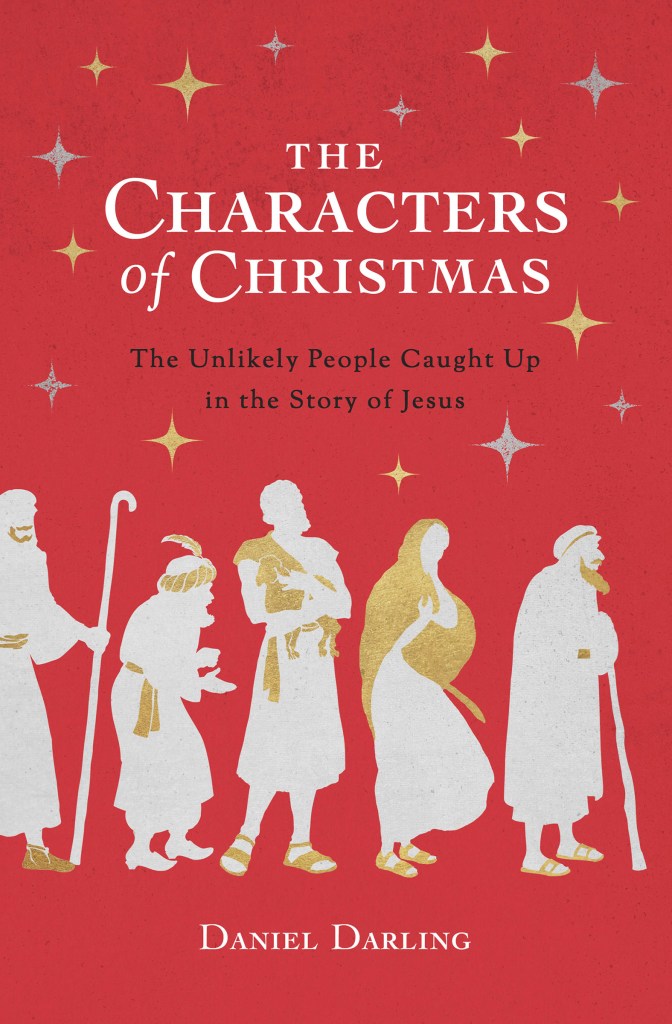
Review: The Characters of Christmas

Characters of Christmas

In The Characters of Christmas: The Unlikely People Caught Up in the Story of Jesus, Daniel Darling takes a fresh look at Joseph, Zechariah, Elizabeth, Herod, the innkeeper, and others involved in the first Christmas. He writes, “We should become familiar with them not because their lives are the point of the story, but because their lives, like our own, point ultimately to the one character whose birth changed the world: Jesus Christ” (p. 11). “Reading about this supporting cast allows us to get a closer look at the One who is worthy of our worship” (p. 169).

Most of them were “wonderfully ordinary” (p. 13), encouraging us that God often uses everyday folks.

The author weaves together what the Bible says about these people as well as what is known from the customs of the day and gives us a credible view of the first Christmas from their point of view.

Some of the quotes that stood out to me:

Zechariah was a common name in those days. There are even multiple Zechariahs in the Bible. But it is not a coincidence that the first words from God to His people in four hundred years would come to someone whose name means “the Lord has remembered” (p. 33).

A priest, who often spoke words of blessing on God’s people, would be silenced and would emerge with a renewed faith in the possibility of God’s promise. Sometimes God has to quiet us so we can hear Him. Sometimes we have to be still so we can see Him move. Sometimes our words and our busyness get in the way of our faith (p. 41).

The couple who suddenly showed up at his door was a disruption, an inconvenience, a problem he didn’t plan for. This is, by the way, how God often enters our lives (p. 86).

A temptation for us, this Christmas, is to simply get full of “the feels,” the warm sentimentality of this season, and miss the good news at the heart of the holiday: Christ has come into the world to save you and to save me (p. 100).

If Jesus is the true King, if He is indeed the fulfillment of the covenant promises to Israel, if He is the Light of the world who saves people from their sins, then isn’t He worthy of our whole selves, body and soul? (p. 114).

Each chapter ends with study reflections and a suggested Christmas song.

I appreciated the fact that the book was only eleven chapters rather than being a 25- or 31-day Advent schedule. Fewer chapters made it easier to work in amid Sunday School and Bible study reading throughout the month.

I enjoyed this book a lot. Even though I was familiar with most of what was written, it was done in a way that helped me look at the Christmas story anew. I’m sure I’ll use this book again for future Advent reading.

Thanksgiving in Unexpected Places

Thanksgiving In Unexpected Places

During and after Thanksgiving several weeks ago, I began to notice thanksgiving in places in the Bible where it’s easy to overlook. I jotted down some notes, thinking I might write about this next autumn. But then I thought–why not now? Though we emphasize Thanksgiving in November, we’re supposed to be thankful year-round. Plus, a thankful post now would go along with the theme of thanksgiving in unexpected places.

One such passage was 1 Timothy 2:1-2: “First of all, then, I urge that supplications, prayers, intercessions, and thanksgivings be made for all people, for kings and all who are in high positions, that we may lead a peaceful and quiet life, godly and dignified in every way.”

We understand the need to pray for our authorities. But thanksgiving? Even for the ones I didn’t vote for, the ones whose ideology is opposite mine?*

I understand that Nero was the ruler when Paul wrote this letter to Timothy. How could anyone be thankful for Nero?

I imagine that even a bad dictator is better than total anarchy. The Bible says God “removes kings and sets up kings” (Daniel 2:21) and “It is God who executes judgment, putting down one and lifting up another” (Psalm 75:7). Scripture gives numerous examples of God working through rulers who didn’t know Him or follow His ways.

We can be thankful that, no matter who is in charge, God ultimately rules. We can respect someone’s authority even if we can’t respect them personally.

Another unexpected mention of giving thanks is in a passage we normally turn to in anxiety: “The Lord is at hand; do not be anxious about anything, but in everything by prayer and supplication with thanksgiving let your requests be made known to God. And the peace of God, which surpasses all understanding, will guard your hearts and your minds in Christ Jesus” (Philippians 4:3b-7).

It’s natural to pray in troubling situations. But when we’re anxious, one of the last things on our minds is thankfulness. Yet we can be thankful that “The Lord is at hand,” He loves us, He knows the best outcome and course of action, and He has the power to answer and keep us. Thanksgiving reminds us how He has answered prayer and delivered us in the past and encourages our faith to trust Him for present and future concerns.

It’s also hard to be thankful when we’re in pain. Pain can become all-absorbing. But David writes, “I am afflicted and in pain; let your salvation, O God, set me on high! I will praise the name of God with a song; I will magnify him with thanksgiving” (Psalm 69:29-30). David goes on to say in verse 32, “When the humble see it they will be glad; you who seek God, let your hearts revive.” Thanksgiving revives and encourages us as well as others. Gratefulness acknowledges that God has a purpose even in suffering (Romans 5:1-5).

Another surprising place to see thanksgiving mentioned is Romans 1. Paul details mankind’s downward spiral, resulting in God’s judgment. A lack of thankfulness (verse 21) is listed in the passage along with idolatry, slander, deceit, faithlessness, hatred toward God, and more. Paul’s letter to Timothy lists characteristics of people in the last days, including lack of gratefulness, as well as selfishness, pride, and disobedience (2 Timothy 3:1-5).

Is a lack of thankfulness as bad as all those other things? Apparently so.

Thanking God for who He is and what He has done and given is a way to acknowledge that all we have comes from Him. It keeps us from pride and from feeling entitled. “The one who offers thanksgiving as his sacrifice glorifies me” (Psalm 50:23).

What a gracious Lord we have. He doesn’t “need” our thanks, though He deserves it. He’s not feeding His ego by desiring our thanks and praise. He wants us to be thankful to encourage us to keep our eyes on Him, to trust Him for all we need, to keep us on track and away from self-dependence or idolatry.

I am reminded and encouraged to “give thanks in all circumstances; for this is the will of God in Christ Jesus for you” (1 Thessalonians 5:18)–not just in November, but every day; not just in good times, but in every situation.

1 Thessalonians 5:18

* I am not thinking of specific examples here and don’t want to get into any political debates. I will not publish comments containing political rants.

(I often link up with some of these bloggers.)

Laudable Linkage

Laudable Linkage

I’m still behind in my online reading, but I did find a lot of great links to share. I hope some of them will be helpful to you.

How Do We Minister to Parents with Broken Hearts? “For every family in church where the children seem to be well established in the faith, there will be another family where one or more of their children have deserted it. They have tasted Christianity first-hand and want nothing more to do with it. This may apply to you; it almost certainly applies to someone you know. So how can we help and bring comfort to parents in pain?”

To the One Who’s New to and Nervous About Reading Scripture. “I heard you set a goal for the new year to read Scripture more faithfully. That’s great! A commendable goal. But I also understand that now you’re feeling a bit overwhelmed. You want to be in the Word, but you’re just not quite sure how that’s going to work. I get it. And if you don’t mind, I’d like to offer you a few pieces of advice.”

You Have Time to Read the Bible, HT to Knowable Word. “I’ve often been told by others that they don’t have time to read the Bible regularly. It’s one of the most common excuses I get now as a Bible teacher. It might be the thing holding you back right now. But I’m lovingly calling your bluff. You do have time to read the Bible. And so did I during all those years I swore I didn’t. Here’s how I know.”

7 Tips for Regular Bible Reading. “Most Christians realize they should probably read their Bibles every day. Most Christians want to read their Bibles every day. Yet many Christians (the author of this post included), have found it difficult to be consistent in reading their Bibles every day. If you find yourself wanting to more faithfully read the Bible in 2026, here are some suggestions that will hopefully help you start (or reinforce) a habit that sticks.”

No One Is Going to Make You, HT to Challies. “No one is going to wake you up tomorrow, tie you to a chair, tape a Bible to your hand, and force you to read it. No one is going to throw you into the prayer closet and lock the door until you’ve prayed. And even if someone did do that to you (call the police if they did), no one can make you do it with the right heart. Just to say it plainly, if you want to seek the Lord, you have to take personal responsibility and just do it.”

Dieting to the Glory of God, HT to Challies. “My purpose is not to over-spiritualize dieting (or not dieting). But for me, I am realizing I look to food for answers because I start with the wrong questions. I have been at times guilty of gluttony and asceticism, vanity and self-loathing. None of those extremes honored God. None of them helped me serve him better.”

What Is Your Responsibility in Sanctification? “The million-dollar question about sanctification is this: whose job is it to make us more holy? Ours or God’s?”

The Joy of Bible Journaling, HT to Challies. “Journaling through the whole Bible was a long process, and not always easy. But think about it: When was the last time you walked down the street and stumbled across a pile of gold? It doesn’t work that way. Finding gold requires time and effort digging for it. In fact, that very picture is used in the book of Proverbs.”

6 Means Through Which God May Choose to Guide You. “Providing a list of ‘tried and true methods for finding the will of God’ or prescribing how God will work in a life is presumptuous—and probably harmful. Our God is in the heavens, and He does whatever He pleases. However, an understanding of how God has worked in the past helps discern how He may work in the future, so I offer here six means through which God may choose to guide us in the new year.”

Motherhood Is a Mission, Not an identity. “Motherhood is absolutely an eternal mission. But our position and prominence in our kids’ lives is temporal, and if we find that we are living in a cloud of hurt and sadness as each phase moves and changes, then it may be a symptom that we have built our identity on a good, but wrong foundation.”

5 Ways to Honor an Aging Loved One (Even When It’s Hard), HT to Challies. “I’ve experienced tough situations in my adult life, including a divorce, single parenting two young boys, and telling them at ages 8 and 14 that their dad had been killed in a car accident. Despite those challenges, I’ve told many people that caring for an aging loved one is the most difficult thing I’ve ever done.”

Beyond Shame and Showmanship: Why You Should Read Christian Books, HT to Challies. “The question is not whether we will be readers, because we read all sorts of things every day. The question of this article is, ‘Why and how should I start a habit of reading Christian books?’ I still love listening to music and playing drums.1 However, I personally needed to grasp the purpose behind reading books, particularly Christian books.”

Don’t Forget to Pray for the M’s, HT to Challies. “I have an unfortunate talent for getting easily distracted from a task. One way this shows itself is when I decide I’m going to pray through the church membership list. I start strong. I make my way diligently down the list: Adams, Ainsworths, Bolens, Bonds, etc… To my shame, by the second month, my ‘praying through the list’ has lost its focus. I start praying for other things, and I just keep forgetting to look at the membership list to see who is up next. And you know what that means? All the ‘M’s get missed. Here’s your reminder to pray for the ‘M’s.” Jacob shares not just a reminder but tips to help.

5 Fun Fiction Challenges to Spice Up Your TBR. “If your TBR (to-be-read) pile looks like a skyscraper and your reading motivation feels like a puddle, it’s time to shake things up with a fiction reading challenge! These challenges aren’t just about finishing books—they’re about adding a dash of adventure to your literary life. Ready to play? Here are some creative ideas to get you started:”

Image

If you’re thinking that you don’t deserve a second chance from God, it’s important to remember that you didn’t deserve the first one, either.–Unknown

(Updated to add: I think this quote is meant to encourage rather than discourage us. All the chances God gives us are based on His grace, not what we deserve.)

Friday’s Fave Five

Friday's Fave Five

This week has been a little more eventful than some, so I’ll just plunge right in sharing the blessing of this week with Susanne and friends at Living to Tell the Story.

1. Taking Christmas decorations down with Jesse helping. It’s always a little sad yet a relief to get everything packed up and put away. The rooms look a little less cluttered.

Somehow we always miss some decoration until after the boxes have been stored back in the attic. Jesse and I discussed this and looked in places where we’ve left something out before. We couldn’t find anything, but Jesse said, “I just know you’re going to send me a picture of something we forgot.”

And sure enough, when I walked into my bathroom after Jesse left, I saw this:

bottle brush Christmas tree.

And I texted him the photo. 🙂

That’s the only Christmas decoration I have in a bathroom, besides a Christmas hand towel. But it makes me happy. 🙂 It’s still there, but I’ll probably whisk it into the storage closet at some point.

2. Easy returns. Some of the clothes we had gotten for Timothy didn’t fit. They had all been ordered online, and I didn’t think to get gift receipts or save packages they came in. They were from two different stores, and I wasn’t looking forward to the ordeal of getting the approval to return and then finding boxes to send them back in. But the online process went amazingly smoothly. Plus, all the items could be taken to a local store without having to mail them. My dear husband took care of that part.

3. Surgery over. I went in Wednesday morning for ablations for atrial flutter and atrial fibrillation. Everything went well except I ended up in afib. 😦 I was told that I’d likely have more afib episodes for three months after the procedures, because the heart is a little sensitive and erratic from all the poking around they did in there. My son did some reading this morning and saw that it’s actually the scarring that develops from the zapped places that blocks the circuits causing afib. So it makes sense it would need some time to heal.

They shocked my heart three times after the ablations, but it wouldn’t convert back to normal. They theorized that once I got back on the medications I’d had to stop before surgery, that would help my heart to convert back to normal. If that doesn’t help, then I am supposed to call them and we’ll see if they want to do another cardioversion or try another medication.

Other than being in afib, I am doing well and feeling good. I had an allergic reaction to some of the adhesive pads that they use during the cardioversion, so I have been using a lot of Benadryl cream on the welts.

But the biggest thing I am thankful for is just that the surgery is over. Plus, last time I had to be on my back for 4-6 hours after the procedure, and then even longer when I started bleeding from the incision the first time they let me stand up. This time, I only had to lay flat for two hours. And I didn’t have any bleeding.

4. Excellent nurses, both the one who took care of me before and after the surgery as well as the one who discussed things with me before the surgery and then took me to the operating room. I don’t think I could ever have been a nurse, but I so appreciate those who are skilled, efficient, kind, and compassionate.

5. Friends who pray and send notes or texts telling me they are thinking about me and praying for me. And then Mittu told me that a number of people asked about me at church on Wednesday. That warms my heart.

And my dear husband has been going the extra mile through all this. He’s a much better caregiver than I am.:)

I hope your week has gone well! Many thanks to those of you who prayed for the surgery.

Reading Plans for 2026

Reading plans

I like to set some goals for my reading year. If I mean to read more of a certain author, or get to particular titles, those things don’t happen unless I plan for them.

But I also like having flexibility to read a new find or pick up something I am in the mood for or feel the need to read about.

Some of my reading goals this year:

  • One Dickens book I’ve not read yet.
  • A couple of classic books.
  • One C. S. Lewis book I’ve not read yet.
  • A book about writing.
  • A book about productivity, time management, or organization.
  • At least one biography, autobiography, or memoir.
  • A Bible study book.
  • A Christian living book.
  • A book related to midlife or aging.
  • Some of the unread books on my shelves or in my Kindle.

I like reading challenges that help me reach my goals and expand my horizons. Plus, reading challenges are a fun way to share about books we love. But I don’t like being involved in too many because of the record-keeping involved.

These are the reading challenges that best intersect with my goals:

Mount TBR challenge

Bev at My Reader’s Block hosts the Mount TBR Reading Challenge, where we set a goal to read a certain number of books we already own. Details and rules are here. Bev has set the challenge up in increments of twelve, each set represented by a particular mountain. Last year I read 31 books from my shelves and Kindle app. This year I’m aiming for Mt. Blanc again, which is 24 books.

NF reading challenge

Shelly Rae at Book’d Out hosts the Nonfiction Reader Challenge. This can be done one of two ways. Shelly has twelve books in different categories that we can aim for. Or we can be a “Nonfiction Grazer” and make our own goals. Although I might hit a few of her categories, I’ll go the grazer route and incorporate the nonfiction goals mentioned above.

Image

Finally, The Intrepid Reader hosts the Historical Fiction Reading Challenge. A lot of my fictional reads fit this category. I’m going to aim for the Medieval level at 15 books.

Do you make reading plans or participate in reading challenges?