
Winter Storm Fern Insured Losses Seen at $4–7 bn, No P&C Insurer Downgrades
Fitch estimates Winter Storm Fern insured losses at $4-7 bn. Losses hit earnings, not capital, with P&C insurers absorbing most claims and no rating downgrades
Insurance-Linked Securities (ILS) — financial instruments whose values are driven by insurance loss events. Those such instruments that are linked to property losses due to natural catastrophes represent a unique asset class, the return from which is uncorrelated with that of the general financial market.
Insurance companies are two important ways insurers profit in this business.
One is by selling portfolios of insurance policies grouped into packages, to interested investors. The risk from low severity, high probability events can be diversified by writing a large number of similar policies. This reduces an insurer’s risk because should a policy default, then the loss is shared between a large number of investors.
The second way insurers profit on policies is by re-insuring them through other insurers. A reinsurance policy would allow a second insurer to share in the gain and potential loss of the policy, much like an investor. The secondary insurer would share invested interest and risk.
Fitch estimates Winter Storm Fern insured losses at $4-7 bn. Losses hit earnings, not capital, with P&C insurers absorbing most claims and no rating downgrades

The 2025 Atlantic season had no US hurricane landfalls yet delivered Category 5 storms, inland flooding, and losses, highlighting rising intensity and protection gaps

Singapore expands ILS grants as Asia’s cat bond market grows, but investor education, capacity gaps and regulatory momentum still shape the asset class

Hurricane Melissa and Asian floods show insurance’s role in adaptation, yet coverage is scarce. Philanthropy, bundling and aggregation could shift that

H1 2025 has reinforced Insurance-Linked Securities as one of the most resilient corners of the capital markets. Notional issuance has already topped $17bn across 60 deals

Explore major US hurricanes since 2015, their economic and insured losses, and how storms reshape insurance, risk modeling, and disaster resilience

Hurricane Katrina struck Louisiana on 2005. Katrina generated $104.5bn in insured losses, according to the Insurance Information Institute

The global reinsurance sector has undergone a notable transformation since the market reset, drawing sustained attention from investors and analysts

Global insured losses from natural catastrophes reach $80 bn in the first half of 2025. This is almost double the 10-year average and more than half of the $150 bn

Worldwide, natural disasters caused overall losses of around $131 bn in the first half of 2025 (previous year, adjusted for inflation: $155 bn), of which $80bn was insured (in 2024: $64 bn)

The California Department of Insurance (CDI) has finalized its review of the state’s first approved wildfire catastrophe model

UK’s proposed reforms to insurance risk transformation and captive insurance will not affect the credit quality of London market insurers ahead of the 2027 implementation

Severe weather in Kentucky drives up insurance rates, strains carriers, and prompts regulatory changes as tornadoes and hailstorms increase in frequency and cost

California’s Insurance Market: The Case for Risk-Based Pricing and Data-Driven Mitigatio. California’s insurance availability/affordability challenges

Global insured losses from natural disaster events in Q1 2025 were preliminarily estimated to reach at least $53 bn, the highest Q1 insured losses since Q1 2011 ($81 bn)

Global reinsurers’ profitability will remain strong in 2025 despite lower risk-adjusted prices for most business lines when reinsurance contracts

The insurance-linked securities (ILS) market hit $107 bn in capacity by the end of 2024, driven by strong investor returns and increased catastrophe bond issuance

WTW has analyzed natural disasters, key lessons, and emerging trends. The assessment will focus on physical and vulnerability NatCat factors

Insured catastrophe losses in Canada reached a record C$8.5 bn in 2024, nearly tripling the prior year’s total and standing 12 times higher than the annual average

In 2024, global natural perils resulted in total direct economic costs of $417 bn. Of this, $154 bn was covered by private insurers and public insurance entities
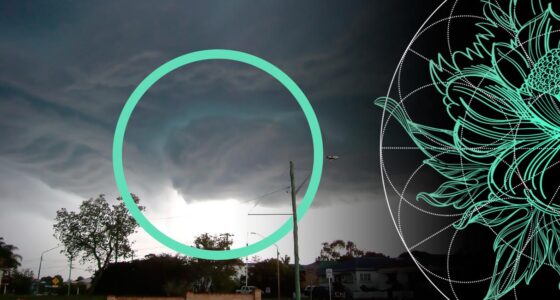
In the US, two major hurricanes and frequent severe thunderstorms accounted for at least two-thirds of the year’s global insured losses, which currently exceed $135 bn

Economic losses from natural catastrophes in the EU are rising due to increased economic exposure and the growing severity of climate-related disasters

Government-backed catastrophe insurance schemes play a vital role in managing the financial impact of natural disasters across Europe

The 2024 Atlantic hurricane season ended on November 30, marking a year of above-average storm activity and substantial insured losses in the U.S.

PERILS has released its third insurance industry loss estimate for the floods that hit southern Germany from May 31 to June 6, 2024

2024 is on track to become the hottest year recorded. A warming climate has intensified natural catastrophes, especially in Europe, which faced severe flooding

Hurricane Helene’s recent destruction underscores the rising flood risk impacting local economies and tax bases in the Eastern and Southern United States

Changes to reinsurance-related capital requirements proposed by the Australian Prudential Regulation Authority strengthen Australian general insurers’ credit profiles

Catastrophe bond issuance set records in three of the past four quarters, pushing the market to $45.6 bn—an 18% rise

Q3 2024 saw a number of significant disaster events, which drove total economic losses from natural catastrophes above at least $258 bn

Economic and insured losses from Hurricane Milton remain uncertain, Milton is the second major storm to hit the U.S. within two weeks, following Hurricane Helene
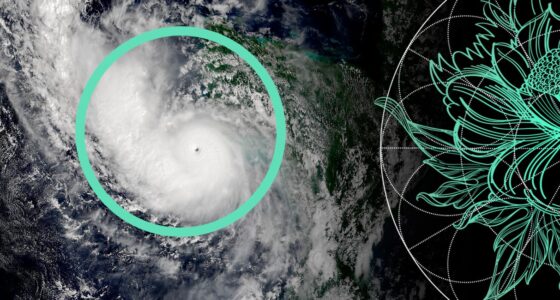
Hurricane Milton is anticipated to be one of the most powerful and economically detrimental hurricanes to make landfall in the western region of Florida

ILS market remains a significant capital source for reinsurers in 2024. Alternative capital estemated at $110 bn, with the catastrophe bond market growing to $45 bn

Higher property values, urbanization, and increased repair costs are likely to drive demand for property re/insurance, particularly in regions facing heightened natural catastrophe

Global natural disaster losses in the first half of 2024 reached $120 bn, down from 2023, which saw $140 bn in losses due to a severe earthquake in Turkey and Syria

The mid-year reinsurance renewals occurred against a continued increase in reinsurer appetite as overall reinsurance capacity grew

Natural disasters amplified by climate change continue to take a bitter toll on the global economy, caused $350 bn in economic losses, with insurance covering just over $100 bn

1H 2024 saw multiple notable natural catastrophe events, which drove total year-to-date economic losses above at least $117 bn

Severe convective storm (SCS) losses in the US continued to dominate global insured losses in 2024, following a highly active period for the peril

The 2024 Atlantic hurricane season officially began and has already been active. Business owners found that 91% identified specific weather or natural hazards as risk

The total economic loss from global natural catastrophes for H1 2024 was estimated at $128 bn, insured losses totalled at $61 bn

Insured losses from Hurricane Berylcould have surged if the Category 1 hurricane had struck a densely populated Texas city like Corpus Christi or Galveston

Insurance-Linked Securities Overview. Insurers and reinsurers leveraged alternative capital in 2023 more than any year in the history of the (re)insurance market

The global financial cost of natural catastrophes starting in 2024 was manageable for federal governments and the insurance industry

Natural catastrophes will once again break several insured loss records in 2023. A high number of low-to-medium-severity events will aggregate to insured losses

2023-2024 saw multiple significant disaster events, which drove total economic losses above $295 bn, approaching the 21st-century average of $310 bn

The U.S. is experiencing its costliest year ever in 2023 for severe convective storms, with insured losses from these events exceeding $50 bn

Verisk report: Global Modeled Catastrophe Losses. The current challenges the global reinsurance industry faces in addressing recent catastrophe losses

Moody’s RMS overview of North Atlantic seasonal activity forecasts and summarized the key oceanic and meteorological drivers behind the predictions

The U.S. flood insurance market had grown 24% – from $3.3 bn in direct premiums written to $4.1 bn between 2016 and 2022

Most natural disaster databases show a significant decline in the number of annual global events prior to 1980. While the biggest natural catastrophe events are typically captured

A series of widespread thunderstorms (severe convective storms) hit the US and account for 68% of global insured natural catastrophe losses

2024 is a continuation of the recent run of years with high losses from natural disaster. While the overall losses of $120bn in 2023 were lower than those in 2022
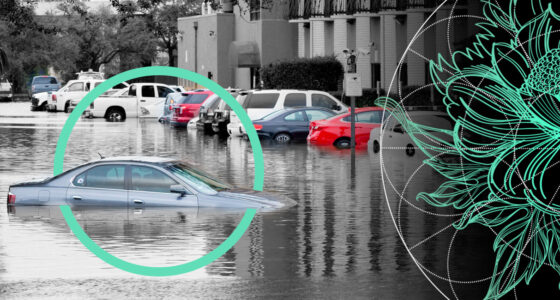
Insured losses from hurricanes have risen over the past 15 years as hurricane activity has intensified

U.S. property catastrophe reinsurance rates rose by as much as 50% at a key July renewal date, with states such as California and Florida increasingly hit

Reinsurance market — a critical piece of Florida’s property-insurance system — is improving as Florida insurers try to bounce back

Catastrophes and natural disasters in the Asia Pacific (APAC) region amounted to a total economic loss of $80 bn. A substantial protection gap of 86%
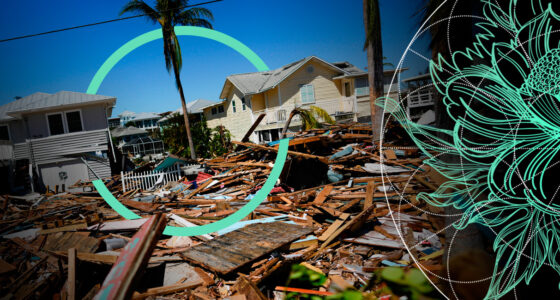
When considering weather-related catastrophes, few perils have generated as many column inches in recent months as severe convective storms (SCS)
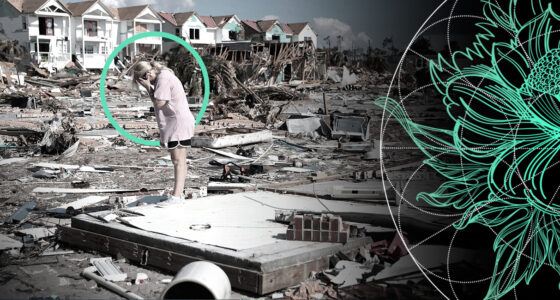
Insured losses from major natural catastrophes in the second quarter of 2023 are estimated to be less than $10 bn, in H1 totaled $23 bn
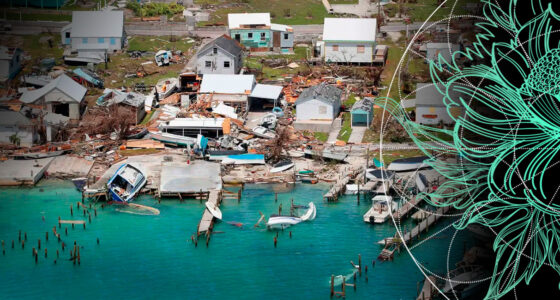
Aon’s work with Columbia University has revealed that under selected scenarios, U.S. hurricane losses would increase by at least 10% over 20 years