
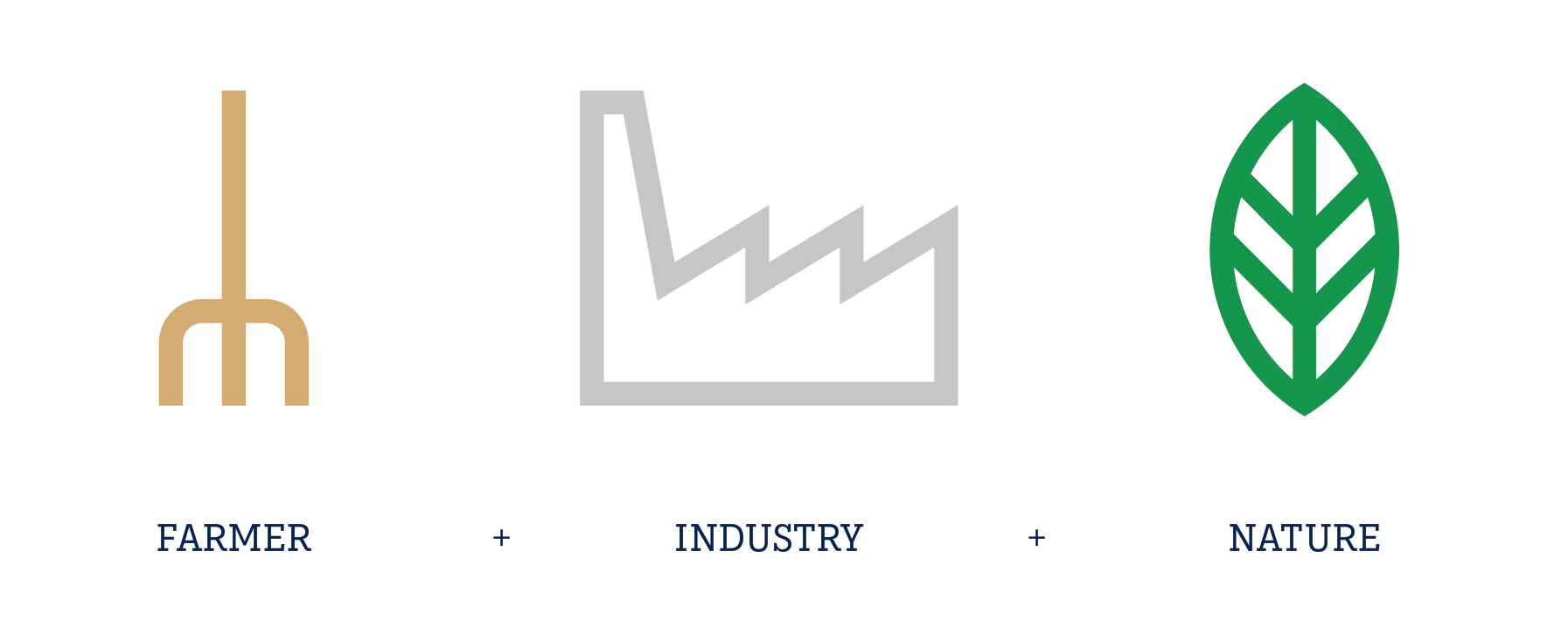
Currently, the farming sector faces a hard challenge: increasing land productivity in a sustainable way. Over the past decades, however, agri-food specialisation has often compromised the presence of soil nutrients. To reverse this trend, the fertiliser industry must supply renewable nutrients: this is possible only by improving the relationships between the farming sector and the bio-based industries.
Outcomes and impacts
B-FERST’s main objective was to integrate the valorisation of bio-waste in agriculture management plans by creating new circular and bio-based chains starting from bio-waste. Thanks to a direct interaction between farmers and the fertiliser sector we changed the fertilisers’ paradigm by developing 8 innovative fertilisers: specialised nutrients have been provided by tailor-made dosing adapted to farmers’ needs to improve both the efficiency and the sustainability.
Development of integrated and sustainable value chains
B−FERST changed the market uptake of fertilisers in intensive agriculture by demonstrating and introducing new integrated and sustainable value chains whereby bio−waste guaranteed a secure and sustainable supply of biomass feedstock. This approach contributed to decarbonise the fertiliser sector by replacing fossil-based products with bio-based by-products. B− FERST contributed to reduce up to 10% the carbon footprint of the fertilisers’ production and thus their environmental impact.

New bio-fertilisers with unused sources
B−FERST consortium validated new demonstration processes able to integrate the incorporation of bio−waste in form of solid nutrients from ashes, struvite or compost, and Non−Microbial Plant Biostimulant from biomass, to obtain advanced bio−based fertilisers.
The project allowed the substitution of about 15-30% of mineral raw material by bio-waste residues. All bio−based products include between 10 and 43% of bio−based material rate. This lessens the dependence from raw materials, improve the fertilisers’ sustainability and valorise the underexploited biowaste for a more sustainable agricultural management.
- Bio-based mineral fertiliser
- Bio-based mineral fertiliser enhanced with microbial plant biostimulants (MPBs)
- Bio-based mineral fertiliser enhanced with non-microbial plant biostimulants (NMPBs)
- Organo-mineral fertiliser enhanced with MPB
- Organo-mineral fertiliser with NMPB
- Bio-based organo mineral fertiliser enhanced with MPB
- Bio-based organo mineral fertiliser enhanced with NMPB
- NMPB based on biowaste by-products from dry industrial oil crops or compost
Competitive rural economy in the EU
The B−FERST consortium setup four demo pilots in different geographical areas (Spain, Italy, Portugal, and Poland). Know-how and good practices were transferred and replicated both locally and in other areas. Direct involvement of end users in the whole value chain to create the right environment for product acceptance was facilitated and promoted.

Partners
The B-FERST consortium is composed of a multidisciplinary team with expertise in every aspect of the whole fertiliser value chain as well as in transversal activities. The team includes large companies, SMEs, research entities and non-profit organisation for a total of 11 partners from 6 countries.

Sister projects
B-FERST collaborated with similar projects, and shares knowledge and experience, to increase the impact of our activities and results.