What is Sacred Music? The History Is More Complex Than You Might Think

sacred music

sacred musicNote to readers: The following article is long (3500 words). This is because I have been adding to it over the years as my research has continued. I am by avocation a church musician. Before my ordination, I was a Choir director and an organist. Like most of you, I have my preferences in the area of Church music, but we must be careful not merely to dogmatize them. If we are going to talk intelligently about Church music, knowledge of history is important. It would certainly be incorrect to think that the debates about music in the liturgy began in 1965. In fact, such debates go back to the very beginning of the Church. In order to provide some historical perspective (and a context for the reflection on what is and is not appropriate music) I have been writing and expanding upon this essay for several years. Since it is long, I want to provide a PDF, which you may find here, so that you can print the article out and read it at your leisure.  If you do not have the time or the interest to read this full article, you can get the gist of it in the summation at the end.

With the exception of chant, almost every form of music that is today regarded as sacred initially had a stormy reception in the Church before being admitted to the ranks of music commonly called “sacred.”

That music is controversial in the Church is nothing new, as we shall see in this modest survey of the history of music in Catholic liturgy. Some of my sources are listed at the end of this post, but it is really the product of many years of reading and studying.

On some level, I hope to provide some perspective on the claim that is often made today that certain modern forms of music are inadmissible because they are not “sacred.” In no way do I intend to approve of all forms of modern music nor to encourage the admission of all of them into the liturgy, but it is worth appreciating that the definition of “sacred music” has changed over time. New forms have been admitted— sometimes reluctantly—to the exalted class we refer to as “sacred music.”

Here, then, is a brief look at the history of Church music in terms of what has been considered sacred and what has not.

I.   The early, pre-Constantine period: Chant reigns supremeWhile little if any music survives in written form from the earliest days of the Church, it seems clear (as Johannes Quasten records) that the leaders of the early Church (the Fathers and bishops) preferred monophonic music. This seems largely due to the association of harmony with the excesses of the pagan world and pagan worship.

Frankly, there was in the early Church a very persistent theme that music itself was problematic. Many ancient bishops and Fathers of the Church barely tolerated it, sought to limit its influence, and/or were deeply suspicious of any singing at all.

In his essay “On the Theological Basis of Church Music,” Cardinal Ratzinger (drawing from sources such as Pope Gregory the Great, St. Jerome, Gratian, and even as recent as St. Thomas Aquinas) describes the rather negative opinion in the early Church of any music involving instruments, harmony, or anything deemed “theatrical.” He writes,

Instrumental music, understood as a Judaizing element, simply disappeared from the early liturgy without any discussion; the instrumental music of the Jewish temple is dismissed as a mere concession to the hardness of heart and sensuality of the people at that time. What the Old Testament said about music and worship could no longer be applied directly; it had to be read by them allegorically; it had to be spiritualized

(Ratzinger, “On the Theological Basis of Church Music,” quoted from Collected Works Vol XI, pp 425-432).

Summarizing the views he had received from the earlier Church, St. Thomas wrote, “In the praise of God, the Church does not employ musical instruments … lest she appear to be falling back into Jewish ways” (Summa Theologica II, IIae, q. 91 a 2 ad 3).

Cardinal Ratzinger continues,

Analyzing the texts, not infrequent in the Fathers, which are critical of music or even openly hostile to it, one can clearly identify two constant and governing factors:

A.  In the first place there is the one-sidedly “spiritual” understanding of the relationship between the Old and New Testaments … [So] Christian liturgy … took on a more or less Puritan form. … The idea that God can only really be praised in the heart means that no status can be accorded to music … In Christian worship … music must be relegated to a secondary level. Augustine is a splendid example of this. His sensitivity to music causes him much torment because his mind is dominated by a spiritualizing theology that ascribes the senses to the Old Testament, the old world; he is afraid of “sinning grievously” when he is “moved more by the music then by the reality to which the singing refers” … and would prefer “not to hear singing at all.” Fortunately, his rigorism is dampened when he recalls the profound stirring his soul experienced when he first heard Church music in Milan. [He thus adopted a view of music later stated by St. Thomas, which held that among the reasons for Church music was that] “Thus the minds of the weak be more effectively summoned to piety.”

B.  The second group of ideas that stood in the way of a positive the valuation of Church music … is put in a nutshell in Thomas’ fundamental article on the praise of God, where he says that vocal worship is necessary, not for God’s sake, but for the sake of the worshiper (Ibid).

Cardinal Ratzinger argues in the essay that this tended to lead to a utilitarian view of Church music: necessary to some degree, but somehow less than ideal. He reflects that this created a barrier to any satisfactory theology, not only of Church music, but of all prayer whatsoever.

He also adds (in a later essay) another reason for the restrictive notions about music in the early Church:

To the extent that it distanced itself from the Semitic world, the development of Christological art songs [also] threatened more and more to turn into an acute Hellenization of Christianity … The fascination of Greek music and Greek thinking [now excluded] … so that the new music rapidly became the domain of Gnosticism … For this reason [too] the Church immediately and rigorously rejected the poetical and musical innovation and reduced Church music to the psalter … This limitation of liturgical singing which gradually began asserting itself from the second century … led to a forbiddance of private song compositions and noncanonical writings in liturgical services. The singing of the psalms also came to be restricted to the choir whereas others “should not sing in church” (See canon 59 of the Synod of Laodicea 364 AD) (Ratzinger, Ibid, p. 505).

Thus music in general, given its Semitic and pagan associations, was widely resisted in the early Church and tolerated only in limited ways. Music with any harmony was altogether excluded and would not reappear until the Late Middle Ages.

As a final sample of the Patristic skepticism of music or demonstrative worship, consider St. Cyprian, who wrote the following early in the 3rd century:

When we pray, our words should be calm, modest and disciplined. Let us reflect that we are standing before God. We should please him both by our bodily posture and the manner of our speech. It is characteristic of the vulgar to shout and make a noise, not those who are modest. On the contrary, they should employ a quiet tone in their prayer ….

When we gather to celebrate the divine mysteries with God’s priest, we should not express our prayer in unruly words; the petition that should be made to God with moderation is not to be shouted out noisily and verbosely. For God hears our heart not our voice. He sees our thoughts; he is not to be shouted at …

(Treatise on the Lord’s Prayer by Saint Cyprian, bishop and martyr (Nn. 4-6: CSEL 3, 268-270)).

So much, it would seem, for demonstrative prayer and exuberant singing.

Another reason that the early Church seems to have favored non-harmonic singing was somewhat rooted in the cosmology of the time, wherein there was an emphasis on the unity of all things. Whatever diversity was discovered was viewed as coming from the one hand of God. Monophonic music seemed to better express this unity, at least to the ancient Christian mind.

This cosmology of unity still finds its expression in the way that most Prefaces in the Mass are concluded. The Latin text speaks of the multitude of the choirs of angels, joining with the voices of the many saints (cum Angelis, et archangelis, cum Thronis, et Domininationes … et òmnibus Sanctis). Yet despite the vast multitude of voices, at the end of the Preface it says that they all sing “as with one voice, saying” (una voce dicentes), “Holy, Holy, Holy, Lord God of hosts.”

And so at the earliest stage, music was limited, and to the degree it was it was largely what we today call chant. To the ancient Church, harmony was widely considered to be secular, even pagan.

II.  The Church after Persecution: Chant developsThe earliest chants were quite simple and largely syllabic (one note per syllable); there were few elaborations. However, after the Edict of Constantine (321 A.D.) as the Church came out of a more hidden worship, the use of large, cavernous buildings started to influence the singing.

Cantors began to elaborate on the chant, making full use of the echoes in the larger, basilica-like buildings. Vocals became increasingly melismatic (multiple notes per syllable) rather than syllabic, especially during festival seasons. Syllables (such as those in the word “Alleluia”) began to be extended over more and more notes.

Singers also “yielded to the spirit,” and the long melismata became a kind of ecstatic “singing in tongues.” Though at first any elaboration was resisted, certain chants did begin to develop in some areas. As these melodies became increasingly complex, they were written down and collected by Pope St. Gregory (among others), hence the modern name, “Gregorian chant.”

As these chants became more and more elaborate, their sacredness was only gradually conceded. In fact, they became so complicated that the faithful in the congregation, who were already being discouraged from singing at all, had great difficulty joining in most of the chants. For this reason, special choirs called “scholas” were formed.

III. The High Middle Ages: Harmony entersThe next major development in Church music took place during the High Middle Ages, generally speaking in the 13th century. The first developments of harmony occurred in the musical schools in France, particularly around Paris. It was here that we saw the first widespread introduction of harmony into Church music.

Several factors influenced the introduction of harmony. First, there was the reintroduction of Greek philosophy and some of its views back into the Western world through scholasticism.

Among the Greek notions was a cosmology that spoke of the planets orbiting the sun in perfect circles, each of them ringing out a different tone and creating a beautiful celestial harmony in the heavens as they did so. This was the “music of the spheres” and the idea of a great and beautiful harmonic sound in the heavens. Thus the association of harmony with the sacred began to seem more plausible in the minds of Christians.

The first experimentation with harmony seems to have been singing the Gregorian melodies and adding a hollow harmony of a fourth or fifth. Sometimes this involved several singers singing the words in those harmonies. Other times the harmonizers simply “droned” in the background, somewhat like bagpipe drones.

Architecture was another factor that influenced the harmonies. The soaring new cathedrals with their vaulted ceilings that began to dot the landscape of Western Europe seemed to demand more soaring music. These cathedrals were the skyscrapers of their day.

As harmony began to sound more pleasing to the ears, scholars worked to study it using, of all things, the Pythagorean Theorem, to mathematically set forth the harmonic scale. Thus mathematics and music came together to quantify a kind of music theory. Gradually, as the years just prior to the 16th century ticked by, we came to have what we know of today as the 12-tone scale.

The introduction of harmony in the Church (as with most things musical) was not always without controversy. Some thought that it made the words harder to understand, a complaint that would plague polyphonic music in its early stages.

Nevertheless, as a general rule, the new harmonies from the Paris school swept through Europe to widespread acclaim. People flocked to the cathedrals to hear this splendid new music.

IV.  Late Middle Ages to Renaissance: Musical revolution and a growing crisis for polyphonyIt is hard to describe what took place in music from the late 1300s to 1500 as anything less than revolutionary. The modern harmonic scale as we now know it came into full realization. Harmony went from two-part, to three-part, and then to four and more parts, amazing listeners everywhere.

The incredible development of music during this period paralleled the remarkable developments in painting: increasing use of shadow, light, perspective, and depth. By the early 1500s, Renaissance polyphony was in all of its glory. Composers such as Isaac, Lassus, Palestrina, Victoria, Tallis, and Byrd brought this art form to an amazing richness.

But the music was not without controversy. There were two main problems with this new style called polyphony.

The first problem was the intelligibility of the text. With multiple harmonies being sung, the Latin text, often staggered across many parts and voices, became harder and harder to understand. Clergy in particular complained of this, arguing that the sacred text was taking a backseat to musical flourishes. In addition, the “theatrical showiness” seemed secular to many.

The second troubling issue was that many of the composers of the day drew from secular melodies that were often heard in taverns, in theaters, and on the streets. They would often take these recognizable melodies and set them as a cantus firmus (musical theme or foundation) of sacred compositions, including the parts of the Mass.

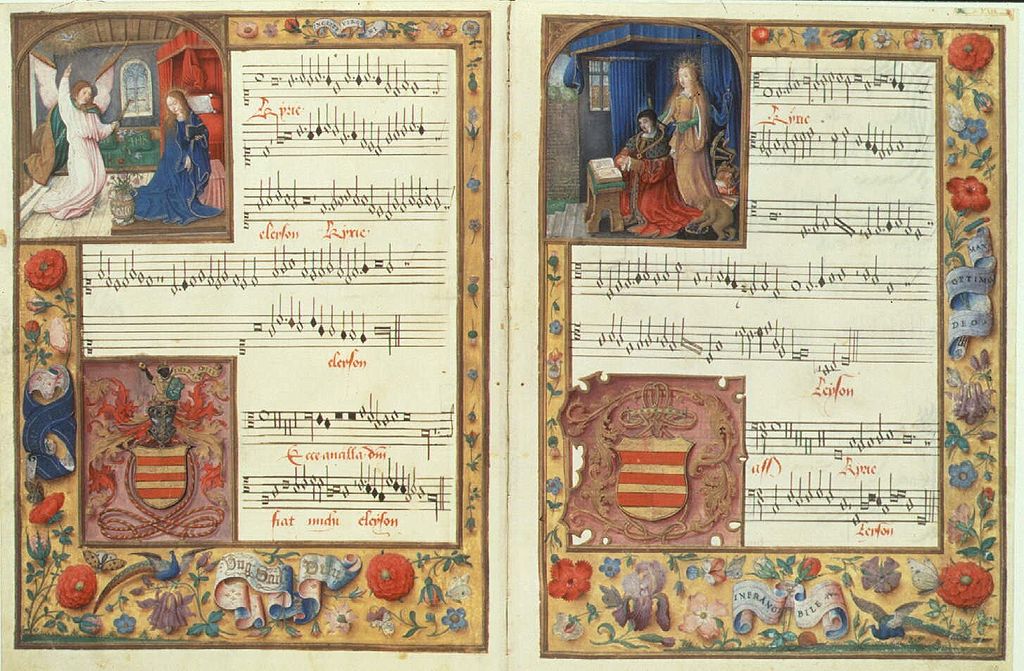
Heinrich Isaac, as early as the 1400s in his Missa Carminum, drew from many of these tavern songs. But perhaps the most egregious example of this, and something that almost caused polyphony to be banned completely from the Catholic Church, was a Mass composed by Orlandus de Lassus.

The Mass in question was his Missa Entre Vous Filles. The main melody of both the Kyrie and the Gloria came from a secular piece by the French composer Jacob Clemens non Papa, the words of which bordered on the pornographic. As the Mass grew widely popular (for it is a lovely melody), Church authorities discovered its source and a great uproar ensued.

This controversy took place during the years of the Council of Trent, and though some scholars are dubious of all the details, it is reported that there were Council Fathers who were serious about seeing that sacred polyphony was forever banned from the Catholic liturgy.

Among those who came to the rescue, I am happy to report, was my patron saint, Charles Borromeo. He assembled some increasingly dubious bishops and cardinals who were attending the sessions of the Council of Trent so that they could hear the Pope Marcellus Mass by Palestrina. This particular Mass seems to have been specifically composed to address some of the critiques about the intelligibility of the text and the secular origins of many melodies. The presentation calmed some of the fears regarding this new music and the crisis largely passed.

This incident demonstrates that what many today consider a very sacred sound (namely Renaissance polyphony) was actually quite controversial in its day. It was only thought of as sacred in a widespread way later on. After surviving this first crisis, polyphony became less “florid” and gave greater emphasis to the intelligibility of the text. Secular melodies were also excluded. For these reasons, later works by Palestrina are more austere than those from his earlier period.

Thus we see how the definition of what makes for sacred music had already passed through two major periods. In the first, harmonies were considered too secular; in the second, harmony was introduced but only slowly accepted as sacred in nature.

V.  The Renaissance to the Baroque: New controversies, old problemsIn the period of the middle Renaissance, a new cosmology began to replace the idea that the planets revolved around the sun in perfect circles. Astronomy started to reveal that most of the planets revolved around the sun in elliptical orbits, some of them quite elongated. The notion of the circular orbits of the planets, symbolized by the “music of the spheres” and imitated by Renaissance polyphony, began to give way to the understanding of the mathematical progression of elliptical orbits—a kind of Bach fugue in the sky. This change in cosmology helped to usher in the rather more elaborate, yet mathematical, music of the Baroque period.

In this period, we find the wonderful and mathematically precise music of Bach, Vivaldi, Handel, Mozart, Gabrieli, Schubert, Scarlatti, and many others. Perhaps the fugue best exemplifies the kind of mathematical cosmology of the time. In a fugue, mastered by Bach but not wholly unique to him, a musical theme is set forth. For example, quarter notes may announce the theme of the fugue. This theme is then repeated in the left hand and then in the feet (of the organist). It also progresses mathematically: into eighth notes, then into sixteenth and even 32nd notes. Math meets music! Other musical forms like canons emerged similarly. Symphonies also grew to have movements, which were often named for their tempo (e.g., allegro, adagio, presto).

The classical and baroque periods brought the great orchestral or “Classical” Masses, by composers such as Mozart, Schubert, and Scarlatti. Even Bach and Beethoven set the Catholic Mass in great symphonic and orchestral renderings.

Much controversy accompanied these newer forms. Once again, the principle concern was the intelligibility of the text. Another concern was the length of many of these Masses; in some, the Glorias and Credos could go on for twenty minutes or longer.

Some complained that these musical settings of the Mass made it sound more like being at the opera than at Mass. Indeed, they often broke the sacred text into movements sprinkled with soprano or tenor solos and duets, grand choral sections, and often with full symphonic accompaniment. It was quite a feast for the ears! These Masses were generally so elaborate that they could only be performed in the larger, well-endowed, city churches.

The controversy concerning these kinds of Masses continued for many years. Even as liturgical reforms began in the early 1900s, Pope Pius X frowned on their usage, referring to these orchestral Masses as “theatrical” (see Tra Le Sollecitudini # 6). This led to a de facto banishing of the form from the Catholic liturgy at that time. Only after the Second Vatican Council was this form rehabilitated in a small way.

Here, too, we see that what many Catholics today consider unquestionably sacred (e.g., a great Mozart Mass) had to survive much controversy and even a kind of banishment. What is thought of as sacred today has not always enjoyed that rarefied distinction!

VI.  The Modern Era: New musical forms, new controversies This leads us to the modern era. As we have seen, those who think that debates about what constitutes sacred music are new are simply mistaken. These disputes have been quite a constant part of Church life almost from the beginning. To place them at the feet of the Second Vatican Council is to lack historical perspective.

It is true that two documents of the Second Vatican Council (Musicam Sacram and Sacrosanctum Concilium) opened the door to newer forms with a greater freedom toward enculturation (e.g., MS # 18, 63), but they also reasserted the special accord to be given to chant (# 50a), polyphony, and the pipe organ (# 4a).

Although debate continues about newer forms of music and whether or not they are sacred, such tensions have long existed. Some newer forms have already been tried and found wanting (e.g., Polka Masses). Other forms such as “folk,” gospel, or contemporary music, with adaptions over time, have remained.

Summation:

  1. Historically, no form of music currently considered sacred achieved that status without controversy.
  2. Indeed, music itself was controversial in the early Church and was barely tolerated by many of the Church Fathers.
  3. Time ultimately proves where wisdom lies and ultimately mediates for us what is sacred in a way that transcends mere passing tastes or preferences.
  4. Music has made several revolutionary leaps during the age of the Church.
  5. Provided necessary rational limits are applied, there is no need to rush to exclude every newer form.
  6. If we were to do so, only chant would exist in the Church, and we would be deprived of a great treasury of music from the era of polyphony and the classical period.

In saying this I do not mean to indicate that all music is just fine, or that all modern forms are here to stay, or that newer forms should not be questioned; it is clear that some forms are wholly inimical to the Sacred Liturgy. Rather, I seek to remind people that what is called “sacred music” is historically quite complex. It is the result of long and vigorous discussions, refinements, and other factors as diverse as cosmology, architecture, mathematics, and culture.

We do well to let some of the conversations and controversies work themselves out, lest in too quickly ending them by judicial fiat we impoverish ourselves and block what might bless others and even our very selves.

These are just a few of my sources for the above article:

  1. Music and Worship in Pagan and Christian Antiquity (Johannes Quasten)
  2. Theology of the Liturgy (Joseph Ratzinger)
  3. Papal Legislation on Sacred Music (Msgr. Robert F. Hayburn)
  4. Sacred Music (a four-part production of the BBC)
  5. Coming of Age in the Milky Way (Timothy Ferris)
  6. Why Catholics Can’t Sing (Thomas Day)

Here are the Kyrie and Gloria from the Missa Entre Vous Filles by Orlando de Lassus, the polyphonic Mass setting that almost torpedoed polyphonic music in the Church. To our “distant” ears it is delightful and melodic. At the time, however, it engendered great outrage as nearly pornographic, because it drew from the melody of a “racy” song of the time.
Who Is Jesus Christ? A Homily for the 2nd Sunday of the Year

Image

011814As Ordinary Time (tempus per annum) opens up, the lectionary continues to “introduce” Christ to us. The Christmas cycle now done, we must ask, “Who is Jesus Christ? Who is this savior who has been born for us?”

In today’s Gospel, John the Baptist elaborates on this. John’s words are brief, but they are packed with Christological teaching. In this Gospel we learn at least five things about Jesus. We learn that He is prefigured, preexistent, preeminent, powerful, and is the presence of God. Let’s look at each one.

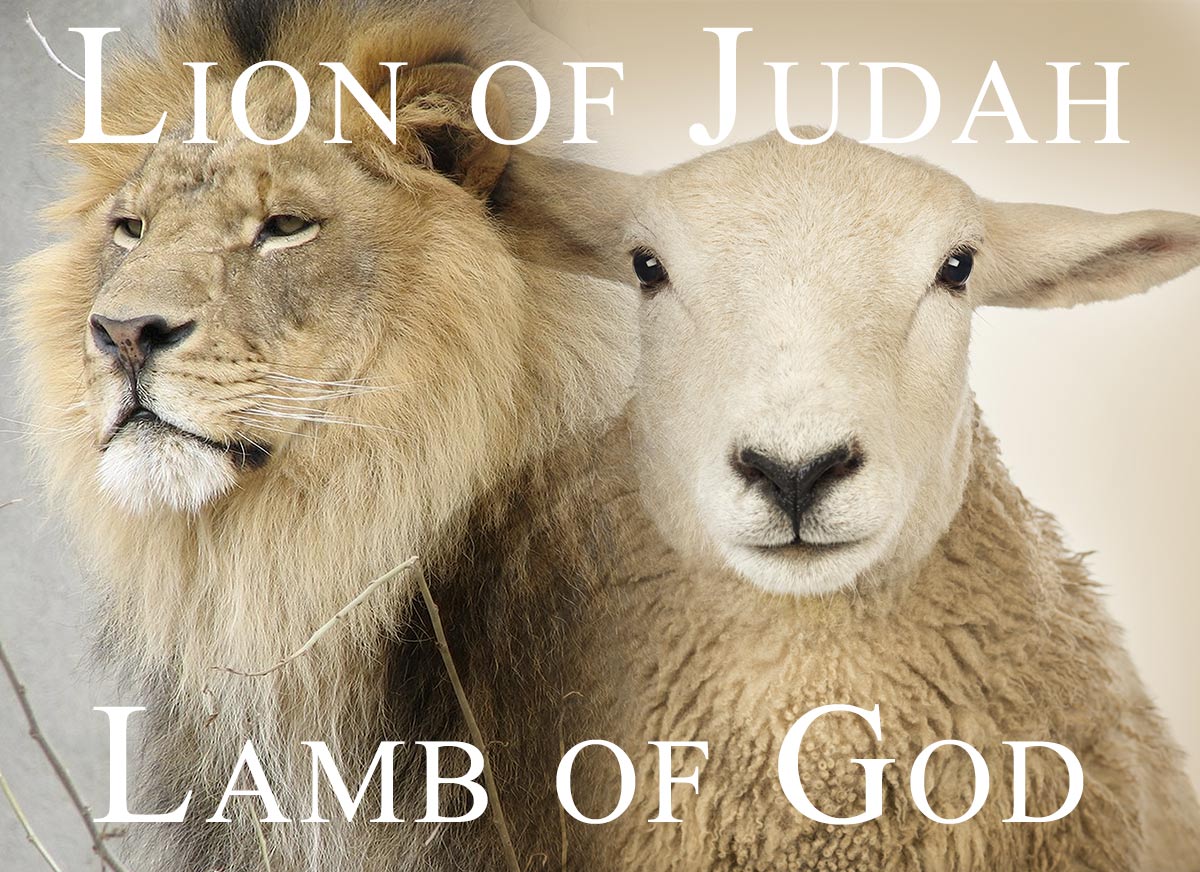
I Prefigured John the Baptist saw Jesus coming toward him and said, “Behold, the Lamb of God, who takes away the sin of the world.” Unless you know the history of this moment, it seems a little odd.

But for those who know Scripture, it is clear that John is really answering a question that was asked by Isaac some 1800 years prior to this event. Abraham had received from God a strange and terrible command: that he take his son to Mt. Moriah (present day Jerusalem) and there offer him in sacrifice.

And Abraham took the wood of the burnt offering, and laid it on Isaac his son; and he took in his hand the fire and the knife. So they went both of them together. And Isaac said to his father Abraham, “My father!” And he said, “Here am I, my son.” He said, “Behold, the fire and the wood; but where is the lamb for a burnt offering?” Abraham said, “God will provide himself the lamb for a burnt offering, my son.” So they went both of them together (Gen 22:6ff).

Do you get it? A promised son had wood laid upon his shoulder and was made to carry it up a hillside, the same hillside where Golgotha would one day be found. There, on the top of that hill he was to be laid on the wood and killed. Sound familiar? Of course Isaac is a prefigurement of Christ. Things were starting to look grim for Isaac, who got nervous and asked his father, “Where is the Lamb?” You know the rest of the story. It is true that God provided a ram caught in the thicket that day, but that ram pointed to Christ.

And so the question “Where is the Lamb?” wafted up on the breeze and was repeated down through the generations. Some five hundred years later, at the end of the period of slavery in Egypt, the blood of the lamb also protected Isaac’s descendants from death. Every Passover the question was still asked, “Where is the Lamb?” referring to the Passover lamb. Here, too, the Passover lamb was but a symbol, a prefigurement of Christ.

Now, standing on the banks of the Jordan, John the Baptist answers Isaac’s question, the question repeated down through the centuries: “Where is the Lamb?” John answers, “Behold the Lamb of God.” So the first thing we learn of Christ is that He was prefigured, here and in many other places in the Old Testament.

II Preexistent He is the one of whom I said, “A man is coming after me who ranks ahead of me because he existed before me.” Now this, too, is a strange thing for a man to say about his younger cousin. Jesus was born six months after John the Baptist, yet John says that Jesus existed before him. John is clearly teaching us here of Christ’s pre-existence. Before assuming a human nature, Jesus existed eternally with the Father.

There never was a time when Jesus the Son was not. He is eternally begotten by the Father; He existed before all ages. Scripture says the following of Him:

  • For in him all things were created, in heaven and on earth, visible and invisible, whether thrones or dominions or principalities or authorities—all things were created through him and for him. He is before all things, and in him all things hold together (Col 1:16).
  • In the beginning was the Word, and the Word was with God, and the Word was God. He was in the beginning with God; all things were made through him, and without him was not anything made that was made (John 1:1).
  • Your father Abraham rejoiced that he was to see my day; he saw it and was glad. The Jews then said to him, “You are not yet fifty years old, and you have seen Abraham?” Jesus said to them, “Truly, truly, I say to you, before Abraham was, I am” (John 8:56).

III. Preeminent I did not know him, but the reason why I came baptizing with water was that he might be made known to Israel. In effect, John is saying, “I exist for Him. My purpose is to reveal Him.” He must increase, but I must decrease (John 3:30). Jesus is greater than John or any prophet or world leader. Jesus is the Groom; John is but the best man.

IV Powerful John testified further, saying, “I saw the Spirit come down like a dove from heaven and remain upon him. I did not know him, but the one who sent me to baptize with water told me, ‘On whomever you see the Spirit come down and remain, he is the one who will baptize with the Holy Spirit.’”

The baptism of John could only announce repentance and call for it. It could not truly wash away sins; the Baptism of Jesus can.

Even more, not only does Jesus’ Baptism take away sins; it confers the Holy Spirit. In Baptism, we are given a whole new life. Sin is taken away and in its place grace upon grace is given: grace to restore us, renew us, and refashion us; grace that equips, empowers, and enables us; grace that sanctifies, gives sonship, and seals us with the Holy Spirit.

All this is in fulfillment of this passage from Ezekeiel:

I will sprinkle clean water upon you, and you shall be clean from all your uncleannesses, and from all your idols I will cleanse you. A new heart I will give you, and a new spirit I will put within you; and I will take out of your flesh the heart of stone and give you a heart of flesh. And I will put my spirit within you, and cause you to walk in my statutes and be careful to observe my ordinances (Ezekiel 36:25ff).

Scripture also says, But to all who received him, who believed in his name, he gave power to become the children of God (Jn 1:12).

V. Presence of God Now I have seen and testified that he is the Son of God. Jesus would say elsewhere, To see me is to have seen the Father; the Father and I are one (John 14:9). As the Son of God, He manifests the Father; He is the presence of God in this world. He shares fully in the one divine essence and as Son, shows us the Father. He is the presence of God among us.

So a brief passage from the Gospel of John contains five important teachings about Jesus Christ. He has existed forever. He was prefigured in the Old Testament. He has priority above and beyond anyone we know or think important. He has the power not only to save us from sin but to give us the very life of God. And as Son of God, He is God, and thus is God’s very presence among us. Jesus is not just the man from Galilee; He is very God from Heaven.


Welcome to “Ordinary Time”

Image

Welcome to the wearing of the green, green vestments that is. The weeks of the year outside of seasons such as Advent, Christmas, Lent, and Easter are termed “ordinary time.” It’s a rather dull-sounding description, isn’t it? “Ordinary” time, hmm …

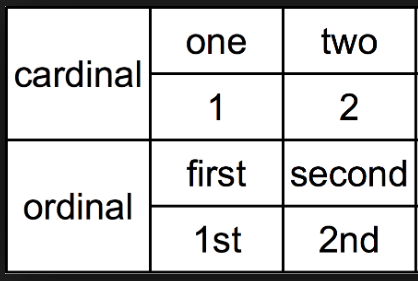
But in this case, the word “ordinary” does not refer to its typical meaning: “common, usual, or unremarkable.” Instead, it comes from the English word “ordinal” meaning “relating to a thing’s position in a series.” Some examples of ordinal numbers are “first,” “second,” and “third.” Thus ordinary time refers to weeks/Sundays that are numbered (e.g., 15th Week/Sunday in Ordinary Time).

The Latin description for this time is Tempus per annum (time through the year). Each week is merely designated as “Hebdomada # x” (Week # x).

These terms or titles seem somewhat uninspiring. This is especially the case when we consider that the old calendar (replaced in 1970, but still used in the Extraordinary Form of the Mass) numbered these Sundays and weeks in reference to Epiphany or Pentecost (e.g., Third Sunday after Epiphany, or Fourth Sunday after Pentecost). The pivotal events of Epiphany and Pentecost therefore set the tone for the following weeks e.g., “This is Third Sunday since our Lord was manifested to us,” or “This is the Fourth week since the Holy Spirit was granted to us for our mission.”

Alas, we are not likely to see the current calendar replaced any time soon, so welcome to Ordinary Time, and more specifically to the First Week of the Year!

But maybe there is some inspiration here after all. The faith is not just something reserved for extraordinary moments and seasons. It is meant to be lived in all the ordinary moments of life, too; it is meant to be lived throughout the year.

The liturgical readings and prayers of Ordinary Time emphasize discipleship. What does it mean to be a disciple of Jesus in matters involving money, time, priorities, etc.? How do we encounter the Kingdom of God and perceive it in our daily lives? What are the conditions of discipleship? How will we ultimately be judged? These are some of the themes of Ordinary Time.

So encounter God in the “ordinary,” in the time throughout the year, even when on vacation this coming summer. There is no vacation from our vocation. Do not miss what God is doing, even in the ordinary.

The Bountiful Blessings of Baptism—A Homily for the Baptism of the Lord

Image

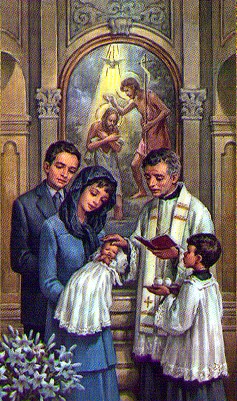
Today’s Feast of the Baptism of the Lord is a moment to reflect not only on the Lord’s Baptism but on our own. In an extended sense, when Christ is baptized, so are we, for we are members of His Body. As Christ enters the water, He makes holy the water that will baptize us. He enters the water, and we who are members of His Body go with Him. In these waters He acquires gifts to give us.

Let’s examine today’s Gospel in three stages:

The Fraternity of Baptism – The text says, Jesus came from Galilee to John at the Jordan to be baptized by him. John tried to prevent him, saying, “I need to be baptized by you, and yet you are coming to me?”

John is surely puzzled when Jesus requests Baptism. Why? John’s Baptism of repentance presumes the presence of sin, but Scripture is clear that Jesus had no sin.

      • For we have not a high priest who is unable to sympathize with our weaknesses, but one who in every respect has been tempted as we are, yet without sin (Heb 4:15).
      • You know that he appeared to take away sins, and in him there is no sin (1 John 3:5).

So, why does Jesus ask to be baptized? Before answering, let’s consider this dramatic fact: Jesus identifies with sinners, even though He never sinned. As He comes to the riverside, He is not concerned with what people think. He is not embarrassed or ashamed that some might think Him a sinner. He accepts a remarkable humiliation in being found in the company of sinners like us and even in being seen as one of us. He freely enters the waters despite the likelihood of being numbered among the sinners by those who do not know Him.

Consider just how amazing this is. Scripture says, He is not ashamed to call us his Brethren (Heb 2:11). It also says, God made him who had no sin to be sin for us, so that in him we might become the righteousness of God (2 Cor 5:21).

Jesus ate with sinners to the horror of many of the religious leaders: This man welcomes sinners and eats with them (Lk 15:2). Jesus was a friend of sinners, had pity on the woman caught in adultery, and allowed a sinful woman to anoint His feet. He cast out demons and fought for sinners. He suffered and died for sinners in the way reserved for the worst criminals. He was crucified between two thieves and He was assigned a grave among the wicked (Is 53).

Praise God, Jesus is not ashamed to be found in our presence and to share a brotherhood with us. There is a great shedding of his glory in doing this. Again, Scripture says, [Jesus], being in very nature God, did not consider equality with God something to be grasped, but made himself nothing, taking the very nature of a servant, being made in human likeness. And being found in appearance as a man, he humbled himself (Phil 1:3).

The Fulfillment of Baptism – The text says, Jesus said [to John] in reply, “Allow it now, for thus it is fitting for us to fulfill all righteousness.” Then he allowed him.

The Fathers of the Church are of varying opinions as to what exactly Christ means by fulfilling all righteousness.

      • Chromatius links the righteousness to all the sacraments and the salvation they confer: This is true righteousness, that the Lord and Master should fulfill in himself every sacrament of our salvation. Therefore, the Lord did not want to be baptized for his own sake but for ours” (tractate on Matthew 13.2).
      • Chrysostom links it to the end and fulfillment of the Old Covenant: He is in effect saying, “Since then we have performed all the rest of the commandments, this Baptism alone remains. I have come to do away with the curse that is appointed for the transgression of the Law. So I must therefore fulfill it all and, having delivered you from its condemnation, bringing it to an end” (Homily on Matt 12.1).
      • Theodore of Mopsuestia interprets Christ to mean that He is perfecting John’s Baptism, which was only a symbol of the True Baptism. The Baptism of John … was perfect according to the precept of Law, but it was imperfect in that it did not supply remission of sin but merely made people fit of receiving the perfect one …. And Jesus makes this clear saying, ‘For thus it is fitting for us to fulfill all righteousness’ (Fragment 13).

From another perspective, the word righteousness refers, biblically, to God’s fidelity to His promises. In this sense, Jesus would mean that His Baptism would be the sign of the fulfillment of God’s righteous promise of salvation. God had promised this, and God is faithful to His promises. Jesus’ Baptism indicates this. How?

St. Maximus of Turin speaks of the Old Testament prefigurement of Baptism at the Red Sea and then shows how Christ fulfills it:

I understand the mystery as this. The column of fire went before the sons of Israel through the Red Sea so that they could follow on their brave journey; the column went first through the waters to prepare a path for those who followed …. But Christ the Lord does all these things: in the column of fire He went through the sea before the sons of Israel; so now in the column of his body he goes through baptism before the Christian people …. At the time of the Exodus the column … made a pathway through the waters; now it strengthens the footsteps of faith in the bath of baptism (de sancta Epiphania 1.3).

So, what God promised in the Old Testament by way of prefigurement, He now fulfills in Christ. They were delivered from the slavery of Egypt as the column led them through the waters, but even more wonderfully, we are delivered from slavery to sin as the column of Christ’s body leads us through the waters of Baptism. God’s righteousness is His fidelity to His promises. Hence, Jesus says that in His Baptism and all it signifies (His death and resurrection), He has come to fulfill all righteousness and thus fulfills the promises made by God at the Red Sea and throughout the Old Testament.

The Four Gifts of Baptism – The text says, After Jesus was baptized, he came up from the water and behold, the heavens were opened for him, and he saw the Spirit of God descending like a dove and coming upon him. And a voice came from the heavens, saying, “This is my beloved Son, with whom I am well pleased.”

Ephesians 5:30 says that we are members of Christ’s body. Thus, when Jesus goes into the water, we go with Him. In going there, He acquires four gifts on our behalf:

      • Access the heavens are opened. The heavens and paradise had been closed to us after Original Sin, but with Jesus’ Baptism they are opened. Jesus acquires this gift for us. At our Baptism, the heavens open for us and we have access to the Father and to the heavenly places. Scripture says, Therefore, since we are justified by faith, we have peace with God through our Lord Jesus Christ. Through him we have obtained access to this grace in which we stand (Romans 5:1). Scripture also says, For through Jesus we have access in one Spirit to the Father. So then you are no longer strangers and sojourners, but you are fellow citizens with the saints and members of the household of God (Eph 2:17). Hence, the heavens are opened at our own Baptism giving us access to the Father.
      • Anointing the Spirit of God descends on him like a dove. Here, Jesus acquires for us the gift of the Holy Spirit. In Baptism we are not just washed of sins; we also become temples of the Holy Spirit. After Baptism there is the anointing with chrism, which signifies the presence of the Holy Spirit. For adults, this is Confirmation, but even for infants there is an anointing at Baptism to recognize that the Spirit of God dwells in the baptized as in a temple. Scripture says, Do you not know that you are God’s temple and that God’s Spirit dwells in you? (1 Cor 3:16)
      • Acknowledgmentthis is my beloved Son. Jesus receives this acknowledgment from his Father for the faith of those who are there to hear it but also to acquire this gift for us. In our own Baptism we become the children of God. Because we become members of Christ’s body, we now have the status of sons of God. On the day of your Baptism, the heavenly Father acknowledged you as His own dear child. Scripture says, You are all sons of God through faith in Christ Jesus, for all of you who were baptized into Christ have clothed yourselves with Christ (Gal 3:26).
      • ApprovalI am well pleased. Jesus had always pleased His Father, but now He acquires this gift for us as well. Our own Baptism gives us sanctifying grace, the grace to be holy and pleasing to God. Scripture says, Blessed be the God and Father of our Lord Jesus Christ, who has blessed us in Christ with every spiritual blessing in the heavens, as he chose us in him, before the foundation of the world, to be holy and blameless in his sight (Eph 1:1-3).

Thus, at His Baptism, Christ acquired these gifts for us so that at our own Baptism we could receive them.

Consider well the glorious gift of your Baptism. Perhaps you know the exact date on which you were baptized. It should be a day as highly celebrated as your birthday! Christ is baptized for our sake, not His own. All of these gifts have always been His. In His Baptism, He fulfills God’s righteousness by going into the water to get them for us. It’s all right to say, “Hallelujah!”


On the Role of Curiosity in Evangelization (Part Two)

Image

This is part two of an article on curiosity. We are considering the following four aspects:

I. Premises Related to Curiosity
II. Problems Regarding Curiosity
III. Pictures Reinforcing Curiosity
IV. Personal Requirement of Curiosity

Please see yesterday’s post for an introduction to the topic and a discussion of the first two items. In today’s post, we consider the third and fourth.

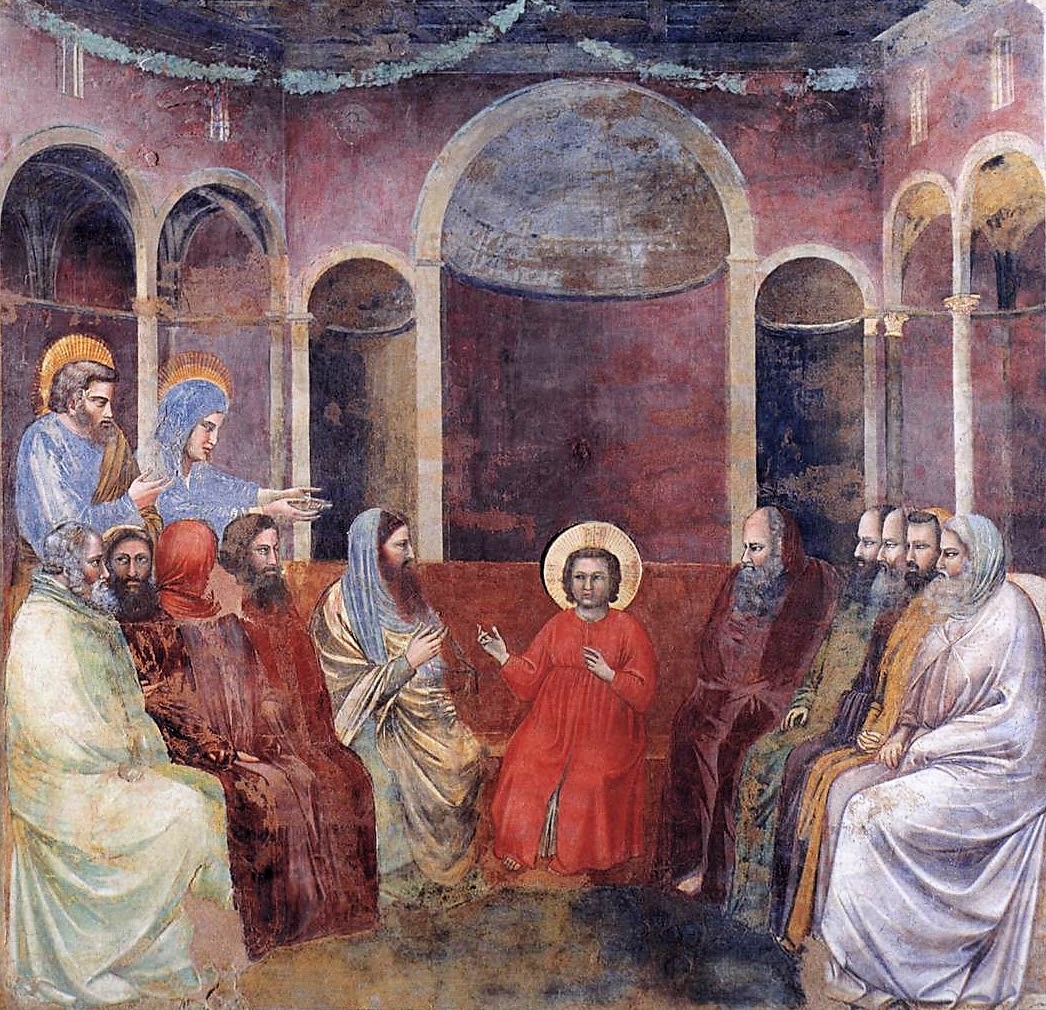
III. Pictures Reinforcing Curiosity – We have already reflected a good deal on this aspect in the introduction. Jesus generated a lot of curiosity because of the mystery of His person. How did this simple Galilean “get all this?” This was a cause of wonder in the people of His time. Jesus also generated a lot of curiosity; He cultivated it because He saw the value in doing so.

Jesus seldom gave straight answers to questions. Instead, He would say things like “Come and see.” Or He would answer questions with questions, or respond using parables which were often riddle-like and far from straightforward.

Consider how Jesus deals with this simple question:

[The Temple leaders said] “Who are you?” Jesus said to them, “Just what I have been telling you from the beginning. I have much to say about you and much to judge, but he who sent me is true, and I declare to the world what I have heard from him.” They did not understand that he had been speaking to them about the Father. So Jesus said to them, “When you have lifted up the Son of Man, then you will know that I AM” (Jn 8:25-28).

Notice that when asked who He is, the Lord does not answer pedantically by saying, “I am God, the Second Person of the Blessed Trinity, the Word made Flesh hypostatically united to my human nature.” Instead, He holds the mystery and refers them to their own hearts, which have stubbornly refused to listen to Him and accept the evidence of who He is.

Indeed, Jesus asserted elsewhere (Jn 5:30-46) that John the Baptist testified to Him. Scripture testifies to who Jesus is because it is clear that He fulfilled countless scriptural passages. He has worked miracles, which testify to His divinity. And finally, the Father is testifying to Him in their hearts. If they will but search their hearts, they will know who He is. They have fourfold evidence and testimony.

Jesus’ reluctance to provide straight answers unnerves even many of us true believers, but it is this very mystery that keeps us curious and ever studying His teachings. The implicit yet clear admonition in this approach is that we should come and see more, come and listen more. We are to ponder more deeply and spend our lives going ever deeper into the meanings of our questions and the answers the Lord provides, which are far richer than a simple one-line response.

While quick apologetics has an important place in this information age, so does holding on to the mystery of what questions really point to so as not to stifle the power of mystery to elicit curiosity.

IV. Personal Requirement of Curiosity This leads us to the personal challenge and charge. We cannot simply wait for mystery to be rediscovered or to emerge. We are called to be the mystery, to be the one who brings out curiosity in others! There ought to be something of a deep mystery in us as we live among our fellow denizens of the world. If we are truly living in Christ, we will not fit neatly into worldly categories and distinctions. There were at least three “political parties” in Jesus’ day: Sadducees (Herodians), Pharisees, and Zealots. Jesus did not fit into any of their little boxes. The parties only agreed on one thing: this Jesus must go. How about you? Are you worthy of Jesus Christ or just “the party”? Are you worthy of Jesus Christ or just the world?

If we are to be a mystery to the world, we cannot simply desire to fit in, desperately seeking worldly approbation. We will defy categorization because we serve a higher, broader, and transcendent vision.

As such, we will be a mystery to others. Seeing our integrity, they cannot understand us in worldly ways, but neither can they simply discredit us “hacks” or shills for political parties. Jesus is broader, higher, and deeper than worldly parties or categories—and so are those who truly follow Him.

This elicits curiosity because it is a mystery. Of this, Sherry Weddell writes,

The Catholic life is meant to be a “sign of contradiction” in this world. That doesn’t mean that we are to be nay-saying curmudgeons. Rather, it means that we are to live lives of such inexplicable joy, love, faith, and peace (even in trial) that all the normal categories by which nonbelievers try to classify us won’t work. We are neither Jew nor Gentile, fish nor fowl, “conservative,” nor “liberal,” nor any of the other tribes of this world.

Living curiously means more than being “nice.” It requires that we think and act in Kingdom-oriented and countercultural ways in our daily lives. For instance, forgiving and asking forgiveness of those who have betrayed and abused us are perhaps the most countercultural things we can do. … Likewise, being in healthy relationships, caring for the poor, sharing possessions freely, praying for healing and provision, and even simple family prayer times can be startling countercultural witnesses.

To be a witness … means to live in such a way that one’s life would not make sense if God did not exist (Forming Intentional Disciples, p. 148, 151).

Scripture affirms this as well:

Always be prepared to render an account to anyone who asks the reason for the hope that is in you; do it with gentleness and respect (1 Peter 3:15).

This text presupposes that people notice a hope in us, a stable, serene, and confident joy or hope. This is mysterious and elicits curiosity. In curiosity, one might remark, “When all of the rest of us are worn out by stress, complaints, gossip, and office politics, you don’t seem anxious, or obsessed with position, or hungry to hear all the gossip. In fact, I’ve never heard an ugly word come out of your mouth. What is it about you? What keeps you so calm and charitable?”

In a world where so many lead disordered lives (sexually, emotionally, and intellectually); where envy, jealousy, greed, power, and position consume so many; a person that is not disordered and beset with the deep drives of sin and negativity is a mystery. People who get married and stay married and who actually seem to love their spouse and children are increasingly mysterious to others. They elicit the question, “How do you do it?” People who don’t just parrot the angry and often-foolish slogans of the world or who are not endlessly distracted and controlled by the news and the entertainment culture are often mysterious to those around them.

Distinction: Of course, pointing out the value of mysteriousness is not an encouragement to become some sort of spooky oddball. Mystery is not spooky, it is attractive and evokes wonder and curiosity.

There is a remarkable passage in the Acts of the Apostles in which Peter and John elicit this sort of response:

When [the Sanhedrin] saw the courage of Peter and John and realized that they were unschooled, ordinary men, they were astonished and they recognized that these men had been with Jesus (Acts 4:13).

Here is the goal and challenge for us: Do we provoke astonishment or even surprise from people around us? Are we a mystery that engenders curiosity? Would anyone conclude that we “have been with Jesus?”

The point is that we cannot simply ponder mystery and curiosity as a tool for “the Church.” We must also be the mystery, be the one who evokes curiosity and attracts others to Christ and to the faith.

Summation: In this two-part essay, we have pondered the powerful effect of mystery and curiosity in evangelization. In most cases mystery is very attractive. Curiosity, while not discipleship itself, assists in a process that leads to discipleship; we should not too quickly diffuse its power with simple or pat answers. We must learn to teach and spread the faith not merely by answering questions, but also by asking them. Replies are good, but invitations are often even better. “Come and see” can be a rich response that provides some answers but also insists that there is more to the story. This mystery is not merely to be found in the pages of a catechism, or in the sacred liturgy; it must also be found in us who live in the world but are mysteriously not of the world.

On the Role of Curiosity in Evangelization (Part 1)

Image

In yesterday’s post we discussed how the word curiosity can have a good and a bad meaning. In that post we focused on sinful curiosity after distinguishing from good and helpful forms of it.

In today’s post we look at a more positive and intriguing understanding of curiosity and apply it to evangelization.

In the world of evangelization, the concept of curiosity is almost never discussed. If anything, evangelizers are encouraged to quickly satisfy any curiosity by supplying all sorts of answers to questions that arise about the faith. Apologetical tracts, books, catechisms, and videos abound. Curiosity, it would seem, is something to be quashed or at least overcome quickly. Allowing a person to wonder why for any length of time seems almost dangerous, especially in a “search-engine” culture. Quick answers, please!

How different this is from the more mysterious and “parabolic” way Jesus handled questions. Ask him a question and you might get another question back from Him. “Are you a King?” asked Pilate. Jesus, on trial for his life replied, “Are you saying this on your own or have others been talking about me?” (Jn 18:33-35) Sometimes Jesus answered obliquely. As Jesus was walking by, Andrew asked Him, “Rabbi, where do you stay?” Jesus just kept on walking and said, “Come and see” (Jn 1:38-39). On other occasions Jesus answered questions or supplied information through enigmatic stories, called “parables” because they do not provide straight answers but are more “parabolic.” They are full of twists and turns, paradoxes and puzzles.

Curious indeed! Come on, Jesus; the people want to know; let’s have some straight answers here! But Jesus, the Master Evangelist and Lord, has something to teach us. Curiosity is important and should not be crushed too soon with lots of stiff or overwhelming answers.

To her great credit, Sherry Weddell in her book from a few years back, Forming Intentional Disciples devotes an entire chapter to this topic. She ranks it as the second threshold to conversion (after trust and before openness). I’d like to combine her insights with some of my own and consider curiosity under four headings:

I. Premises Related to Curiosity
II. Problems Regarding Curiosity
III. Pictures Reinforcing Curiosity
IV. Personal Requirement of Curiosity

Given the length of my reflections, I will cover them in two separate posts. Are you curious yet? Let’s begin!

I. Premises Related to Curiosity

What is curiosity? At its heart, curiosity as we are using the word here is a response to an encounter with mystery. The Latin root of curiosity is cur, meaning “why.” Having encountered mystery, we ask questions such as “Why?”, “What is this?”, “What does this mean?”, “Who are you?”, or “Why are you this way?” Mystery engenders curiosity. This analysis of curiosity raises another question:

What is mystery? At its heart, mystery refers to something we see only partially, something that is mostly hidden from us. Almost no person, thing, or event is entirely devoid of mystery. Even something as simple as a tree elicits questions. Why is this tree here? Who planted it and why? Why this kind of tree and not another? Is the tree healthy inside or rotted? Isn’t it amazing that trees breathe our expelled carbon dioxide and give us back the oxygen we need! How has this remarkable symbiosis come about? Yes, even a simple tree has mysteries that pique our curiosity. There is almost always more than meets the eye.

Far deeper are the mysteries related to the people and complex human interactions. Fr. John Le Croix gives the following definition of mystery: Mystery is that which opens temporality and gives it depth. It [also] introduces a vertical dimension and makes of it a time of revelation.

While this definition may seem complex, a simple example might help. Suppose you and I are at a gathering. Smith enters the room and immediately walks up to Jones, enthusiastically shaking his hand. I comment, “Wow!” You say, “What’s the big deal? People shake hands all the time.” I reply, “Smith and Jones have been enemies for thirty years.” The handshake between the two men has a mysterious dimension, one that the eyes cannot see. Yet that mystery is still real, giving the physical handshake both a depth of meaning and a vertical dimension of revelation.

Mystery is rich, fascinating. It can bestow an aura of wonder and awe upon even ordinary things, people, interactions, and events.

Yes, mystery is wonderful. Mystery attracts! It is mystery that generates curiosity, the desire to know more and experience the depths and heights of what is.

Because mystery is important, so is the curiosity that arises as a response to it. It deserves more attention than it usually gets in our theological and pastoral reflections.

II. Problems Regarding Curiosity

Although mystery attracts, we live in times in which there are many factors diminishing its appreciation and the consequent curiosity. This is especially true when mysteries are not quickly “solved” and curiosity cannot be satisfied quickly. There are a number of factors to mention.

First, there is the notion that a mystery is something merely to be solved rather than savored. When we hear the word mystery today we tend to think of crime novels or police shows on television. A crime is committed; the mystery is who did it and for what reason. The “hero” must get to the bottom of this!

While this may be the case for a crime, the mysterious depths of the human person, the significance of human events, and the truths of our faith, are not things to be figured out or solved.

When it comes to the truths of our faith, there are many mysteries that cannot simply be solved. For example, how can Jesus be God and Man? God, of His nature, is eternal and omnipresent and cannot “fit” in space and time. Yet Jesus, as man, is in time and in space. This is not a mystery we can solve. We must savor it. The early Church knew this and the faithful fell to their knees at the words in the creed that announced the incarnation. Wonder and awe are natural reactions to mystery.

Second, we live in an age of empiricism and rationalism. We often demand that everything be explained, that everything be understood within our categories and on our terms. But not all mystery can be explained or understood in this way, which many find irritating and unsettling. Often, the questions raised by mysteries—especially those not easily answered—are brushed aside with the nebulous statement that “science will eventually be able to explain this.”

But of course the physical sciences cannot really address metaphysical realities; or the moral, historical, or emotional significance of things; or why something is meaningful, beautiful, or upright, or even exists at all.

In an age of rationalism, materialism, empiricism, and reductionism, mystery is often underappreciated—seen as a problem when it is not. Deep down, we are more fascinated with mystery than we like to admit, even in times like these.

Third, we live in an age that demands quick satisfaction and instant answers. In the past, we often had to ponder and research things at length; today we “Google it” and are immediately presented with numerous resources and answers. Reflection suffers because of this; we often fail to ponder the deeper aspects of our questions.

Information gathering is not the same as study and reflection. Quick answers often stifle deeper scrutiny and discernment. As a result, we often miss the more mysterious and deeper dimensions of people, places, events, and life itself.

Similarly, in the Church, if all we do is provide quick answers to questions in an inquiry class, or we engage in cursory apologetics, we miss the depths of Jesus’ reply to Andrew’s question: “Rabbi where do you stay?” Jesus did not give Andrew an address or map coordinates. He extended the mystery and deepened Andrew’s curiosity by saying, “Come and see.”

Apologetics has its place, but the true desire driving every question is not merely information, but a transformation in Christ. “Come and see” is not an invitation that can be forever put off by one-off answers.

Fourth, we live in immodest times. Modesty is reverence for mystery. We live in times of overexposure. This is a broader concept than clothing. Many people both demand and provide too much information. They discuss private matters on national television. What should be discreet is shared indiscriminately. There are constant demands for “transparency.” The people’s “right to know” has very few limits today. While curiosity is a good thing in itself, excessive curiosity is sinful.

Mystery is attractive. Modesty is a virtue that governs access to and protects a great gift. The curiosity incited by it should be satisfied at appropriate times and in appropriate ways. Yes, mystery is a gift to be savored, not merely a problem to be solved or a hidden thing to be exposed willy-nilly.

I wonder if, in the Church, we have not overly exposed our sacred liturgies and other mysteries. Who can deny the evangelical power of televised masses and other expositions of our faith and liturgies?

Yet is there nothing left of the disciplina arcanis (discipline of the secret) of the ancient Church? Until relatively recently, our liturgies were conducted in Latin while facing east. These days, little that is secret or even discreet remains. Everything is casual, in the vernacular, and intentionally ordinary. The sacred mysteries seem almost washed out in the light of scrutiny and overexposure. There is nearly an obsession with explaining all mystery; if there is any curiosity at all, it is seen as a failure in catechesis.

With little appreciation for the mystery we truly celebrate at Mass; curiosity, interest, and attendance have dropped. Few dress up for Mass anymore; little seems special about it. All the more reason to re-emphasize the true mysteries we celebrate.

Mystery is attractive! Curiosity is the natural response to mystery. If we try to make everything understandable (which is impossible), we lose our way.

To be continued tomorrow …

What is Sinful Curiosity and How is it the Root of Many Sins?

Curiosity

Curiosity is one of those qualities of the human person that are double-edged swords. It can cut a path to glory or it can be like a dagger of sin that cuts deep into the soul.

As to its glory, it is one of the chief ingredients in the capacity of the human person to, as Scripture says, “subdue the earth,” to gain mastery over the many aspects of creation of which God made us stewards. So much of our ingenuity and innovation is rooted in our wonder and awe of God’s creation and in those two little questions, “How?” and “Why?”

Yes, we are curious as to how things work and why they work as they do. This curiosity burns within us and motivates us to unlock many of nature’s secrets. Curiosity drives us to learn and to gain mastery—often for good, but sometimes for ill.

What a powerful force within us, this thing we call curiosity! It is a passion to know! Generally, it seems quite exclusive to us who are rational, for animals manifest little or none of it. Occasionally an animal might seem to manifest curiosity: a sound might draw its attention causing it to look more closely. But the investigation is probably more motivated by seeing whether the sound is a threat or a food source rather than by curiosity. True curiosity asks the deeper metaphysical questions of what, how, and why. True curiosity seeks to explore formal and final causality as well as efficient and material causality. It seeks to learn, sometimes for learning’s own sake. Sometimes, and potentially more darkly, curiosity seeks to learn so we can exert control.

Of itself, curiosity can be a magnificent quality, rooted in the gifts of wonder and awe as well as in the deeply profound gift of man’s intellect or rational nature.

However, as a double-edged sword, curiosity can also wound us very deeply and mire us in serious sin. Indeed, it can be a very sinful drive within us. Eve grew curious of the Tree of the Knowledge of Good and Evil and thus Satan was easily able to turn her curiosity into a deep dagger that has reached every human heart.

Understood this way (as a sinful drive), curiosity is a desire to gain knowledge of things we have no right to know. A more mitigated form of sinful curiosity is the desire to know things that are in no way useful to us. In this sense, curiosity is a form of spiritual gluttony that exposes us to innumerable tricks of the evil one.

Sinful curiosity causes us to meddle in the lives of others, to pry. This can then lead us to gossip, potentially defaming others and ruining reputations in the process. Nothing is a bigger invitation to sin and gossip than the phrase “Have you heard the latest news about so-and-so?” Heads turn, ears perk up, and meddlesome curiosity is immediately incited. Almost never is the news that follows such a question positive or even edifying. Sinful curiosity is at the root of almost all gossip, defamation, slander, and even calumny. The vast majority of what we hear through gossip is none of our business. And yet, through sinful curiosity, somehow we feel that we have the right to this information.

There is a whole branch of news, barely distinguishable from gossip columns and scandal sheets, that has emerged based on the people’s “right to know.” Too much secrecy can be unhealthy, but that is hardly the problem in this day and age. Today, too many people know too many things about too many people. Even what is reported (most of it unnecessary) about so-called public figures is not really helpful for us to know. This is not to say that we should have no interest whatsoever in what is happening in the world or in the character of our leaders; rather, it is an invitation to distinguish between what is truly useful and necessary for us to know and that which arises from sinful curiosity.

Sinful curiosity is also at the root of a lot of lust and immodesty. A man may be happily married, but when he sees a woman walk past on the sidewalk he may temporarily push that to the back of his mind. Part of his problem is lust. And in that lustful mindset, he reduces the woman—a person—to her curves and other physical attributes. But another aspect of his struggle is the sinfully curious question “I wonder what she’d be like?”  Well, sir, that is none of your business! Now mind you he’s happily married, but he already knows his wife well. Pardon the expression, but the mystery of his wife has been unveiled. This other woman he sees, however, still has a shroud of mystery that incites in him a sinful curiosity. Immodesty also taps into the sinful curiosity of others by revealing more than it should. Modesty is reverence for mystery. Immodesty jettisons this reverence and seeks to incite sinful curiosity.

Sinful curiosity has been turned into a consumer industry by many talk shows that publicly feature topics that should be discussed discreetly. Further, many guests on such shows reveal details about their lives that should not be discussed in a public forum. Too many people discuss terrible struggles of a very personal nature and too many people tune in to listen. This is a form of immodesty as well, even if it does not involve sexual matters; modesty is reverence for mystery and it respects appropriate boundaries and degrees of intimacy in conversations. “Baring one’s soul” is neither prudent nor appropriate in all situations or with all people; it too easily excites sinful curiosity and sets loose a wave of gossip and uncharitable banter. Some things are just not meant to be dealt with in public, and many are incapable of handling such information without easily straying into sin.

A mitigated form of sinful curiosity is the excessive desire to know too many things all at once. This is a kind of “information gluttony.” This sort of desire, though not necessarily sinful, can become so by excess. It is catered to by the 24-by-7 news services. Being informed is good, but being over-informed can easily lead to becoming overwhelmed and discouraged. Generally speaking, indulging in such a steady stream of news (along with talk radio, etc.) provokes anxiety, discouragement, and a sense of being overwhelmed. Such news services tend to generate interest by inciting alarm. Bad and bloody news predominates; the exotic and strange are headlined; the titillating and shocking lead the news hour; that which generates controversy and ratings is emphasized. It’s not long before we have moved away from necessary and important news and back into the sinful curiosity that sets tongues wagging and heads shaking.

Sinful curiosity, even of this mitigated form, so easily draws us into very negative, dark, and even depressing places. News junkies would do well to balance their diet with other more edifying things than what is the latest scandal or threat.

St. Paul gives good advice to all of us when it comes to sinful curiosity and our tendency to collect unnecessary, unhelpful, and unenlightening news. In effect, he invites us to discipline our minds with the following good and solid advice:

Finally, brothers and sisters, whatever is true, whatever is noble, whatever is right, whatever is pure, whatever is lovely, whatever is admirable—if anything is excellent or praiseworthy—think about such things (Phil 4:8).

Curiosity—the double-edged sword—so noble yet so easily ignoble, so wonderful yet so easily debased.

https://youtu.be/EYpmXeEkvqA?list=RDEYpmXeEkvqA


Five Remedies for Sorrow from St. Thomas Aquinas

Image

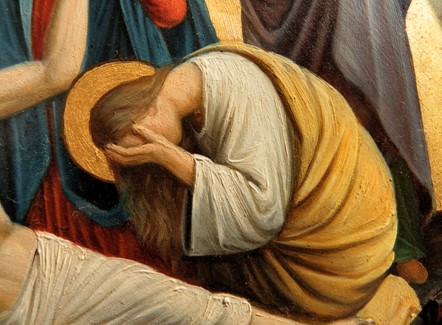
ImageOne doesn’t usually go to the St. Thomas Aquinas’ Summa Theologica for advice on emotional matters. But for the feast of St. Thomas we shall indeed go there to seek advice on sorrow and consider some of St. Thomas’ remedies for it. (His advice is contained primarily in the Prima Secundae questions 35 – 37.)

St. Thomas follows some of the Eastern fathers in naming four kinds of sorrow (cf I IIae 35:8): anxiety, torpor, pity, and envy. Let’s look at each before examining some of the remedies he suggests:

1. Anxiety – This is a kind of sorrow that emerges when the mind is so weighed down by something that escape seem impossible. St. Thomas’ definition is likely rooted in the Latin word angustia, which is a narrow pass or straight. And thus anxiety tends to arise when we experience stress over a situation and find no room to maneuver, no way out. Anxiety tends to pertain to the future, in contrast with pain, which generally pertains to the present. With pain, one can suffer about a situation in the moment yet recognize that it will pass. Anxiety arises when we sense no definitive end to the painful situation.

St. Thomas calls anxiety a form of sadness. In modern culture we often link anxiety and depression. This is because anxiety, as a sorrow, weighs us down. And just as joy and hope tend to expand and lighten, the sorrow of anxiety tends to crush and turn us inward. It makes us feel limited, hemmed in, confined, and heavily weighed down.

Someone once said that depression is anger turned inward. This makes sense because anger results from fear and anxiety, and anger that cannot be expressed or managed becomes like a heavy weight or depression.

2. Torpor – This word is not used very frequently today. Literally, it refers to slowness of movement. When one is sorrowful or depressed, one is less motivated to move. St. Thomas says, “If, however, the mind be weighed down so much, even the limbs become motionless, which belongs to ‘torpor’” (I IIae 35.8). Even ordinary conversation with others, which is a kind of movement, can seem difficult. The sorrow we call torpor slows us down and makes us feel rundown and sluggish.

Inactivity tends to build. The less motivated we feel, the less we move; the less we move, the less motivated we feel. It’s a kind of downward spiral.

This is why those who are experiencing depression are often encouraged to find friends that will make them move, make them go places—even if they don’t feel like it. This helps to stave off the downward spiral that torpor can cause.

The second two types of sorrow (pity and envy) relate more to our experience of other people’s circumstances.

3. Pity – This is the sorrow that we feel for the evil or misfortune endured by another person. But it is deeper than mere regret or perturbation. Pity is experiencing the misfortune of another as though it were our own.

Pity, therefore, implies a felt relationship. Perhaps it involves a close friend or family member, but it can also be the felt relationship of common humanity with the one who suffers.

Of itself, pity is a proper and good sorrow born out of love. And yet, like any common human emotion or passion, it can be tainted by sinfulness. For example, sometimes pity results more from egotistical needs, wherein one develops a sort of condescending attitude, needing to see others as beneath him or worse off than he is.

And thus what masquerades as pity is too easily merely the drive to be in a superior position with respect to another person. Patronizing attitudes are a misguided form of pity such that we do for people what they should rightfully do for themselves, thus robbing them of their dignity and their call to live responsible lives.

Hence pity, like any sorrow, has to be moderated and helped by reason and by the understanding that it is not always possible or even helpful to assist everyone in every circumstance simply because we feel sorrow for their condition. Sometimes the best we can do is to listen to them and pray for them.

Properly understood, pity is a very beautiful emotion rooted in love for others.

4. Envy – On the other hand, envy is a very dark sorrow and is rooted in sin. I have written more extensively on envy here: Envy Is a Diabolical Sin. For this reflection, however, I will just summarize by saying that envy is a form of sorrow or anger at the excellence of another person, because I take it as lessening my own.

Envy is a particularly dark sin because it seeks to destroy the goodness in others rather than to celebrate it. If I am jealous of you, you have something I want. But when I am envious of you, I seek to destroy that in you which is good. That is why St. Augustine called envy the diabolical sin.

While discussing these four types of sorrow, St. Thomas also discusses some ways to overcome them. We will look at remedies for all four of them. Because envy stands apart from the other sorrows due to its sinful quality, the remedies for it are quite different. The remedies for envy are the gifts of joy and zeal. When someone else possesses goodness or excellence, the proper response is to rejoice with them and for them, as members of one body. When one member is praised, all members are praised; when one member is blessed, all members are blessed. This is rational and reasonable; we should seek from God the gift of joy at the goodness or excellence of another person. We should also seek from God the virtue of zeal, wherein we seek to imitate, where possible, the goodness or excellence we observe in others.

Remedies As for the forms of sorrow (anxiety, torpor, and pity), St. Thomas advises some of the following remedies:

1. Weeping – St. Thomas makes the very interesting observation that where there is laughter and smiling there is increased joy. But weeping, rather than increasing sorrow, actually diminishes it. How is this? He says, “First, because a hurtful thing hurts yet more if we keep it shut up, because the soul is more intent on it: whereas if it be allowed to escape, the soul’s intention is dispersed as it were on outward things, so that the inward sorrow is lessened” (I IIae 38.2). Thus tears are the soul’s way to exhale sorrow. For when we weep, we release sorrow. Tears have a way of flushing it from our system.

It is a rather beautiful and freeing insight, especially for some of us who were raised with more stoic sensibilities. Many of us, especially men, were told not to cry, not to show our emotions. But of course such an approach seldom works, for the more we shut up our sorrow, the more the mind ruminates on it. Better to weep and let it run out through our tears.

2. Sharing our sorrows with friends – Scripture says, Woe to the solitary man, for if he should fall, he has no one to lift him up (Eccl 4:10-11). Aristotle also said, “A sorrow shared is a sorrow halved.”

The danger to avoid in sorrow is turning in on ourselves. We often need the perspective of others. And even if they don’t have many answers to give us, simply talking to them about our sorrow is itself a form of release. St. Thomas also adds, when a man’s friends condole with him, he sees that he is loved by them, and this affords him pleasure… [and] every pleasure assuages sorrow (Ibid).

3. Contemplating the truth – The word philosophy literally means “the love of wisdom,” and for those schooled in it, it can provide great consolation. St. Thomas says, the greatest of all pleasures consists in the contemplation of truth. Now every pleasure assuages pain … hence the contemplation of truth assuages pain or sorrow, and the more so, the more perfectly one is a lover of wisdom (I IIae 38.4).

This is even more so with the contemplation of sacred truth, wherein we are reminded of our final glory and happiness if we persevere. We are given perspective and reminded of the passing quality of sorrow in this life, that “trouble don’t last always,” and that the sufferings of this world cannot compare with the glory that is to be revealed.

4. Pleasure – We have already seen that St. Thomas says, “pleasure assuages pain.” If one is physically tired, then sleep is a solution. If one is in pain or sorrow, pleasure is also helpful remedy.

In sudden and heavy loss or sorrow, some period of quiet convalescence maybe called for. But there comes a time when one must go forth and savor the better things in life once again.

The Book of Psalms says, When sorrow was great within me, your consolation brought joy to my soul (Ps 94:19). In the midst of pain, God will often send consoling pleasures, which should be appreciated and savored (with proper moderation, of course).

As a priest, I sometimes minister to those who have suddenly lost a spouse or other beloved family member. In these situations, I find that some of those who mourn feel almost guilty about venturing out into the world again to enjoy the better things: laughter, good company, entertainment, etc. But for the survivors to cease living does little to honor those who died. There comes a time, after a suitable period of mourning, when one must go forth and reclaim the joy of life again.

5. A warm bath and a nap – This is a rather charming remedy recommended by St. Thomas. And it is actually very good advice, for we are not simply soul; we are also body. And our body and soul interact with and influence each other. Sometimes if the soul is vexed, caring for the body will bring soothing to both body and soul. St. Thomas says, Sorrow, by reason of its specific nature, is repugnant to the vital movement of the body; and consequently whatever restores the bodily nature to its due state of vital movement, is opposed to sorrow and assuages it (I IIae 38.5).

We live in a culture that tends to overindulge the body. And yet to do so is not really to care for it. Frankly, some of our overindulgence actually stress the body, which thereby vexes the soul.

Surely what St. Thomas has in mind here is the proper care of the body. Whether that means a warm bath, a leisurely walk, or a nap, the soothing care of the body can help to alleviate sorrow.

Sorrow! It does find us. But in the midst of it, there are still some gifts. Learning these simple truths can be a gift:  that tears are the soul’s way to exhale, that we ought to reach out and stay in communion with others who can help us, that meditating on eternal truth is important, and that proper soothing care of ourselves has its place.

Sorrow also reminds us that this world is not our home, that we ought to set our gaze on the place where joy shall never end, even as we must journey through what is often a “valley of tears.” And finally, the Book of Revelation reminds us to regard what the Lord will do for those who die in Him:

He will wipe every tear from their eyes. There will be no more death or mourning, crying or pain, for the old order of things has passed away (Rev 21:4).

Amen. Come, Lord Jesus!