Categories
pubs

Of course you can sit at our pub table (terms and conditions apply)

British people can be oddly reluctant to share pub tables. Maybe it’s time to get over that and get better at asking “Are these seats free?”

There are all sorts of reasons for our collective reticence. What if you’re intruding on someone else’s privacy or peace by sitting at their table? Or what if they end up intruding on your privacy or peace by being ‘chatty’ or weird?

In general, we’re also a nation that likes our personal space. You might have noticed on the London Underground how, even when it’s crowded, people very rarely actually make physical contact with each other. It’s a national superpower.

In our recent write-up of Saint Mars of the Desert (SMOD) in Sheffield we mentioned the sign on a long beer garden style table that specified it was for sharing. We liked this because it overcame one immediate objection: what if they think I’m weird or rude for even asking?

In that situation, not only are you not being weird or rude – you’re following the rules, and doing as you’ve been told. It would be more awkward not to share the table.

We wouldn’t mind if more pubs had signs like this, or if more publicans helped people find spaces to sit by asking the regulars to budge up and/or move their carrier bag full of taxidermy pigeons, or whatever it might be.

Every now and then someone will just ask us if they can share our table and, honestly, we’re always delighted. Not least because if we’re taking up two seats at a table for four or more people, we feel guilty.

Sometimes, however, our cheery “Of course, no problem!” backfires. At our local taproom, Lost & Grounded, a couple of years ago a nice young couple asked the question and only after we’d waved them in did they summon about twelve friends from afar. We ended up being crowded off our own table.

So, now, we sometimes ask, suspiciously: “Well, it depends – how many are you?”

On a more recent pub trip, we ended up sharing the table with two incredibly tall, very boring middle-aged men whose day jobs we assume must be around wind tunnels or jet engines because THEY SHOUTED THE ENTIRE TIME. We gave up on our own conversation after a while and just listened as they bellowed about their mortgages and sound bars and decking.

It would be easy to focus on these bad experiences, though, and overlook how often sharing a pub table is either just perfectly fine or even positively delightful.

For example, at The Swan With Two Necks, we’ve occasionally been lucky enough to be joined by a young couple who like to play cards while their excellent baby giggles and waves at us.

In strange towns, it can often be a great way to get the gossip, get advice, and learn things you won’t read on the official Visit Anytown dot com website.

From time to time, we try taking active steps to let people know we don’t mind if they sit with us, or near us. The offer is usually gratefully received, except when people look terrified and run away. They don’t want to share, we suppose; they want a space of their own.

The absolute worst approach is to stand around near some vacant seats huffing and puffing and making vague passive-aggressive complaints to nobody in particular: “Well, there would be somewhere to sit if two people weren’t taking up entire tables to themselves, harrumph!”

The other day, inspired by the little sign at SMOD, we briefly considered getting our own sign made to carry around with us: “We don’t mind sharing our table.”

It would either solve the problem completely or, alternatively, ensure nobody ever wants to share our table again.

Categories
News

News, nuggets and longreads 17 January 2026: Around the World in 80 Days

Every Saturday we round up the best writing about beer from the past week. This time, we’ve got sandwiches, decoction, and battling pianists.

First, an obituary: John Hanscomb, editor of the first edition of the Campaign for Real Ale’s Good Beer Guide, has died at the age of 88. Roger Protz, who knew Hanscomb well, has written about him for What’s Brewing:

John, who lived in Croxley Green in Hertfordshire… worked as a page planner in the print and newspaper industry, a demanding job in the days of hot-metal printing… He was an active member of CAMRA from its early days and took up the challenge of producing a guide to pubs that sold what he called “proper beer” at a time when such keg beers as Watney’s Red Barrel, Worthington E and Double Diamond were being heavily promoted by national brewers… John recalled there weren’t many CAMRA branches at the time, and he spent a lot of the time on the road, often with his wife Rose… “I remember spending a whole evening in Henley-on-Thames visiting 10 or 12 Brakspear pubs. There wasn’t the breathalyser in those days and there was much less traffic on the roads.”


A vector illustration of a bacon, lettuce and tomato sandwich on a plate.

Pete Brissenden has fond memories of the bacon, lettuce and tomato sandwich he’d eat while on shift as a teenage barman at The Shipwrights Arms in Hollowshore, Kent, and of the pub itself:

There was Sid, with his badly arthritic hands and wild hair, slowly sipping an ‘AB’, half bitter and half mild, whilst we talked about pruning apple trees and making cider. Bob “The Bike”, chuntering to anyone who’d listen about his classic BSA motorbikes. If nobody listened, he’d just carry on talking anyway, blissfully unaware. Later, he’d wobble home across the marshes on one of the aforementioned bikes. ‘Cash Only’ Mickey had long, sharp sideburns, a red neckerchief, a grey greatcoat and mischievous, twinkly blue eyes. A cross between Sean Bean’s Sharpe and a highwayman. Always scheming his next way to turn a profit, but mostly hiding from HMRC on his boat in the yard. There was the couple with their English Pointer, Harry, who’d curl up under the bar stools farting quietly but steadily. Trish, the town’s traffic warden, feared and revered in equal measure.


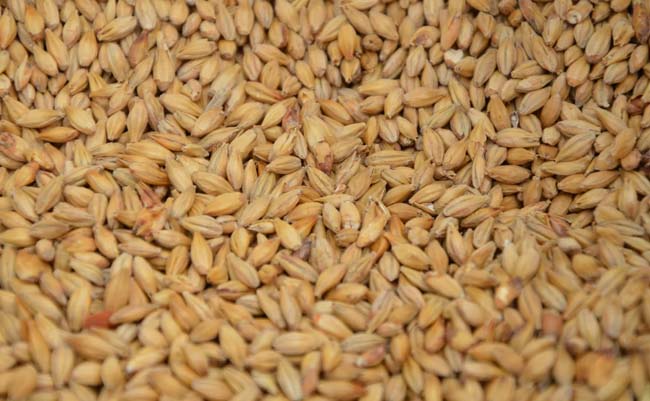
Grains of malt.
SOURCE: Lutz Wernitz/Unsplash.

At Craft Beer & Brewing John M. Verive has written about the importance of decoction in modern craft lager brewing:

There are two kinds of brewers in this world: those who think decoction is old tech made obsolete by modern equipment and well-modified malt, and those who hold this onerous process as a key to unlocking a nearly indescribable quality in the finished beer… In one camp are the pragmatic brewers, including renowned brewing scientist Charlie Bamforth. “I don’t understand why anybody in their right mind would want to be doing decoction mashing,” he once said on the podcast of the Master Brewers Association of the Americas… On the other side of the schism are the brewers who skeptics might view as romantic or quixotic… Sacred Profane in Biddeford, Maine, is a lager brewery that imports a variety of floor-malted Czech barley, which is famously less modified and therefore better suited for decoction mashing… Cofounder Michael Fava says he wants their beers to have the character of the Czech lagers they love, even if it means doing things the hard way. He and cofounder Brienne Allen designed their brewhouse for decoction because it’s the best way to honor the unique Haná barley malt they use. If you’re brewing Czech-style lagers but not practicing decoction, Fava says, “you’re lying to the consumer and yourself.”


Labels from organic beers in shades of green.
Various organic beers pictured in 2007.

For Pellicle William Georgi has been talking to brewers about organic status, sustainability, and the difficulty of competing in a market where people say they want these things but won’t pay for them:

There’s no sign outside Ketelbroek Food Forest, but it’s not hard to find… I’ve come to this corner of the Netherlands to meet Mattias Terpstra, ex-owner of the now-defunct Nevel Wild Ales… Mattias founded Nevel with Vincent Gerritsen in 2016, in the nearby city of Nijmegen. They made wild beers with locally sourced, sustainable ingredients, many of which came from this food forest; some were even served in Michelin-starred restaurants across the Netherlands. In 2021, Nevel won Dutch Beer of the Year at the Dutch Beer Challenge. The winning beer, Meander, was a barrel-aged wild blonde beer made with rhubarb and blackcurrant leaf… “Our goal was to close the gap between nature and beer,” Mattias tells me. “Wild fermentation produces the kind of aromas you find in nature, which fermenting with one strain can’t mimic. By using local ingredients, I grew connections to farmers, their crops, and the natural system behind them.” … However, the values that made Nevel special would also prove to be its undoing. In August 2024, Mattias announced that Nevel would close the following year, as it was impossible to make ends meet.


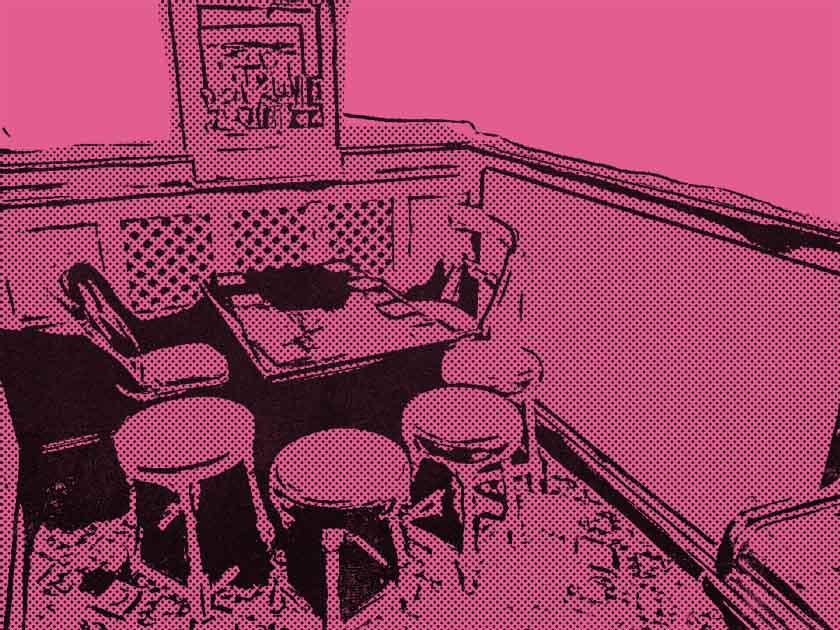
Illustration: a quiet corner in a quiet pub, with table and stools.

Martin Taylor doesn’t generally preach about the importance of pubs. Rather, he demonstrates their variety and wonder by posting about those he visits with a fondly critical eye. Inspired by something we wrote on BlueSky, however, he wrote this week about his belief that no other ‘third place’ can do what the pub does:

I didn’t really talk about “life” in my 2025 reviews, but clearly the death of your Mum is a key life event… [The picture on the order of service at the funeral] was taken at the Five Miles From Anywhere (No Hurry), an unfussy dining pub by the River Cam where I used to take Dad to give Mum a few hours respite (and vice versa). Mum liked the Five Miles too; she looks as happy there as she was anywhere in her last year… The night Mum died we felt the need to get away for a while before the real drama started, and ended up in Leighton Buzzard, near Mum’s birthplace, just being part of life…


An old upright piano with vases and flower arrangements on top.
The pub piano at The Moulders Arms. SOURCE: Ian Beesley/Macfilos

For photography website Macfilos Ian Beesley has written about his experiences photographing pubs in Yorkshire from the 1970s onward, when many were endangered and/or disappeared:

The Moulders Arms wasn’t the finest looking pub, but it stood proud and defiant as the surrounding streets were demolished… Winnie advertised in the local paper for [a piano player]. Two turned up: one called Gabriel “I ain’t no angel, but I play the piano like one” and a character called Freddy Fingers. They were both blind… They were invited to play six tunes each, then a decision would be made. Freddy hammered the keys first. When Gabriel started to play, it was obvious he was an accomplished pianist. Unfortunately, he had a weak bladder and had to go to the gents after three songs… Freddy, realising he wasn’t going to get the job, decided to sabotage Gabriel by sticking matchsticks between the keys. When Gabriel restarted, he realised what had happened, but was kicked off for not being able to play… Gabriel called Freddy out to have a fight, and we all followed, pints in hand, to watch two blind piano players have a scrap in the pub car park. While the logistics of this contest were being worked out, Winnie came tearing out of the pub, grabbed Gabriel and Freddy and told them never to step foot in her pub again… She then turned to me, “And what do you think you’re doing?” I was stood holding my Leica M6, “I was going to take some photos.” I replied. “That’s part of the problem: you’re stood there with your expensive camera, egging them on. You should know better. Give me that camera, you can have it back in a day or two, when. You better have a think about what you were doing.”… When I returned to get my Leica, there was no film in it. “What’s happened to my film?” I asked Winnie? “I threw it away.” she replied, “Nobody needs to see them sort of photographs. What were you going to do with them, put on a show, so your la-di-da friends in Leeds could laugh at us? That’s not who we are, that’s not how it is, just think about it.”

There’s a book of Beesley’s photographs with text by poet Ian McMillan and an accompanying exhibition at Salt Mills in Saltaire that runs until the end of 2026.


Finally, from BlueSky…

This week's 2000AD has co-opted The Bridge Tavern in Newcastle for the ancient goddess of northern England.

[image or embed]

— The Beer Nut (@thebeernut.bsky.social) 15 January 2026 at 11:32

For more good reading check out our Patreon-exclusive ‘Footnotes’ to this post and Alan McLeod’s round up from Thursday.

Categories
breweries

St Mars of the Desert: an oasis in the industrial hinterlands

Brewery taprooms often feel in conflict with their industrial surroundings, but few so much as The Brewery of St Mars of the Desert (SMOD).

This is partly because Sheffield’s industrial hinterlands still feel wonderfully undeveloped and somewhat wild.

Similar landscapes in Bristol are now broken up with blocks of student flats, climbing centres, gyms, and hipsterish food and drink businesses.

Walking the route of the Sheffield and Tinsley canal, however, we saw the charmingly ugly backsides of many small factories and workshops that are still in use. 

When we were diverted off the towpath, we walked streets lined with colossal sheds in various states of disrepair. The gutters were thick with litter and piles of fly-tipped waste covered muddy verges. The odd chunky rat scurried past.

The final approach to the brewery tap took us past busy car repair and tyre reconditioning firms whose business was spilling out onto oil-stained pavements. It felt like a part of the city that was hard at work.

The first sign that we were actually in the right place at all was the brewery gate which is decorated with various cute hand painted signs such as one that read: “SMOD is… open (hooray)”.

Taprooms exist on a spectrum. Some, like the one with the ducks in Bradford-on-Avon, feel temporary and makeshift, as if you’re drinking on a factory floor. Others feel more polished and permanent.

Crossing the yard at SMOD, we weren’t sure which we were about to get. It’s in an old industrial workshop and there aren’t many clues to be seen from outside, among the clutter of a working brewery.

Stepping through the red door (with more cute hand lettering) inevitably brings to mind the Tardis or the wardrobe that leads to Narnia. Wonders have been worked inside with light, paint, quirky ornamentation and something we’ve never seen in a taproom before: a wood burning stove.

As we said in our Golden Pints post, where we named this our favourite taproom of 2025 based on a single visit, we couldn’t decide if it made us feel as if we were in Belgium, or Bavaria, or some magical blend of the two.

Everywhere we looked there were Continental beer crates, tin plaques, posters or (unusual but effective) stripes of brewery-branded packing tape.

Old leatherbound books, dangling lamps, stacked beer crates, and other clutter, against painted brick walls.

A table near the bar had an enormous standing sign declaring it a Stammtisch – that is, a table reserved for regulars. Other tables were marked as reserved from 4 or 5 pm.

We were initially a little disappointed by this, which felt at odds with the informal village pub vibe, but we needn’t have worried. At least one long table was designated as reserved for sharing and the co-founder of the brewery, Dann Paquette, was buzzing around helping people find seats. Why doesn’t this happen in more pubs?

We knew we’d be stuck there for a while when we saw the beer list which included ten or so beers in a range of styles from Rauchbier to grisette. Each was served in a stylish glass with considerable pride and ceremony. The Czech-style lager Laska, for example, came in a rotund handled mug with a thick head of smooth foam which, even before we’d tasted the beer, told us to expect something special.

The beer was delightful. Even those that were less to our taste (Urchin) were clearly well made, characterful, and interesting. And those we did like we really liked. Jess, who is not given to emotional hyperbole, said that Rotkäppchen, an homage to the red beers of Nuremberg, nearly made her cry.

How often does a taproom really have any kind of personality? Even the best of them are usually rather blank, minimalist spaces. They tend to feel cold, literally and figuratively, with acres of whitewash, bare concrete, or bare brick.

By contrast, every surface and corner of SMOD tells you that it is run by human beings. Even the toilet is covered with yet more handwritten signs pleading with customers not to steal the decorative plaques, and arguing for a reduction in beer duty.

It must help that the owners and founders of the brewery are both present and hands-on with the running of the place. With Martha Holley-Paquette greeting us and serving us at the bar, and her husband managing the floor, it felt as if we were guests in something close to a family home.

Perhaps this all sounds a bit gushing but we’re not prone to falling in line with hype or groupthink. If anything, miserable sods that we are, we resisted visiting SMOD for this long because everyone else seemed so excited about it.

They were right. We are idiots. You should go as soon as you get the chance.

Categories
News

News, nuggets and longreads 10 January 2026: A Perfect Spy

Every Saturday we round up the best writing about beer from the past week. This time, we’ve got trademarks, ironworks and brown sugar.

First, some news that might be of interest to British publicans: the not-for-profit organisation Pub is the Hub is offering grants of up to £6,000 to “pubs in rural, remote or deprived areas… who want to offer additional services and/or activities”. The examples it gives are a village store at The Duck in Stanhoe and a community cafe at The George, Bethersden. In a longer press release reproduced at Beer Today they also cite the example of The Halfway, Tal-Y-Coed, Wales, which used a grant to set up a marquee where meetings and classes are held.


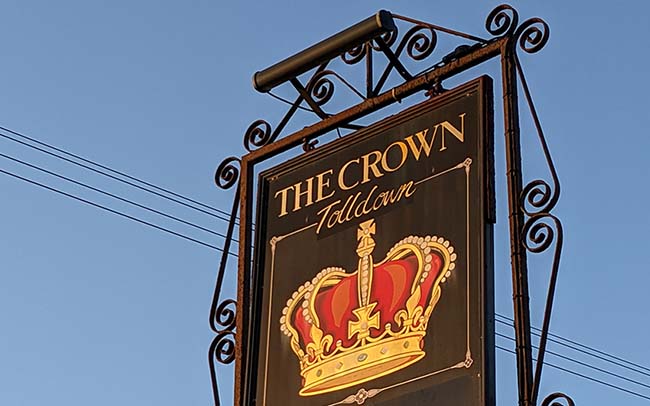
A sign for a pub called The Crown.

On a related note, for What’s Brewing, the newspaper of the Campaign for Real Ale, Laura Hadland argues that pubs should be treated as pieces of “community infrastructure”:

Shortly before Christmas, I read a letter to the editor of the Irish Times written by Dr Kathy McLoughlin… She decried the decline of the Irish rural pub and her words affected me profoundly… “When the pub shuts,” Dr McLoughlin wrote, “so too does the informal welfare system that has quietly operated for generations.” She goes on to say that if it is considered important to sustain rural Ireland, it will be necessary “to stop treating pubs solely as private businesses and start seeing them as pieces of community infrastructure”… I worked in museums and galleries for a decade and a half and not one of them made any significant money. Certainly not enough to be entirely self-sustaining. That doesn’t mean that they lack worth… As Dr McLoughlin wrote in her letter, “we should examine whether every rural resident is entitled to a local social hub within reasonable reach, in the same way they are entitled to broadband or public transport.”


A version of the Bass logo.

Various articles and posts have been written to mark the 150th anniversary of the registration of the Bass red triangle as Trademark No. 1 on 1 January 1876. The one that particularly grabbed our attention was by Gavin Blackmore for the blog of the UK Government’s Intellectual Property Office (IPO):

London, 31 December, 1875. Midnight approaches. Outside a modest office, a queue forms – not for concert tickets or Boxing Day bargains, but for something far more valuable: a place in history… As the clock edges towards midnight, the Trade Marks Registration Act 1875 is about to come into force, allowing businesses to officially register and protect their brands for the very first time… Bass & Co. is determined to be first. Legend has it their representative camped outside through the freezing winter night, wrapped in blankets and clutching the company’s application papers, waiting for the doors of the new registration office to open… The clock strikes twelve. The doors swing open. Bass steps forward… Despite a scuffle in the hall with other eager company representatives, Bass secures trade marks 1, 2 and 3. Their iconic beer label, featuring a red triangle – becomes UK trade mark No. 1, securing its place at the very top of the register forever.


A photo of an industrial town in black and white.
Merthyr. SOURCE: The Melting Pot – Merthyr Tydfil’s History and Culture

For a blog associated with the Merthyr Tydfil & District Historical Society Brian Jones has written about the pubs and breweries of Merthyr, once the iron capital of the world. It reveals the part played by industrial manufacturers in the establishment and running of breweries in the 19th century:

From the mid 18th century there was a race to build new iron works and  four were established in Merthyr with others at Hirwaun, Tredegar, Rhymney and Blaenavon. Many  of the men and women worked in the open air, mining ironstone, limestone, clay and coal in adits and comparatively small drift mines. In the summer this proved to be thirsty work. Those in the iron works faced hot conditions all year round and sought drink in the many pubs  and publicans began to brew alcohol for their customers. The Brewers Arms and the Clarence Hotel in Dowlais were small scale brewers, however some iron companies saw the potential to make safe and consistent quality beers in substantial quantities. A classic example was the Rhymney Iron Company which morphed from the Union Iron Company in Rhymney Bridge, and the Bute Ironworks. In 1838 it was decided to build a brewery for its workers and a year later a Scotsman, Andrew Buchan, became the brewery manager. For some decades the beers were sold as Buchan’s beers brewed and bottled at the brewery in the centre of Rhymney.

(You might want to skip the section on how beer is made, though. Malted from hops!)


A vintage bock beer label from Peoples brewery of Oshkosh, Wisconsin. It has a worried looking goat and two slogans: "Hits the spot! Brewed to please you!"
SOURCE: Lee Reiherzer/Oshkosh Beer

For Craft Beer & Brewing Michael Stein makes the case for American Bock as a unique and interesting style of beer that has relatively little to do with German Bock, and was historically defined by the use of corn and dark brewing syrups:

Peoples Brewing of Oshkosh, Wisconsin, first brewed its American bock in 1914… Lee Reiherzer, author of The Breweries of Oshkosh: Their Rise and Fall… collected some oral history from a brewer at Peoples – a man named Wilhelm Kohlhoff, who brewed there from 1953 to 1968. In the unique case of Peoples Bock, the adjuncts were corn grits and brown sugar… When Kohlhoff started working at Peoples in 1953, Peoples Bock was in retirement. The brewery discontinued it from 1940 until 1959, when it made its glorious comeback. Some drinkers remember Peoples Bock as “strong,” though it was only about 1 percent ABV higher than Peoples Beer—the brewery’s flagship pale lager, which was about 4.5 percent ABV… “Oshkosh was crazy about Bock,” Kohlhoff says. “Everyone saw it as this high-powered beer – strong beer, you know. Dark is associated with strength. So, people would pre-order. … And I heard this from someone else who had worked there: When the Bock would come out, they would just all day long be selling it off that back dock of the brewery in cases, you know. It was an event.”


A busy city street with neon signs advertising bars and restaurants.
The French Quarter, New Orleans. SOURCE: Aric Cheng at Unsplash

The first Pellicle article of the year is by Courtney Iseman whose newsletter we’ve been reading and linking to frequently in these round-ups for several years. In her Pellicle piece she’s written about the craft breweries of New Orleans and what she argues is their uniquely collaborative nature:

The closeness of the New Orleans beer community extends beyond quality hangouts. Craft-beer-at-large hangs its hat on being collaborative, but the local scene here gives that identity new meaning. Connor cites Shawna coming to help bartend at Care Forgot during a mad Mardi Gras rush, as Care Forgot is on the parade route. Urban South lets Care Forgot use its lab, and Care Forgot, Ecology, and Courtyard, because of their equidistant locations, have dubbed themselves the ‘Beermuda Triangle’ and collaborate often… Ingredients are shared like neighbours borrowing cups of sugar, and because many of these breweries are small, they team up to access larger orders and share shipping costs. Before the pandemic, Brieux Carré and Parleaux co-purchased a canning line they’d shuttle back and forth between breweries in a trailer.


Finally, from BlueSky, a neat summary of a complex issue…

I feel like a lot of analysis on the Death of Pubs overlooks or downplays the impact of the attacks on the finances of the working classes. There are much broader economic factors at play than taxes etc.

— Steve (@steveuntilnextyear.bsky.social) 8 January 2026 at 12:28

…which prompted a rare thread from us:

A short thread on The Death of Pubs inspired by that post from @steveuntilnextyear.bsky.social 1. One of our early blog posts, back in 2009, was about *why* people stopped going to the pubboakandbailey.com/2009/03/pubs…“Working class homes are nicer now than they were in the 60s and 70s…”

[image or embed]

— Boak & Bailey (Jess & Ray) (@boakandbailey.bsky.social) 9 January 2026 at 08:20

For more good reading check out our Patreon-exclusive ‘Footnotes’ to this post and Alan McLeod’s round up from Thursday.

Categories
pubs

I’ll put you on speaker, mate

Why on earth do people in pubs keep using their phones in speaker mode? And how do we stop it happening?

On a recent trip to an otherwise peaceful pub we were treated to squawking phones by two separate groups.

First, a pair of men in their forties decided to share some ‘funny videos’ they’d found, at full volume. This sent scratchy, distorted noises and bursts of music echoing through the pub, which they further enhanced with their own loud live commentary.

Then, a little later, a party of couples in their sixties took the table next to ours. When a friend phoned one of them, he immediately said: “I’ll put you on speaker, mate.”

For a full five minutes, the phone shouted at them, and they all shouted at the phone, and we gave up on trying to have a quiet conversation between ourselves.

You’ll notice that neither of these parties included young people. Younger people, based on our observations, are generally less likely to indulge in this kind of behaviour.

Perhaps it’s to do with degrees of tech savviness, the stereotype being that older people are less good with gadgets.

Or maybe it relates to age-related hearing loss, which can make us less able to perceive higher frequencies, and thus less sensitive to VERY ANNOYING SOUNDS.

Whenever it happens, we find ourselves hoping that a member of staff might have a word.

In micropubs, or guv’nor managed establishments, that does sometimes happen. You won’t get away with it for long in The Drapers Arms if Garvan is about, for example.

The other alternative is that we need to get better at having the conversation ourselves: “Hello, sorry to interrupt, but can you turn that off, please?”

God, how awkward, though, with so much potential for escalation if you happen to try this with the wrong (pissed) person.

On the most recent occasion, something in Ray cracked.

In a fit of passive-aggression he began to whistle loudly – ‘The Dam Busters March’, for some reason.

They noticed, looked startled, and turned off the video.

Are we being fuddy-duddy, or do we all agree that using your phone on speaker mode in the pub is unacceptable?

Ruvani de Silva certainly singled this habit out as part of her contribution to the recent Pellicle pub etiquette article.

If we are all agreed, how do you think we can stop it happening?