Leucochloridium: The Zombie Snail Worm
Written by Jonathan Wojcik 3/17/2013
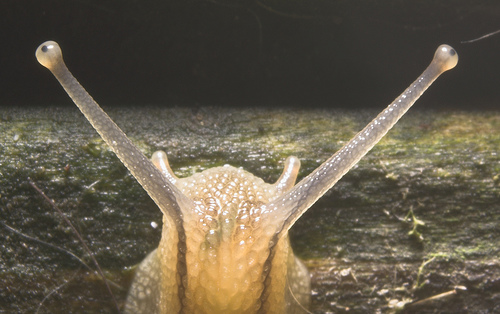
Imagine the every day life of a garden snail. Prone to drying out, you
avoid the dessicating rays of the sun as you slither in the shadows beneath the dense
foliage, eating anything chewable you find in your slimy path. One day, you catch a
whiff of fresh bird droppings; to you, a delicious and nutritious meal, and slurp the gooey treat into your jawless throat.

Days pass, and you start to feel strange - at least as strange as your simple
nervous system can muster - and against all logic, you ooze your way out into the hot,
bright daylight your kind has spent millions of years hiding from. You go about your
snaily business as you always would, but this time, you're completely exposed, both
to the light and to the eyes of hungry birds. Your foul tasting slime has taught most
avians that snails are an unappetizing meal, but unfortunately for you, you no longer
look like a normal snail...
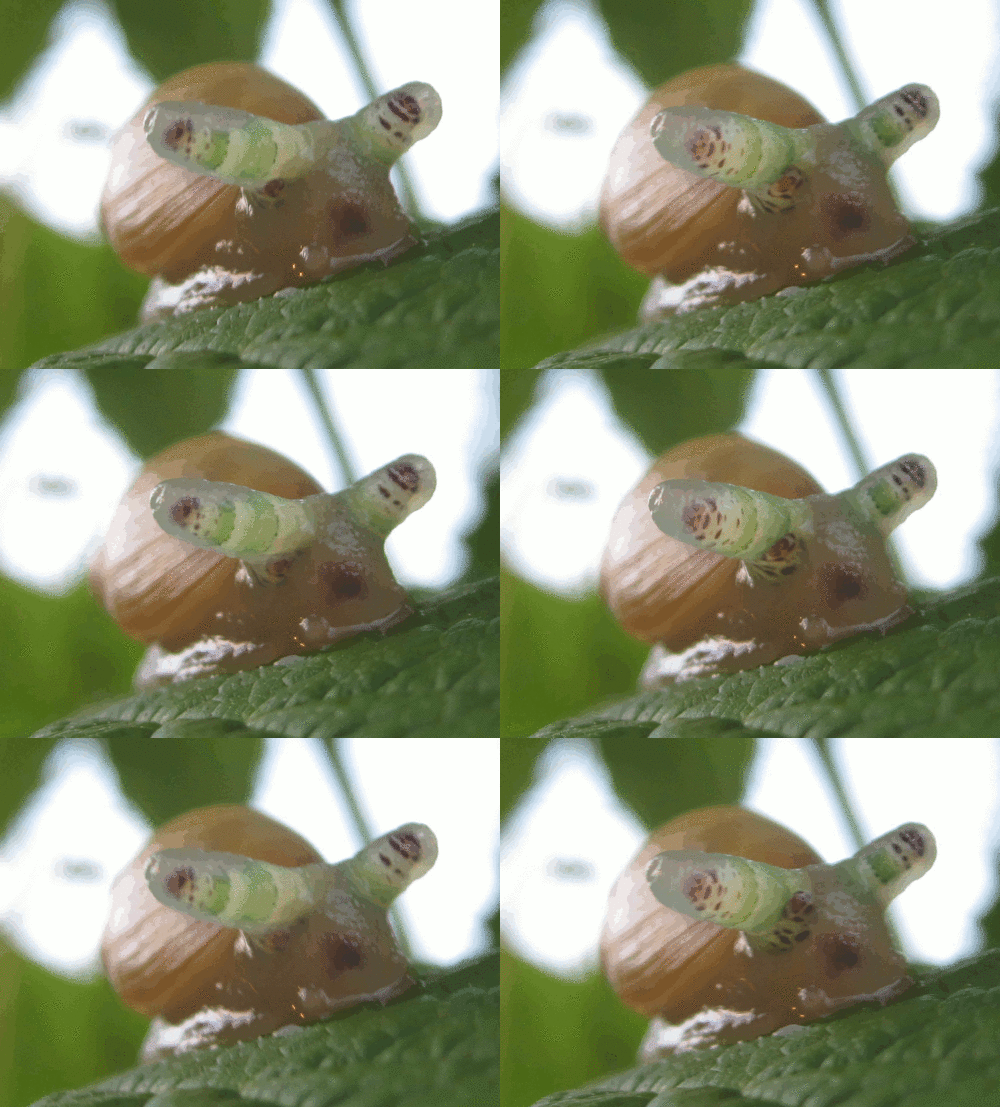
By Hanne Sundin - more gifs and invertebrates under link!
Those droppings you ate were swarming with the eggs of a parasitic flatworm in the genus Leucochloridium. Invading your simple little gastropod brain, the parasites have
impaired your normal behavior, and with their colorful, pulsing "brood sacs"
crammed into your eye-stalks, your head now resembles a couple of fat, juicy insect
larvae - every bird's favorite.

You'll likely survive your eyestalks being ripped off, and eventually, your entire face
will grow back...as will the parasites. You're lucky evolution never granted you the
intellect to comprehend your new existence, enslaved by a worm in your brain to
have your eyes chewed off again and again.
Genus Leucochloridium are Trematode flatworms in their own family, the Leucochloridiidae. At least nine species have been described, from L. caryocatactis in 1800 to L. perturbatum discovered in 1969. Perhaps the most famous are L. paradoxum, found in several European countries, and L. variae, found in North America.
The first I ever learned of these incredible creatures was in a children's book whose title escapes me. Interestingly enough, the book was all about the possibility of life on other planets, and used the parasite as an example of of just how inhuman an organism can be - an excellent choice, though it didn't provide any photographs. It would be many years before I could look them up on the internet, and they were only more magnificent than I had ever imagined. Some particularly glamorous shots can also be seen here, here, and here.
The internet's first (and therefore most official)
LEUCOCHLORIDIUM FAN ART GALLERY

Frankiesmileshow |

Acidonia |

Darkazam |
||||||||||||||||||||||||||||||||||||||||||||||||||

Eternal Saturn |

Pwnpirate |

Kecen |

Lee Sherman |

Detail |

Firagashark |

777WhiteDragoness |

777WhiteDragoness |

Insane Drunken Angel |

BrokenTeapot |

Dodoman |

Dodoman |

Dodoman |

Ophiguris |

Ophiguris |

Planet Eater |

Poison Kiryu |

PousazPower |

PousazPower |

PsychoDemonFox |

Rad & His Mom |

Rillid |

Louella |

SmashedPumpkin |

Spivsy |

Tekkactus |

Verdego |

Stahl und Wasser |

Jesse Hardy |

Angus Silverman |

Furbearingbrick |

Helmrich |

Kainsword17 |

Ron Spencer |

Goombajoe |

Penny Rosenstein |

(and page two!) |

DarkHeartsClub |

Haemish |

David Lynch |

John Pesando |

Shadgrimgrvy |

Daimera |

The Episiarch |

Leiapico |
