Spell the Month in Books – January 2026

Image

Spell the Month in Books is a linkup hosted by Jana on Reviews From the Stacks on the first Saturday of each month. The goal is to spell the current month with the first letter of book titles, excluding articles such as ‘the’ and ‘a’ as needed. That’s all there is to it! Some months there are optional theme challenges, such as “books with an orange cover” or books of a particular genre, but for the most part, any book you want to use is fair game!

The theme this month is New, interpreted as you wish: new releases, recent acquisitions, “new” in the title, etc, new-to-you books, new additions to your TBR list, recently published books, or something else that you connect with the word ‘New’.

These books are all fairly recent acquisitions, new-to-me and are books I haven’t read. The links go to the descriptions on Amazon.

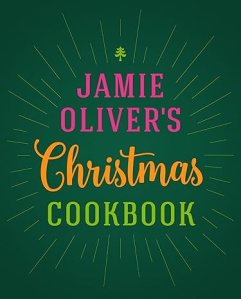
J is for Jamie Oliver’s Christmas Cookbook 
Image

With classic recipes for every part of Christmas dinner, veggie alternatives, clever ways to use up all of those leftovers, top tips for cooking meat perfectly, and even recipes for edible gifts and Christmas cocktails – he really has thought of everything!

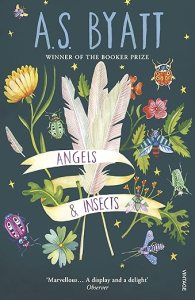
A is for Angels and Insects by A S Byatt
Image

Like A.S. Byatt’s Booker Prize-winning novel, Possession, these two mesmerising novellas are set in the nineteenth century. In Morpho Eugenia, an explorer realises that the behaviour of the people around him is alarmingly similar to that of the insects he studies. In The Conjugal Angel, curious individuals – some fictional, others drawn from history – gather to connect with the spirit world. Throughout both, Byatt examines the eccentricities of the Victorian era, weaving fact and fiction, reality and romance, science and faith into a sumptuous, magical tapestry.

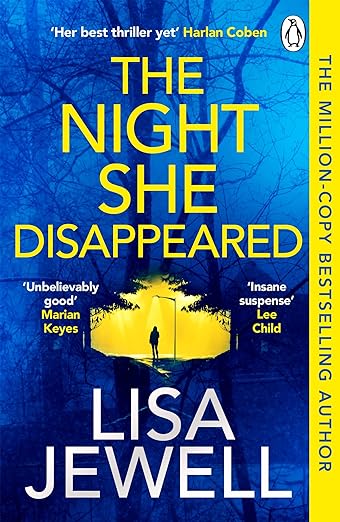
N is for The Night She Disappeared by Lisa Jewell
Image

Midsummer 2017: teenage mum Tallulah heads out on a date, leaving her baby son at home with her mother, Kim.

At 11 p.m. she sends her mum a text message. At 4.30 a.m. Kim awakens to discover that Tallulah has not come home.

Friends tell her that Tallulah was last seen heading to a pool party at a house in the woods nearby called Dark Place.

Tallulah never returns.

2018: walking in the woods behind the boarding school where her boyfriend has just started as a head teacher, Sophie sees a sign nailed to a fence.

A sign that says: DIG HERE . . .

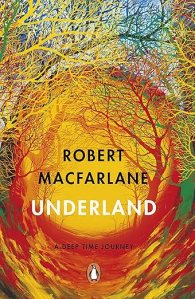
U is for Underland: A Deep Time Journey by Robert Macfarlane
Image

In Underland, Robert Macfarlane takes us on a journey into the worlds beneath our feet. From the ice-blue depths of Greenland’s glaciers, to the underground networks by which trees communicate, from Bronze Age burial chambers to the rock art of remote Arctic sea-caves, this is a deep-time voyage into the planet’s past and future. Global in its geography, gripping in its voice and haunting in its implications, Underland is a work of huge range and power, and a remarkable new chapter in Macfarlane’s long-term exploration of landscape and the human heart.

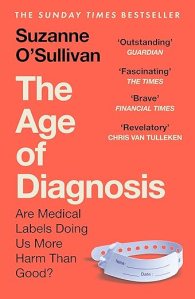
A is for The Age of Diagnosis: Are Medical Labels Doing Us More Harm Than Good? by Suzanne O’Sullivan
Image

Mental health categories are shifting and expanding all the time, radically altering what we consider to be ‘normal’.

Genetic tests can now detect pathologies decades before people experience symptoms, and sometimes before they’re even born.

And increased health screening draws more and more people into believing they are unwell.

An accurate diagnosis can bring greater understanding and of course improved treatment. But many diagnoses aren’t as definitive as we think. And in some cases they risk turning healthy people into patients.

Drawing on the stories of real people, as well as decades of clinical practice and the latest medical research, Dr Suzanne O’Sullivan overturns long held assumptions and reframes how we think about illness and health.

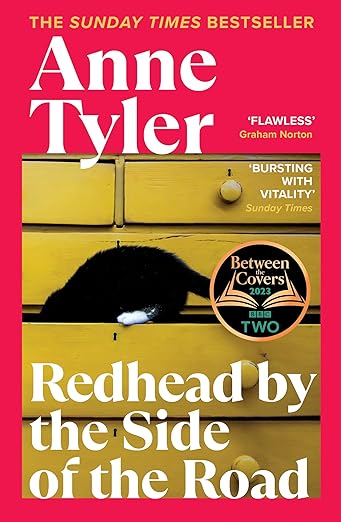
R is for Redhead by the Side of the Road by Ann Tyler
Image

A perfect love story for imperfect people

Micah Mortimer measures out his days running errands for work, maintaining an impeccable cleaning regime and going for runs (7:15, every morning). He is in a long-term relationship with his woman friend Cassia, but they live apart. His carefully calibrated life is regular, steady, balanced.

But then the order of things starts to tilt. Cassia is threatened with eviction, and when a teenager shows up at Micah’s door claiming to be his son, he is confronted with another surprise he seems poorly equipped to handle.

Can Micah, a man to whom those around him always seem just out of reach, find a way back to his perfectly imperfect love story?

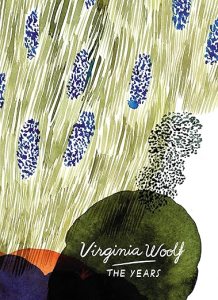
Y is for The Years by Virginia Woolf.
Image

The Years follows the lives of the Pargiters, a large middle-class London family, from an uncertain spring in 1880 to a party on a summer evening in the 1930s. We see them each endure and remember heart-break, loss, radical change and stifling conformity, marriage and regret. Written in 1937, this was the most popular of Virginia Woolf’s novels during her lifetime, and is a powerful indictment of ‘Victorianism’ and its values.

The next link up will be on February 1, 2026 when the theme will be a Freebie.
The Unicorn: Book Beginnings on Friday & The Friday 56

Image

Every Friday Book Beginnings on Friday is hosted by Gillion at Rose City Reader where you can share the first sentence (or so) of the book you are reading. You can also share from a book you want to highlight just because it caught your fancy.

Image

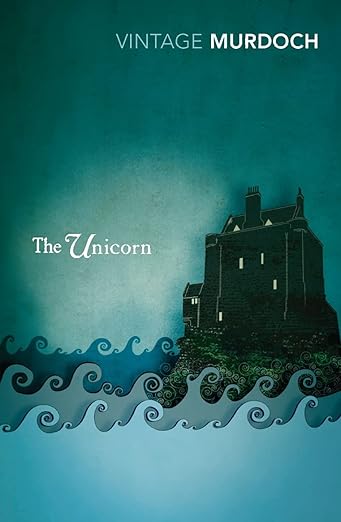
The Unicorn by Iris Murdoch is one of the books I’ll be reading soon. It’s one of my TBRs, a book I bought in a secondhand bookshop in Old Melrose in the Scottish Borders in 2014. It’s a book I’d nearly forgotten, double-shelved at the back of one of my bookcases.

The book begins with the strange conversation:

‘How far away is it?’

‘Fifteen miles’.

‘Is there a bus?’

‘There is not.’

‘Is there a taxi or a car I can hire in the village?’

‘There is not.’

‘Then how am I to get there?’

‘You might hire a horse hereabouts’, someone suggested after a silence.

‘I can’t ride a horse’, she said in exasperation, ‘and in any case there’s my luggage’.

They stared at her with quiet dreamy curiosity.

Image

Also every Friday there is The Friday 56, hosted by Freda at Freda’s Voice, but she is taking a break and Anne at My Head is Full of Books has taken on hosting duties in her absence. You grab a book and turn to page 56 (or 56% of an eBook), find one or more interesting sentences (no spoilers), and post them.

Page 56:

She had never felt quite like this before, alone in her own mind; and yet not quite alone, for somewhere in the big darkness something was haunting her.

Description from Amazon UK

When Marian Taylor takes the post of governess at Gaze castle, remote house on a beautiful but desolate coast, she finds herself confronted with many strange mysteries. What kind of crime or catastrophe in the past still keeps the house under a brooding spell? And is her employer Hannah an innocent victim, a guilty woman, a lunatic, or a witch?

If you have read this book, what did you think?

26 Questions in 2026 from The Classics Club

Image

26 Questions in 2026 from The Classics Club 

When did you join The Classics Club? How many titles have you read for the club so far? Share a link to your latest classics club list. I joined the Classics Club in April 2013. I didn’t finish reading and reviewing the books until 2022! Here is my completed list. I am now on my second list , aiming to finish it in January 2027 and have read 30 of the books, making a total of 80 books. The books on both lists are all either physical books on my bookshelves or e-books on my Kindle. 

What classic are you planning to read next? Why? Is there a book first published in 1926 that you plan to read this year? It will probably be The Unicorn by Iris Murdoch. It’s been years since I read any of her books and I have a paperback copy lined up to start soon. I haven’t got a book first published in 1926 in mind to read this year.

Best book you’ve read so far with the club? Why? This is a hard question, too hard, there are so many!

Classic author who has the most works on your club list? Or, classic author you’ve read the most works by? Charles Dickens – 10 books

If you could explore one author’s literary career from first publication to last — meaning you have never read this author and want to explore him or her by reading what s/he wrote in order of publication — who would you explore? Obviously this should be an author you haven’t yet read, since you can’t do this experiment on an author you’re already familiar with. 🙂 Or, which author’s work you are familiar with might it have been fun to approach this way? Evelyn Waugh. I read Officers and Gentlemen years ago, the second book in his Sword of Honour trilogy, so I’d like to read all three, but I’m not sure I want to read all his books in the order they were published.

First classic you ever read? I was about 12 when I first read Pride and Prejudice.

Favorite children’s classic? I can’t decide between What Katy Did by Susan Coolidge and Heidi by Johanna Spyri.

Which classic is your most memorable classic to date? Why? These are such hard questions. I think it could be The Grapes of Wrath by John Steinbeck because it totally surprised me by how much I loved it. Cannery Row was the first of Steinbeck’s novels that I read and I thought then that Steinbeck’s style is perfect for me. With both books I felt that I was there in the thick of everything he described

Least favorite classic? Why? Washington Square by Henry James because it just didn’t catch my imagination and I found it tedious.

Favourite movie or TV adaption of a classic? I usually prefer a book to a movie or TV adaptation. But I did enjoy the 2005 BBC adaptation of Charles Dickens’s Bleak House with Gillian Anderson as Lady Dedlock and Charles Dance as lawyer Mr Tulkinghorn, which prompted me to read the book. I loved the book.

Favorite biography about a classic author you’ve read, or the biography on a classic author you most want to read, if any? I’ve read several biographies of classic authors so this is yet again a difficult question, but I’ve chosen Peter Ackroyd’s biography of William Shakespeare. I’m familiar with several plays, which helped enormously with reading Ackoyd’s biography as he has structured it mainly around the plays.  But above all, he has placed Shakespeare within his own time and place, whether it is Stratford or London or travelling around the countryside with the touring companies of players. Shakespeare spans the reigns of two monarchs, which saw great changes and Ackroyd conjures up vividly the social, religious and cultural scene. It’s a very readable book, full of detail.

Favourite classic author in translation? Do you have a favorite classics translator? What do you look for in a classic translations? I think my favourite classics author I’ve read in translation is Leo Tolstoy. I loved War and Peace so much that I forgot that I don’t like reading about battles and war.

Do you have a favorite classic poet/poem, playwright/play? Why do you love it? I don’t read a lot of poetry but I do like Robert Frost’s poems. When we used to live near enough to see plays at the Royal Shakespeare Company in Stratford we went to several live performances including Twelfth Night, King Lear and The Tempest. I love to see plays rather than just reading them.

Which classic character most reminds you of yourself? Which classic character do you most wish you could be like? I’ve never really thought about this before and off the top of my head I can’t think of any characters who remind me of myself.

What is the oldest classic you have read or plan to read? Why? The oldest book I own is Meditations by Marcus Aurelius, 161–180 CE. I’ve only read some of it.

If a sudden announcement was made that 500 more pages had been discovered after the original “THE END” on a classic title you read and loved, which title would you be happiest to see continued? I can’t think of one.

Favorite edition (or series) of a classic you own, or wished you owned, if any? I still have my mother’s copy of Pride and Prejudice which I treasure.

Do you reread classics? Why, or why not? Yes, Jane Austen’s books, Jane Eyre, The Christmas Carol, A Tale of Two Cities, and Rebecca are some that come to mind.

Has there been a classic title you simply could not finish? The House of Mirth by Edith Wharton.

Has there been a classic title you expected to dislike and ended up loving? There aren’t any I expected to dislike, but there are some that I was surprised at how much I enjoyed them – War and Peace, as said before, as I usually dislike reading about battles, but I loved it.

List five fellow Classic Clubbers whose blogs you frequent. What makes you love their blogs? There are more I could list – they all write such interesting and in-depth reviews.

  • Anne at My Head is Full of Books
  • FictionFan at FictionFan’s Book Reviews
  • Brona at Brona’s Books
  • Helen at She Reads Novels
  • Karen at BookerTalk

If you’ve ever participated in a readalong on a classic, tell us about the experience? If you’ve participated in more than one, what’s the very best experience? the best title you’ve completed? a fond memory? a good friend made? In 2022 when FictionFan mentioned she was intending to read Notre-Dame de Paris and hold a Review-Along on her blog that nudged me into reading it. I am glad I read it even if I couldn’t give it more than 3 stars – I  liked it, a good, enjoyable book. I also contributed to the Classics Club Jane Austen event last year. I really enjoyed reading the other members’ experiences in reading her books.

If you could appeal for a readalong with others for any classic title, which title would you name? Why? Maybe Dombey and Son by Charles Dickens, or one of his others I’ve still not read.

What are your favourite bits about being a part of The Classics Club? The Spins – I look forward to them immensely.

What would like to see more of (or less of) on The Classics Club? Not sure about this.

Question you wish was on this questionnaire? (Ask and answer it!) How do you define a classic? What is the definition of a ‘modern’ classic? What is a ‘vintage ‘ classic? These all seem to me to be rather loose, vague terms, with no fixed timelines and criteria. Just who decides whether a book is/will be a classic? I don’t know the answers.

The Fox of Kensal Green by Richard Tyrrell

Image

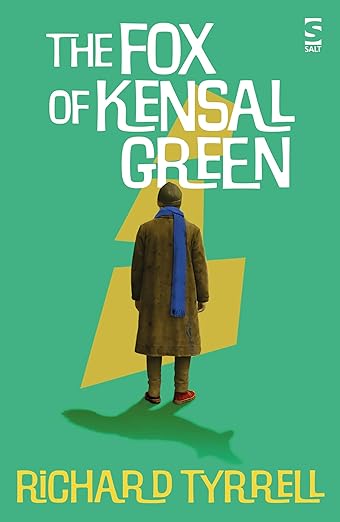
Salt Publishing| 7 January 2026| 240 pages| e-book| Review copy| 4*

Description

A quiet neighbourhood of London is about to be shattered.

Normally little happens in these mixed streets of families, retirees, podcasters and gossips. A little group create a community garden. An ageing journalist writes nature columns. A left-wing Scotsman longs for the glory days when he interviewed Castro. A disabled professor plans a book clearance. Supine Mario takes far too many drugs. And Wilf Kelly decides to get a fox as a pet.

Can a fox be tamed? Wilf sets out to do it. We follow his journey of self-discovery as he patiently befriends the animal.

When Wilf is accused of an awful crime, he becomes the target of a police and media firestorm. It’s a drama that galvanises not just the community but people from all around London to pour to Kensal Green’s streets. But can anyone prove Wilf’s innocence?

A superbly written debut novel with a big heart, that will make you laugh, cry and remind you of the joy of community spirit.

My thoughts:

I thought I’d enjoy The Fox of Kensal Green by Richard Tyrrell, based on the description above, so I was delighted to find that I loved it. It is an in-depth study of Wilf Kelly, who at the beginning of the book is a young man living on his own after his mother died. He’s a neurodivergent loner, with his own comforting routines, one of which was walking in a wild old cemetery. He loved its memorials, trees and bushes, a place where birds nested and where the brambles had overgrown the graves. It was there he spotted a big red dog fox and decided to make him a pet. His mum used to chant ‘To get love, you give love’ and love meant gifts. So, he brought him gifts of meat hiding it in a thicket under a bush.

He found life confusing and clung to his routines. But he knew he had to change and wondered if he could overcome his fears of people by forcing himself to speak to more people. Could he build bonds with people at the same time as with his fox, and be socially acceptable. Another one of his routines was delivering the Metro newspaper to his neighbours through their letter boxes and he decided to extend his round and actually talk to people. They recognise him as an eccentric and try to support him in their different ways. But then a terrible crime occurs and Wilf becomes the centre of a police investigation, and is besieged by the media.

I was very impressed by this debut novel. I loved all the characters, each one coming across as a real person with their own individuality, and the setting in a quiet London neighbourhood is vividly depicted. I’ve never been to Kensal Green but I could easily visualise the locations, the Victorian terrace houses, the tree streets neighbourhood and the local cemetery, the Kensal Green Cemetery in West London. I found this website fascinating, giving the history of the cemetery. It opened in 1833, in 72 acres of grounds, including two conservation areas, adjoining a canal, and home to at least 33 species of bird and other wildlife. Anthony Trollope and Wilkie Collins, are just two of very many famous people who are buried there.

I loved Wilf. He’s an eccentric character portrayed with empathy. And it is the local community, and in particular Felicia, his childhood friend, who quietly provide him with support, emotionally and practically with gifts, and they rally to defend him when he is suspected of a violent crime. To go into any more would only give away spoilers. This is an original novel that will linger in my mind for quite a while.

Thank you to the publishers, Salt for my review copy of this book via NetGalley.

The Feast of Artemis by Anne Zouroudi

Image

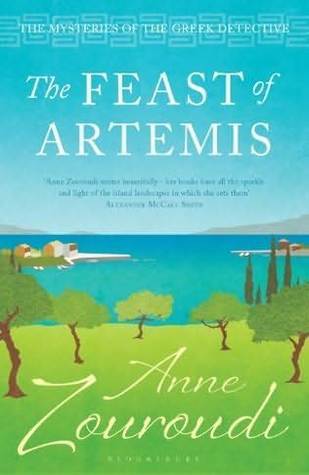
Bloomsbury| 2014| 288 pages| paperback| library book| 4 stars

Description

The olive harvest is drawing to a close in the town of Dendra, and when Hermes Diaktoros arrives for the celebratory festival he expects an indulgent day of food and wine. But as young men leap a blazing bonfire in feats of daring, one of them is badly burned. Did he fall, or was he pushed? Then, as Hermes learns of a deep-running feud between two families, one of their patriarchs dies. Determined to find out why, Hermes follows a bitter trail through the olive groves to reveal a motive for murder, and uncovers a dark deed brought to light by the sin of gluttony.

This is the seventh in Anne Zouroudi’s unique series of award-winning books featuring the enigmatic and courteous investigator Hermes Diaktoros, a man as much a mystery as the cases he solves. Who dispatches him to where he’s needed? And on whose authority does he act?

Hermes’s uncertain origins bring an additional level of bafflement to these much-loved stories. Perfect for fans of well-written crime thrillers and armchair travellers alike, they combine compelling suspense with touching portraits of Greek life far away from the tourist hotspots most visitors to Greece know.

‘Firmly in the delicious subgenre of crime-cum-gastroporn pioneered by Andrea Camilleri . . . Essentially gloriously sunny escapism, the perfect holiday read’ – Daily Telegraph

This book is the 7th in Anne Zouroudi’s series about Hermes Diaktoros of Athens, the Greek Detective. Each of the books in the series features one of the Seven Deadly Sins – in this one it is the sin of gluttony. It is set in the town of Dendra, where two families of olive growers, the Papayiannis and the Kapsis, are continuing a long standing feud. It begins on the day the town is celebrating the annual feast day, a festival that replaced an ancient feast in honour of the goddess Artemis. But the feast ends in disaster, when a young boy, Dmitris Kapsis is badly burned jumping a bonfire, either through being pushed or by slipping. The Kapsis family immediately blame the Papayiannis.

Hermes is a detective with a difference. Just who he is and who he works for is never explained. He’s most definitely not a policeman and when asked he says he works for the ‘highest Authorities, whose interests lie in justice where there’s been none. I act on their behalf, in the capacity of what you might call an investigator’ (page 161) . He’s described as ‘the fat man‘:

His owlish glasses gave him an air of academia; under his raincoat, his bark-brown suit was subtly sheened, and expertly tailored to flatter his generous stomach. His pale green polo shirt had a crocodile on the chest, and on his feet he wore white shoes, old fashioned canvas shoes of the type once used for tennis; in his hand was a sportsman’s hold-all in black leather, painted in gold with the emblem of the rising sun. (page 14)

Hermes stays in Dendra, investigating what had happened, together with the death of the head of the Papayiannis family, and the deaths of several townspeople from poisoning, allegedly after eating ice cream from the local gelateria. There are many characters to keep in mind, but this is made easier, by the Dramatis Personae at the beginning of the book. And with so much to investigate there are many twists and turns, but Hermes manages to get to the bottom of all the mysteries and along the way we meet his half-brother Dino, an unkempt and dissolute character, with wine-stained teeth and the smell of alcohol seeping through his pores and the flaking skin on his dry lips black from the wine – an interesting version of the god Dionysus.

I did enjoy reading The Feast of Artemis, following Hermes both as he investigates, enjoys all the Greek foods, learns about the impact of technology on the traditional methods of olive oil production, and interacts with the local people. I loved the descriptions of the Greek town and the surrounding countryside. All in all, a most enjoyable book.

Six Degrees of Separation from In the Heart of the Sea to West with Giraffes

This is a monthly link-up hosted by Kate at Books Are My Favourite and Best. On the first Saturday of every month, a book is chosen as a starting point and linked to six other books to form a chain. Readers and bloggers are invited to join in by creating their own ‘chain’ leading from the selected book.

Books can be linked in obvious ways – for example, books by the same authors, from the same era or genre, or books with similar themes or settings. Or, you may choose to link them in more personal ways: books you read on the same holiday, books given to you by a particular friend, books that remind you of a particular time in your life, or books you read for an online challenge.

A book doesn’t need to be connected to all the other books on the list, only to the ones next to them in the chain.

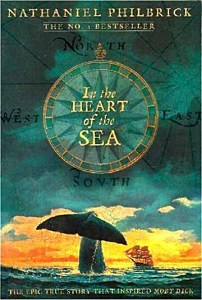
This month we are starting with the book you finished last month’s chain with, which for me is In the Heart of the Sea The Epic True Story That Inspired Moby Dick by Nathaniel Philbrick.

Image

It’s a nonfiction book telling the incredible story of the wreck of the whaleship Essex in 1820 in the South Pacific. It was repeatedly rammed and sunk by an eighty-ton bull sperm whale. I haven’t read this book yet; it’s one of my TBRs.

Image

My chain begins anothe book with the word heart in the title. It is Heart of Darknessa novella by Joseph Conrad, originally a three-part series in Blackwood’s Magazine in 1899. Although a gripping story, this was not an enjoyable book for me. But then, I suppose, it is not meant to be. Conrad was writing about the inhumanity of the way the native population in Africa was treated; the greed and cruelty of the Europeans to gain property, business, trade and profit, draining Africa of its natural resources. It paints an appalling picture.

 I think it shows the darkest depths of human behaviour. In doing so Conrad highlights the prejudices and the cruelty and shows how it was at that time – the graphic reality of what happened. It is a powerful criticism of colonialism at its worst, and full of imagery, casting a spotlight on the barbarity of the so-called civilised Westerners. These few words, uttered by Kurtz concisely summarise the whole story: ‘The horror! The horror!’

Image

The second book in my chain is also a book set in Africa – Thirteen Hours by Deon Meyer (translated from Afrikaans by K L Seegers), crime fiction set in South Africa, DI Benny Griessel has just 13 hours to crack open a conspiracy which threatens the whole country. Rachel, a young American girl is running for her life up the steep slope of Lion’s Head in Capetown.  The body of another American girl is found outside the Lutheran church in Long Street. Her throat slit had been slit. An hour or so later Alexandra Barnard, a former singing star and an alcoholic, wakes from a drunken stupor to find the dead body of her husband, a record producer, lying on the floor opposite her and his pistol lying next to her.

Image

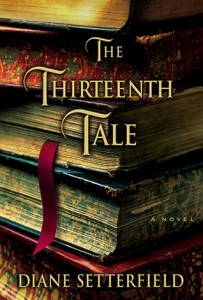
The next book in my chain is The Thirteenth Tale by Diana Setterfield. It took me some time to get into this book and I found myself being both reluctant to read it and yet unable to stop. It was only when I was reading the second part of the book that I found myself actually enjoying it. I usually give up on a book before then. Part of the problem I have with this book is that I couldn’t really like the characters, even Margaret, the narrator irritated me somewhat, even though she loves books. Another problem is the ending, which I found to be contrived.

Image

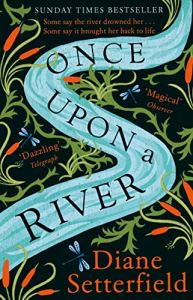
My fourth book is another book by Diana Setterfield that I enjoyed much more than The Thirteenth Tale is Once Upon a River. It is a beautifully and lyrically told story, and cleverly plotted so that I was not completely sure at times what it was that I was reading. It’s historical fiction with a touch of magic that completely beguiled me with its mysteries and fascinating characters. It’s a mystery beginning in the Swan Inn at Radcot, an ancient inn, well-known for its storytelling, on the banks of the Thames. A badly injured stranger enters carrying the drowned corpse of a little girl. It’s mystifying as hours later the dead child, miraculously it seems, takes a breath, and returns to life. The mystery is enhanced by folklore, by science that appears to be magic, and by romance and superstition.

Image

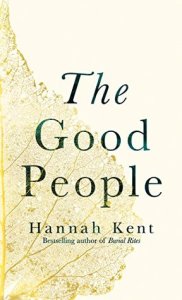
My fifth book is The Good People by Hannah Kent, another beautifully written book, and an intensely moving tale of Irish rural life in the early 19th century. I grew up reading fairy stories but The Good People gives a frighteningly realistic view of what belief in fairies meant to people dealing with sickness, disease, evil and all the things that go wrong in our lives. It’s set in 1825/6, a long gone world of people living in an isolated community, a place where superstition and a belief in fairies held sway. People talk of others being ‘fairy-swept’ or ‘away with the fairies’, and kept with the music and lights, dancing under the fairy hill. This is a beautifully written book. It is not a fairy story, but one in which their existence is terrifyingly real to the people of the valley.

Image

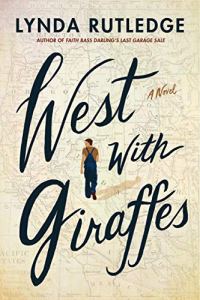
The Good People is based on true events. And my final link is also based on a true event. West with Giraffes by Lynda Rutledge is historical fiction based on fact about two giraffes who miraculously survived a hurricane while crossing the Atlantic. They then travelled across America from the east coast to the San Diego Zoo, during the Great Hurricane of 1938, the most destructive storm to strike New England in recorded history until 2012’s Hurricane Sandy. It conjures up a vivid picture of America in 1938 during the Great Depression, the Dust Bowl, hobo cards, nomadic workers taking jobs where they could, desperate Hooverville dwellers in shanty towns, sundown town racism, and circus animal cruelty. But of course, it is the giraffes that are the two main characters. 

My chain is mainly made up of historical fiction this month travelling from the South Pacific through Africa, England, Ireland and America and from the nineteenth century to the twentieth.

Next month (February 3, 2026) we’ll start with a book that topped lots of 2025 ‘best of’ lists – Flashlight by Susan Choi.