


Welcome to the Canadian Lyme Disease Foundation
The Canadian Lyme Disease Foundation (CanLyme) was created to promote a more complete and comprehensive understanding of Lyme disease and related illnesses through research, education and advocacy to help reduce misdiagnosis and improve treatments for Lyme disease.
Get help for Lyme
Recognizing symptoms and learning how to talk to your doctor are the first steps towards treatment.
Learn more about Lyme
Understanding Lyme disease is the best way to prevent, diagnose and treat it.
Get the facts
Get the facts on ticks and tick-borne diseases. There are many myths!
Recent dispatches
Antibiotic therapy an effective treatment and diagnostic tool for children with persistent Lyme disease, study finds
Renowned U.S. researcher followed 101 pediatric Lyme cases in New England.
Six myths about Lyme disease that harm patients in Canada
As cases of tick-borne infections mount, debunking misinformation is even more urgent.
Dr. Vett Lloyd on biobanks and the science of tick-borne post-infection illness
Dr. Lloyd reviews tick-borne chronic illness from a research lens and the role of biobanks in answering key questions.
Justin Wood reviews Canada’s growing tick problem
Geneticks tests ticks for human pathogens and gathers valuable data on ticks, pathogens and tick-borne diseases across Canada.
New research explores the genetics of the bacteria responsible for Lyme disease in Canada
This study was funded by Genome Québec, the G. Magnotta Foundation for Vector-Borne Diseases and the Caron Thorburn Institute.
Nine questions for your vet about protecting your pet from Lyme disease
Tick-borne diseases can be fatal to dogs but there are plenty of ways to prevent them, veterinarian says.
Where there are ticks, there’s often Lyme disease
Lyme disease is caused by an infection that is most often transmitted by ticks, but it can also be transmitted from mother to child during pregnancy.
Ticks can attach to your body without being seen or felt, and diagnosis can be difficult due to symptom presentation, testing protocols and other challenges.
Learn to protect yourself
You can support our work
CanLyme is a registered Canadian charity. We rely on the financial support of donors. You can help save lives.
Stay connected
Sign up and get our occasional updates, educational resources, and news from our community of experts.


Tick removal kits

Prevention tips

Donate now
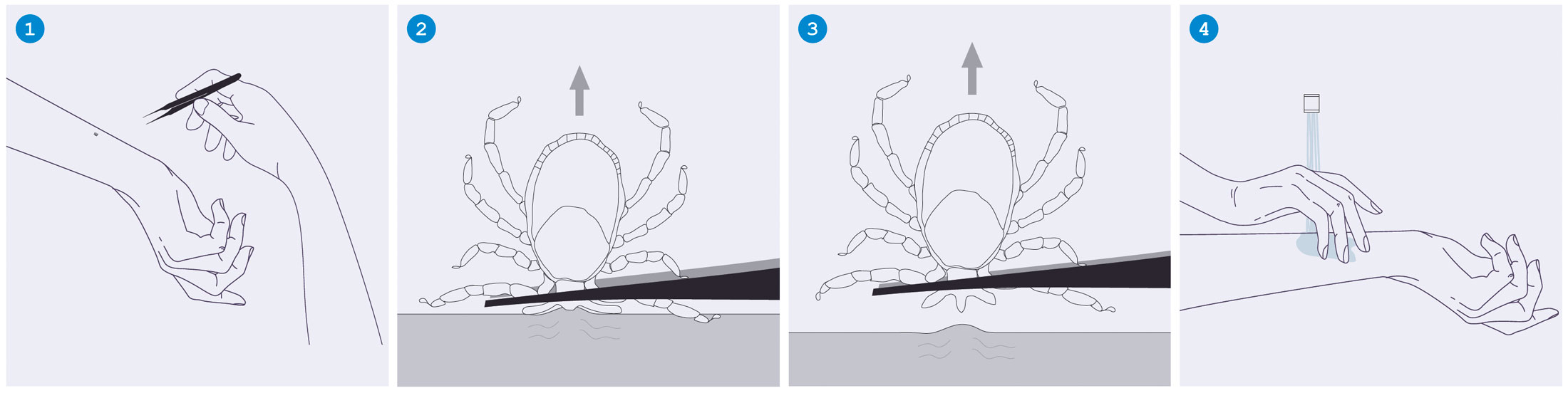
Tick removal

Lyme basics

Prevention
More news
New research explores the genetics of the bacteria responsible for Lyme disease in Canada
This study was funded by Genome Québec, the G. Magnotta Foundation for Vector-Borne Diseases and the Caron Thorburn Institute.
Nine questions for your vet about protecting your pet from Lyme disease
Tick-borne diseases can be fatal to dogs but there are plenty of ways to prevent them, veterinarian says.
Dr. Brian Fallon on Neuropsychiatric Lyme
Expert discusses how to recognize and manage the neuropsychiatric manifestations of Lyme.
Diagnostic tools for Lyme disease, by Dr. Ralph Hawkins
Dr. Ralph Hawkins presents on a probabilistic approach to understanding uncertainty in medical diagnosis. From the Canadian Tick-Borne Disease…
Chronic Lyme is real
Despite their intention, recent news broadcasts have the potential to put patients at further risk.
New research: Infrared thermography makes the bullseye rash more visible for diagnosis of Lyme
Infrared imaging can detect early Lyme inflammation invisible to the naked eye, Ukrainian study suggests.
Fuel the movement for better Lyme disease diagnosis and treatment
This Giving Tuesday, be a part of our efforts.
How CanLyme’s annual conferences could lead to better care for patients with Lyme disease and other tick-borne illnesses
More than 60 Canadian health professionals from a wide range of disciplines gathered in Toronto.
First annual Canadian Tick-Borne Disease Conference a success
This conference was an incredible opportunity for practitioners and experts to network and to share ideas formally, through presentations,…
