Will Work for Food:"With a combination of education, monitoring, and enforcement, the Fair Food Program and the CIW have provided fertile ground for both preventing and addressing sexual violence in the workplace."
"The CIW successfully looks up the food chain to the highest-profiting companies in retail and service and puts pressure on them to absorb the cost of higher worker wages at the farm level. Because of their successes, thousands of farmworkers like Lupe have benefited from better pay and working conditions."
As the CIW’s Fair Food Program—and the broader Worker-driven Social Responsibility model to which it gave rise—continue to scale and be replicated in workplaces across the country and around the globe, a new book goes under the hood of the FFP to tell a remarkable story of transformation and hope.
The book traces how farmworkers from the forgotten agricultural town of Immokalee, Florida, achieved what once seemed unthinkable: bringing about a new day of dignity and respect for farmworkers across the United States, and in the process helping to forge a new paradigm for enforcing human rights in global supply chains through the Fair Food Program. What makes the achievements of the FFP so extraordinary is not just the program's current reach, but its most unlikely origins. In an industry long defined by impunity, entrenched power imbalances, and a chilling climate of fear, farmworkers—among the most economically and politically marginalized workers in the global economy today—stood up, made common cause with consumers, and demanded they be treated as human beings.
Will Work for Food: Labor across the Food Chain places the groundbreaking success of the Fair Food Program against the stark backdrop of a global food system that all too often exploits and abuses those at the very bottom—stripping workers of their time, their dignity, and, in some cases, their freedom. For readers seeking to understand both the depth of abuse that persists in food and agriculture and the proven solutions capable of ending it, this book is essential reading.
The book is co-written by two leading scholars of food systems: Laura-Anne Minkoff-Zern and Teresa Mares. Minkoff-Zern is an Associate Professor of Geography and the Environment at Syracuse University. Mares is an Associate Professor of Anthropology at the University of Vermont and serves as Director of the university’s Graduate Program in Food Systems.
We are excited to share a few excerpts below, but you'll want to read the whole thing, which you can find here!
Will Work for Food: Labor across the Food Chain
“‘For women, to be able to work with dignity and respect is huge, because before the [Fair Food] Program the women were sexually harassed, but now that the program exists there is zero tolerance for sexual harassment and woman can report sexual harassment anonymously, because that did not happen before. Therefore, now women are working and our human rights are being respected, which is very important, especially because as women there are many things that we face and this alleviates one of our worries to be able to work as a woman free and with respect.’
- Lupe, tomato picker and Coalition of Immokalee Workers organizer
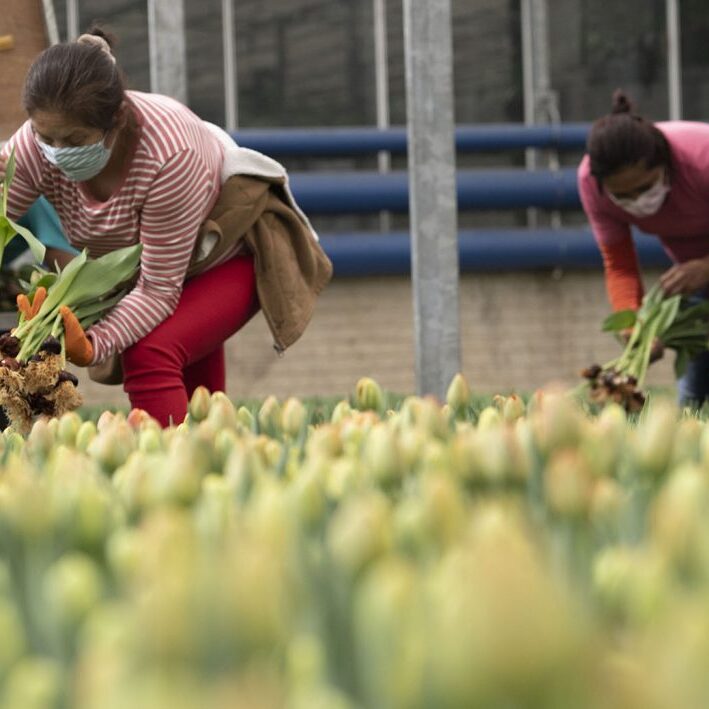
Farmworkers like Lupe are central to food production in the United States, from New England’s dairy farms to vineyards on the West Coast to tomato fields in the Southeast. Yet across these regions workers labor under grueling physical conditions and in one of the lowest paid and least regulated industries in the country. In the small agricultural town of Immokalee, Florida, farmworkers have organized a powerful campaign, affecting how their labor is valued from the grassroots level to the very top of the corporate food chain. The Coalition of Immokalee Workers is a worker-based organization focused on protecting the human rights of farmworkers.
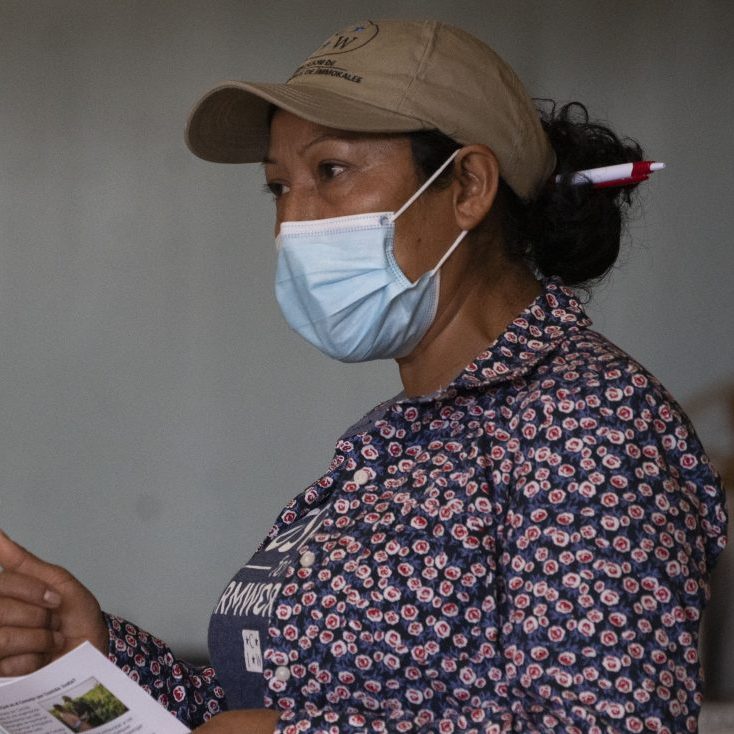
CIW staff member Lupe Gonzalo provides an on-the-clock, worker-to-worker education session at Tuxedo Corn, CO.
They have coordinated one of the most forward thinking and strategic programs to address labor abuses and sexual violence against farmworkers in the United States today, called the Fair Food Program. In developing this program, the CIW has articulated a strong analysis of the power dynamics within the industrialized food system and has found creative ways for their demands to fit within its confines. Moreover, they recognize farm labor as part of a food system, where power and profits remain at the top, in the service and retail sectors, and outside of the direct relations between agricultural workers and their farm-level employers. Their role in creating the broader framework and network of the Worker-Driven Social Responsibility (WSR) model is profound and engages a different set of organizing principles from that of more traditional forms of worker activism. The WSR model is a worker-led approach to monitor labor standards and fight labor abuses, which can include mechanisms for handling complaints and worker trainings. Organizations engaging in WSR models, such as the CIW, exemplify a food chain perspective. The CIW successfully looks up the food chain to the highest-profiting companies in retail and service and puts pressure on them to absorb the cost of higher worker wages at the farm level. Because of their successes, thousands of farmworkers like Lupe have benefited from better pay and working conditions. The organizing work of the CIW and others challenges the structural inequalities embedded in the industrial mode of producing food today.
…We opened this chapter with a discussion of the success of the CIW Campaign for Fair Food, whose worker-organizers have catalyzed a growing network of labor organizations committed to the WSR model. The CIW was formed in 1993, when a small group of workers began weekly meetings in response to rampant labor abuses and violations in Florida’s tomato fields. Using organizing tactics of widespread work stoppage, a well-publicized hunger strike, and a 234-mile march across Florida, these workers followed in the footsteps of many farmworkers before them, attempting to structurally address low wages and abusive conditions... Rather than follow the dollar only to the farm level, farmworkers and organizers in the CIW recognized that large-scale retailers and restaurants are making much more of the food dollar than the farmers who directly employ them…
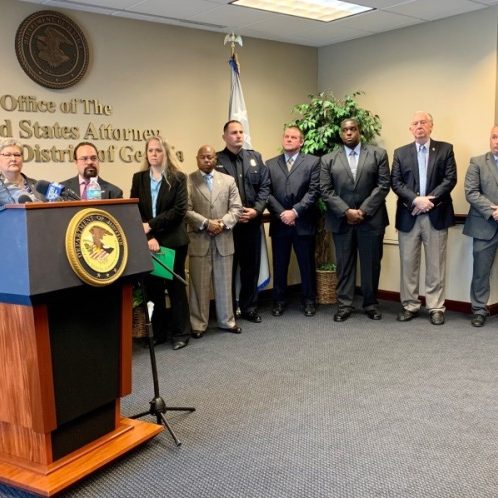
Walmart executives sign onto the Fair Food Program, joined by Coalition of Immokalee Workers co-founder Lucas Benitez, in 2014.
Despite the often-grim realities confronting farmworkers, there are reasons for optimism thanks to this activism and the effective organizing within the farmworker justice movement. In a Civil Eats piece examining the influence of the #MeToo movement on farmworker organizing, Vera Chang shows how one of the most important accomplishments of the CIW has been to tackle sexual violence in the field head-on. With a combination of education, monitoring, and enforcement, the Fair Food Program and the CIW have provided fertile ground for both preventing and addressing sexual violence in the workplace. In addition, according to the CIW, as of 2024, the program has provided more than 1,200 worker-to-worker educational sessions, has fielded more than 3,900 complaints to the Fair Food Hotline, and has distributed more than $44 million of premiums paid by participating buyers...
As the CIW has expanded its influence, the development of the WSR network is an inspiring example of worker solidarity across sectors as the network includes both food and farmworkers and those in other industries, such as garment production. One member of the WSR network, Migrant Justice, has benefited from a close collaborative relationship with the CIW as it has drawn heavily on the Fair Food Program and its principles to develop the Milk with Dignity (MD) program with dairy farms in the northeastern United States. In October 2017, Ben and Jerry’s signed on to the MD program after years of worker organizing. As of 2024, sixty-five farms in Vermont and New York supplying Ben and Jerry’s with milk are abiding by a farmworker-authored code of conduct. More recently, Migrant Justice has expanded its organizing to the retail sector, calling for the supermarket chain Hannaford to join the MD program as well. In designing the MD program with farmworkers at the center, Migrant Justice has regularly visited Immokalee and hosted worker organizers from the CIW in Vermont, and there is little doubt that the successful campaign bringing Ben and Jerry’s (which is owned by Unilever) into the MD program was due in part to the solidarity between the two organizations…
Indian Sugar Workers Association (ISWA) release: “To remedy – and ultimately prevent – this outrageous exploitation, ISWA urgently calls on the global brands that purchase Indian sugar to engage with workers and collaborate in the implementation of the only internationally recognized solution to forced labour and related abuses for the most vulnerable workers in global supply chains – the Fair Food Program’s Worker-driven Social Responsibility model.” In the closing days of 2025, a series of grave atrocities came to light in India’s sugarcane industry, where the CIW is partnering with an association of farmworker organizations in the adaptation of the […]
Dear Fair Food Allies, As the year-end giving season comes to a close, we cannot thank you enough for your generous support. Together, we have accomplished so much. Earlier this year, we launched an urgent appeal after an Immokalee-based farmworker, Marco Antonio Hernández Guevara, lost his life to heat stress while laboring on a farm that’s not part of the Fair Food Program. You responded with compassion and resolve, raising more than $27,000 to help his family cover the sudden and overwhelming costs that accompanied the unfathomable loss of their beloved husband and father. In just the past month, you […]
As the year comes to a close, we want to share something with the rest of the Fair Food community that has deeply moved all of us here in Immokalee. Students from All Saints Catholic School recently took the time and care to write personal letters to farmworkers — messages of gratitude, encouragement, and solidarity for the people whose hard work feeds us all. These letters were a powerful reminder that farmworkers are valued and supported far beyond the fields — an important truth to remember in a moment when it is so frequently and loudly denied. One student wrote: […]
ProPublica on the Fair Food Program: “…The Fair Food Program’s protections currently extend to more than 20,000 farmworkers in nearly half of all states. It has led to workers getting paid more than $50 million in premiums. It is embraced by federal officials… The participants include other large tomato growers in Florida, corn harvesters in Colorado and sweet potato farmers in North Carolina.” Jon Esformes, CEO Pacific Tomato Growers and first major grower to join the FFP: “All of these things that are illegal were going on under the labor contractor system on every farm, including ours,” Esformes said. “I’m not sitting here […]
In late October, the Winn-Dixie in Immokalee closed its doors. Its replacement may take six months — or longer — to build. For the thousands of families who call Immokalee home, and whose only major grocery store was that Winn-Dixie, the closure has been devastating. The nearest full-service supermarket is now about ten miles away in the town of Ave Maria — and far more expensive. For residents who rely on walking or biking to buy groceries, that distance is a serious barrier, made even worse by the added cost of paying for a ride. The few neighborhood markets that […]
Today, on Giving Tuesday, we launch our end-of-year campaign — a moment to honor all who have stood with Immokalee’s farmworker community over the years, and to reflect on the challenges ahead as we redouble our efforts to expand the groundbreaking Fair Food Program with your support. Before we ask you to give, we want to share why many already do: “Everyone deserves to earn a decent wage, be safe performing their job, have decent housing, access to medical care and be free from all types of harassment. My monthly donation helps to ensure that the Fair Food program can […]
This Thanksgiving, you can help sustain the groundbreaking advances we’ve achieved through the Fair Food Program, and give thanks for the women and men who put food on your Thanksgiving table, by becoming a Fair Food Sustainer The holiday season is officially upon us. The routine of daily life is receding by the hour, replaced by the gathering joy of family and friends coming together after months, or even years, apart; by all the details of preparation for the big day ahead, from food and drink to accommodations for one and all; and – if we’re being honest! – by […]
Thirty years ago this month, the Immokalee farmworker community — the principal source of labor for Southwest Florida’s massive agricultural industry for several decades — came together across long-standing linguistic and cultural divisions and erupted in its first-ever general strike. Thousands of workers, immigrants from Mexico, Guatemala and Haiti, refused to board the busses that usually carried them to the fields after one major tomato grower announced a significant cut to the per-bucket harvesting rate, or piece rate. Instead, for five days the workers occupied the central parking lot in town, where dozens of labor busses normally gathered before dawn […]
Ganga Sekar, a coordinator of ISWA: “By coming together, sugar workers break the silence around long-standing abuses and begin to build the trust, confidence, and collective voice needed to support a rights-based program like the Fair Food Program.” Something incredible is underway in India right now. While the award-winning Fair Food Program continues its domestic expansion here in the US, covering more farms and crops than ever before, the groundbreaking program is inspiring and informing efforts to replicate its unique success by workers across the world. In March of this year, we shared the news with you that a coalition […]
Yale Student Farmworker Alliance in Yale Daily News: “It is unacceptable that Yale backs away from fair and humane conditions in its supply chain when a program exists which can guarantee them.” “Twenty years ago, students helped bring the groundbreaking Fair Food Program into existence. Now, it’s our turn to help expand the reach of the FFP’s life-saving protections to as many workers as possible.” Last week, with midterms behind them and the autumn weather giving way to the colder months ahead, students across Yale University woke up to an op-ed in their paper of record, Yale Daily News, about […]