
8 Carpet Cleaning Myths Busted
Have you ever, as a cleaning professional, been asked a question by a client along the lines of: “If you clean my carpet, will it get dirtier quicker?” “Does carpet cause allergies?” “Isn’t it true that steam cleaning will ruin my carpet?”
Do you know how to address the various cleaning myths?
Recently, two IICRC-approved instructors—James Tole and Jessika James—joined Unscripted, an IICRC video production, to tackle some of the most common carpet cleaning myths that continue to mislead homeowners and even some professionals.
Here’s the no-fluff breakdown, myth by myth.
Myth 1: Cleaning makes carpet get dirty faster
Reality: Bad cleaning does.
Proper cleaning does the opposite. It’s possible the cleaner has not been certified and properly educated. James explained that re-soiling usually traces back to residue, such as cheap detergents, poor dilution, weak rinse, or equipment that leaves carpet wet. “Budget cleaning” leaves sticky films that grab soil, Tole said. Modern chemistry and correct rinse steps remove soil and residue, keeping the fiber cleaner, longer.
Myth 2: Rental machines can match a professional result
Reality: Not even close.
Capacity, heat, airflow, and chemistry all play a role. Rental units hold a few gallons, run cooler, and rely on outdated detergents. According to Tole, the carpet might look clean, but you leave a lot behind. James added that professional equipment, whether portable or truckmount, delivers better extraction and faster dry times. Do-it-yourself jobs that stay damp for a day (or three) aren’t a badge of effort; they’re a biology project, she said.
Myth 3: If it smells clean, it is clean
Reality: Fragrance is not cleanliness.
Covering odor doesn’t remove the source. Pet dander, body oils, food residues, and the fine soil you don’t see must be physically removed. Tole is not a fan of blasting deodorizer at the end. When deodorizers are needed, professionals apply them thoughtfully at the beginning and rinse them, rather than misting them like perfume. James put it plainly: Cleaning removes source materials; scent masks them.
Myth 4: More detergent means cleaner carpet
Reality: More detergent means more residue.
Formulas are designed to work optimally at specific dilutions, with the addition of water, at a particular temperature, and with a specified dwell time. Over-concentration overwhelms the rinse, leaves sticky films, and accelerates re-soiling. “Not only will you leave soil behind, but you’ll also leave a sticky, tacky residue when that product dries,” James explained. The industry has shifted to lower-residue chemistries and light-touch rinse solutions. The pros measure, mix, and flush.
Myth 5: Carpet causes allergies
Reality: Neglected carpet can hold allergens; properly maintained carpet helps control them.
James described carpet as a passive filter: Dust and allergens settle into the pile instead of circulating in the breathing zone, provided the fiber is routinely vacuumed and periodically deep-cleaned. “Cleaning is actually the answer,” Tole explained, recounting how thorough cleaning eliminated stale odor in a heavily soiled home without a drop of deodorizer. Pulling out the carpet won’t cure habits; maintaining the carpet will improve indoor conditions.
Myth 6: Stain-resistant carpet is stain-proof
Reality: Treatments reduce risk; they don’t grant immunity.
Foot traffic and abrasion wear down stain-resistant protection in high-use lanes first. To do a quick field check, pour a bit of water in a traffic lane versus a wall edge. If it soaks in fast where people walk, that protector is tired. “They’re stain-resistant, not stain-proof,” Tole added. Pros clean with chemistry that respects the mill’s treatment, then reapply protector so spills bead up and can be blotted off more easily. For heavy-use homes, James recommended reapplying more frequently.
Myth 7: Steam (hot water extraction) ruins carpet—dry methods are safer
Reality: Hot water extraction is the most recommended deep-cleaning method for residential carpet when done correctly.
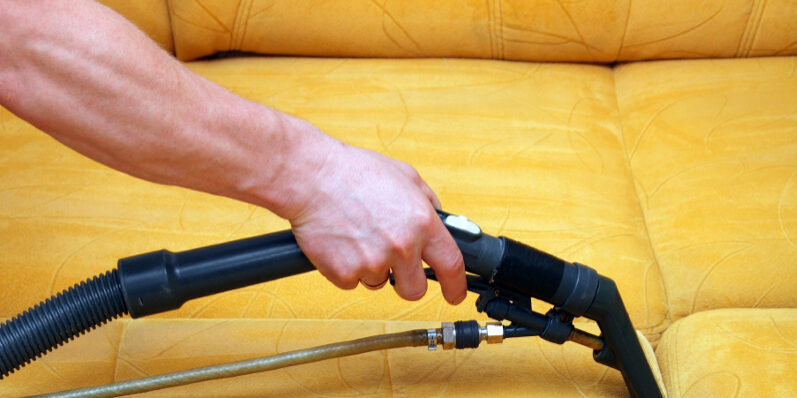
Steam cleaning carpet rinses out suspended soil and residues that other methods leave behind. “By far, maybe like 96% of the time we would recommend steam cleaning,” James said of her company’s business, noting that dry powder and low-moisture options have a place for certain constructions or constraints. Still, they are moderate cleaning methods and can leave product behind. Modern truckmounts and portables deliver controlled heat and airflow for thorough cleaning and fast dry times that align with warranty expectations.
Myth 8: Vacuuming once a week is enough
Reality: Frequency should match life.
Foot traffic, kids, pets, and cooking all push the schedule higher. Dry soil acts like tiny abrasives that scratch fibers and dull their appearance. What people call “traffic lane gray” is often damaged by soil, not a permanent stain. James advises clients to vacuum two to three times a week, focusing on transition zones and pivot points. Tole’s pragmatic rule: The best vacuum is the one you’ll use. Make it easy to grab, and focus where it matters most—entries, family rooms, stairs, and under dining tables. The more soil that is removed before cleaning, the better the professional result is.
The bottom line
What do these logical realities mean for cleaners and clients?
Education matters: Certified training teaches chemistry, fiber identification, equipment setup, dilution, and rinse technique—the difference between residue and results.
Process matters: Dry soil removal, correct preconditioning, agitation, controlled rinsing, and fast drying are the key elements. Skip steps and you invite callbacks.
Communication matters: Set clear expectations regarding protector durability, drying times, and maintenance. “There isn’t one fix for everything,” Tole said. Pros pick the proper method for fiber, construction, and use.
Clean carpet is a system: Regular vacuuming, periodic professional hot water extraction, and smart chemistry—do that, and the myths collapse on contact. Stain-resistant doesn’t mean stain-proof. Fragrance isn’t cleanliness. Rental machines aren’t professional tools. And the old rumor that cleaning makes carpet get dirty faster? That’s not what quality work does, but what residue does.
Stay informed, protect your carpet investment, and help your customers understand the facts behind proper carpet cleaning.
BONUS VIDEO CONTENT
EDITOR’S NOTE: Cleanfax produces this media program in partnership with the Institute of Inspection, Cleaning, and Restoration Certification (IICRC). The program, Unscripted, features what the IICRC is doing, what the industry needs to know about IICRC Standards, certifications, events, technical tips, management, marketing strategies, and more. If you have a topic you would like to see featured in a future edition of Unscripted, email Jeff Cross, ISSA media director, at [email protected].

Jeff Cross
Jeff Cross is the ISSA media director, with publications that include Cleaning & Maintenance Management, ISSA Today, and Cleanfax magazines. He is the previous owner of a successful cleaning and restoration firm. He also works as a trainer and consultant for business owners, managers, and front-line technicians. He can be reached at [email protected].





 Loading ...