![[personal profile]](https://www.dreamwidth.org/img/silk/identity/user.png)
Dreaming of Maui
22/2/26 07:45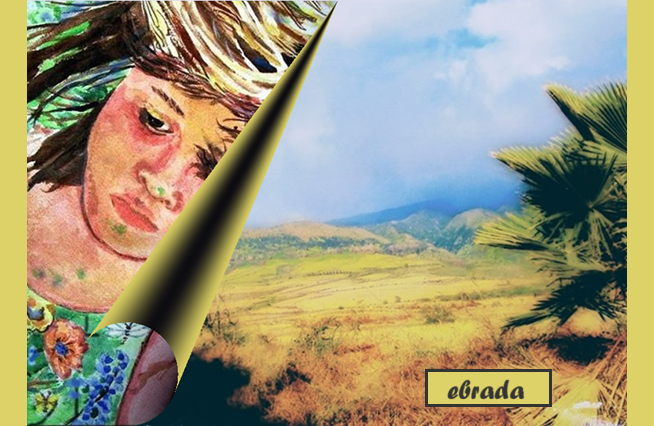
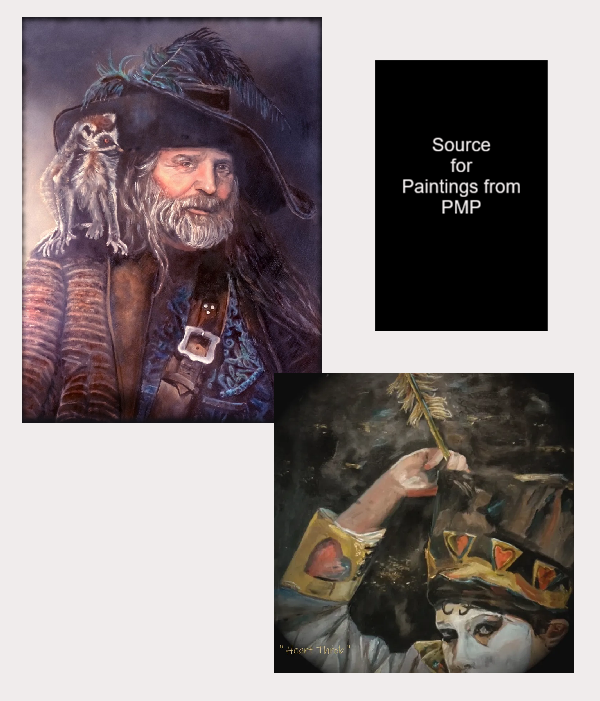
Source of Painting- Painting of JJ Culberth
A GOOD DAY
21/2/26 17:17Lunch at the Cactus Grill began our outing. The food was good and the gossip about the signature of a national artist, and how it had ended up on the restaurant's wall was fun.
Hubby and I then headed to the polls for the early voting of the primary election. There’s a specific kind of weight that I had felt this year in the voting booth. There was a need to take time to study the candidates, and me deciding on the ones with experience to run our government. I created a cheat sheet to take into the voting booth. I wasn't just choosing names; I learned that I had been naive to believe if we got rid of everybody in government, that we could start over, and cast out the evil corporations. Along with the rest of the American citizens, we found out quickly what it looks like to have people in power that don’t have a clue about what they are doing. Casting those votes felt like I had done what I could do for the moment, hoping that I had not mis-led myself, and we still have the opportunity to save our democracy. Only time will tell.After leaving the voting center a glorious event happened. For over a year, the commute to one of our local towns had been a puzzle of detours and frustrated sighs as the main bridge stayed under construction and was impassable. But yesterday when driving toward it, I felt the words “glory be” slip out of my mouth, “look husband it’s open.” A celebration ensued between the two of us.
On returning home I checked the news… good news….could the day get any better? I saw the headline that had been years in the making: the Epstein estate had finally been required to pay out $35 million to the surviving justice warriors. It is a staggering figure, but the money was secondary to the message. It was a validation of the courage shown by those who refused to be silenced. Seeing the systems of power finally held to account added a layer of profound satisfaction to an already good day. Lord, it is not possible for me to admire a human being more than those women
Half A Rose
14/2/26 09:28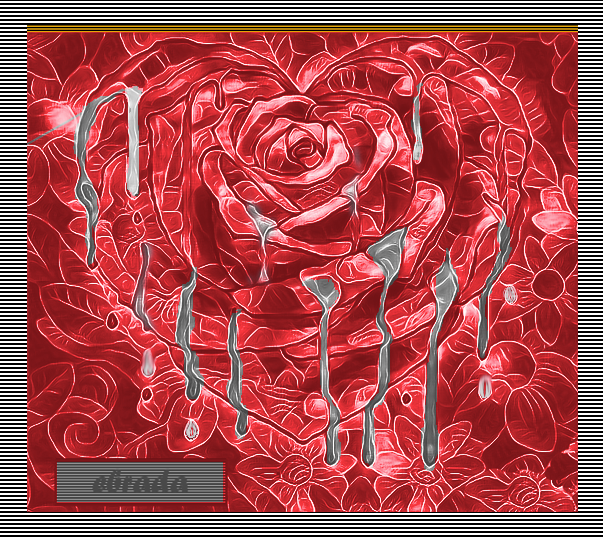
******************************************************************************************
It’s not just your imagination—the classic "rose scent" has largely been sacrificed at the altar of efficiency. If you’ve ever walked into a supermarket and inhaled deeply only to smell nothing but cold air and plastic, here is the scientific and economic breakdown of why.
1. The Energy Trade-Off
In the world of plant biology, producing scent is expensive. Roses have a limited "energy budget" to distribute among their traits.
The Choice: To survive a cross-continental flight and ten days in a vase, the plant has to divert its energy away from creating volatile organic compounds (the chemicals that create smell) and toward building thicker cell walls and sturdier petals.
The Result: Geneticists have essentially "bred out" the scent genes to prioritize physical durability.
2. The Logistics of the Global Market
Most mass-produced roses are grown in countries like Ecuador, Colombia, or Kenya. They aren't just being driven down the street; they are industrial travelers.
Longevity over Luxury: A scented rose usually wilts within 3–5 days because the chemical process of releasing scent also triggers the aging of the flower. For a rose to survive being cut, chilled, boxed, flown, and displayed, it needs to be "dormant" and hardy.
The "Cold Chain": Roses are kept at near-freezing temperatures from the moment they are cut. Even if a rose had a faint scent, the cold suppresses the release of those aromatic molecules.
3. The Genetic "Off Switch"
Recent research has identified a specific enzyme called RhNUDX1. In highly fragrant roses, this enzyme is very active in the petals. In mass-produced varieties, this gene is often suppressed or absent entirely because the breeding process focuses on:
Uniformity of color.
Stem length and straightness.
Disease resistance.
Vase life (the "12-day" standard).
How to find a rose that actually smells
If you want that nostalgic perfume, you have to look outside the standard supply chain:
Source
Why it smells
Garden Roses
Bred for fragrance and beauty, often with high petal counts, but they wilt quickly.
Heritage/Heirloom
Varieties from before the 1950s (when industrialization took over) retain their original DNA.
Local Flower Farmers
Since they don't have to survive a flight from South America, they can grow "scent-first" varieties.
Seems like Gemini gives you excellent info, to back up your bitching, about anything you want to bitch about.
Boo!!!!!!!!!
10/2/26 14:35
In my youth the idea would have scared me to come face to face with a ghost. But the description of the victim actually sounded like someone I would have liked to know. I made the decision to leave whatever that had fallen in my bed till morning. When morning light came I discovered it was a picture that had jumped off the shelf and landed at my feet. Did the ghost help it fall? Who knows, that’s the thing about ghosts.
Riding Colored Cows
9/2/26 14:55
Moving on from Dukedom. I learned something using Gemini. It is a good idea if the central character is interesting. In this case that would be me. It didn’t work for me because, in the story, I wouldn’t even allow myself to keep the owl. It was Charron that ended up all knowing and seeing into the future. A sad commentary on the state of my mind. It’s ok, as I prefer peace and boredom these days rather than being interesting. We already have enough people trying to entertain the world with their negative crap.

The Duchess Elara favored the hour when the dew still clung to the heather. It was during one of these morning constitutionals, near the rusted iron gates of the eastern wood, that she encountered Old Maude. The village woman was shivering, despite her heavy wool shawl, looking up at a sky that remained a bruised, stubborn purple long past the hour of dawn.
"Your Grace," Maude whispered, her breath visible in the unseasonal chill. "The light won’t come. The folk say the Wizard Bright has grown greedy. He usually waits for the solstice to take the sun for his winter hoard, but he has claimed it early this year. The North is in total shadow, and the cold is creeping south."
Elara looked at the horizon. A thin, pale ribbon of grey was all that remained of the morning. "Bright," she murmured, the name sounding like a cruel joke. "He would leave us to freeze in the dark?"
She hurried back to the manor, her silk skirts catching on brambles. She found the Duke in the solar, trying to read by the flickering, desperate light of a dozen beeswax candles.
"The sun has been stolen, Arthur," she said, her voice steady despite her haste. "The Wizard Bright has taken it early. The neighbors are frightened, and the air tastes of iron and ice."
The Duke sighed, leaning back into his high-backed chair. He was a man of action, but his joints were stiff with age. "If the North is already dark, then the crops will fail before the month is out. We need a man who knows the northern winds." He paused, a spark of inspiration lighting his eyes. "We shall send for my nephew, Basil. He has lived among the crags of the North since he was a boy. He is hardy, and he is hungry for a name."
Basil arrived three days later, riding a pony that looked as rugged as he did. He stood before his uncle, his face wind-burned and his eyes keen.
"Basil," the Duke declared, "find this Wizard Bright. Reclaim our sun from his clutches and bring the spring back to the valley. If you accomplish this—if you return the light to the sky—I shall personally petition the King to grant you knighthood. You shall be Sir Basil, Defender of the Dawn."
Basil bowed low, his heart hammering against his ribs. Knighthood was a dream he had chased through every mountain pass in the North. But he knew he could not do it alone.
Before departing for the capital to receive the royal blessing, Basil sought out the King. He stood in the great hall, which was now draped in heavy furs to keep out the unnatural cold.
"Your Majesty," Basil said, "I accept the quest. But I must inform you that I do not go alone. I have taken a husband, a man named Amish. He is a healer and a navigator of the high seas. He will accompany me on this task; his steady hand is as vital as my blade."
The King, a man whose crown seemed to weigh heavier in the dim light, nodded slowly. "A husband’s devotion is a fine shield, Basil. If you seek the Wizard Bright, heed the whispers I have gathered from the coastal watches. They say the wizard does not hide in a tower of stone or a cave of ice. He has built himself a fortress of vanity."
The King leaned forward, his voice dropping to a conspiratorial rasp. "Look along the shoreline, far to the north where the salt spray freezes in mid-air. The wizard lives in a gargantuan sandcastle on the shore. It is a fragile-looking thing, built of grains and seawater, yet held together by the darkest enchantments. Seek him there, where the tide meets the dark."
With Amish at his side and the promise of a golden spur in his mind, Basil turned his horse toward the coast, chasing the last fading echoes of the light. And then you know what happened: the wizard killed all but one. The descendent that would introduce Oculus in the future. The End S
S
Burning Eyes
5/2/26 07:49She fled back to her spire, her breath coming in ragged hitches. She slammed the door and threw herself toward Archimedes. "Take it back," she sobbed, reaching for the owl. "Blot it out. I cannot see it anymore." The owl did not blink. It merely tilted its head, its amber eyes reflecting the very nightmare Aelina sought to escape.
Over the following months, the Duchess visited the spire often, growing increasingly concerned. The Wise Woman had become a phantom. Aelina stopped feeding Archimedes; they together lost all sense of time. She stopped sleeping, for the moment her eyelids closed, a thousand silent lights began to scream from the desert.
"It is coming, Ebrada," Aelina would mutter, huddling in the corner of her room, her hair a matted nest of grey. "The spell has not broken. The black glass is at hand."
"You are unwell, sweet friend," the Duchess said one evening, laying a cool hand on Aelina’s forehead. "The visions have burned you through." Ironically the Duchess' use of the word burned became part of her vision with the word Burning Man appearing across the room.
Aelina looked up, and for a brief second, her mind cleared. She saw the Duchess—truly saw her—and realized the woman had no idea. Ebrada didn't know that every prophecy Aelina had ever uttered, every secret she had whispered, had been stolen from the amber depths of the creature on the perch. Aelina felt the last cord of her sanity snap. If she could not stop the vision, she would become part of it. She began to laugh, a dry, rattling sound that turned into a shriek. She clawed at the air, trying to pull down the white mask that only she could see.
When the royal physicians finally declared the Wise Woman "shattered beyond repair," Aelina was moved to a quiet cell in the lower gardens where she could watch the birds and babble to the stones. She left nothing behind in the spire but a stack of ruined parchment and Archimedes.
The Duchess, moved by a strange, lingering affection for her fallen seer, decided to give the bird a home with Charron. "A pity," Ebrada remarked, standing in the spire as a servant prepared the travel cage for the owl. "She was so brilliant before the vision took her. I shall never forget her service to me.” She thought perhaps Charron’s owl,( Rufus) and Archimedes would become allies of the forest. It had just dawned on her for the first time. that she no longer has a key to the future, which saddened her.
She reached out a gloved hand to stroke the owl’s feathers. Archimedes leaned into the touch, his talons clicking softly against the oak. As the Duchess looked into the bird's amber eyes, she felt a strange, sudden warmth—a shimmering at the edge of her vision, like a golden haze that smelled of wet earth and old copper. "How curious," Ebrada whispered, her head tilting just as the owl's did. "The light in here... it’s almost violet." She didn't notice the bird's pupils dilate, swallowing the amber until only the darkness remained.
Source- Photo Scarborough Fair in Waxahachie, Tx.

Source- Photo taken at Scarborough Fair in Waxahachie, Tx., Watercolor Self Portrait
The vision she had received several weeks ago was not a shadow. It was a sun-bleached, neon-soaked fever dream that defied the very language of the sixteenth century. She received it while giving council to the Duchess. It was brought back with the death of Silas’ son.
"You are pale, Aelina," said the Duchess as she intercepted the seer near the marble fountain. "You have been avoiding the sun. My tea has gone cold without your counsel."
Aelina bowed her head, her fingers twitching within her woolen sleeves. "The threads are tangled, Your Grace. It is a period of... static."
"Nonsense," the Duchess replied, her eyes narrowing. Ebrada was a woman of great insights into people’s emotions. "The last time we spoke, you gasped. A vision that displeased you.
Aelina felt a cold sweat prickle her neck. How could she describe the desert? She had seen a horizon of dust, a flat alkaline wasteland under a sky so blue it looked bruised. In the center of the vision, a man who bore the unmistakable high cheekbones of the Duke Earl’s line sat in the letter B , his skin painted with white clay. Over his eyes was a heavy, white object that seemed to bind his sight to another world entirely.
Somehow there stood with him an older woman, perhaps his mother, wearing the same white object about her head, but not truly with him. They weren't praying. They weren't at war. They were flying toward a colossal bird in the sky. When they entered their was a sign that read "Burning Man" that towered over a city made out of air and pulsing, impossible lights. There were no horses, only chariots of steel that glowed like fallen stars.
"I saw a desert," Aelina whispered, unable to look the Duchess in the eye.
"A crusade?" Ebrada asked, her voice lifting with hope. "A conquest in the East?"
"No," Aelina said, her voice trembling. "I saw a world where the sun never sets because men have captured lightning in bottles. I saw your bloodline wearing masks with black glass, staring into ghosts while their bodies stood in different surroundings. They were... celebrating the end of things."
"The end of what?"
"I don't know!" Aelina finally snapped, her composure breaking. "There were no crosses, Your Grace. No banners. Only the box on their faces and the fire in the sand. It was a madness I cannot name."
Aelina turned and fled toward the servant’s gate, leaving the Duchess standing among her perfectly manicured roses.
In the days that followed, Aelina took the long way through the kitchens, sleeping in the haylofts to avoid the palace's main thoroughfares. But Ebrada was relentless. She began to haunt the gardens at dawn, her silhouette appearing at the end of every path Aelina took. The Duchess didn't want a prophecy of gold or land anymore; she was obsessed with the "boxes." She wanted to know what kind of magic allowed a person to see through a wall of black glass, and why her descendants would choose a wasteland over a throne.
Aelina had no answers. Every time she closed her eyes, she saw the neon lights of that distant desert flickering against the dark, and she feared that by seeing it, she had invited that strange, chaotic future to begin its long march toward them.
Source- Oculus painting
Holiday Revoked
30/1/26 11:23
All Source Photos- Family Photos
"Brom! The tide is coming for your keep!" Adeliza laughed, pointing toward the shoreline. Brom, the youngest, was a whirlwind of sandy limbs. He was deep in the construction of a fortress that rivaled his father’s ancestral home in complexity, if not in scale. With a wooden spade and a tongue poked out in concentration, he reinforced the western wall against the encroaching foam.
A few yards away, the air was filled with the clatter of driftwood and high-pitched shouts. Now, all three stood in a doorway, pretending to be the Knights of the Roundtable. Aldred had lured Brom away from his castle building by promising the opportunity for him to hold the sword. It was Aldred's responsibility to take care of Brom when unsupervised by the court nanny.
Lee watched them with a quiet, grounded pride. He had never cared for the rigid hierarchy of the court, a trait that had often exasperated his father. To Lee, a man was measured by the calluses on his hands and the truth in his voice, not the crest on his ring. He saw that same wild, egalitarian spirit in his children as they finally shed their "armor" and plunged into the crashing waves, their laughter lost to the wind.
The bliss lasted until the sun began its slow descent. A rider appeared on the dunes, his horse lathered and gasping. It was a messenger from the estate, bearing a seal that turned the summer air cold. Adeliza walked to Lee’s side, her hand finding his as the messenger spoke the words: Elian was dead.
The news hit Lee with the force of a physical blow, not just for the loss itself, but for his son. Elian was the son of Silas, the castle’s head gardener. While the tutors and the Duke had looked for Aldred in the schoolroom or the armory, the boy had almost always been in the dirt of the courtyard. Aldred and Elian had spent their childhoods as equals, chasing chickens, sharing stolen bread, and dreaming of adventures beyond the walls. Elian had been the one who taught Aldred how to whistle through his fingers; Aldred had been the one who stood up to the other pages when they mocked the gardener-boy’s patched tunic.
To the world, it was the death of a servant’s son. To the family, it was the extinguishing of a part of Aldred's heart, and Lee felt that grief as if it were his own.
"We have to go," Lee said softly, his voice thick. Adeliza nodded, her eyes full of understanding. She looked toward Aldred, who was still dripping wet and smiling, unaware that his world was about to change. She knew that to their eldest son, the courtyard had always been more of a home than the Great Hall, and Elian more of a brother than any blood relative in the capital.
The children were gathered, their sandy faces falling as Lee knelt to break the news to Aldred. As they packed the carriage, the knights of the beach became quiet children once more. Lee looked back one last time at the shoreline. Brom’s sandcastle was being smoothed away by the rising tide, leaving nothing but a flat expanse of gray.
He thought of the courtyard back home—the cold stones where the boys had played. The castle would feel far emptier now, stripped of the one person who had never seen Aldred as a future Duke, but simply as a friend. Lee climbed into the carriage, holding a trembling Aldred close and ignoring the dusty velvet of the seats, his mind already miles away, mourning a boy who had owned nothing but had meant everything.

The Silent Gardner
29/1/26 19:40 Source- Photo taken at Scarborough Fair in Waxahachie, Tx.
The Duchess entered the Duke's study, her face pale, and found Earl hunched over a ledger of grain taxes. "The gardener’s boy is dead, Earl," Ebrada said softly, her hand resting on the heavy oak door. "The fever took him in the night." The Duke did not look up immediately. He dipped his quill into the inkwell with a steady hand. "A pity. The boy had promise sharing his father’s love of plants. I trust you will be representing our family at the funeral.” "Yes, Silas is more than a servant who has lost an apprentice," the Duchess relayed, her voice trembling thinking of the dog. "He has lost his soul. The man is half-mad with the grief of it."
Silas had once been a man of gentle songs and low humming. He lived in a small stone cottage on the edge of the estate with his son, Elian, a boy of seven years who possessed his father's green thumb and a laugh that could pierce the thickest morning mist. They were a pair seen often at dawn, two silhouettes against the rising sun, tending to the Duke’s lilies.
Then came the Great Shiver. It began on a Tuesday. Elian, who had been chasing a rabbit through the vegetable patch, came inside complaining of a cold that no hearth could warm. By nightfall, his skin was a map of fire and ice—burning to the touch, yet the boy shook so violently his teeth rattled in his head. Silas stayed by his side, wringing cool cloths and praying to every saint he could name.
In the deepest hour of the night, when the moon hung like a sickle over the palace battlements, a sound tore through the silence. It wasn't a human cry. It was a long, low, mournful howl. A stray hound, black as the soil Silas tilled, had perched itself just outside the cottage window. It howled once, a sound of absolute finality, and vanished into the trees.
By the time the sun touched the windowsill, Elian was still. Grief is a poison that acts differently on every soul. In Silas, it manifested as a desperate need for a cause. In the days following the burial, Silas did not weep quietly. He stood in the village square and the palace kitchens, his eyes wild, recounting the story of the Black Dog.
"The omen," he would whisper to the laundresses. "The Shuck came for him. The beast sang the death-knell before the spirit even left the flesh." He spread the rumor with a frantic energy, claiming the Duke’s lands were haunted, that the very soil was cursed by the spectral hound. He wanted the world to know that his son hadn't just died of a common fever; he had been taken by something cosmic and cruel.
But the rumors reached the Duke. Earl, a man of cold logic and little patience for superstition that scared his servants, summoned Silas. The Duke punished him with words. "You speak of ghosts to hide your own powerlessness, Silas," the Duke had said from his high throne. "Your tongue wags with shadows while my gardens go to seed. If your words bring only fear and rot, perhaps they are a crop we can no longer afford to harvest." Silas looked at the Duke, then at the bustling court. He realized then that no amount of talking would bring Elian back. No rumor could fill the silence of the cottage. The "Black Dog" was just a dog, and the fever was just a fever, and his son was gone.
Before he left the palace that day, Silas returned to his cottage and picked up the only thing Elian had clung to during those final, shivering hours: a small, tattered stuffed bear, its fur matted and one button eye missing. Using a length of sturdy garden twine, Silas tied the bear tightly around his waist, knotting it against his rough tunic. That was the last day Silas spoke.
He returned to the gardens the following morning. He took up his shears and his spade. A fellow gardener asked him where the mulch was kept; Silas merely pointed. The cook asked him for herbs; Silas gathered them and laid them on the table in silence.
Years bled into decades. Silas became a fixture of the palace, as permanent and quiet as the stone statues in the courtyard. He grew old, his skin turning to the texture of bark, his hands permanently stained with the dark earth he loved. He moved through the Duke’s roses like a ghost himself, the little bear always at his hip—a missing eye, its stuffing long since compressed, but never once removed.
He never spoke again. Not because he was forbidden, but because he had made a vow to the soil. He had learned that the only things worth saying were the things he used to sing to Elian, and since the audience was gone, the music was unnecessary.
People eventually forgot the rumors of the howling dog. They forgot the man who had ranted in the square. All that remained was the Silent Gardener, a man who spoke only through the blooming of flowers and the rhythmic, soft thud of a small, tied bear against his leg as he walked the paths of a life lived in the shadow of a memory.
Magical Aelina
26/1/26 00:32 The afternoon sun hung heavy and golden over the gardens, casting long, skeletal shadows through the trellises of climbing roses. Despite the warmth, the air in the private grove felt brittle.
Duchess Ebrada walked slowly, her skirt whispering against the stone path. Beside her stood Aelina, a woman whose presence in the castle was as controversial as the omens she interpreted. Perched upon Aelina’s leather-clad forearm was a Great Horned Owl, its amber eyes unblinking, its talons occasionally shifting with a soft clack.
" Earl’s temper has reached a fever pitch, Aelina," Ebrada said, her voice barely a breath. "He calls your counsel 'village superstitions' and 'poison in my ear.' He wants you gone from the realm."
Aelina did not look at the Duchess. She watched the owl. "The Duke fears what he cannot command, My Lady. He thinks the future is a beast he can tame with a sword. It is not."
Suddenly, the owl let out a sharp, clicking sound. Aelina stiffened. From the direction of the servants' quarters, a low, mournful sound drifted through the air—a dog howling, long and jagged. "Listen," Aelina whispered. Ebrada shivered. "It’s just a hound at the gate."
"A dog howling in a house of stone is a bell tolling in the dark," Aelina countered, her voice dropping to a gravelly register. "When the hound cries without cause within the realm, the air thickens with the scent of the shroud. Someone in the realm will soon fall to the sweating sickness, or the cold sleep from which none wake." The Duchess paled, clutching her pearls. "Which one, Aelina? Who is marked?"
Aelina opened her mouth to answer, but the words died in her throat. Her eyes, usually sharp and penetrating, suddenly glazed over. In the theater of her mind, a vision began to stitch itself together: she saw a man and woman that looked like two drawings flying. She saw a face—a face that looked familar—but it was obscured by a heavy, white mask setting on top of the woman’s head. The words Burning Man flashed across her eyes.
The images were fractured, like a mirror shattered by a stone. It was incomplete. To speak now would be to offer a half-truth, and in the Duke’s court, a half-truth was a death sentence. "Aelina?" Ebrada reached out, her hand trembling. "What do you see?"
Aelina blinked, the color returning to her face as the vision receded into the back of her mind like a retreating tide. She adjusted the owl on her arm and looked toward the high towers of the keep.
"The omen of the dog is clear enough for today, My Lady," Aelina said, her voice now flat and guarded. "As for the rest... the mists have not yet parted. I must gather more threads before the tapestry is ready for your eyes."
As Aelina retreated into the shadows of the shrubbery, the heavy thud of boots on stone signaled a new arrival. Duke Earl emerged from the arched gateway, his face a mask of controlled fury.
"Still consulting the bird-woman, Ebrada?" he boomed, his voice echoing off the garden walls. "I thought I made my wishes clear." "She provides me comfort, Earl," the Duchess replied, trying to steady her breathing.
"Comfort? She provides you with delusions," Earl snapped, closing the distance between them. "You are the Duchess of this realm, yet you behave like a frightened peasant. Think of the example you set! Our children watch you, Ebrada. They see their mother whispering in corners with a witch."
He leaned in closer, his shadow engulfing her. "Someday, one of our sons will sit upon my throne and rule this kingdom. How can he lead with a clear mind and a heavy hand if he is raised on a diet of omens and ghost stories? A ruler must trust in steel and law, not the howling of dogs and the flight of owls. Do not poison the bloodline with this madness." He turned on his heel, leaving Ebrada alone with the echo of his footsteps and the terrifying weight of Aelina's silence.
Nearby, crouched behind a thicket of manicured boxwood, Silas the head gardener remained perfectly still. His pruning shears were forgotten in the dirt. Silas had lived in the castle long enough to know that secrets were the most valuable currency in the realm, and he was an expert trader.
By the time the sun had dipped below the castle battlements, Silas had already visited the kitchens and the stables. Like a stone thrown into a pond, the news of the Duke’s fury rippled outward. By nightfall, the gossip had slipped through the postern gate and into the local tavern. Among the peasants, the whispers grew: the Duke was at odds with the Duchess, and the "Witch of Omens" had seen a death in the stars that the master of the house was too proud to acknowledge. The air in the village felt as charged as the air in the garden, as everyone waited for the dog to howl once more. Ebrada decided to cast out all dogs in the realm to increase the chance of no more howling. 
Source- Family Photo
The little sister Izzy and her son Lee took this opportunity to make fun of the duchess. 
Izzy Adventures Inc.
23/1/26 07:01
Source- Family Photo
The sun had not yet breached the jagged teeth of the eastern mountains when Ebrada made preparations to ready the carriage. The air was crisp, smelling of damp earth and of early-rising hearths. Another adventure was planned by the official travel coordinator, on the duchess side of the family, Izzy the younger sister.
Inside the large castle, the negotiation was reaching its final act. "It is a folly, Ebrada," Mum Beejay whispered, her voice like dry parchment. At seventy-nine, her hands shook and ached with the age of time, and her spirit, though bright, was guarded by the caution of age. "My bones are made of old chalk. A journey to the coast is for those with spring in their heels, not for an old woman who has spent her life in the shadow of these walls."
Izzy knelt by her mother’s chair. Izzy had spent the last three seasons brewing tinctures of willow bark and nettle, ensuring her mother’s heart remained strong and her joints supple. She took Mum’s hands in hers. The chalk in your bones is stronger than you think, Mum," Izzy said softly. "I have tended to you specifically for this. The air by the Great Water is said to carry the breath of the angels. You have spent eighty years giving us the world; let us show you just one piece of it you haven’t seen."
Ebrada poked her head through the door, grinning. "The stable hand said the horses are fed, and the cushions are stacked high enough to make a King jealous. We leave now, or we miss the evening tide."With a long, trembling sigh that eventually turned into a smile, Beejay allowed her daughters to help her to the coach.
The journey began in a gentle rhythm of clattering hooves and rolling wheels. As they traveled, the dense canopy of the Great Woods began to thin, giving way to rolling golden hills. Around midday, they pulled into a bustling market town. The air here was different—vibrant and loud.

Source- Family Photo
They walked through the stalls, Mum leaning lightly on Ebrada’s arm. They bought a honeycomb wrapped in wax, a small wheel of sharp goat’s cheese, and a ribbon of deep sea-blue silk that Ebrada insisted on tying onto her mother’s hat for the beach. For the first time in years, Beejay wasn’t looking at the ground to steady her step; she was looking at the faces of the merchants and the bright tapestries hanging from the stalls.
As they climbed back into the coach and continued west, the air began to change. It grew heavy and cool, carrying a sharp, metallic tang that made Beejay wrinkle her nose. "What is that smell?" she asked. "That," Izzy said, her heart hammering with excitement, "is the salt."
They crested the final dune just as the afternoon sun turned the world into hammered gold. Below them lay the Atlantic—a vast, sapphire infinity that crashed against the shore in a rhythmic thunder that Mum had only ever heard in her dreams.
The coach had barely groaned to a halt when the impossible happened. Beejay didn't wait for the folding steps. She didn't wait for Ebrada’s steadying hand. With a lightness that defied her seventy-nine years there was a sudden, electric spark of youth rediscovered. And, off went her boots as she hopped from the carriage door. Her bare feet hit the soft, white sand, and she gasped, the blue ribbon on her hat whipping in the gale.
A flock of silver-winged gulls let out a raucous cry, settling near the foam’s edge a few dozen yards away. "Look!" Beejay cried, her voice ringing out clear over the wind. She followed the birds toward the retreating tide, her laughter echoing against the dunes.
Ebrada stood by the coach. She watched as her mother reached the edge of the world, standing where the wet sand mirrored the sky, her face turned upward to catch the spray. The woman who had been afraid of the journey was now chasing the birds, finally seeing the horizon she had not known she wanted to experience.

Charron's Lot
20/1/26 10:41
To the village, the forest was a place of shadows and teeth. To Ebrada, it was where her sister Charron visited regularly." They are restless today, Ebrada," a soft voice drifted up from the courtyard below. Ebrada leaned over the crenellations. Standing near the edge of the moat was Charron. She wore her light grey brocade dress. A stark contrast between her vision and her non-human friends, which sometimes raised eyebrows among the court's people. She did not care, because she had decided long ago what was best for herself. Perched in a nearby tree was a Great White Owl, its golden eyes fixed on the Duchess with an intelligence that felt unnervingly human.
"The border lords are restless as well, Charron," Ebrada replied, her voice weary. "Come inside. The frost is settling." Charron shook her head, a small smile playing on her lips. "The stags have moved to the low valley. They scent fire on the wind—iron and ash. The wolves say men are marching from the north, through the Hidden Pass." Ebrada stiffened. The Hidden Pass was a secret known only to the ducal line and the cartographers of the crown. If an army was moving there, the castle was blind to it. "Are you certain?" Ebrada asked, her hand tightening on the cold stone.
Charron reached up, stroking the owl’s feathers. The bird let out a low, rhythmic hoot. "The mice heard the rhythmic thud of boots; the crows saw the glint of steel through the pines. The forest does not lie, sister. It has no politics."
Ebrada turned to her captain of the guard, who stood like a statue by the door. "Sound the bells," she commanded. "Ignite the beacons. We prepare for the siege." The captain hesitated. "Your Grace? Our scouts reported nothing."
"My scouts look for tracks on the ground," Ebrada said, looking back down at Charron. Her sister was already turning back toward the tree line, the owl taking flight and circling her head like a crown. "My sister listens to the heart of the land. Move, Captain. Before the iron reaches our gates." As the heavy bells of the castle began to toll, shaking the very foundations of the keep, Charron vanished into the emerald gloom of the Blackwood. She had delivered her warning. Now, she would lead the creatures of the wood further into the dark, where the steel of men could not follow.

Puppet Master
19/1/26 06:31
Source- Family Photo
The carriage wheels crunched against the gravel of the museum’s courtyard as Duchess Ebrada stepped out. Behind her, her three nieces, Peejay, Berrie, Chara, all born from Charron. They all emerged from their couch like a bloom of spring flowers.
The girls were young women now, and had special dresses made for the occasion. And, the duchess had loaned the young women her crowns for the special event. But Ebrada had kept the crimson weight of the ruby crown for herself. It was a badge of age, of power, and of the long memory required to live a life as storied as hers.
The museum was quiet, the air smelling of linseed oil and floor wax. Ebrada led them toward the North Wing, where the modern competition exhibition was held.
"A contest, Auntie?" Peejay asked, adjusting her crown. "You’ve never been one for public competition." "Sometimes," Ebrada replied, her eyes twinkling with a mischief that bypassed her regal bearing, "history needs a gentle nudge to remember who was there first." They stopped before a canvas that seemed to radiate a strange, melancholy light. It was titled "Two Little Liars." The painting depicted a wooden marionette sitting on the knee of a boy who looked suspiciously like a younger version of the Duke. The puppet’s nose was elongated, a splintered branch of pine reaching toward the viewer.
"It’s the Duke as a child!" Chara exclaimed. "But the style... it looks so old." "Look at the date on the placard," Ebrada whispered. The girls leaned in. The date was 1681. Berry looked quizzingly and asked, “ Aunt Ebrada does anybody ever write stories from paintings? Some day I would love to read a story about a man and a marionette.”
" Yes, my dear," Ebrada said, trailing her fingers near the frame, "some artists take words and turn them into images. But others—the ones who truly understand the fabric of time—create the image first. We plant the seed in the collective mind and wait for a writer to find it."
The Duchess explained her theory as they walked. She spoke of an "inverse inspiration"—the idea that a powerful image can hang in a dusty corner of a gallery for centuries, radiating a narrative until a passing writer catches the scent of it.
A museum curator approached, bowing deeply to the ruby crown. "Your Grace, the judges have reached a decision. For the category of 'Portraits,' your entry has won. Ebrada smiled, and thought of what her niece had said. She had witnessed to the way art ripples through time, proving that sometimes, the painter is the one who writes the first draft of history.
Unforgetable Dreams
16/1/26 22:51
She found herself not in a room, but at the edge of a vast, obsidian pool. Sitting upon a throne of wet river lily pads was a figure that defied the rigid geometry of the ducal court. Ebrada had heard of the Egyptian God Heket, the frog-headed goddess, her aura gold like the sun. She looked just as was reported to her.
"You walk heavily for one who carries nothing," Heket said. Her voice didn't come from her throat; it echoed from the water itself, deep and resonant. The Duchess knelt, the dampness seeping into her hem. "My husband speaks of lineage. The people speak of famine. My womb feels like the cracked earth of the outer fields."
The Duchess reached out. As her fingers brushed the goddess’s cold, damp palm, the dream shifted. The stagnant air of the castle was replaced by the scent of rain on hot dust. "The Duke wants sons to continue his legacy," Heket whispered, her golden eyes widening. "But I give you the seeds of a transformation. You will not just bear sons; you will bear the spring."
The water in the pool began to rise, swirling around the Duchess’s ankles. It wasn't drowning her; it was waking her up. She felt a sudden, sharp vitality—a rhythmic thrumming in her own veins that matched the heartbeat of the goddess. The Duchess bolted upright in her bed. The moonlight was silver across the heavy oak furniture, but the room felt different—smaller, more fragile.
Beside her, the Duke slept, a man of beliefs that the world should be wandered. The Duchess placed a hand on her stomach. She didn't feel the cold marble of the palace anymore. Instead, she felt a strange, new warmth, and from the gardens outside—long parched and silent—came the first, solitary sound of a frog signaling the coming rain.


Conversation with Cateline
13/1/26 10:47
Source-Family Photo, Facebook
The conversation begins with Cateline sitting on her stool, her fingers stained with charcoal, recounting the afternoon’s confrontation. "I told her I wouldn’t do it," Cateline said, her voice trembling with the weight of her conviction. "If I paint her nose smaller just to make her 'prettier,' I’m participating in a lie. A hundred years from now, how will anyone know the truth of who we were if we erase our features? I don't want to be the one who paints over reality."
Ebrada, who had been meticulously layering a vibrant, translucent violet over a field of textured gold, stopped her brush mid-stroke. She didn't turn around immediately. "The truth, Cateline?" Ebrada asked, her voice dry. "If the woman wanted the 'truth,' she would not have come to an artist." Ebrada finally turned, leaning against her easel. She looked at her niece with a mixture of affection and seasoned view. "We aren't historians. We aren't stenographers for the flesh. We are creators. If she wants a smaller nose, and that change allows you to create a more harmonious composition, or captures the essence of her desire, then that is your prerogative as the master of the canvas." "But it's dishonest," Cateline countered, her eyes wide. "It’s a historical erasure." "It's an interpretation," Ebrada corrected firmly. "Maybe there will be an invention that will win the war for 'the truth'. What we have left is the soul, the mood, and the artist's right to manipulate the world. If you refuse to bend reality to your vision—or even to your client's vision—you aren't being an artist; you're being a mirror. And mirrors are cheap. You think the people of the future need to know the exact bridge of this woman’s nose to understand us?" Ebrada asked, a small, challenging smile playing on her lips. "They’ll learn more about our era by seeing how we chose to reinvent ourselves. Your 'truth' is just a collection of measurements. My 'lie' is a conscious choice. Which one do you think requires more imagination?"
Ebrada looked down at her charcoal-stained hands, the silence between them widening. The gap wasn't just about a nose; it was about the very purpose of the brush.
-Gemini- Will Gemini lie to tell a story? Yes
54 & Counting
11/1/26 00:27
Source- Family Photo
The stone walls of the castle had seen fifty-four winters, but inside the Duke’s private solar, the air smelled of linseed oil and aged parchment. The Duke, Earl, sat by the hearth, his heavy furs draped over shoulders that had once led charges at Agincourt. Across from him sat Ebrada, her fingers stained with the lapis lazuli blue of a half-finished illumination. "The music is changing again, Earl," she murmured, her voice like soft velvet over gravel. Earl smiled, watching the firelight dance in her silver hair. To him, their marriage had never been a static thing—not a vow carved in cold stone, but a Basse Danse. It was the stately, gliding dance of their youth, where they moved with measured grace, feet barely leaving the floor, learning the geometry of each other's souls.
The First Movement: The Basse Danse
In those early years, the steps were formal. He was the sword, she was the vision. They moved in a line, parallel but careful, navigating the politics of the court. The approach was learning when to bow to his duty and when to yield to her creative fire. Their cadence was the birth of their sons, rhythmic and grounding.
The Second Movement: The Saltarello
Then came the middle years—the Saltarello. It was faster, more precarious, full of the leaps and bounds of raising two headstrong boys. Lee, the eldest, was built of his own free will. He could be an erratic beat of the drum, but sometimes practiced his tilt in the courtyard. Reid, the younger, inherited his mother’s wandering eye, sketching gargoyles in the margins of his Latin primers. During those decades, Earl and Ebrada had to catch each other mid-air. When the harvests failed or the King called for men, the dance became a frantic whirl. They didn't always land in unison, but they never let go of the hand that steadied them.
The birth of Lee set their dance in a different motion which allowed for easier and slower movement with Reid. Lee’s arrival had been a crash of cymbals in a quiet hall. As the firstborn, his birth turned their private duet into a public spectacle. The dance suddenly required armor, heavy robes of state, and the rigid choreography of lineage.
For Earl and Ebrada, Lee was the "Grand Square"—the foundational movement that demanded their full strength. They spent years holding the formation steady for him, ensuring the borders were secure and the castle accounts were full so that the boy could seek his path. It was a high-energy, breathless stretch of time where Earl was often away at camp and Ebrada managed the estate with a quill in one hand and a ledger in the other.
But as Lee grew, something unexpected happened to the rhythm of the household. The heavy burden of the "First Movement" had been settled. There was a shift in tempo by the time Reid was born, the frantic pace of establishing a dynasty had peaked. The "Basics" were mastered, allowing the couple to find a more fluid, lyrical style of movement. While Lee was trained in the cold geometry of the sword, Reid was raised in the warm glow of Ebrada’s studio. The dance became slower because they finally had the luxury of time to notice the details.
Lee was practicing his footwork with a wooden dussack, his movements sharp and with free will. Watching him, Earl felt the pride of a father, but also the exhaustion of the responsibility Lee represented. Then there was Reid, sitting at Ebrada’s feet, learning how to grind malachite into pigment.
The Final Measure
In their fifty-fourth year, the tempo had slowed to a Pavane. It was a processional—dignified, solemn, and deeply intimate. "Lee sends word from the northern border," Earl said, tapping a scroll against his knee. "He commands his garrison with your stubbornness, Ebrada." "And Reid?" she asked, not looking up from her vellum. "He is in Florence," Earl chuckled. "Studying the frescoes. He has your hands, but he uses them to build worlds instead of painting them."
Ebrada set down her brush and walked toward him. Her joints ached, a mirror to the stiffness in his scarred hip. She reached out, and she took his hand. They didn't need a minstrel; the wind through the arrow-slits provided the melody. They moved together in a slow, circular step—the "Turn" of the old dance. It was the movement of two people who knew exactly where the other would lean before they even shifted their weight.


