For purposes of today’s column, I don’t want to merely assert that the Swiss approach is better (though it is). I want to explain how decentralization will make the United States better.
And not simply because it’s the system America’s founders wanted.
There are two big non-ideological reasons to support federalism.
First, it will ease tensions in America. People on the left and right have big fights in Washington about one-size-fits-all policies about everything from abortion to tax policy. A decentralized system doesn’t eliminate those battles, but shifting those fights to the state level means that people in Texas can choose one approach and people in Massachusetts can go in the other direction.
Second, it will help inform policy makers of the best way of addressing different issues, even with regard to non-ideological issues such as highway construction and the size of school districts. This is because state-based lawmakers will be able to see what works best in other states – something that is not possible when major decisions are made in Washington and local officials are mere administrators.
To show federalism shouldn’t be a right-vs-left issues, let’s look at some excerpts from an article in the Intelligencer by Sasha Issenberg.
The author is envisioning two semi-autonomous blocs of states, but I think these arguments also apply to 50 states making 50 choices.
The breadth and depth of the dysfunction has even Establishmentarian figures ready to concede that our current system of governance is fatally broken. …Policy wonks across the spectrum are starting to rethink the federal compact altogether, allowing local governments to capture previously unforeseen responsibilities. …center-left urbanists Bruce Katz and Jeremy Nowak exalt such local policy innovation specifically as a counterweight to the populism that now dominates national politics across the Americas and Europe. Even if they don’t use the term, states’ rights has become a cause for those on the left hoping to do more than the federal government will. Both Jacobin and The Nation have praised what the latter calls “Progressive Federalism.” …Whether measured by county, state, or region, the partisan divide has grown… Red places have grown redder (at least in their presidential votes), blue places bluer. …If we are already living in two political geographies, why not generate a system of government to match?
To augment, Professor Ilya Somin at George Mason University’s Law School has a couple of columns in the Washington Post (here and here) citing left-leaning academics who now favor more decentralization.
I have no philosophical objections to the left-leaning federalists. If they get their way and some states use decentralization to push for bigger government, I’ll warn them they are making policy mistakes, but that’s their choice.
All that matters is that residents should have the right to move away from states imposing bad policy (which already is happening). And that’s already been a teachable moment for the left is states such as Vermont and California.
The bottom line is that leftist arguments for federalism are fine, but I obviously prefer the libertarian(ish) arguments.
We are really 50 micro-countries that have chosen to coexist as one. …we ought to examine the ways in which this vastly diverse group of people has managed to get along and prosper for almost 250 years. …From the beginning, even before we were this big and diverse, our system was designed to allow for peaceful coexistence among very different people. Each state possesses its own executive, legislative, and judicial branch, along with its own constitution. …The founders’ intention was always localized control. This structure of government is what we call federalism. The founders intended the states to operate as laboratories for new ideas and programs. If a state tried a successful approach to a problem, others would take note and replicate it. If a state did something terrible, the harm was mitigated and would impact fewer people. And the federal government was on hand to step in if a state infringed upon individual rights. …People in California shouldn’t be able to force their way of life on people in South Carolina, or vice versa.
…in America today, for every problem, real or imagined, a national “solution” is proposed, regardless of how individual, local, or varied the issues are. …Americans are overwhelmed with ever more “federal government knows best” policies and programs centralized in Washington. And what it does not mandate, the federal government manipulates… America’s Founders did not envision the federal government as being involved in virtually any decision made by anyone, much less as the domineering senior partner for almost every decision made by everyone. …The current nationalization of every decision is blatantly inconsistent with individual rights and our Founders’ federalism, designed to tightly constrain the national government to few, enumerated powers. …Federalism gives citizens an exit option that sharply limits government’s ability to mistreat them.
Good federalism is competitive federalism. It compels junior governments—states—to, well, compete for the talents, affections, and assets of mobile citizens. Consumers and producers can sort themselves into jurisdictions that provide an attractive mix of amenities and public services at an acceptable tax price. …more people get more of what they like. Successful state experiments may induce others to follow; the dispersion of state school choice policies over the past decade may be an example of such “yardstick competition.” Finally, the fear of losing productive firms and citizens may help to discipline spendthrift, overregulating state governments. …competitive federalism has numerous advantages if you put a premium on living in a reasonably free and prosperous society. …our Constitution facilitates (and, rightly understood, nearly commands) competitive federalism. …federalism’s future may hang on a bunch of lawyers and judges. Then again, America’s federalism, more than any other country’s, has always been a lawyerly province, because we live under a constitution that makes it so.
I like all of these arguments, and all three of these columns are worth reading in their entirety.
But the arguments might only be persuasive to readers who already believe in liberty.
So I’m going to close today’s column by citing some research from (the decidedly non-libertarian) International Monetary Fund.
Here are some excerpts from the study, which was authored by Julio Escolano, Luc Eyraud, Marialuz Moreno Badia, Juliane Sarnes, and Anita Tuladhar.
This paper provides new evidence on the impact of decentralization on fiscal behavior, focusing on the EU. Our paper contributes to the literature in two main respects. First, we look at different dimensions of fiscal decentralization (expenditure and revenue decentralization, as well as transfer dependency) and their interactions. Second, we take into account whether fiscal institutions geared toward maintaining budgetary discipline among subnational entities can offset the potential fiscal risks of decentralization. Our results show that fiscal decentralization may improve fiscal performance. First, we find that spending decentralization improves the fiscal position of the general government. This is consistent with the efficiency arguments in favor of spending autonomy. Nevertheless, high transfer dependency reduces the positive effect of spending decentralization.
Regarding the last sentence, true federalism is having subnational governments raise and spend money. So I’m not surprised that national-to-subnational transfers undermine the benefits of decentralization.
But let’s not digress. Here’s Figure 3 from the IMF study.
As the authors wrote:
We use fiscal data from Eurostat covering the years 1995-2008 and look at different indicators (balance and debt) to assess the performance of the general government. The main findings are…Spending decentralization is associated with better fiscal performance at the general government level (Figure 3).
These findings are very powerful precisely because they come from the IMF. Likewise with some pro-centralization research from the OECD that I wrote about in 2020.
By contrast, it’s not surprising that academic economists acknowledge the benefits of federalism.
P.S. As I recently wrote, federalism is a way of minimizing (or at least constraining) the type of fraud we see in states such as Minnesota.
Two months ago, I shared some data showing that his policies were hurting blue-collar workers.
Today, let’s specifically look at manufacturing employment. We’ll start with this chart showing that jobs in that sector have declined ever since Trump started his trade war on “Liberation Day.”
The charts comes from a column for Bloomberg, authored Scott Lincicome.
Here are some passages.
US manufacturing ended 2025 with a thud, capping a rough year for the sector. To recap, manufacturers shed 63,000 jobs, according to the latest data from the Bureau of Labor Statistics. It wasn’t just labor that was hurting. The Institute for Supply Management’s manufacturing index clocked in at 47.9 for December, marking the 10th consecutive month of contraction as new orders were especially weak and costs at historically elevated levels. …the evidence reveals a sector that’s stagnant at best, and a long way from the manufacturing renaissance President Donald Trump promised when he took office for a second time a year ago. …The most basic problem is that modern American manufacturing depends on international trade. As documented by the National Association of Manufacturers, 91% of manufacturers use imports to make things in America, and these inputs constitute around half of all US goods imported each year. Advanced industries such as semiconductors, aerospace and medical devices are particularly reliant on complex global supply chains and cutting-edge components from around the world. …Trump’s broad and indiscriminate tariffs confound domestic manufacturing operations in myriad ways. Most obviously, they increase production costs – even when firms buy American. Tariffs on steel, aluminum and copper drove prices in the US for these critical materials to significant premiums over global benchmarks. Tariffs on parts and equipment raise the same issues.
That’s a damning indictment.
But there’s more.
The second problem stems not from the level of tariff rates, but how they’ve been implemented. …Last year, the US tariff code was amended 50 times, a non-pandemic record and far above the pre-Trump standard. These changes, along with constant tariff threats, caused an unprecedented increase in trade policy uncertainty, which weighed on manufacturers’ hiring, capital expenditures, supply chain and sales plans… Complexity has imposed additional costs. By the end of last year, 20 different tariff measures applied to significant volumes of US imports, up from just three in 2017. …tariff complexity has pushed US firms to scuttle major operational decisions until they have more clarity.
Regarding his point about tariff complexity, he shared this very depressing flowchart last month.
This is perhaps not as bad as tax code complexity, but it’s a disaster nonetheless.
Needless costs being imposed on American employers, with workers ultimately bearing a big chunk of the burden.
Let’s return to the topic of manufacturing employment. Writing for the Washington Post, David Lynch shares some unfortunate data. Here are some excerpts.
President Donald Trump made a clear promise in the spring: “Jobs and factories will come roaring back into our country.” They haven’t. Manufacturing employment has declined every month since Trump declared “Liberation Day” in April… U.S. factories employ 12.7 million people today, 72,000 fewer than when Trump made his Rose Garden announcement. …That’s because roughly half of U.S. imports are “intermediate” goods that American companies use to make finished products… So while tariffs have protected American manufacturers such as steel mills from foreign competition, they have raised costs for many others. Auto and auto parts employment, for example, has dipped by about 20,000 jobs since April. …Small and midsize businesses have found Trump’s on-again, off-again tariffs especially vexing. …Industries producing more technologically complex goods such as aircraft and semiconductors also are paying an outsize price… Makers of semiconductors, for example, shed more than 13,000 jobs since April.
Lynch’s article included this chart. It’s about manufacturing activity rather than jobs, but the two are correlated.
As you can see, it does not appear that Trump’s protectionism is having a good impact.
An editorial in the Wall Street Journal last month also observes that Trump’s protectionism has backfired for blue-collar workers.
…private employers aren’t laying off workers in large numbers but they also aren’t hiring all that many. The question is why? …Our main suspect is the impact of tariffs and the uncertainty Mr. Trump’s willy-nilly border tax policies have caused. …One big statistical reason to suspect that tariffs are hurting jobs is the trend in manufacturing. Remember when tariffs were supposed to produce a U.S. manufacturing boom? It hasn’t happened. In January BLS reported 12,755,000 workers in all manufacturing industries. The number rose by a few thousand through April, but then began to fall each month and in November hit 12,697,000. That’s a net loss of 58,000 jobs, including 19,000 in the last three months. Further evidence comes from the industries affected most by Mr. Trump’s tariffs of 50% on steel and aluminum and 25% on autos and auto parts. Employment in motor vehicles and parts fell 15,000 since January, while it remained flat in steel-making and aluminum manufacturing. This doesn’t count the job losses in downstream manufacturing firms that use steel and aluminum. Some renaissance.
Last but not least, let’s look at some research published by the American Enterprise Institute.
Gary Clyde Hufbauer and Ye Zhang estimated how much it would cost the economy to artificially boost manufacturing jobs.
…this report…roughly estimates the hypothetical tariff rate needed to eliminate the US trade deficit in manufactured goods, the number of jobs that would thereby shift from other sectors to manufacturing activity, and the economic cost of this endeavor. …Replacement production of $641 billion manufactured imports would entail about $321 billion of new manufacturing value added… In turn, the additional manufacturing value added of $321 billion entails roughly 1.42 million jobs. Each job created entails an annual cost of $225,000 for an indefinite period… The cost is paid through higher prices of manufactures purchased by US households and business firms. …However, this calculation critically depends on the assumed 0.5 pass-through coefficient. If the coefficient is actually close to 1.0, as estimated by independent scholars, the total cost would be $642 billion annually, and the cost per job-year would be $550,000.
For what it’s worth, I think $550,000 per job is more accurate than $225,000.
But set that aside. The key takeaway from this research is protectionism is a net job destroyer. The resources diverted to create manufacturing jobs are no longer available to create jobs elsewhere in the economy.
The bottom line is that there’s a tried-and-truerecipe for job creation. Sadly, Trump seems incapable of following those directions.
P.P.S. Because of productivity increases, manufacturing employment has been on a downward trajectory for decades, so some job losses may have occurred even if Trump had good trade policy.
P.P.P.S. Because of changing market conditions, there will always be some job losses. The goal of policy makers should be to make sure that there are pro-growth policies so that there is net job creation.
While I periodically disagree with some of the magazine’s analysis (see here, here, and here), I enjoy perusing the Economist because it covers issues I care about.
A recent headline in the U.K.-based publication caught my attention. The world’s biggest problem, according to the article, supposedly is that people feel gloomy.
The article correctly explains that there are reasons to feel dour, but that’s not the focus of today’s column. Instead, I started thinking about what I think is the world’s main economic problem.
Governments created tax-and-transfer programs in many nations based on the assumption that there would always be a population pyramid, meaning lots of young taxpayers to finance pensions and health care for old people.
But people are now living longer and having fewer kids. As such, the population pyramid in almost every developed nation is becoming a population cylinder.
Pointing out that there is a problem is easy. Indeed, very few serious people think otherwise.
The hard part is convincing politicians to enact reforms that will avert future crises.
Very few nations are dealing with the problem of health entitlements. Yes, Switzerland seems to be characteristically sensible, but other nations either rely on rationing to control costs (goodbye, grandma) or they allow ever-larger spending burdens.
So it’s very appropriate that we’ll be focusing on Zohran Mamdani, New York City’s new mayor who openly extolled the supposed “warmth of collectivism” in his inaugural address.
This was superior, he claimed, when compared to “the frigidity of rugged individualism.”
Which led one clever person to point out that you can see the difference from outer space.
So I’ll start today’s Mamdani-themed humor with another comparison of rugged individualism and warm collectivism.
Some Mamdani humor focuses on whether residents have voted for economic suicide.
Based on this recent chart from Robin Brooks at the Brookings Institution, something has gone wrong in recent years.
As you can see, Mexican growth was keeping pace with U.S. growth from about 2006-2017. But then Mexican growth ground to a halt, pre-pandemic, during the pandemic, and post-pandemic.
First, U.S. politicians might be doing something smart. But American growth has not been spectacular over the past eight years, so that explanation doesn’t hold water.
Second, Mexican politicians might be doing something dumb. And since economic freedom is lagging in Mexico, this explanation seems very reasonable.
In his column, Brooks mostly focuses on explaining that Mexico has stagnated, so I have no idea whether he would agree or disagree with my hypothesis.
But here’s some evidence for my viewpoint. Here’s a chart, based on IMF data, showing that the fiscal burden in Mexico has increased over time.
Both taxes and spending are now a heavier weight on Mexico’s economy, and note that most of the additional spending burden has been imposed since Mexico opted for populist-left rule in 2018 (AMLO followed by Sheinbaum).
Fiscal policy is just one of many variables that determine economic output.
And the EFW data clearly shows that rule of law and red tape are the biggest problem areas. Nonetheless, it is bad news that those mistakes are now being exacerbated by fiscal mistakes.
Since I was combing through the IMF database, I also created this chart that shows per-capita GDP levels over time.
The overall picture is weak growth over the past 45 years, though there was improved performance after 1985 thanks to some pro-market reforms.
In recent years, however, per-capita GDP has been completely flat.
The bottom line is that Mexico is caught in the “middle-income trap.” A few nations have shown how to break past that barrier, but there’s is almost no hope (at least in the next few years) that Mexican politicians will adopt a Milei-style agenda.
P.S. Trump’s trade taxes are bad news for Mexico, and that’s not the fault of Mexican politicians. So weak Mexican data in 2025 (and future years) is partially the fault of the United States.
As I wrote last month, I sort of hope that California voters approve a referendum approved that would impose a huge wealth tax on California’s most-successful investors, entrepreneurs and business owners.
But I’m not cheering for a bad outcome because I’m a bad person.
Instead, I think the negative impact of such a scheme would be a teachable moment. As I noted in that column:
..part of me would be happy if they voted yes. After all, it helps to have bad examples when teaching economics. Actually, California already is a bad example. Enacting a wealth tax would make it a catastrophic example.
In other words, people could learn from California’s mistakes, thus leading to a net boost for freedom and prosperity.
But it may be that the teachable moment already has occurred. To be more specific, there’s apparently been a significant exodus of successful people from California.
They see the handwriting on the wall.
They are not stupid (and their financial and tax advisors definitely are not stupid).
They understand that the tax would be retroactive to January 1.
So they have already taken steps to make sure they can avoid the tax if it gets enacted.
For those of you who want something more substantive than a clever visual, here are some excerpts from a Bloomberg report by Biz Carson and Dylan Sloan.
At least a half-dozen billionaires left California before the new year, and their exodus could soon be followed by more than a dozen others in the face of a proposed 5% tax on their wealth, according to financial advisers to the rich. David Lesperance, who specializes in relocation and expatriation, said he personally helped four billionaires leave the state ahead of the bill’s Jan. 1 residency cut-off date. Two other billionaires — Peter Thiel and David Sacks — both publicly announced new office locations on New Year’s Eve as they departed for Florida and Texas, respectively. Iconiq Capital founder Divesh Makan knows four or five families that have left already, and he expects another 15 to 20 will leave if the tax is approved, he said in an email. Alphabet Inc. co-founder Larry Page has also moved out of the state, according to a report in Business Insider. …A state analysis calculated that while a wealth tax could generate “tens of billions of dollars” in one-time revenue, it could end up costing California hundreds of millions per year in long-term revenue if billionaires choose to leave.
A story in the New York Post by Nina Joudeh is even blunter.
California lost a mind-boggling nearly $1 trillion in wealth in the past month alone thanks to fears over its proposed “Billionaire Tax,’’ according to one of the state’s wealthiest residents. …“Collectively, the amount of Billionaire wealth that has left California in the last month (!) is now in excess of $700B,” fumed venture capitalist and former Facebook exec Chamath Palihapitiya on X on Friday. …“I would not be surprised if 2026 ended with less than $1T of billionaire wealth in California and decades and hundreds of lawsuits,’’ Palihapitiya said… The mere fear of the possibility of the measure — which could go to the polls in November 2026, making its potential start date retroactive — has reportedly left a slew of California’s roughly 215 billionaires to scoop up homes in states such as Florida and Tennessee and relocate at least some of their company offices out of state, too.
Let’s now turn to a couple of other columns that raise important points.
First, Lorraine Ali wrote a piece for the L.A. Times that captures the left’s upside-down morality. Here’s some of what she wrote.
California helped make them among the richest people in the world. Now they’re fleeing because California wants a little something back. The proposed California Billionaire Tax Act has plutocrats saying they are considering deserting the Golden State for fear they’ll have to pay a one-time, 5% tax, on top of the other taxes they barely pay in comparison to the rest of us. …it’s disturbing to think that some of the richest people in the nation would rather pick up and move than put a small fraction of their vast California-made — or in the case of the burger chain, inherited — fortunes toward helping others who need a financial boost.
I can’t resist four comments on her vapid column.
First, a 5 percent wealth tax can easily translate into a 100 percent-plus tax rate on actual income from capital.
Second, this wealth tax would be devastating for entrepreneurs with paper wealth but relatively little cash flow.
Third, California didn’t make these people rich. It’s the other way around. California has been lucky that lots of highly skilled people created businesses in places like Silicon Valley.
Fourth, I suspect Ms. Ali has no clue what it will mean when California loses the other types of tax revenue generated by these taxpayers.
I assume Ms. Ali is an ideological leftist. She’s probably well-meaning, but doesn’t understand economics, wealth creation, or much else about the real world.
But let’s close today’s column by looking at the main sponsors of the referendum. I view the Service Employee’s International Union as run-of-the-mill “rent seekers.”
They want the state to have more money so that their members can continue to earn above-market salaries.
So what will happen when their cash-grab backfires and they realize the state has lost tax revenue because of out-migration?
Billionaire exodus was not the stated goal of the wealth tax proponents: it was an unintended consequence of the ballot language drafting and revision process. SEIU-UHW is a veteran of ballot measure warfare… The fiscal impact of the billionaire exodus is hard to assess. While they are already subject to California’s top 13.3% personal income tax rate, many (or most) utilize tax avoidance strategies like borrowing against appreciated stock rather than selling it. The Legislative Analyst’s Office put the potential state income tax revenue loss at hundreds of millions of dollars per year, but LAO made its estimate before the exodus began. …If California’s share of tech workers drops (faster than it already is), income tax receipts will be severely impacted. Considering that the top 1% of earners already account for close to 40% of the state’s personal income tax, the loss of hundreds of highly compensated software engineers could have a material impact on state finances. In conclusion, it seems that SEIU-UHW should have been more careful… If it does, California state government will have less money to pay their member’s salaries and cover its other priorities.
And less money for all the other interest groups feeding at the public trough.
So I can imagine when the pro-spending lobbies get together for their strategy sessions, the union bosses are probably getting lambasted by the other moochers. Just imagine what is being said:
This doesn’t mean he’s part of the moderate GOP establishment, like Bush and Romney. But it does mean that there is considerable overlap in terms of supporting bad policy, as indicated by my last two columns.
Yesterday, I wrote about his protectionism leading to a weak job market.
The previous day, I wrote about his embrace of Bernie Sanders-style price controls.
Today, let’s look at another example of Trump-style statism. During his first term, I pointed out that he was in favor of easy-money policy at the Federal Reserve.
He’s now gone nuclear in his quest for loose monetary policy, using a very flimsy pretext to threaten Fed Chairman Jerome Powell with a criminal indictment (for details, see reports from Reuters, AP, and WSJ).
I was trying to think of a way to explain why Trump’s approach is wildly wrong. But then I saw a tweet from Prof. Justin Wolfers that perfectly captures my concerns.
And his example of Turkey is spot on, as I wrote back in 2023. If you give a populist control of monetary policy, it’s a sure-fire recipe for inflation.
In a column for National Review, Jeffrey Blehar warns that Trump is going down a very bad path. Here are some excerpts.
Trump wants lowered interest rates and “loose money”; Powell (as well as nearly every single economist in America, including the vast majority of conservative economists) feels otherwise after the runaway inflation of the Biden era. …Trump demands a political Band-Aid to cover up the self-inflicted wound; Powell serves the nation, and not Trump’s immediate political desires. …What the Trump administration is doing here is pure thuggery, lawfare of the most shameless and self-disgracing sort. What defense does MAGA wish to offer for Trump threatening to indict the chairman of the Fed on fake charges because he won’t cut interest rates like Trump demands? …It’s frightening to see a methodology shaping up in the Trump DOJ’s nakedly political indictments. This is now the second time they have moved against a disliked political figure by sifting through random Senate testimony to find something they can hang a flimsy indictment on. It is precisely the brand of injustice we all learned to revile from the Stalinist era: “Show me the man, and I will find you the crime.” …The cost of the politics of this era will be felt long after Trump is gone. I fear we will never get the poison fully out of our blood.
Since I’m a policy wonk, I want to make a broader point. As such, I’ve created this very simple spectrum to help illustrate different approaches to monetary policy.
On the right end, you have the libertarian fantasy of competitive currencies, known in the academic world as free banking. Then you have various rules-based systems (such as inflation-rate targeting and price-level targeting), with the gold standard being the most rigid.
On the left end of the spectrum, you find the most irresponsible approach, where politicians use the printing press to finance deficit spending. Zimbabwe and pre-Milei Argentina are examples.
The problem with Trump’s preferred approach is that the sugar high of easy money is only temporary. It is followed by negative effects, such as rising prices and/or asset bubbles.
When politicians get involved, it is always possible to go from bad to worse. And that’s what Trump wants, which puts me in the uncomfortable position of defending a bad Fed Chairman because the replacement surely would be worse.
P.S. I’ve analyzed two academic studies on populist economics (here and here), and both found that higher inflation is one of the negative effects.
To summarize, I pointed out that Trump thinks trade deficits are terrible and I then showed that trade deficits increased in both 2025 and during his first term following the imposition of protectionist policies.
Today, let’s look at an economic variable that does matter.
Here’s a chart shared by Marc Short. As you can see, ever since Trump imposed big tax increases on global trade, job numbers have gotten worse.
But what about manufacturing jobs? Was Trump at least able to protect America’s industrial base, which is a reason why some people defend Trump’s protectionism?
Here’s another chart, this one shared by Mark Perry. As you can see, manufacturing jobs have fallen ever since Trump launched his protectionist jihad.
I suppose it is possible that these job numbers (both overall and for manufacturing) are just statistical blips. But we’re approaching one year of data, not just one or two months.
Though it probably is indirectly connected with protectionism.
“Affordability” has become a big issue, in part because Trump’s corrupt and misguided trade taxes have raised the prices of many goods and also made the economy less efficient and productive.
He’s right that Trump’s proposed price controls – if enacted – would hurt millions of Americans.
Though I don’t think he’s the “most socialist and economically illiterate president” in the modern era. Nixon was worse, in my not-so-humble opinion, and LBJ, Obama, and Biden also were bad, as were both Bush presidencies.
The way I would categorize him is that Trump is the “most prone to vapid populism” of any president in my lifetime, with Obama perhaps giving him a close race.
I’ll close today’s column by recycling this clip from two years ago. The specific issue being discussed was whether demagogic politicians would restrict late fees on credit card payments, but the negative consequences are similar to what Trump is now proposing.
P.S. If you want broader analysis of why price controls, click here, here, and here.
In 2016, here’s some of what I wrote about the economic outlook in Illinois. And I shared the same observation when writing about California in 2018.
There’s a somewhat famous quote from Adam Smith (“there is a great deal of ruin in a nation“) about the ability of a country to survive and withstand lots of bad public policy. I’ve tried to get across the same point by explaining that you don’t need perfect policy, or even good policy. A nation can enjoy a bit of growth so long as policy is merely adequate. Just give the private sector some “breathing room,” I’ve argued.
Today, I’m again sharing Smith’s observation and applying it to the United States because I’m going to make a Goldilocks-type observation about American prosperity.
Simply stated, the United States could be growing much faster if we had better policy. That’s why I spend so much time complaining when politicians (from both parties) do foolish things to increase the size and scope of government.
But I also recognize that there’s still a decent amount of economic freedom in America. Especially when compared to the rest of the world.
So the United States is not Germany or Japan, with weak growth. Or Italy or Finland, with no growth. And we’re definitely not Venezuela or Iran, with absolute economic decline.
Though the Goldilocks analogy is inadequate because she wanted to be in the middle, with the porridge not too hot or too cold, and the bed not too hard or too soft. By contrast, I want fast growth. Not in the middle with weak growth or no growth (and I obviously don’t want economic decline).
I apologize for the long introduction to today’s column, but I want readers to understand I’m not a Pollyanna/optimist or a Cassandra/pessimist.
And those caveats are important when looking at some new research from Stephen Rose and Scott Winship at the American Enterprise Institute, which debunks the claim that the average household in America has lost ground in recent decades.
Here’s he most important chart from their study, which shows a clear upward trajectory in inflation-adjusted family incomes.
Here’s some of what they wrote.
Populists on both the political left and right routinely claim that the middle class has been hollowed out. …Using an absolute definition of the middle class, we find that the “core” middle class has shrunk, but only because more families have become upper-middle class over time. The upper-middle class boomed from 10 percent of families in 1979 to 31 percent in 2024, and its share of income doubled. The share of families whose income left them short of the core middle class fell from 54 percent to 35 percent. Claims of a hollowed-out middle class wrongly reinterpret widespread (if unequal) gains across the income distribution as rising insecurity and declining living standards. …Decrying a shrinking or hollowed-out middle class is just a gloomy way of saying the upper-middle class has boomed and fewer families are in hardship.
To augment the last portion of the above excerpt, here’s their chart showing the the biggest change in recent decades is that there are a few more rich people and a lot more upper-middle class people.
The bottom line is that there is mobility in the United States, and it’s mostly upward mobility, as I’ve argued in the past. And John Stossel and Russ Roberts (twice) have also weighed in on this issue. The U.S. is doing okay, but we could be doing better.
P.S. I invite readers to peruse the earlier columns in this series (2021, 2024, and 2025).
I’m not against international cooperation, per se. It’s simply a question of whether a bureaucracy is a net plus for economic liberty.
As a result, I’m largely sympathetic to the World Trade Organization. It has helped to reduce taxes on cross-border trade.
But the same can’t be said about the OECD, IMF, and UN. These bureaucracies seek to strengthen government at the expense of the private sector.
That’s the bad news.
The good news is that the Trump Administration is very skeptical about the merits of some of these organizations. And he’s acting on those feelings.
Adam Taylor has a report in the Washington Post about Trump’s
The Trump administration announced Wednesday that it will withdraw the United States from dozens of international organizations and bodies associated with the United Nations as Washington retrenches from global cooperation on everything from climate change to cotton. In total, according to the White House, the United States will withdraw from 66 organizations or bodies. Of that number, 31 are entities associated with the United Nations. The White House said in a statement the U.S. will withdraw from the bodies and halt any funding because they “operate contrary to U.S. national interests, security, economic prosperity, or sovereignty.” …Among the notable organizations that the United States will leave is the Intergovernmental Panel on Climate Change (IPCC), a scientific body for global climate research and policy guidance. It will also withdraw from the Global Forum on Migration and Development, an organization that helped develop a 2018 United Nations compact on migration that Trump administration officials rejected as an infringement on sovereignty during his first term. The U.N. Population Fund, the main agency supporting worldwide reproductive health and rights, also appeared on the new list of withdrawals. …Rubio, who oversaw the dismantling of the United States Agency for International Development last year, said that the United States was taking aim at the “NGO-plex” and the “elite networks” who ran it.
All of this is great news.
But the news is also very disappointing because the bureaucracies that do the most damage to the global economy – the OECD and IMF – are not on the list.
There is no redeeming quality to the OECD. It pushes for global tax harmonization and promotes tax-and-spend fiscal policy. Not in every instance, to be sure, but the Paris-based bureaucracy is clearly a net negative. It advocates bad policy in every corner of the globe.
The bottom line is that Trump has moved the ball in the right direction, but it is frustrating that the two worst bureaucracies emerged unscathed.
I’ll close by assigning blame to the Treasury Department. I don’t have any inside knowledge of what’s happened in recent months, but I know from battles during the Bush years and during Trump’s first term that Treasury bureaucrats were unfortunately effective at manipulating the the people that Bush and Trump appointed to senior positions.
Part of the problem is that career bureaucrats lean left. And some of those Treasury bureaucrats probably aspire to eventually landing a sinecure at the OECD or IMF (where they receive lavish, tax-free salaries). So it’s understandable that they do everything they can to sabotage the president’s agenda.
Let’s hope Trump eventually takes another whack at international bureaucracies. He should definitely not be happy with the OECD since some senior bureaucrats in Paris have personally attacked him.
I pointed out in both 2016 and 2022 that the United States has the most “progressive” tax system among rich nations. In other words, compared to other developed nations, the rich in America pay the largest share of the fiscal burden.
Today, let’s look at some new research on that topic, courtesy of Canada’s Fraser Institute. The report (authored by Grady Munro, Milagros Palacios, Nathaniel Li, and Jason Clemens) reconfirms that the rich bear the biggest burden of tax in the United States.
It’s especially true in California. But, because the large fiscal footprint of Washington easily offsets the impact of state tax policies, it’s even true in Texas.
Since the report was produced in Canada, there’s a breakdown of progressivity in all the provinces. In general, Canada’s tax system also is tilted against rich.
And the same is true in nations such as Korea and Austria.
Looking at the tax systems that don’t target the rich (at the bottom of Figure 6), many readers won’t be surprised to see that nations in Eastern Europe have low levels of progressivity. But how many would have guessed that there is very little bias against the rich in Scandinavian nations such as Sweden, Norway, and Finland?
Here are some excerpts from the Fraser report. We’ll start with the methodology (if you don’t care about these details, just skip to the next paragraph).
This study measures tax progressivity at a single point in time to provide a snapshot of the relative rankings of OECD jurisdictions. …the jurisdiction with the most progressive tax system receives an index score of 10 and the jurisdiction with the least progressive tax system receives an index score of 0, while the remaining jurisdictions are scored in between. …This study measures tax progressivity for 45 jurisdictions from 33 OECD countries, for 2023. …Canada, Spain, Switzerland, and the United States all have subnational governments (at the provincial/regional/cantonal/state level) that have considerable taxing powers and impose their own personal income tax schedules. 16 This means tax progressivity within these countries can vary considerably depending on where a person is located. As such, these four countries are split up into their respective subnational jurisdictions. …This analysis utilizes three variables to measure the progressivity of each jurisdiction’s PIT system. The first variable is the percentage point difference between the top and bottom marginal statutory PIT rates, while the next two variables are the income threshold over which the top marginal PIT applies, and the basic exemption, both measured as a share of that jurisdiction’s average wage… The final two variables look at each jurisdiction’s overall tax mix. Specifically, the variables are PIT and consumption tax revenues each, as a share of total tax revenues.
Now let’s look at Fraser’s analysis of the results.
The report has a lot more details, but Figure 6 is so self-explanatory that this small excerpt will suffice.
The extent to which a tax system is progressive determines the extent to which the burden of paying taxes is concentrated on top earners within that jurisdiction. As such, these results suggest that jurisdictions such as California and Newfoundland & Labrador shift a greater share of the tax burden onto those earning higher incomes, while other less progressive jurisdictions like Hungary and Estonia spread more of the tax burden onto those earning middle and low incomes. …It is worth noting the extent to which the Canadian and American jurisdictions are more progressive than European jurisdictions. Indeed, every Canadian and American jurisdiction ranked higher than nearly every European jurisdiction.
Now I’ll add my two cents, looking at the issue from an American policy perspective.
First, a political point. America’s class-warfare politicians are a motley collection of liars, know-nothings, and demagogues. They endlessly bleat that upper-income taxpayers “don’t pay their fair share,” yet the U.S. tax system is the most progressive in the world when looking at developed nations.
Second, the study is only measuring the degree to which taxes are paid by various income groups, not the overall weight of the tax system. The key thing to understand is that the U.S. system is very progressive not because the rich are paying very high rates, but rather because lower-income and middle-class taxpayers are paying very low rates.
To elaborate on the second point, imagine a tax system that was nothing but a 10 percent flat tax on million-dollar-and-up incomes. That would be a hyper-progressive tax code (i.e., every penny of tax paid by the rich), but it also would be a tax system that would make everyone better off compared to today’s punitive system.
So it’s not that progressivity is the defining characteristic of a bad tax code. It’s high tax rates that cause damage, as I’ve noted in my two-part series (here and here). And if you want to see how nations rank on that basis, I have columns from 2014, 2017, 2019, and 2023.
One final point is that the difference between the U.S. and European welfare states is not taxes on the rich (upper-income taxpayers get squeezed on both sides of the Atlantic).
The real difference is that lower-income and middle-class taxpayers are pillaged in Europe and taxed lightly in America.
The above table is my adaption from a report by U-Haul. The truck rental company analyzes the flow of one-way rentals throughout the nation.
They don’t draw any conclusions, which is why I augmented their data with some of my observations (2025 tax rates in green).
Here’s some of what is in the company’s report.
Texas and Florida lead the list of in-migration states on the U-Haul® Growth Index analyzing one-way customer transactions during 2025, while California ranks last with the greatest out-migration number for the sixth consecutive year. Texas reclaims the title of No. 1 U-Haul growth state for the seventh time in 10 years. It climbs one spot from its previous ranking behind South Carolina, which slides four spots after being the leading growth state for 2024. Florida, North Carolina and Tennessee follow Texas as prime destinations. It’s the same top five from 2024 and 2023, although in a different order. The top 10 also includes Washington, Arizona, Idaho, Alabama and Georgia. While California’s exodus of do-it-yourself movers was greater than any other state, it saw a smaller net loss in 2025 than in 2024. Massachusetts, New York, New Jersey and Illinois also rank among the bottom five on the index.
Some people may be tempted to dismiss the U-Haul numbers as being unscientific. I think that’s a mistake since we now have years of data and a very large data set.
But for those who prefer academic rigor, Professors Traviss Cassidy, Mark Dincecco, and Ugo Antonio Troiano produced a study last year looking at a century of data about income taxes and migration.
Lo and behold, they conclude that people have voted with their feet.
…this paper…analyzed the…introduction of the income tax – using a new panel database that covers the entire twentieth century and the start of the twenty-first century across U.S. states. Our empirical strategy exploits the staggered adoption of the income tax over a 65-year period, and accounts for selective timing of adoption based on recent demographic and fiscal trends. We find that the introduction of the income tax increased total revenue per capita in the near run, medium run, and the long run for both early (i.e. pre-World War II) and late adopters (i.e. post-World War II), while total revenue in absolute levels increased in the medium or long runs for early adopters, but not for late adopters. We explain the fiscal results by showing that the introduction of the income tax by late adopters reduced state populations in the long run, as residents relocated to states that did not have the income tax. We find that both middle- and high-earning households exhibited strong migration responses.
For those who like visuals, here’s a chart from their study.
One big takeaway is that people in recent decades have been more willing to escape high state taxes.
P.S. Here’s a map from their report, showing when income taxes were first imposed.
The good news is that no state has been foolish enough to impose an income tax in recent decades (though the state of Washington is already a bit pregnant in that direction). Also, both Tennessee and New Hampshire now qualify as zero-income-tax states since they got rid of their levies on capital income. And the map is wrong in that Connecticut foolishly enacted on income tax in 1991.
The program is sponsored by UCEMA (University of the Center for Macroeconomic Studies of Argentina) and starts March 16 and has a relatively modest price tag.
I encourage people to sign up, but not because I will be one of the lecturers. What’s happening in Argentina is profoundly important. A complete vindication of hard-core free-market policy.
By the way, this is a labor of love for me. I’m not getting paid for my efforts.
Instead, my participation is part of the Center for Freedom and Prosperity’s new project on Latin American Liberty. The Center started this project because there are so many key developments happening in that region.
Speaking of Mexico, the other announcement today is that I’m in Mexico City because I am now a visiting professor at Universidad de la Libertad. This afternoon, I’ll be teaching my first class on Foundational Principles of Economics to a class of lucky students.
Or maybe not so lucky. We’ll see what happens.
P.S. I’m not giving up on economic liberty in North America (though Canada seems hopeless) And I’m not giving up on Europe (where good places like Switzerland offset basket cases such as France). Or the rest of the world, for that matter. I’m simply saying that Latin America is where big things are happening
The Center for Freedom and Prosperity released this video back in 2010, but I don’t think I’ve re-shared it since 2016, so let’s begin today’s column with a reminder that it is possible to have a simple and fair tax system.
But since I’m an economist, I couldn’t resist pointing out in the video that it’s also important to have a tax system that does not needlessly penalize and undermine prosperity.
But it can also mean looking specifically at the damage of “progressive” tax rates. In other words, what are the adverse consequences of a tax system that punishes people with ever-higher tax rates if they contribute larger and larger amounts to overall economic output?
We have an answer, which builds on a column I wrote in 2021. There’s a new study by João Tovar Jalles and Georgios Karras, economists from the University of Lisbon and the University of Illinois Chicago respectively.
This chart from their study shows that an increase in progressivity reduces economic growth.
Here’s their description of the issue they addressed.
Early research, such as Barro’s (1990) influential study, argued that a progressive tax system, where higher-income individuals pay a higher percentage of their income in taxes, could negatively affect economic growth. The basic premise here is that higher tax rates on the wealthy may reduce their incentives to work, save, and invest, ultimately slowing down economic growth. Several empirical studies have supported the idea of a negative relationship between tax progressivity and economic growth. For instance, Gemmell and Hasseldine (2001) found that higher marginal tax rates on top incomes were associated with slower economic growth. The argument is that progressive taxation can discourage high-income individuals from engaging in productive economic activities. …in the present paper we investigate the effects of tax progressivity on economic activity, and so we focus on the cost side of its effects. We adopt an econometric direct estimation approach and rely on a data set that covers 33 advanced economies since 1980.
And here are the key findings.
…we show that tax progressivity is negatively related to growth of output per capita in the full panel data set. The result remains valid when the tax rate is controlled for – and in fact the effect of progressivity is often strengthened by adding the tax rate in the regressions. Next, when we turn to the dynamics using a Local Projections methodology, we find that an increase in tax progressivity lowers the growth rate of real GDP per capita temporarily, and its level permanently. Both effects are consistent with the theoretical predictions of the standard neoclassical growth model, sizable, statistically significant, and robust. Quantitatively, our estimates suggest that raising tax progressivity from US to Portuguese (or from Japanese to Swedish) levels retards the real GDP growth rate for 4-7 years, the negative effect peaking at 0.5% to 1% slowdown in the growth rate three years after the shock.
For what it’s worth, I’m most worried about the reduction in long-run economic output (even small changes in long-run growth matter a lot), though obviously it’s also not good to suffer short-run losses.
Some of you may be thinking this research a quantification of common sense.
Nicolas Maduro was one of the worst dictators in the world. Between him an his socialist predecessor, Hugo Chavez, they turned the richest country in Latin America into a basket case.
…lacking evidence of a threat to America’s national security, I’m not a fan of U.S. military action and foreign intervention. That’s my philosophical position. I also have a practical you-break-it-you-buy-it concern. The United States will be responsible for any shortcomings of a new Venezuelan government, which will be seen – fairly or unfairly – as a lackey of Washington. My specific concern is that the Trump Administration might overthrow (or otherwise force out) Maduro and then empower a new government that has a pro-U.S. orientation but no interest in the sweeping economic reforms that are desperately needed. And when the economy continues to languish, the people will blame capitalism – even though it hasn’t been tried.
I did acknowledge in that column that one of Maduro’s potential replacements, María Corina Machado, might have the right ideas.
But I have no idea if she is actually good. Heck, I have no idea whether she will wind up in charge.
So rather than try to make specific predictions, I will highlight the costs and benefits of three potentional outcomes.
Option #1: Laissez faire. Under this approach, U.S. government intervention is limited to capturing Maduro. In other words, the mission was capturing a criminal rather than regime change. What happens next, at least in Venezuela, is up to the people.
The benefit of this approach is that the U.S. doesn’t bear responsibility for the mistakes of the next Venezuelan government.
The cost of this approach is that the next government would probably be another socialist dictatorship, expecially since Maduro made sure his cronies controlled the military. The economy would remain in the toilet.
Option #2: Fair elections. Under this approach, the United States doesn’t impose a new leader. Instead, the intervention is limited to making sure there are legitimate and fair elections.
The benefit of this approach is a restoration of democracy.
The cost of this approach is that voters sometimes make very dumb choices. Part of me thinks they would be so tired of the failure of socialism that they would elect their version of Javier Milei. But does one exist? Moreover, another part of me worries that the voters who would elect a pro-market leader have already fled the country (though hopefully they would still be allowed to vote, allaying that concern).
Option #3: The U.S. picks a leader. Under this approach, the United States basically installs a leader, perhaps Ms. Machado, with a mandate to govern by decree for some period of time.
The benefit of this approach is entirely contingent on whether the U.S. installs a good leader who both wants to make the necessary reforms and has the power to make the necessary reforms. Perhaps something akin to Pinochet’s economic policy in Chile.
The cost of this approach, beyond the absence of democracy, is that a U.S. puppet government might simply be a pro-western soft dictatorship. That might yield good outcome for the foreign-policy crowd (pressure on Cuba, one less ally for China/Iran/etc), but it would not produce the economic reforms that are desperately needed.
For the time being, my heart will be happy about Maduro being gone but my head will be worried that people in the Trump Administration haven’t thought through steps 2 and 3.
I know what I want for Venezuela (some combination of Switzerland and pre-crackdown Hong Kong, with a bit of Liberland thrown in for good measure). I worry what I’ll get.
I’m going to start today’s column by acknowledging a mistake. Two days ago, as part of my Best and Worst News of 2025, I didn’t include Zohran Mamdani’s election as Mayor of New York City because I viewed him only as “a theoretical threat.”
Yes, I knew he had a nutty agenda, but surely he couldn’t be worse than other leftist NYC Mayors, such as Bill de Blasio?
But I had to change my mind after seeing what he said as part of his inaugural speech yesterday. Like a good Marxist, he actually stated the “We will replace the frigidity of rugged individualism with the warmth of collectivism.”
Your eyes are not deceiving you. He actually embraced the totalitarian notion of collectivism. Whether you call that communism or hard-core socialism, that’s insane.
But don’t believe me. Let’s see what people who grew up in the Soviet Union have to say. Here’s look at a tweet from Garry Kasparov, who was a chess champion from the communist era and obviously has familiarity with collectivist regimes.
Even the head of Russia’s sovereign wealth fund (and a Putin appointee), Krill Dmitriev, couldn’t resist tweeting that Mamdani doesn’t understand history.
Here’s a tweet that shows what collectivism delivers (described in greater detail here).
When I first read Atlas Shrugged in college, I remember thinking how the bad guys closely resembled real-life people.
Well, here’s a tweet from Professor Alex Tabarrok at George Mason University that makes the same point.
And we’ll close with a tweet from one of Justice Gorsuch’s former clerks.
If you want the details about the 100 million deaths caused by communism, click here.
P.S. I can’t resist sharing two additional tweets.
First, Mamdani supporters got a nice taste of what socialism actually delivers.
But I don’t wonder about the impact of Mamdani’s policies on domestic migration patterns. If he gets to impose even half of his agenda, New York City might beat Chicago to bankruptcy.
Here are three things I hope will happen (and since this is about public policy, I won’t mention a victory for Georgia in today’s Sugar Bowl or another national title later this month).
Milei-ism spreads across Latin America…and maybe the world – I want Argentina to prosper, but that normally doesn’t mean anything. After all, I want countries all over the world to adopt good policy and prosper, from China to the United Kingdom. But I especially want Argentina to prosper because Milei’s bold reforms may encourage other politicians to do likewise. The first step is right-of-center candidates winning, as has happened in other nations in the region, such as Chile and Bolivia. What remains to be seen is whether these new governments actual engage in libertarian reforms.
The Supreme Court voids Trump’s unilateral tax increases on trade – Trump’s protectionist trade policy has been horrific. It is bad economic policy, obviously, but what he’s been doing presumably is unconstitutional as well. The U.S. Court of International Trade has already ruled the right way, but that decision was appealed. The Supreme Court will decide the issue later this year. Fingers crossed the Justices do the right thing.
Revitalization of the Heritage Foundation – This may not seem like a big deal, and admittedly it’s a bit of “inside baseball” for D.C.-based policy wonks, but my former employer is going through a rough stretch. It’s received a black eye for being close with the increasingly erratic Tucker Carlson. And it has aligned itself with “national conservatives” who don’t necessarily support limited government and free trade. I’m hoping that the Heritage Foundation goes back to being a voice for “freedom conservatism.” In other words, I want my former employer to be filled with Reaganites rather than Trumpies.
Here are three things I fear could happen.
The Supreme Court upholds Trump’s awful protectionism – I already explained the issue above, but I’m raising it again simply because this case will test whether various Justices do the right thing for the right reason. I suspect the three leftists on the Court to vote correctly merely for partisan reasons, so they’ll do the right thing for the wrong reason. But what about the six GOP-appointed Justices. In theory, they all should vote the right way for the right reason. But this will be a test whether some of them put politics about jurisprudence. I’m desperately hoping Clarence Thomas votes the right way. I don’t want him to undermine his strong legacy.
California voters approve a suicidal wealth tax – As I wrote a few days ago, California voters may be voting later this year whether to impose a wealth tax. This type of class-warfare proposal is insanely foolish. It’s especially foolish because it will be very easy for successful people to move from California to sensible states. Heck, that’s already been happening. I advise people to look at the horrible consequences of Norway’s wealth tax and imagine results that are twice as bad.
A fiscal crisis – or crises – in Europe – Economists are lousy at making predictions, so I’m not going to pretend to know when Europe will suffer another fiscal crisis. But I’m very confident that such a crisis will happen. So this item will appear every January 1 until the you-know-what hits the fan.
P.S. I linked to last year’s hopes and fears at the start of this column. You can also see what I wrote in 2024, 2023, 2022, 2021, 2020, 2019, 2018, etc.
I’m a traditional guy, so it’s time for my annual list (2024, 2023, 2022, 2021, 2020, 2019, etc) of the best and worst things that happened in 2025.
And when I say best and worst, I’m talking about public policy rather than events in my life, so Georgia’s victory over Alabama in the SEC Championship Game doesn’t count, though it was a glorious moment.
I’ll start with the best three policy developments this year and the first one is obvious.
Javier Milei’s economic (and political) accomplishments – What’s happening in Argentina is miraculous. One of the world’s most statist nations is being transformed by the country’s libertarian president. Though I should elaborate by stating that the great economic results are completely predictable. What’s miraculous is that good things are happening in Argentina and that voters just rewarded Milei’s La Libertad Avanza with a landslide victory in October’s mid-term elections.
The voters of Switzerland overwhelmingly reject a class-warfare referendum – I’ve repeatedly stated the Swiss voters are very sensible and that there’s lots of evidence that Switzerland may be the world’s best nation. We now have more evidence since voters overwhelmingly rejected a proposal to impose a punitive death tax.
Kamala Harris was not inaugurated on January 20 – Senator Harris was/is a doctrinaire leftist who wanted/wants a much bigger government. She would have done damage in the White House even if Republicans controlled Congress (though perhaps Republicans on Capitol Hill and elsewhere should have rooted for her since that almost surely would meant good news for the GOP in the 2026 mid-term elections).
I thought about listing the continued progress on taxes and school choice at the state level, but I’ve featured those items several times in the past couple of years.
Now for the bad news.
Donald Trumps was inaugurated on January 20 – As a libertarian, I didn’t like the idea of Kamala Harris in the White House. The same is true for Donald Trump. Yes, some of his policies are good, but I fear he discredits capitalism because voters incorrectly associate Republicans with free enterprise. Moreover, I’m quite fearful Trump’s chaotic behavior will wind up delivering total control of Washington to the left after the 2028 elections.
Trump goes crazy with protectionism – I just mentioned that some of Trump’s policies are good. Trade is an area where his approach is not good. But “not good” doesn’t begin to capture the profound idiocy of his protectionist policies. He’s much worse so far in his second term than he was in his first term.
Trump causes a left-wing victory in Canada – Canada suffered immensely under the statist policies of Justin Trudeau. He became very unpopular, leading the Liberal Party to replace him with Mark Carney, a smooth-talking, failed central banker. The Conservatives looked like they were cruising to victory with a decent candidate (maybe not an Arctic version of Javier Milei, but Pierre Poilievre seems to have good instincts). Unfortunately, once Trump took power, he started running his mouth about annexing Canada. This led to an understandable backlash and now Canada is stuck with more Trudeauism.
Some other options I considered include the election of a lunatic Mayor in New York City. But since he hasn’t done anything yet, and since some of his worst ideas would require approval from the state government (unlikely), it’s best to view Mamdani as a theoretical threat.
I wrote earlier this month about pervasive corruption and fraud in Minnesota’s Medicaid program.
Now that the issue has become big national news (I first started writing about Medicaid scams more than 12 years ago), let’s take a more detailed look at the problem.
The national Medicaid problem is exacerbated by state policies.
And Minnesota is among the worst of the worst.
As illustrated by this map, it has the second-highest per-capita spending in the country (keep in mind that federal taxpayer pick up almost two-thirds of cost of Medicaid).
When I look at this map, the first question that springs to mind is why Minnesota is spending about twice as much, per recipient, as a state like Florida?
Is it because of differences in the amount of illegal fraud?
Or is it simply a matter of some states having responsible governance while states like Minnesota are poorly run?
Regarding the last question, the Wall Street Journal has an editorial comparing Minnesota and Indiana. The Minnesota analysis is depressing.
Minnesota’s great welfare heist is…”staggering industrial-scale fraud,” Assistant U.S. Attorney Joe Thompson said. “When I look at the claims data and the providers, I see more red flags than I see legitimate providers.” Mr. Thompson estimates fraud losses since 2018 could top $9 billion. …The state’s Medicaid spending has increased by nearly two-thirds in six years. Mr. Walz says his administration has begun to inspect Medicaid claims more closely. But because the feds pick up most of the Medicaid tab, Minnesota and other states have less incentive to identify fraud and waste. Medicaid spending nationwide has increased by some $380 billion since the beginning of the pandemic as providers and beneficiaries dine out on the all-you-can-eat buffet.
By contrast, Indiana lawmakers have actually sought to save money for taxpayers.
The inexorable spending growth spurred Indiana Republicans this spring to impose reforms, including more rigorous eligibility checks and guardrails to prevent excessive billing. Last week the state said it expects to save $466 million on Medicaid over the next two years compared to its spring projections. Medicaid enrollment has declined by some 11% thanks to eligibility checks. …Indiana’s Medicaid spending is expected to grow 3.2% this year versus its 9.5% forecast.
I’ll close today’s column with my recommendations, all of which are contained in my 2011 video on Medicaid reform.
If you don’t have a spare five minutes to watch, here’s all you need to know.
Replace the federal entitlement with a block grant, copying the success of welfare reform in the 1990s while also eliminating the perverse incentive for both federal and state lawmakers to expand the program.
Phase out the block grant so that states ultimately are fully responsible for providing health care to low-income citizens. – including both raising the revenue and deciding how it gets spent.
In other words, it’s time to end the Washington redistribution racket. If Tim Walz thinks it is politically beneficial to turn a blind eye to fraud, let’s at least make sure only Minnesota taxpayers are bearing the burden.
I’m a big fan of the Constitution and the Bill of Rights. I like the restrictions on government power that are being enforced, and I like the restrictions on government power that I wish were being enforced.
And I think we have to be very vigilant against politicians who want to erode our constitutional freedoms, which is the message of this video about the 1st Amendment from John Stossel.
My view on the issue is very straightforward.
There are people who engage in disgusting, inaccurate, and dishonest speech. But restricting odious speech – or any other type of speech – is not the proper role of government.
To understand the importance of free speech, especially in a historical context, I urge everyone to read this article by Jay Cost of the American Enterprise Institute.
For purposes of today’s column, I’m going to focus on how governments continue to attack free speech.
This was a problem during the Biden Administration, as noted in this 2023 column in the Wall Street Journal by Philip Hamburger and Jenin Younes.
Court-ordered discovery in Missouri v. Biden has already revealed that the White House strong-armed platforms into more censorship than they considered justified—prompting the judge to declare that the administration had made “arguably the most massive attack against free speech in United States’ history.” The new documents go further, showing that the administration drove much of Meta’s censorship. …At the government’s behest, Facebook also adopted a policy of removing posts discussing the lab-leak theory. …The company’s vice president in charge of content policy responded that “we were under pressure from the administration and others to do more” and continued with regret: “we shouldn’t have done that.” The First Amendment prohibits the government from “abridging the freedom of speech.” Supreme Court doctrine makes clear that government can’t constitutionally evade the amendment by working through private companies. The newly released documents paint a clear picture of an administration run
And it remains a problem under the Trump Administration, as explained by Steven Greenhut in this column for Reason.
Trump continues his attacks on free speech through a variety of disreputable strategies. Multiple lawsuits he’s filed against media operations are “chilling attempts to convert Trump’s complaints about press coverage into causes of action are legally baseless and blatantly unconstitutional,” notes Reason‘s Jacob Sullum. He used as an example Trump’s recent social-media post after MSNBC cancelled a TV show: “Fake News is an UNPARDONABLE SIN! The whole corrupt operation is nothing more than an illegal arm of the Democrat Party. They should be forced to pay vast sums of money for the damage they’ve done to our Country.” …Trump’s interim U.S. attorney for the District of Columbia, Ed Martin, …threatened criminal investigations of members of Congress and the media who have criticized Elon Musk and his team of DOGE budget-cutters.
The problem is even worse overseas.
The British government’s actions are particularly disturbing. Here is some of what Charles Cooke wrote in National Review about his native country.
In England, …the police deliberately arrested a man who was flying in from the United States because he had expressed views on Twitter that the British government does not like. England — not North Korea, or Russia, or China. England — the land of John Stuart Mill and Thomas Paine and Monty Python. For tweets on transgender issues. Tweets — not threats of imminent violence, or a credible vow to blow up the airport upon arrival. …Since I moved to the United States in 2011, I have been chronicling the increasingly illiberal attitude to free expression that has been adopted in my country of birth. But this one, I will confess, surprised even me. …This one was egregious on an entirely new scale.
Now let’s shift to Germany.
Here are some excerpts from a column in Reason by J.D. Tuccille.
…members of the AfD aren’t alone in being targeted for voicing disapproved ideas; across Germany, the U.K., …declining respect for liberal norms is breeding censorship and arrests for offending politicians. …Putting the main opposition party under an “extremist” designation subject to surveillance is a frightening step for a democracy. …David Bendels, an AfD-associated editor, was sentenced to seven months’ probation for posting a mocking meme of former German Interior Minister Nancy Faeser holding a sign digitally altered to say the German equivalent of “I hate freedom of speech.” …Faeser has a censorious reputation; she banned Compact magazine as “extremist” just last summer. …nationalist “extremists” aren’t the only targets of Germany’s censors. …Last November, a Bavarian man was investigated for referring online to then- Deputy Chancellor Robert Habeck with a pun that roughly translates as “idiot.” Police raided the home of a Hamburg man for calling a local politician a “pimmel” (dick). …And Irish protesters in Germany were forbidden to speak in Gaelic because police wouldn’t be able to tell if they were saying verboten things.
And here are some passages from a report in the Washington Post by Terrence McCoy and Marina Dias about Brazilian tyranny.
“I make jokes about everything and everyone,” the comedian Leo Lins said during his set in mid-2022. “What show could be more inclusive? I even hired a sign language interpreter just to be able to offend the deaf-mute.” By the end of his act, which quickly went viral and has collected more than 3 million views on YouTube, Lins had made fun of Black and Indigenous people, obese people, elderly people, gay people, Jews, northeastern Brazilians, evangelicals, disabled people and those with HIV. Now he faces eight years and three months in prison. …The decision, which the comedian plans to appeal, marks the latest effort by the Brazilian judiciary to place limits on freedom of expression, especially on social media. In recent years, the country’s Supreme Court has repeatedly moved to block and remove the online accounts of people it alleged were spreading misinformation that could endanger Brazilian democracy. …Prosecutors have opened thousands of criminal cases; penalties have been stiffened.
Since I agree with the analysis from Tuccille and Cooke, I don’t have much to add, other than there’s no way to trust governments. If politicians and bureaucrats get the power to restrict truly odious speech, they inevitably will use that power to restrict speech that is disliked by the establishment.
Indeed, people from all parts of the political spectrum should contemplate my Fifth Theorem of Government before deciding they want government to control and limit speech.
Why? Because I understand that a trade deficit is merely the flip side of a capital surplus. In other words, when foreigners earn dollars, they often think investing in the American economy is the best use of that money.
I also understand that the United States has a much bigger and much richer economy than our trading partners, so of course Americans can afford to buy more from them than they buy from us.
Needless to say, Trump has a different perspective on trade deficits. He thinks they are a sign that America is getting “ripped off.” Indeed, he is so distraught about the balance of trade that he has unilaterally imposed huge tax increases on Americans who buy imports.
So is that policy working? The bad news is that prices are higher, the economy is less efficient, domestic investment is weak, and jobs are being lost. But, from Trump’s perspective, is it okay to suffer all that collateral damage because at least the net effect is a smaller trade deficit?
Well, not exactly. Here’s a chart comparing trade balances for the first three quarters of 2024 and 2025. As you can see (and as I predicted back in January), the trade deficit this year has increased. It’s now more than $100 billion larger.
The bottom line is that Trump has destabilized the American economy and the world economy and the net effect – according to the metric he cares about – is a bigger trade deficit.
By the way, some readers may be tempted to dismiss the above chart because nine months of data might simply be an anomaly.
Since I’ve repeatedlywarned about not drawing big conclusions from small slices of data, I agree that some skepticism is warranted.
But now let’s look at four years of data from Trump’s first term. Lo and behold, we see the exact same pattern of higher trade taxes and higher trade deficits.
Incidentally, I’m not claiming that higher trade taxes cause higher trade deficits. My only point is that Trump’s policy has not produced the result he wants.
Sooner or later, when there are too many people riding in the wagon and too few people pulling the wagon, this will cause an economic crisis.
But some people are impatient. They want crisis, bankruptcy, and decline to happen right away.
These are the people pushing a state wealth tax. They don’t say they want bad things to happen quickly, but that will be the inevitable result if they get their proposal on the ballot and California’s foolish voters approve the measure
For background, here are some excerpts from a New York Timesreport by Ryan Mac, Theodore Schleifer and Heather Knight.
Billionaires including Peter Thiel, the tech venture capitalist, and Larry Page, a co-founder of Google, are considering cutting or reducing their ties to California by the end of the year because of a proposed ballot measure that could tax the state’s wealthiest residents… The moves are being driven by a potential California ballot measure from the health care union, Service Employees International Union-United Healthcare Workers West… The proposal calls for California residents worth more than $1 billion to be taxed the equivalent of 5 percent of their assets. If the measure gains enough signatures to reach the state ballot in November and wins approval, it will retroactively apply to anyone who lived in California as of Jan. 1, 2026. Those with $20 billion in assets who resided in the state on that date would face a one-time tax of $1 billion… For Mr. Page, whose net worth is estimated at $258 billion, the measure could result in a one-time tax of more than $12 billion. The tax bill for Mr. Thiel, whose net worth is around $27.5 billion, could be more than $1.2 billion.
But the potential exodus involves a lot more people than just Thiel and Page.
David Lesperance, a tax and immigration adviser for high net-worth individuals, said it would be a “process” for people to successfully claim nonresidence in a state. …Because of the potential ballot measure, “almost all of my clients are taking steps as quickly as possible both to sever California residence and to move assets outside of the state,” Mr. Lesperance said… Brett Harris, a high-end real estate agent in the Miami area, said he had been contacted recently by five California billionaires who planned to make Florida their home so they could “offset their risk of exposure to the billionaire tax.”
Interestingly, California’s left-wing governor, Gavin Newsom, opposes the measure. Perhaps a sign that he’s irrational, but not completely irrational.
But here’s the part of the article that deserves attention. California’s budgetary bureaucrats apparently understand the Laffer Curve!
California’s Legislative Analyst’s Office and Department of Finance have estimated that the state “would collect tens of billions of dollars from the wealth tax” in onetime payments. But they added that state income tax revenues would also fall over the long term by hundreds of millions a year if billionaires decided to move away.
The bottom line is that a wealth tax would be an economic disaster for California.
But that’s economic analysis. What about political analysis?
I think there’s an analogy to the 2017 debate in California over whether to adopt a government-run, single-payer heath system. Even though the left controlled all the levers of power in California, state politicians ultimately realized it would be crazy to double the burden of government in one fell swoop, so the legislation died.
I’m guessing that California’s misguided voters will have a similar epiphany and realize that it’s not a good idea to chase away the geese with the golden eggs.
Though part of me would be happy if they voted yes. After all, it helps to have bad examples when teaching economics. Actually, California already is a bad example. Enacting a wealth tax would make it a catastrophic example.
As explained in my four-part series (here, here, here, and here) and in this clip from a recent interview, Javier Milei’s first two years have been amazingly successful.
There are two points in the interview that deserve emphasis.
Second, we can expect even more success in the future because Javier Milei’s libertarian party (La Libertad Avanaza) won a landslide victory two months ago in Argentina’s midterm elections. As I noted in the video, the victory was especially shocking since most observers expected voters would revert to their post-WWII pattern of voting for leftism.
So the first two years of Milei-ism have been extraordinarily successful.
Now let’s hope there is additional progress the next two years.
According to a report in the U.K.-based Financial Times, that is likely to happen. Milei’s government is especially focused on labor law reform. Here are some excerpts.
Argentina’s government sees 2026 as its “golden opportunity” to pass major economic reform…according to the minister tasked with enacting President Javier Milei’s ‘chainsaw’ deregulation agenda. …having more than doubled its congressional bloc at those elections, the government believes it can now pass labour and tax overhauls, as well as a hardline new penal code. Such reforms have long been resisted by the country’s leftwing Peronist opposition… “There is a new political climate,” deregulation minister Federico Sturzenegger, who wrote many of the planned reforms, told the Financial Times. “The rest of the political system is looking to the party that won 40 per cent and that will make it easier to deal with congress.” …The first target is Argentina’s labour market, where the number of formal private sector jobs has been almost flat for 14 years. Roughly half of workers are employed off the books. Businesses blame high payroll taxes, sometimes outsized severance payments and national level wage agreements…that can override company-level talks. The proposed labour bill would reduce union dues paid by non-members, limit labour courts’ discretion on severance payments and make company wage negotiations supersede nation-level accords. It would also allow a working day of up to 12 hours and limit the right to strike by expanding the category of jobs deemed essential. Sturzenegger said the changes would “correct the rigidity that has expelled people from the formal labour market”. Greater flexibility in wage negotiations, he argued, would allow smaller companies and those in poorer regions to hire more and fuel a 15-20 per cent increase in formal jobs. …Sturzenegger has also led Milei’s efforts to slash Argentina’s labyrinthine regulations — and says he has cut or overhauled 13,500 articles using various executive powers.
To understand why it’s important to liberalize labor markets, here’s the one-minute video released by the Center for Freedom and Prosperity back in July.
Milei already has taken big steps toward his goal of making Argentina the world’s freest economy. Let’s hope 2026 sees even more economic liberty.
P.S. What makes Argentina’s success even more enjoyable is that 108 left-wing economist signed a letter back in 2023 warning that Milei’s agenda would “cause more devastation.” I wish we could have similar “devastation” in the United States!
I sometimesblame the federal reserve, but it seems like Ron Paul does it all the time, so here’s an end-the-Fed start to today’s libertarian-themed Christmas.
Next, the occupant of the White House could be called the Grinch who stole free trade, and the National Taxpayers Union estimates that consumers are paying more than $10 billion this holiday season because of his unilateral tax increases.
And Trump’s trade taxes have given Gavin Newsom an opportunity to pretend he cares about household budgets.
Here’s one more on trade taxes.
The Tax Foundation has the data on how millions of dollars are being taken from consumers when they buy Christmas lights and Christmas decorations.
Let’s close, however, on an optimistic note about the number of toys under the Christmas tree.
Fortunately, that’s a good description of what’s been happening in the United States. And this chart from Gale Pooley is a good example. Average worker could afford far more toys in 2024 than in 1978.
Sadly, because of Trump’s protectionism, this wonderful trend may now be in reverse.
For what it’s worth, I think readers should watch at least 13 minutes of the video, because that’s when you get to the part about the economy not being a fixed pie.
This is a point I made a couple of years ago when speaking in Poland.
And the data from the U.S is a good example. Today’s Americans are far richer than their ancestors.
In other words, our friends on the left are wrong to think the economy is a zero-sum game (though it will become that way if their policies are adopted!).
P.S. In a voluntary form of recycling (far better than the government version), John Stossel created the above video by combing thesethreevideos from 2021.
As they say at tennis matches, that’s game, set, and match. Or a slam dunk if you prefer basktball.
By the way, let me preempt pedantic comments by nothing that Baltimore is run by leftists rather than socialists. After all, there is no government ownership of the means of production in the city, no central planning in the city, and no government-dictated prices in the city.
Instead, you have old-fashioned left-wing vote buying combined with a never-ending search for ways to fleece residents.
But that kind of system isn’t stable. The city is going downhill because there are too few people pulling the wagon (i.e., taxpayers) and far too many people riding in the wagon (i.e., tax consumers like government bureaucrats and welfare recipients).
But my criticisms were not based on partisanship. I praise both Republicans and Democrats when they expand economic liberty and I condemn both Republicans and Democrats when they expand the burden of government.
Having established my bona fides, let’s now look at whether Trump’s policies are helping or hurting ordinary people.
We’ll start with the latest Employment Cost Index from the Bureau of Labor Statistics.
And we’ll augment that with this chart from the Real Earnings report, also from BLS.
The main takeaway is that both data sources show modest increases in income, adjusted for inflation.
And that’s definitely an improvement over what happened at times during the Biden years.
But does “modest improvement” merit a good grade or merely a passing grade.
In a new editorial, the Wall Street Journal is not very impressed. Here are some excerpts.
Paychecks are barely keeping pace with rising costs. …72% of Americans rate the economy as fair or poor, essentially unchanged from when Mr. Trump entered office. Mr. Trump is right that he inherited the inflation mess from Joe Biden, but Americans don’t feel that their situation is improving. Job growth has stalled since the spring, and more important is that incomes after inflation haven’t been rising fast enough. The Bureau of Labor Statistics reported on Thursday that real average hourly earnings for all employees have increased only 0.8% over the last 12 months. That’s down from a 1.4% 12-month rate a year ago and 1.4% in April before most of his tariffs hit. …The President is betting on the benefits of his tax bill kicking in next year. Its expensing provisions could lift business investment… But his tariff barrage is creating uncertainty and adding costs for businesses.
In a column for the U.K.-based Telegraph, Melissa Lawford highlights other problems in the Trump economy.
Donald Trump’s surprise address to the nation on Wednesday night saw him insist everything in the economy is just fine. …America’s affordability squeeze is hitting low income workers hard, a phenomenon that has been well documented. But it is also increasingly choking the middle classes too. …polling shows housing costs are the second biggest affordability concern for Americans after groceries. It was cited by 38pc of people as the most challenging thing for them to afford… Voters’ anger towards the president around affordability is building, says Republican pollster Brent Buchanan. …Trump also said he would soon announce a new chair of the Federal Reserve “who believes in lower interest rates by a lot”. But there is a risk this could backfire. Mortgage rates are not determined by the Fed rate but by yields on 10-year government bonds. If bond investors think there is a threat to Fed independence, which would impede the central bank’s ability to control inflation, they will demand higher returns on Treasuries. In turn, this would drive up mortgage rates.
Here’s a chart from the Telegraph column.
There are two points I’ll add to this analysis.
First, Trump is undermining himself (and undermining the GOP) with protectionism. And I think the data from the Bureau of Labor don’t fully capture the problem. The key thing to understand is that protectionism doesn’t cause inflation (look at the Federal Reserve if you want to assign blame). Instead, Trump’s taxes on trade are causing the economy to become less efficient and less competitive. So protectionism doesn’t effect the overall price level, but it does hamper income growth and it does make some things more costly. The net effect is that people are more likely to feel like their stuck on a treadmill.
Which was the problem that plagued Biden.
Second, the column in the Telegraph raised a very important point about the downside risk of Trump wanting the Federal Reserve to lower interest rates. What Trump is really saying is that he wants an easy-money policy from the Fed. That approach might temporarily lower interest rates, but the long-term consequences – higher prices and higher interest rates – are very damaging.
P.S. The WSJ editorial pointed out that Trump inherited the inflation problem from Biden. Fair enough, but it should have pointed out that Biden inherited an inflation problem from Trump.
Next, regular readers know that I’m definitely not a knee-jerk Trump defender (especially on trade!), but I definitely agree with @seamus_coughlin’s response to Kamala Harris.
Reminds me of what I wrote about Mitt Romney in 2012.
For our third item, I’m going to share a wonky cartoon strip that points out that labor and capital are complementary factors of production. In simpler terms, workers earn more with more capital.
Or even the Barro Curve since Professor Robert Robert Barro from Harvard graphed the relationship between government spending and economic growth in variousacademic articles 35 years ago.
I don’t care who gets credit, though. What matters is that there is a wealth of evidence (even from surprisingsources) that more government spending is correlated with less prosperity.
But not just correlation. There’s a causal relationship. As government gets bigger, that weakens economic performance.
Today, let’s add some additional academic evidence by looking at some findings from a scholarly study in the Journal of Economic Policy Reform by Professors Michael Connolly and Cheng Li.
They look specifically at the economic impact of redistribution spending. Here are some relevant passages.
Given the high levels of public social spending in the OECD, clearly exacerbated by the financial crisis of 2008–2009 where real GDP fell on average in 2009, it is worthwhile to empirically estimate the effects of public social spending on economic growth in these countries. We analyze annual panel data from 1995 to 2011 for 34 OECD countries to examine how each of the three categories of government spending might affect economic growth. …Public social spending…has a small but significant negative effect on subsequent economic growth. A one percentage point increase in public social spending as a percent of GDP leads to 0.09% lower growth rate in GDP in the next year, suggesting that increased public social spending inhibits economic growth in the OECD countries. …increased public social spending may inhibit economic growth: that is, the OECD countries may be on the “wrong side” of the Barro-Laffer curve in growth with respect to entitlements.
Incidentally, here’s a table from the article showing how they define redistribution spending.
The bottom line is that the the welfare state is far too big in the United States and other developed nations.
Moreover, all the academic evidence confirms Thomas Sowell’s wisdom on the issue. Simply stated, government is punishing people for being productive and rewarding them for being unproductive.
Of course such policies will undermine prosperity.
P.S. Since we’re on the topic of the Rahn Curve (i.e., the size and scope of government), here’s a visual I saw on Twitter that is worth sharing.
The “narrow corridor” is where government should be, providing some core public goods but not oppressing citizens.
This image doesn’t say anything about the appropriate size of government, to be sure, but it does highlight the challenge of how you give government the power to do good things without giving it the power to do bad things.
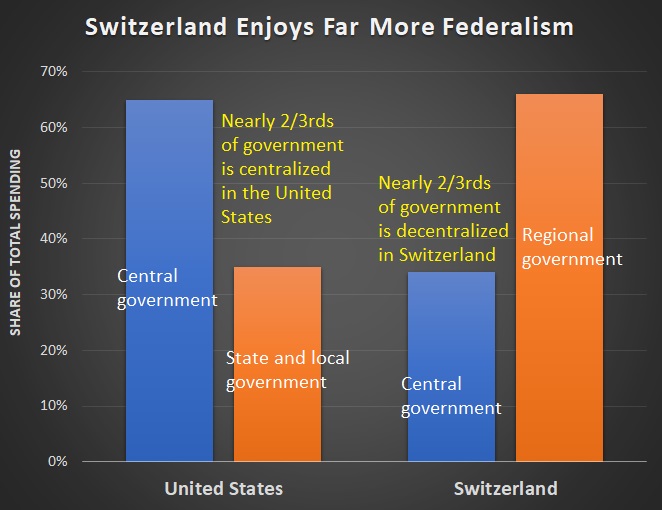 But let’s stick with the issue of federalism.
…center-left urbanists Bruce Katz and Jeremy Nowak exalt such local policy innovation specifically as a counterweight to the populism that now dominates national politics across the Americas and Europe. Even if they don’t use the term, states’ rights has become a cause for those on the left hoping to do more than the federal government will. Both Jacobin and The Nation have praised what the latter calls “Progressive Federalism.” …Whether measured by county, state, or region, the partisan divide has grown… Red places have grown redder (at least in their presidential votes), blue places bluer. …If we are already living in two political geographies, why not generate a system of government to match?

Each state possesses its own executive, legislative, and judicial branch, along with its own constitution. …The founders’ intention was always localized control. This structure of government is what we call federalism. The founders intended the states to operate as laboratories for new ideas and programs. If a state tried a successful approach to a problem, others would take note and replicate it. If a state did something terrible, the harm was mitigated and would impact fewer people. And the federal government was on hand to step in if a state infringed upon individual rights. …People in California shouldn’t be able to force their way of life on people in South Carolina, or vice versa.

And what it does not mandate, the federal government manipulates… America’s Founders did not envision the federal government as being involved in virtually any decision made by anyone, much less as the domineering senior partner for almost every decision made by everyone. …The current nationalization of every decision is blatantly inconsistent with individual rights and our Founders’ federalism, designed to tightly constrain the national government to few, enumerated powers. …Federalism gives citizens an exit option that sharply limits government’s ability to mistreat them.

…more people get more of what they like. Successful state experiments may induce others to follow; the dispersion of state school choice policies over the past decade may be an example of such “yardstick competition.” Finally, the fear of losing productive firms and citizens may help to discipline spendthrift, overregulating state governments. …competitive federalism has numerous advantages if you put a premium on living in a reasonably free and prosperous society. …our Constitution facilitates (and, rightly understood, nearly commands) competitive federalism. …federalism’s future may hang on a bunch of lawyers and judges. Then again, America’s federalism, more than any other country’s, has always been a lawyerly province, because we live under a constitution that makes it so.

Second, we take into account whether fiscal institutions geared toward maintaining budgetary discipline among subnational entities can offset the potential fiscal risks of decentralization. Our results show that fiscal decentralization may improve fiscal performance. First, we find that spending decentralization improves the fiscal position of the general government. This is consistent with the efficiency arguments in favor of spending autonomy. Nevertheless, high transfer dependency reduces the positive effect of spending decentralization.


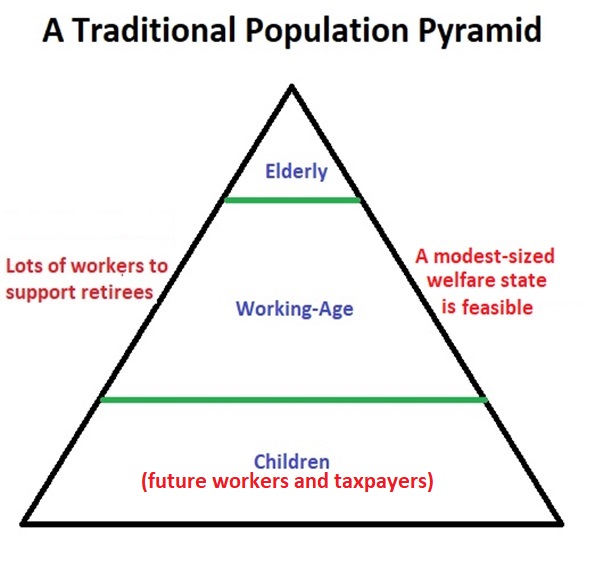
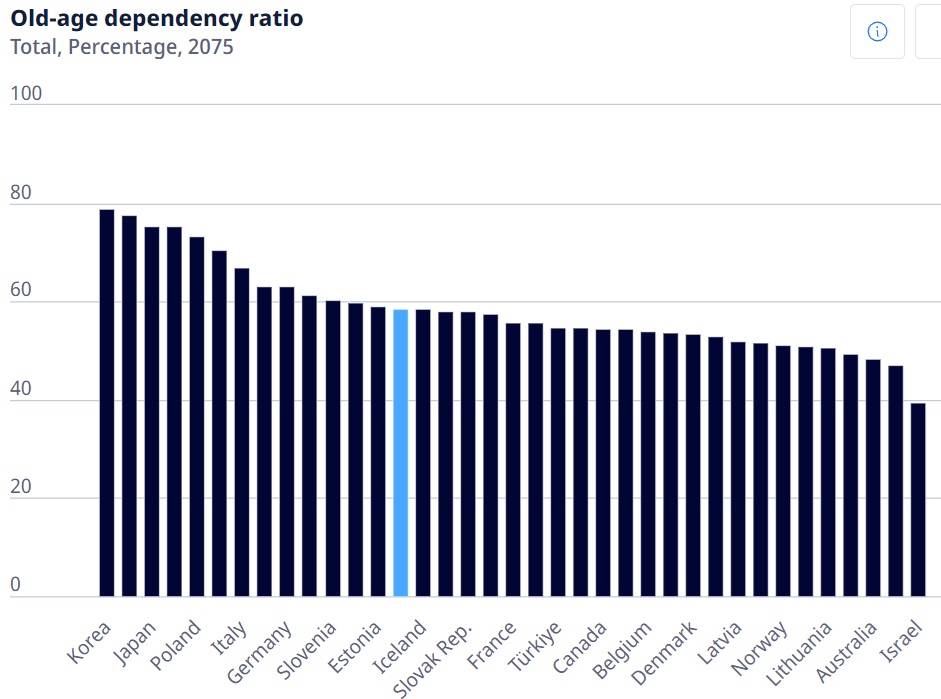


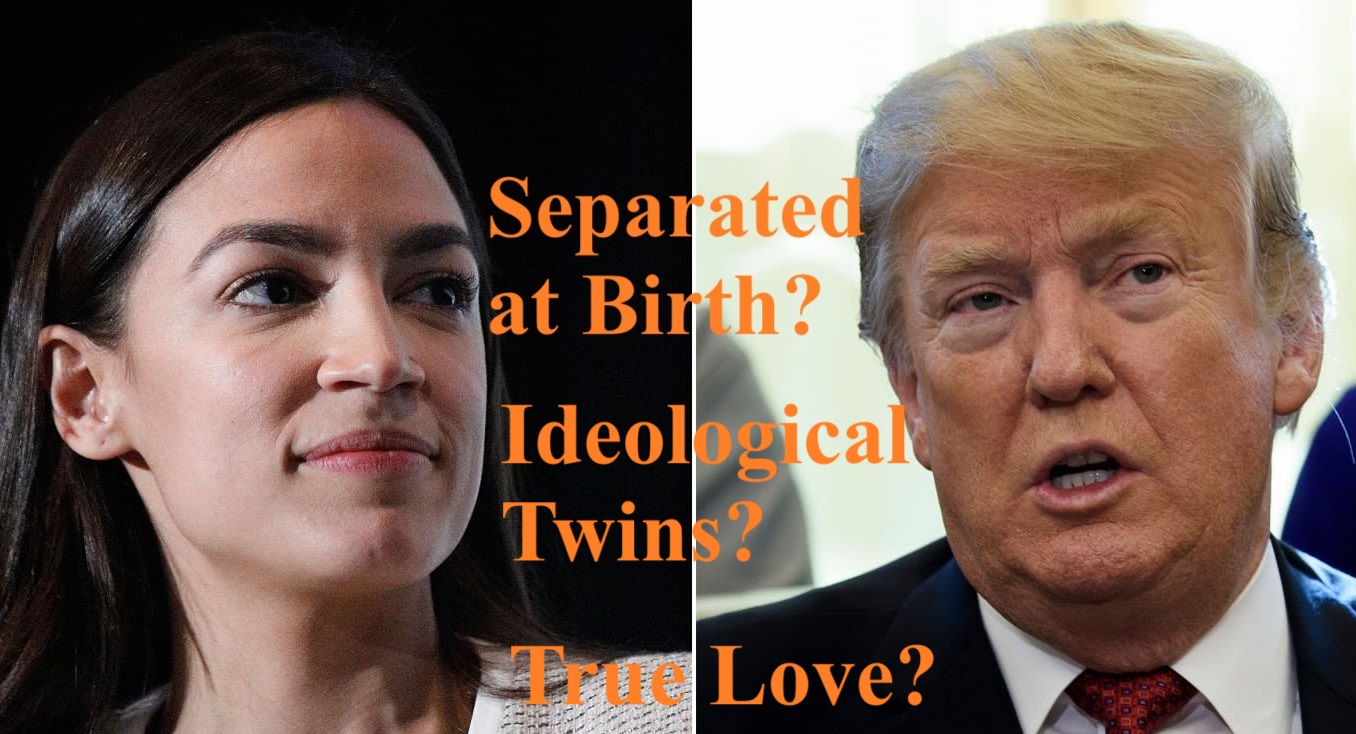


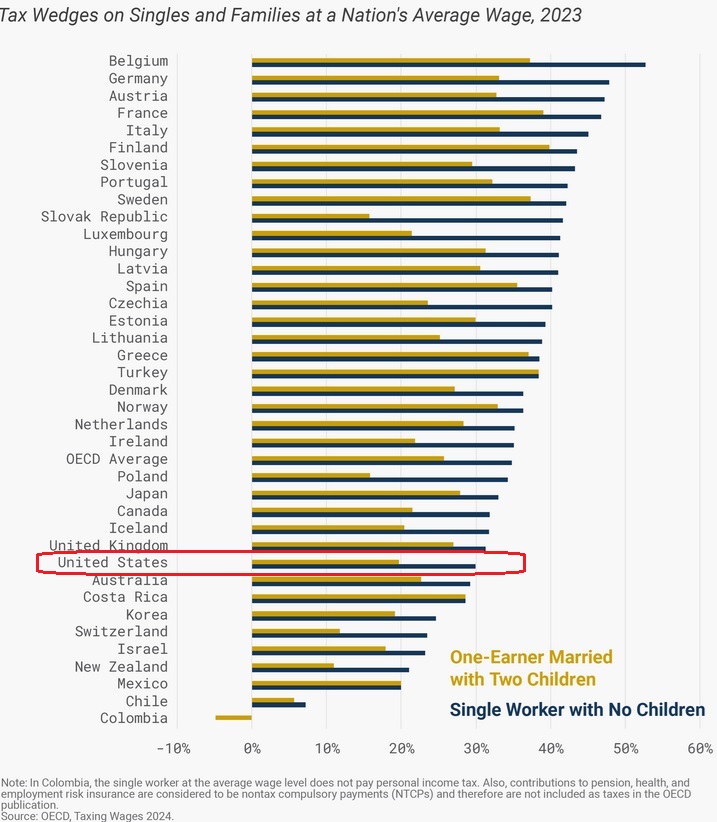


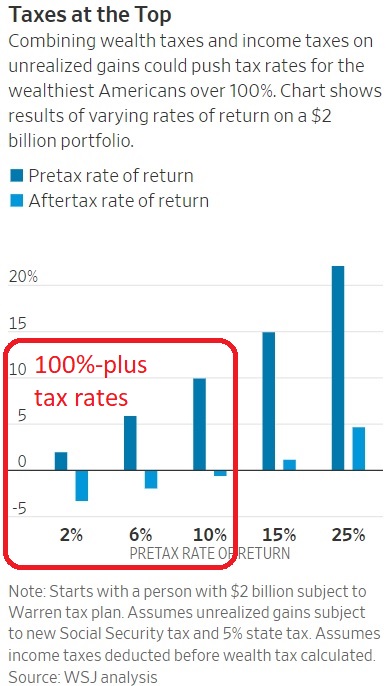
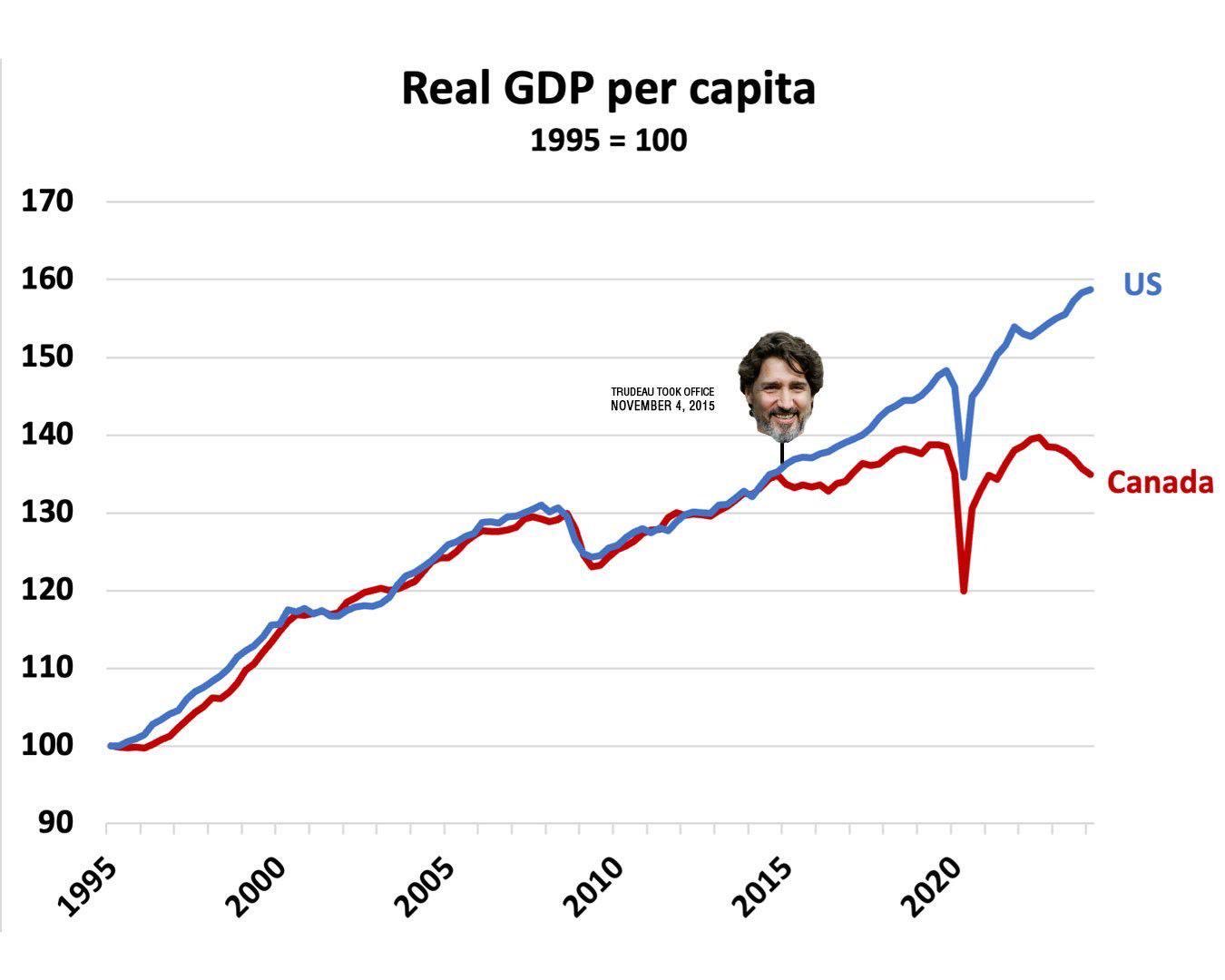


 International Liberty


