Two years ago my sister asked me what was was doing to deal with AI in the gaming industry. I answered, not entirely facetiously, “trying to bring down capitalism”.
The point is of course that one – only one! – of the terrible things AI is already doing to our society is vast economic destruction. Capitalism is built on a fundamental principle of the rich paying their workers as little as possible while controlling them as much as possible. A significant automation that elides human salary will be applied as forcibly as possible and as swiftly and cruelly as possible. There is no human occupation not facing the threat of being eliminated: the only question is the likelihood of profit-making, the timeframe and the popular tolerance for it. (Weirdly some people have insisted their job is the special one which is safe, but I have seen no convincing argument that any job actually is. Feel free to try to convince me I’m wrong!)
The commercial arts are likely to be the first to go. We can see this by the fact that we are labelling things as human-made. A label is always a point of distinction. I remember in the 80s people starting using the term “disposable cups” for the new moulded plastic phenomenon; coffee then was only takeaway from McDonalds. Now we have “keep-cups” for the conscientious and adaptable (I have not been able to bring the keep cup into my life as yet). Human-made will be exceptional very soon and paying for it reserved for those who have space.
Which means games will stop being commercial art forms, except at their most base and most widely appealing – a chess set and a deck of cards will continue to sell, but everything else will be the domain of the enthusiast only. Like theatre, we will encourage people to step away from mainstream entertainment for something rough and ready and perhaps in a dingy community space. Like fine art we will have to rely on the government giving us grants and putting us in museums. If I were keen to preserve games, I think I’d start thinking about setting up game galleries: artistic salons which highlight the unique and the important. We can see this now with the popularity of things like Molly House and John Company. Certainly throughout history the chief way that games have been redeemed from being seen as louche, sinful and only for gambling has been to rebrand them as educational but I think here this is different: we must brand them as culturally significant or we will lose them altogether. The age of the arthouse game is here. It’s the only thing, I think, that will save us.
/pic8978360.jpg)
Some might accuse me of exaggerating, but we know technology can move very quickly and culture does the same in response. In 1825, there was one mile of railroad in the UK; by 1850 there was 6,000. In the space of two generations it changed the world. Along with the bicycle and the steamship it put mass transit into the reach of even the very poor. In 1837 the average difference between the birth place of husband and wife in the UK was 1 mile; by 1901 it was 100 miles. The gap between powered flight and the moon landing was 66 years. Some of us have lived through the digital revolution and the social media shift: in 2005, there was no real social media, almost nobody owned a smart phone, no Tea Party movement, and the idea of Donald Trump becoming president was ridiculous. By 2015, all of that had changed. Social media ran the world and was part of Trump’s ascension. We stand now on the verge of another explosive decade or two: despite the topic of this article it is hard to predict what 2035 will look like. But I think we can guarantee it will be vastly unlike where we are now, in every respect: culturally, socially, politically, commercially and maybe ludically.
It’s also worth noting that none of these inventions raised the ire of Luddites. Certainly the steam engine devastated the barge industry and reduced mining jobs but they weren’t existential threats of naked exploitation like early factories. Luddites were transformed into hating technology but they were nothing of the sort. (Although of course mass transit was not an unblemished blessing: it had devasatating effects when combined with colonialism, for example.) Similarly today if you point out the well documented job losses, capitalist dogmatism, mad financial speculation, government capture, health destruction, environmental threat, child endangerment, psychological damage, intellectual degredation, numerous deaths and general epistemological decay caused by natural language models and AI platforms you are called a “technological doomer”. One should be a tech optimist, as if this is possible in an era where nearly everything we use now isn’t something we can own, fails to work, treats us like the product and reports on us to the government. Worse: it will steal what we create, use it to create a fascimile and then sell it to our audience for less. And not a word of this is hyperbole.
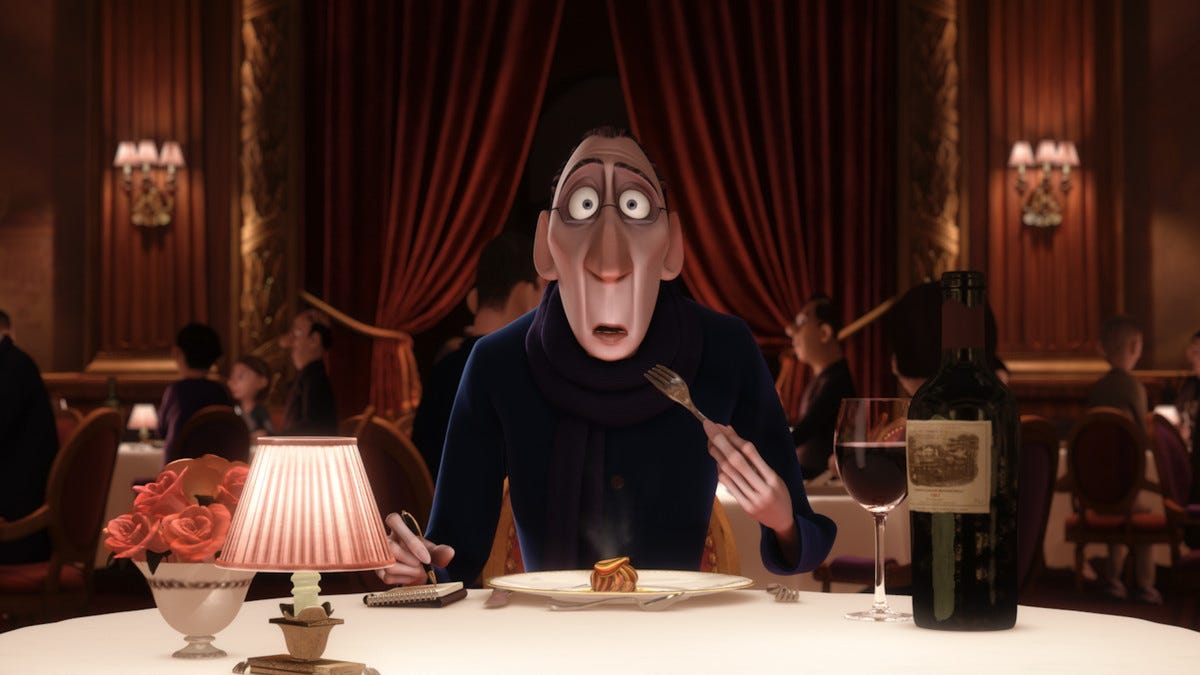
For the early years, much of game design discourse in this area was plagued by the cultish early adopters, eager to prove that they were the smart ones for getting in early. (I remember someone telling me AI was a marvellous invention in most cases; I told him it was slowing down my software. He said I should never use software that forcibly included AI. I told him it was Microsoft Word. Just last week I saw him echoing my frustrations about Word. Early adopters have a flipside: there are also plenty of us who are accused of crying wolf just because we can see the wolf coming from further away.) Nowadays, they seem to have shut up because – as we explained – customers didn’t want AI. But also because the train lines are coming down, fast and hard, and it is true that humans get used to things very quickly. In many ways, the question has become moot. My job has already been taken by AI (see figure 1). The only thing stopping me being replaced is good will and customer insistence. How long can that last?

RPG writers are especially vulnerable to this because like most writers we spent the first thirty years of the internet uploading as much of our work as possible. For the short term, I expect more and more we will just have to retreat. I’m not even sure I dare write games in Microsoft Word right now. Certainly not Google Docs. It feels too risky. Everything I do seems to enrich others and steal from me. But at the same time, I’m not sure – being poor, being disabled, being neuroatypical – that I can find alternatives like a keep cup. It is immensely depressing to be reaching perhaps the high point of my career only to see it on the precipice of being able to make any kind of money – but it is of course much more depressing for the young starting out. Again, others may say that is doomist, but I would say they will see the wolf soon enough.
This may be why we’re seeing zines creeping into the public eye again: they can contain games that cannot be owned or stolen. We’re also seeing more and more that people crave shared experiences and connection and passive media fails to give them that. They want to DO things, and do them together. And they want to feel things and touch them in their hands. Even if these things are the new keep-cups, they will have value to humans. Humans will certainly never stop gaming: I own a facsimile of a deck of cards made from the fibres of beds and walls in a WW2 concentration camp, and cell walls have had games carved into the stone. Gaming, uh, finds a way.
But selling games for money? I’m not so sure. I have so many wonderful ideas for versions of The Score. But I’m not sure there’s enough money in making them…and it might be better to make them as cheaply as I can and give them away as PDFs to print and play. Last year, I spoke at DevCon, the annual Australian meet up of designers, and I was asked a question and the asker said “but don’t just say ‘it depends on your definition of success'” – because I had said that a few times already. But I think it is going to be increasingly important because I think less and less will we be able to always align success with sales. Like the Bohemians, we will have to choose more and more between making games and eating food. Be ready for that choice: that is my message for now.




 D-Constructions
