What Is Worldbuilding For?

A long long time ago there was an RPG called “The End” which was set in a post-apocalyptic world. It’s hook was that the Rapture had happened, and all the truly good people were taken to heaven and all the truly bad people were taken to Hell, and the meek – the wishy-washy, uncommitted, cowards – inherited the earth. Since a lot of RPG nerds grow up immersed in American bible culture, some of them CREAMED THEIR JEANS over this “inversion” of the familiar Beatitude. But as I pointed out at the time, it didn’t mean anything. The setting was just another fight-for-scrap post-apoc setting. You didn’t even make up meek characters. The setting didn’t DO anything. It didn’t effect anything.

There’s an old Knights of the Dinner Table comic where the titular RPG crew have switched from fantasy to sci-fi, with the joke being that nothing has actually changed: the Hackmaster +12 sword is now just a Hackmaster lasersword, and fireballs are now flamethrowers. Very very slowly a variety of interesting, less mainstream titles (I won’t use the word indie, all RPGs are indie really) have nibbled around adding different structures but most of the time, if we’re in an avatar space we’re always going to end up having the same kind of stories. We have to! If you’ve got a band of uniquely talented individuals who need to constantly fall into plots that can be solved at least somewhat by violence, you end up telling the same kinds of stories, every single time. Huge seismic changes in the RPG hobby came from things like Call of Cthulhu, because there you had to investigate and go mad and die, and Vampire, because you actually had to talk to people in a society. Steve’s Second Law of RPGs goes that no matter how inventive your setting, I am probably going to be hired to protect a caravan or solve a mystery in my first scenario. The widow with goblins in her basement, the thieves robbing caravans, the low-level superheroes robbing the bank, these things always end up in most every RPG, which means setting means almost nothing.

You CAN do quite a bit, though, if you push on things well. You can make a standard fantasy setting and a group of PCs interesting, but to do it you have to make sure your setting elements have impact, at every level. World building isn’t just a bunch of ideas: it has to drive every single thing the players think about and do. The Shadow of the Demon Lord RPG by the great Rob Schwalb gets this. Although I want the forces to be stronger, the setting assumes you pick one of several apocalyptic scenarios that are rocking and wrecking the world the moment that play begins. The standard example is the orc rebellion. In the setting, the human empire conquered the half-giant vikings to the south, blasted them with dark magic and created a race of near immortal mindless killing machines called orcs. Except yesterday, all the magic wore off and every orc stopped being mindless. One of the orc generals stormed into the Emperor’s throne room, killed the Emperor, and took the throne. That’s a good example of a Big Thing that Effects Everything Else. Until yesterday, the empire was protected by orcs, now the orcs are in rebellion. Nobody can ignore that. You can run around the edges of it, but only for so long.

Image
Good worldbuilding doesn’t take long. Conan the Barbarian is actually a masterclass in deep worldbuilding with the smallest touches.

There’s an old rule of narrative building that a good way to start is with your villain. The thinking goes that in a lot of stories, the villain is the one with the chief amount of agency, so you need to figure out what things they want to exploit to achieve their evil plan, and what their weaknesses are, so you can then create a plausible way that a hero with everything against them can foil it. Building the villain first gives you the mold for the hero, so they perfectly fit. I think worldbuilding for games is best done the other way: you have to know what kind of heroes (or protagonists) you want, and what you want them to do, and then build the world to suit. It’s too easy to get it wrong the other way. Either your world won’t support heroes at all, so they become so aberrant it becomes weird (like trying to fit murderhobos into cosycore), or it will have things that are in the setting that don’t mean anything because they don’t connect to what the heroes are doing. The setting will be “Oh there are sixteen planes of genies who wished the world into existence and magic is a kind of fish…but you’re going to be defending a caravan, and/or solving a mystery, and most of you are detective ninjas”.

Image
No! Not again!

Superheroes tends to work well here because the comics have already been built around the idea of patrolling and dumb-ass villains doing stupid things that heroes can just stumble across. The setting was built around the needs of weekly comic book action. Fantasy less so, which is why it gets weird trying to map SEAL Team Six onto Lord of the Rings (which is why it was such a great moment when John Tynes said “just run it like SEAL Team Six, it works better that way”). Warhammer also has murderhoboing built into the setting: there are a class of mercenaries who wander around protecting caravans and fighting monsters, and that ecosystem is built into the setting. They have a place. The terrible option too many RPGs opt for is “the system is designed for you to be combat machines, but there’s a big sentence here that says you’re supposed to tell stories.” I flinch when I see “story first”. Fuck off with that. If you have to tell me to put story first, YOU HAVEN’T DESIGNED A GOOD ENOUGH GAME. The same goes for “don’t metagame”.

(Even worse, sometimes you’ll have games or game advice suggest that you punish players who make up murderhobos with dead relatives, as if they’ve been Naughty and have to be Shown How To Do It Right. Or they’ll suggest that only bad GMs create these kinds of players, and they are the Naughty ones.)

You do have to be a little careful though with how you build your world around your heroes or the action of the story. If it fits them too well and too snugly, it can make everything that isn’t connected to them seem less real (which means they might start killing the NPCs etc). It can also stretch believability and make things feel staged, or require players to suspend their disbelief a LOT. (“Yes there’s always a gang of the Joker’s thugs on a street corner in Gotham, waiting for him to always escape from Arkham, because that’s the rules of the story”.) Or the shape you create will be limited to only certain kinds of plots. It might do those well but it might work against you trying to do a slice of life drama or romance story in between. Players can also be pulled out of suspension of disbelief if they see too many of signs of the authorial stance (at which point they will probably conclude they want to just be authors). There’s only so many times you can Acquire Plot Points until you Trigger Act Three before setting also fades away – narrative structure was the caravan all along.

Of course, RPGs have it hard, being both a simulation of a believable, sandboxy world, where you can go anywhere and do anything, but also provide rich narrative. It’s no wonder then that we shrink the types of narratives down to suit simulations. There’s an old saying that RPGs tend to be wide, and provide tons and tons of options, so you can play them forever, or narrow, and thus really good for a brief encounter. With this rule there is often the suggestion that the former can tell any kind of story, and with the latter only one kind of story, but that’s not true, because the sandbox stories are all the same story. There’s just more stuffing around in the simulation parts. The narrative works the same way. So there are good reasons why we end up guarding caravans. The point is to be aware of this, not necessarily throw it away.

I’ve just written a book about worldbuilding and next week we launch a brand new world-creating game The World Well – and both of them are about exploring the WHY of worldbuilding. They both start with the question: what is the world FOR? That’s what you need to know. Outside of the weird hobby where SF nerds build fake biospheres, worlds must have a purpose, and you should know what that purpose is, and you should make sure they achieve that purpose (and maybe even tell the players or at least the GM why the world is like that). It’s okay to say “there’s a bunch of clans in this setting because that makes for a good game, even though it’s not entirely realistic that this clan structure would exist in this context”. Like I said last week you should tell us why.

The World Well is built from the ground up to make a world riven with fractures, with contested factions fighting desperately over coveted power, exactly the things an RPG setting needs to give big exciting events and different points of view of the world. You may still, however, be protecting caravans. I can only do so much with groups of powered individuals fighting trouble. But at least the worlds you build will tremble as you do so. If that interests you, please go back it (and pre-order my book, too).

The Owls Are Not What They Seem

I was too young to watch Twin Peaks. My older sister was probably too young too, but I was 13 and had to go to bed before it started and she was allowed sometimes to stay up and watch it. If I really pushed it, I could see the first few minutes. I was pretty sure that Agent Cooper killed Laura Palmer. Apparently, despite the advertising (because of course Lynch wasn’t doing Who Shot JR) it was very obvious who killed Laura Palmer. That wasn’t the point. It was so much more than that. I saved up all my pocket money and bought my sister the most expensive thing I’d ever purchased (fifteen dollars!) as her next birthday present: the tie-in book about Dale Cooper’s childhood, ostensibly his personal diaries. Parts of it were hilarious.

I still haven’t seen Twin Peaks, and the truth is, I have seen very few Lynch films. I ended up like Hal Hartley instead, the OTHER auteur film director who was huge in the 1990s (the Canadian one). But I understood pretty quickly that Twin Peaks was something different. I’ve talked a lot about how absolutely different nerd culture was 30 years ago, but it’s very hard to convey. In 1990, we still lived in a world where science fiction, fantasy, horror and superheroes were not ready for prime time. They didn’t make those kinds of things for adults, except in Japan. Or if they did, it was six episodes and then it would vanish and you would only see it if a friend of a friend of a friend had a copy, or you rented the VHS that was barely visible because of course the city only had one copy of it and every nerd had run it through the machine. In 1990, Star Trek The Next Generation was back on TV, and it was barely hanging on. If you stayed up very very late you could watch Moonlighting which was the most revolutionary show on television… because it was a screwball comedy with dream sequences and musical numbers. The Simpsons was considered transgressive because it was animated and not wholesome – the big shows were ALL sitcoms, and all wholesome. Cheers, Cosby, Fresh Prince, Roseanne…you had to stay up very late to see L.A. Law, which was the prototype for big issue shows like ER that were coming soon.

But then somebody put Twin Peaks on television.

The term “cult” TV was coined to describe Star Trek, because at the time, rating measurements weren’t broken down by demographics. Almost every single ratings box was on TVs owned by all-American families who watched soap operas and sitcoms and westerns. Then they tried to cancel Star Trek and got tens of thousands of letters. The only explanation was it must be like a cult: a small number of people who were fanatics, zealots. The term “fan” was coined from fanatic. (Republican presidential nominee Barry Goldwater had brought the word fanatic into popular use when he’d aimed it at American conservatives, the people with the same values as the current administration.) The 60s had given rise to fanatics for Doctor Who, Planet of the Apes and Trek, and then the 70s had brought dozens more, and then the 80s had turned them all into toy commercials and that part had kind of killed genre fiction and nerd media. Everyone sort of thought it might be dead; just a weird boomer thing because those kids liked 1930s pulps. But Twin Peaks was not like that. It sort of looked like an adult show. It was a murder mystery drama with a quirky small town and it was also full of the hottest new stars but it was also…art. It was fucking art, and it had to be talked about as art. The word cult had to be hauled out again because adults didn’t want to be fans, but they wanted to be INTO this show. Because it wasn’t just compelling like the CBS Sunday movie, or witty like Murder She Wrote or grown up like Murphy Brown or expensive,like Dallas…it was DEEP. It had levels. It had to be decoded.

Nowadays we not only live in a world where pretty much every fiction exists in a fantasy world and is designed to be full of secrets and codes so the Youtube money machines can do their work, but back then, this didn’t really exist. Let me be clear: when Lynch put in layers of meaning, that’s not “Oh this guy standing behind Iron Man is a reference to a comic from 1994”; I mean artistic meanings, but to some extent there is some overlap in the two things, and in the way people watched. Lynch likened Sherilyn Fenn to Elizabeth Taylor (they looked quite similar) so you needed to know that he was using references to her when he shot some scenes. Lynch actually came out and made statements to help people understand the show. He literally published a ten point guide to help peole. The owls were the spirits of dead people, that’s one I remember. The sheriff is called Harry Truman because he’s a good man and he kind of represents America’s best self. The log lady was just weird, though. She just liked logs. In one memorable scene, Lynch realized that one of his sound guys was being reflected in a prop, and he decided to leave it in the film and build the whole second series around that image being textual. That was Bob, a malevolent force. You might see him in the Black Lodge. You could watch Fire Walk With Me if you wanted more clues.

Unlike things now, of course, Lynch wasn’t sending out codes to be cracked, but art to be understood, but around all of this came a new kind of popular media, building on Twin Peaks like fungus in a culture. You can draw a straight line from Twin Peaks to Picket Fences being full of bizarre set pieces and bathos, and The X Files of course, with it’s deepening mysteries and nameless bad guys, and Forever Night, which was about a vampire cop of all things. The 1990s was a heyday of late night genre TV shows, as all of a sudden, mainstream American TV discovered that genre fiction was allowed. There was a goddamned Highlander TV show! John Glover played the devil! Roswell made a generation of teens LOSE THEIR GODDAMN MINDS because it was romantic in a way nothing on TV was before that. (because teen programming barely existed either – Beverly Hills 90210 began mostly not far from Degrassi Junior High. It was all message TV.)

Then, riding over the horizon, came Buffy the Vampire Slayer and nothing was ever the same again. We were still sharing the tapes in the early days of Buffy and Charmed…but soon enough…all of that was gone, and nerds went mainstream.

None of that has much to do with David Lynch. When he made Twin Peaks: The Return, he wasn’t interested in secrets and lies that forced you to watch to the end (although he did keep you guessing, like any good storyteller would). He hadn’t set out to create that kind of TV. He’d only set out to make great television with his beautiful ideas and his artistic courage. He’d shone out as a young film student: so much so that the head of his film school had the school pay Lynch to get Eraserhead made. Mel Brooks helped him make The Elephant Man, and stayed in the shadows. People believed in him, and those who worked with him never stopped talking about how much they loved him, and how kind he was. But as he found success, he never compromised. He was somehow the ultimate fuck you to people who insisted arthouse cinema wasn’t a good thing, that nobody liked it, or that it coudn’t make money. America and the world went to Wild At Heart and Lost Highway and The Naked Lunch and were often utterly confused and even distraught, but it was the 1990s and early 2000s and that was welcomed. Mel Brooks once described Lynch as “Jimmy Stewart from Mars”, referring to how he mixed his weird drawl and down-home country manners with his oddness and otherworldly nature, but it could just as easily be a description of his career. He could make a movie about terrifying slug monsters and shooting your wife in the head and he’d be welcomed into America’s homes and Oscar ceremonies like he’d just made Mr Smith Goes To Washington. Nowadays we don’t have video stores so they can’t have arthouse sections, and movies may have lost their soul, right when we need good art most of all. And nerds have become geeks and stopped like genre fiction because it was art, because it was just as smart and rich and clever as the mainstream.

But I can tell you one thing: David would not want you to worry about that. He wants you to make your film, to work on your project. Lynch rarely gave interviews and didn’t always like talking about himself, but not because he was shy. It was because there were only two things he wanted to talk about: the work he was doing right then, and the work YOU were doing right then. He loved to make movies and television, to write scripts, to direct, to make art, and that’s what he always wanted to do. He wasn’t on a lot of press tours or red carpets because he wanted to be back at work. Again, I’m not sure he would get away with that now, but then again, he was still making movies last year. Finding budgets. Getting shots. Getting it done. The only time he would stop working or talking about the day’s work was to give advice to others on making movies, and that, more than anything, is what I remember about David Lynch.

He was authentic, and kind and like Jimmy Steward he managed to put both of those things into the camera and speak directly to you, the way only movies can. There’s something more intimate about the screen, but not so invisible as the book. It feels like it really is all about you. Add to that Lynch’s kindness, and he always seemed to be talking straight to me, straight to all of us, telling us kind things and good things, even when he was making us scared and uneasy. And when he spoke about you making movies, all of that was also on show. When he said how to make movies, he said it as if he was looking right at me and saying “here’s how you, Steve, can make a movie.”

Image
I believe in you, Steve, even if you thought I killed Laura Palmer

The other day I told someone my rule that “if your only heroes are famous people, you’ll only be happy when you’re famous.” The second part to that rule is you should never be a fan of a person just as a person. You should be a fan of their virtues and values and the parts of them that inspire you. (Same goes for things too – don’t like Star Trek because it’s Star Trek, or you end up with movies about Section 13.) Yes, I’ve gone to Charles’ Dickens house and sat in his chair and I cried when I touched the wood of his desk but I try to remember also to value his diligence, his courage, his passion for detail, his care and exactitude in capturing the truth, to the last detail, and his care (with those famous exceptions) for the people and the world around him.

David Lynch was kind and he was brilliant and he was courageous and he was true and he was all the things an artist should be. He taught us all to look deeper and think harder and care more about the art we make and the things we love. He said that liking art and deep things and intellectual things could be cool and sexy and popular. That the owls were not owls and that’s allowed. But most, most, most of all? He wanted me to make movies. And I will, for him. And I hope when I point my finger at my screen or my audience and tell them I want them to make games, they hear some small sense of David’s spirit, talking straight to them, and saying they can do it.

The Camera Always Lies, Part 3: The Tyranny of Truth-Making

Many years ago, a friend of mine was once asked by a friend in common what RPGs were. He said “well, a bunch of people sit around a table and roll funny dice, and whoever rolls a one, they’re dead.” He wasn’t wrong.

My argument in part two is really as follows: Firstly, that when we’re roleplaying, we’re doing three things at once – playing a game, creating a story and also simulating a reality where our avatar moves around and does thing. Secondly, that because we give supremacy to the last one, the other two aren’t very good.

Don’t get me wrong, there’s a bit of fun in the game of most RPGs, but it’s mostly to be had in min-maxing. Then there’s the activity of “making up stuff from prompts” which is also a kind of game and a good one, but when we talk about the gaming part of RPGs we don’t usually mean that, we mean the “skirmish level wargame” thingy. And that? That’s okay. But I think it’s worth noting that computer RPGs often do that better. Gloomhaven does that better. It’s about as much of a game as a game of craps – you roll and try not to roll snake eyes. It’s not much of a game. But I also think it’s worth noting too that it can’t do it much better, or – as proved by 4e – it takes away too much from the simulation.

Similarly, we know from the long history of TTRPGs that narrative mechanics are generally only accepted grudgingly, and slowly. I know gamers to this day who complain about how in the roman RPG Fulminata, your social rank determined initiative. We have slowly come around to what Wushu invented – the idea that it doesn’t matter what the fiction says, the game is only over when the hitpoints of the story run down – but even that is very contentious. Blades in the Dark‘s Fiction First principle is angrily against such things (although maybe not – it’s not really clear what that means). We’ve realized that for the most part, virtue and flaw mechanics are dumb because it means you get more combat points to spend if you hog the spotlight with your narrative baggage. The GM has to give you another scene about your nightmares AND you get more points to spend on gun skills? Not fair.

The RPG industry famously has very little memory: the reason fantasy heartbreakers exist is because so many people start with D&D and then inevitably hit a wall of “wait, we can do better”. They even come to this realization if they’re the Critical Role guys! But the consequence is we’re almost always stuck in 1976, design-wise, still learning the same lessons, generation after generation. But I think despite this, we are creeping forward as I say. We’re getting people to move away from flaw points. To accept Drama Points or GM fiat for narrative flair. To be okay with someone getting to go first because they have Impulsive Hothead as a narrative principle, not because they have a high dexterity. But I still think we’re trapped in the tyranny of truth-making that comes from simulation.

Back in Part One, I mentioned the vibes vs plot debate, which was primarily set off by the fantastic Partick H. Willems, who shot to youtube fame with his amazing X-Men by Wes Anderson video. He kicked off that discussion with this video which starts by explaining that plot isn’t what films are made of, despite our obsession with plot. There’s a key example of this at the 32 minute mark, from the 2006 Miami Vice film . Willems explains that the scene we’re about to see has the following plot: the two leads coerce their informant to set up a meet and greet with the cartel. In the actual scene, Crocket (Colin Farrell) breaks away from the conversation and stares out over the ocean, as if imagining an escape. This is important. Regardless of Willem’s ideas about vibe movies, this is about motif, and theme, and character. The opening act of the film has an informant trying to leave Miami and save his girlfriend; when he discovers his girlfriend has been killed the informant commits suicide. Later, Crocket seduces the wife of the cartel leader and talks about running away with her, but they both fear it is too dangerous. Crocket’s partner, Tubbs has a romantic interest who is terribly injured. Crocket wants to preserve the woman he has fallen for she is a criminal and he is also lying to her about being a cop. The film is about how being cast into the battle between vice cops and drug dealers, the lead characters compromise their true desires and may be trapped.

The point of all this is that in most TTRPGs, if you were playing out the scene where Crocket and Tubbs get the informant to set up a meeting, you would focus on plot. You’d roll Negotiate and see if you did well or not, and that would determine how the scene played out. You would not have Crocket’s player roll his Need To Escape. You wouldn’t activate Lonely Stare. You wouldn’t even check a table for The Ocean Is The Stand-In For Freedom.

Image
Mullets? In 2006? Maybe you can change the past.

There are exceptions. Again, I’m not the only person talking about this. Smallville understood this. Robin Laws got into this with Hillfolk, GUMSHOE and Hamlet’s Hitpoints. As Laws has it, there are procedural scenes, where the plot is interacted with and moved forward, and character scenes, which have characters develop and engage in conflict. Smallville, famously, was originally written with plot-moving mechanics in it, but then they course-corrected through playtesting. In that game, Superman never ever punches Lex Luthor with his fists. He rolls his JUSTICE plus his relationship to LOIS to decide if he will save the world or his girlfriend.

But this kind of thing is still rare as hen’s teeth and I’ll argue that one reason it is so is because, just like we’ve got poor game mechanics for the sake of simulation, we’ve got poor narrative mechanics for the sake of simulation. Because simulation is obsessed with “what is true”, we can’t get away from plot. Again, as I said in Part 2, this doesn’t make the standard RPG model bad. It just means there’s other things we can do.

Let me give you another example. I was playing The Score recently and we’d loaded an endangered tiger onto the boat we’d come to the island in. Then later, as we ran to escape, it turned out we’d been set up, and the drug dealers were already on the boat we were running too. They came out and held some of the crew at gunpoint. Then we turned over the last card and it activated my driving skills. I explained that when we had said we’d loaded the tigers onto the boat, the camera had just shown a boat’s interior: we were actually loading them onto the drug dealer’s boat! Which I was now driving, and smashing into our smaller one (with time for our crew to dive safely into the water). Again, this would be a difficult thing to do in your standard RPG because if you say “hey, GM, we load the tiger onto our boat”, that (usually) becomes true. You can add flashbacks, you can spend a Drama Point to make a boat show up, but usually – USUALLY – you can’t edit the past. Because that’s not what GNSMISHMASH is all about. If you can edit the past, simulation stops working. Players stop feeling like their actions have consequences. The tension in most RPGs comes from that simulation element: we did kill the goblin guard so nobody knows we’re coming. The GM cannot later say we did not kill the goblin guard. We rolled to hit and he died. We spent points on our stabbing skills and our move silently precisely SO we could kill the goblin guard. To change this would actually be unfair, because it would invalidate spending those points.

But story does not work like this. Story has no chronology. More importantly, the camera does not work like this. The camera always lies. Plot is a made-up thing experienced by the audience and only the audience. And the audience is always being lied to, because that’s how stories work; they present elements that the audience think are true things that the characters are doing as if those characters were real and time moved forward, but when we create stories, we present ideas. And so there is the issue: if we insist on serving the GNSMISHMASH of “this has become true”, we can be prevented in actually going where narrative mechanics can take us.

THAT SAID not everyone wants to go away into narrative mechanics. It can feel invalidating, like the example above. It can feel “weird”. For example, some players don’t like Brindlewood Bay‘s mechanic where the players just decide who is guilty of the crimes, even thought authors do this mid-book all the time: it can feel like the characters are just framing someone. In the GUMSHOE system seen in Trail of Cthulhu, you never fail investigation tests, because it’s pretty rare in CSI that the labs get lost or they just can’t figure out how the blood splatter fell, but when we ran that game the lack of the role made it feel like we weren’t “doing” anything in the scene. The simulation felt empty because there was nothing for our character to push against. We were also able to understand that when we “failed” at something in other games, it didn’t mean the characters were incompetent, it just meant the plot wasn’t in that position, or that scene wasn’t really a good one in the plot – we were already converting things to have more narrative meaning. And that is the beauty and the flaw of the GNSMISHMASH – because it is three goals glued together, it can lead to groups being terrible mismatched, but it also lets us shuffle these hobbies back and forth across each other, in a way where the friction makes things fun or funny, rather than hurting the game. Where the tension between the three goals becomes the spring in the trampoline of fun. The whole fun comes from the fact that the audience and the author are the same person, and if we go too far into author, we stop being audience.

But as an autistic person, I really struggle playing TTRPGs because I never know if I’m supposed to be writing a story or acting as a character or maximizing as a player, and the GM often refuses to tell me. And one of the reasons I burned myself out as a GM was because I shifted from running pre-written adventures (where there always was a simulation happening, a set truth for me to present) to doing more improv stuff, where the ability to both make anything I wanted be true AND present things however I wanted ended up with me just not knowing what to say. It’s great to have the combo. But I need clarity. And just as I really like how 4E opened up a whole new game of skirmish fun, I want to push this envelope into narrative much much further. I do want to roll for The Ocean Is a Metaphor for Freedom. And given how much people want to put RPGs on the stage, I think the world does too. Let’s see where we can go! But along the way yes, we might have to let go of “truth making” all the time. Funnily enough, what we find in The Score is people love to see it go. Because constantly worrying about what’s true makes them play defensively and get anxious all the time. We tend to say that creativity is the hard part of RPGs, but I think for most people, it’s actually way easier than figuring out what feat you should take.

Image
STEP INTO YOUR POWWWEEERRR

And since the Actual Play movement is more and more focusing on story, it’s time to rethink what RPGs actually are. We didn’t call The Score an RPG because that name has too much baggage – not just all the math and the chunky books and such, but that fear of having to choose feats. And if D&D insists on squatting on that idea and ruining it for everyone, I’m going over here to do something else, like the RPG I just finished which does what is impossible with truth-making approaches: it runs in reverse.

(Although I’m not entirely giving up the GNSMISHMASH of course – I’m actually working on a traditional RPG right now as well.)

The Camera Always Lies, Part 2: Back to GNS

Here’s a thing I like to say which isn’t entirely true but it sounds good and it points to interesting thoughts:

In improv, everything you say is automatically true (“I’m police! Pull over!”) but there are usually strict rules about what you can and cannot say and when and how you say things (for example, you can only say two word sentences). RPGs, broadly are the opposite: you can say anything you want whenever you want (“I waste him with my crossbow!”) but there are strict rules about how and when things become true (“ok roll to see if you hit”).

I like that because it identifies the differences between improv and ttrpgs, and also identifies the similarities between the two things: namely that they are both exercises in sitting around and deciding what happens. Usually collaboratively with others, and usually without the planning involved in more directed forms of what-happens-creation, like writing. This is actually pretty impressive because it’s been historically very difficult to define what rpgs are and why we play them in a way everyone can agree upon. Which is of course why theory exists in the first place: to try to solve that problem.

The definition of “truth-creating” doesn’t quite help us delineate between rpg and traditional game, though: games and sports are engagements with rules that produce a final set of actions that are true, that are (outside weird edge cases, as always) unpredictable and unplanned, and we engage in a shared, rules-governed process to create what-happens. The difference, again, comes from theory.

What most people might not know, or could easily forget, is that RPG theory existed long before Ron Edwards crashed into the scene. Edwards’ sins are mostly well known, I think, but probably his biggest is convincing people that theory was a bad idea. This is always the risk of an enfant terrible – if they become attached to the ideas they spout, then the ideas die when the individual does. But before Edwards the same work had been done, although it was just as often GDS – gaming, drama and simulation. Edwards made two chief conclusions which helped poison the well: that games should pick one thing and do that well, and that games that did not do this were necessarily incoherent. Both these statements are in contradiction to how the theory was being used before Edwards. Indeed, we can look at Everway which condensed these terms down into its core mechanic: when it came time to figure out what-was-true in Everway, you either used karma (what should most likely happen in a simulation), drama (the best story) or fate (roll a die, broadly close to playing a game). This is how most (nearly all) RPGs work at some level, even if the rules say otherwise: we all (consciously or not) are doing all three things, all the time, switching back and forth between them, because slowly though the 1980s we took a weird poorly designed game-that-became-a-simulation and decided it was a game-simulation-storytelling thing.

And again, the point of GDS was not to turn it into a Cosmo quiz and draw battle lines but rather to help players talk about how they made these choices so they could get better games. The point of the theory was so that when we had discussions like this:

Player One: look, I think it is more ‘fun’ if every time we have a fight we are evenly matched so combat isn’t either a total bloodbath for them or for us
Player Two: I agree, it makes stories more exciting
Player Three: that’s nonsense, you are absolutely insane, why would that ever make sense, it would stop me believing in the world, because why would us jumping a bunch of novices be just as hard a fight as fighting some extremely deadly experts

I have had exactly this conversation many times, and I am always player one

We could instead go “oh, Player One wants to have an interesting mechanical Game experience, Player Two is thinking about Dramatic Stortyelling and Player Three values a sense of Simulation, and none of these things are bad and everyone is okay to do their own thing, and perhaps find a group where more people think the same way as you.

Now to be clear: that doesn’t necessarily mean, as Edwards suggested, picking ONLY one of those things for our rules design, or what we do at the table. As I said in Part One, I think a large part of the enduring appeal of the RPG is that there is all three of these ideas acting at once, and the tension is not a sense of failure, but rather it is much like the tension in a trampoline: the very source of the fun. Indeed, the ability to step out of the avatar stance into an author stance and make jokes like the cast of MST3K is only possible BECAUSE it is a game as well as a simulation and a story. BUT this combination also has its costs – we often cannot take the story seriously because we step out into this mode. And that is where I absolutely agree with Edwards. Trying to mash them altogether may be the essential part of what makes an RPG an RPG, but in doing so, I would argue, we often make fairly weak games, confused simulations and poorly executed story-telling machines.

Image
Wilo’s law is communication always fails, except by accident. I think games always fail (to be what everyone at the table wants them to be), except by accident.

An example of the first is in 4E D&D. To me, this is the only D&D that I find worth playing because it makes combat an interesting game; combat in most RPGs is about as much a game as snakes and ladders. You roll and see what happens. There are no tactics and few choices. But because 4E did this, it made people think it wasn’t even an actual roleplaying game. That was the trade off! We may in fact want our games to be poor games so they are better at what I shall call the GNSMISHMASH. Similarly, we abandon exhaustively detailed simulations often, because we find them poor games or poor stories – throwing away things like encumbrance or wandering monsters for things that are more fun to play or produce more drama. We COULD have mechanics that are completely dedicated to telling really amazing stories to each other but, much like 4E, a lot of TTRPG players instantly back away, feeling like that’s Not How It Is Supposed to Work. Because they want to stay as avatars, which again, as I said in Part One, resists good stories.

My most recent game, The Score, was designed with lots of goals but one particular one was trying to get the idea of shared storytelling to people who either a) bounced off TTRPGs or b) haven’t played them much. To that end I tried to remove all the usual barriers that make TTRPGs hard to play:

  • Most RPGs take a few hours to play, even simple ones. The Score is easily under 15 minutes, from chargen to the end of the film.
  • Most RPGs tend towards regular play. The Score is one and done.
  • Most RPGs are big and bulky books. The Score fits in your pocket.
  • Most RPGs have a lot of rules, even simple ones (hence why their books are large). The Score has just enough rules so that it’s not just “make stuff up” like so many other simple card based RPGs, but so few you can fit them on a playing card.
  • Most RPGs need a GM. The Score doesn’t.
  • Most RPGs need a fair amount of creativity and inspiration and ability to make shit up on the fly (or it puts all of that onto one person). The Score, as much as possible, doesn’t.

But the really sneaky thing The Score does is this:

  • Most RPGs demand avatar play; The Score pretends to that, then doesn’t do that at all, which sets players free to tell better stories.

I don’t know if The Score is a TTRPG, but it certainly runs counter to most of the principles of TTRPGs, and as I say, that’s deliberate, because I think most, if not all RPGs operate in the GNSMISHMASH and thus are bad at telling stories. They CREATE stories, but don’t tell them well. And here’s the big big thing:

People keep telling me that they hate RPGs but they love The Score

Exactly as I hoped.

To me, this is really important information. It tells me that there is a thing that TTRPGs do, and it’s this weird GNSMISHMASH, and then there’s another circle, over there, that’s a lot LIKE TTRPGs, but is also not like them at all. I’m not saying there’s no overlap. But over here, in “games that tell stories”, is something that is so unlike TTRPGs that people who hate TTRPGs love The Score. And that to me means we should pay attention to what makes The Score different, and why, because again, the reason I made this game is I think not only does D&D deform the TTRPG hobby with its outsized influence, I think the idea of TTRPGs-GNSMISHMASH that most other games do is actually also doing the same thing: deforming our idea of storytelling games by forcing under into the GNSMISHMASH. And I think the only way to figure out why this is true is by using theory.

Because Edwards so thoroughly poisoned the well, however, we have people saying such nonsense that GNS is merely a tradition of design. If it is only this, then we remain back where we were in 1989, reading Prince Caspian, with no idea what we are doing and why we are doing it. If you insist on throwing theory away, I would at least ask you to provide an alternative.

Now look, I’m not the first lunatic to kick down the door and say “over here is a Brand New Thing, Outside the Establishment” – Edwards did this too, but I have the proof of concept and I can explain why I think things are different. And there are plenty of examples like this – Fiasco, For the Queen, Decaying Orbit and other “prompt” RPGs are doing much the same thing. Do we need to call them some other genre of game so people don’t get confused? That’s hard to say. On the one hand, it is pretentious to act like there’s this Other Hobby; on the other hand I feel like why not let GNSMISHMASH be a thing, and create a thing over somewhere else in the hobby that is free from all that baggage, and doesn’t seek to improve GNSMISHMASH. That’s always the key thing here: I am not here to fix TTRPGs/GNSMISHMASH because I think that is a fine and wonderful thing, perfect as it is.

I just want to do other things as well. And clearly? I’m not the only one. Here’s one more example from a Kickstarter update for a game called Lunar Uni – the teacher was so used to standard (D&D influenced) GNSMISHMASH they were using that game totally wrongly. They had to unlearn that whole style of avatar driven play.

Image

And also, yes plenty of more traditional games have moved the needle on this issue, changing the nature of or expanding the amount of D we want in our mishmash. But (partly because dnd dominates everything) we can’t really get away from the core form. I will talk more about this in part 3.

That’s why I don’t call The Score an RPG. That term may just have too much baggage attached to it. I like what rpgs do. But the core way it decides truth is holding me back. And I got places to go, and people to be.

The Camera Always Lies, Part One

There is occasional nonsense spouted that ttrpgs are not emulative of other media and should not be thought of as such. This is broadly very silly: if they are not emulating media then they would only be simulating the real world, and a Star Wars rpg would be impossible. But I do think a lot of people making this argument are coming back to the GNS/GDS discussion which remains both relevant and interesting – and also obtuse, so worth revisiting, regardless of how The Forge ate itself into unimportance.

Probably the biggest thing this model gets right is that it captures the history of the rpg, because understanding that history is absolutely key to understand how and why they are designed as they are.

The original design of Dungeons and Dragons was just meant to be a game. You could lose (your character dies) and win (defeat the GM/other players/environment. It did not have the language to describe itself but it was a skirmish level miniatures game. And people still play it this way or partly, and so they should! The enduring strength of the genre, I argue, is because ttrpgs are at least three kinds of games in a trenchcoat, scratching multiple itches at once, each providing the scaffolding for the other.

Then all of a sudden the simulation idea began to emerge. You can actually see this in the BECMI/Essentials D&D books: the very first thing that happens in the basic red book is you are in a dungeon killing a goblin and then, right at the end of that book they hint that you might have a town to go home too and might engage in the most fundamental of all rpg activities: shopping. The expert and companion books describe themselves by expanding this idea of your life – we will pull the camera back and reveal your town has a road in it to bigger cities and you will begin playing what was then also not put into words but what we would call like a Castle Sim today. You’re supposed to progress to hiring staff and running a fiefdom. This is probably a big part of why high level D&D play has so often been poorly designed: it’s still trying to think in dungeons which was never the intent!

All of this comes to a head in 1987 when Prince Valiant is released and says it is not an RPG, it is a storytelling game, to which a lot of folks replied “aren’t they the same thing?” because by 1987 there has been already a vast shift in how people thought of ttrpgs in play. And YET – as I will show – both of these were still in a simulation kind of space, depending on what you mean (it’s complicated).

The simulation mode of play, though emulating fiction and still full of fictional contrivances, is basically centred around the avatar stance of play. You can also think of it as a Watsonian position. It says “let us assume you are Luke Skywalker, and inhabiting that person, describe the actions you take”. And to respond to any decision Luke makes, the world around him is modelled to respond to those choices. This kind of thing is why so many early dnd adventures have what is sometimes called “waiting for the bus” monsters: there must be 1d8 bugbears in room 12 and there must always be 1d8 bugbears in room 12 because room 12 is a fixed object in space and time. They may leave at 9pm and go home if undisturbed before then. When Eric the Cleric enters the room the GM can check the game time and say if the bugbears are there or not.

Crucially, in this model, it is important that the GM not simply say the bugbears are there no matter when Eric enters because Eric might be clever and wait for them to leave. This on the other hand might be intolerable to someone trying to tell a story. I remember being quite young when I read in a Star Wars rpg that if the bad guys set up a big front defence, you should not move it if they come in the back and I was like “that makes no fucking sense to me, you put the story wherever the players go”.

While I think the tension between some parts of RPGs is part of their appeal and often pulls things together, not apart, I also think that this tension between simulation and story (much like the tension between game and story) has seldom actually been analyzed properly or giving much actual language. As a result people often have extremely strong views about this stuff, and often assume their conclusions are obviously, prima facie correct and what everyone else believes, when of course the opposite is true. Nobody actually agrees on these kinds of things and nobody is quite sure how to talk about them and it’s a big part of why most ttrpgs are pretty floppy things, and why adventure writing is so shied away from.

The important thing is though that most games that we think of as being extremely story-based aren’t actually designed to tell stories. They’re just simulations with more dramatic conventions. Twenty years ago when we had something like Extreme Vengeance and other such games come along and tell us that we had to take damage in order to be strong enough to fight the big bad, they were only really putting their toes into the water. They still weren’t fully engaging with storytelling mechanics, because – and here’s the kicker: you can’t really do that while you remain in the avatar stance. We’ve got much closer with things like Donjon, where each success gave you the ability to add another sentence of description, but even it was still using avatars. As long as a player is given a character, they tend to put themselves into the world as that character, and the moment you do that, you stop thinking the way writers think.

I don’t mean that games with a huge emphasis on story don’t produce amazing narratives. But they remain simulations because they must become so when we put characters inside them. The more we step out and don’t do that, the more we quote-unquote “metagame”, the more we think how stories actually work. You can of course do both at once – that’s the beauty of the ttrpg artform. But we aren’t really embracing the power of the author stance to its full degree. I don’t mean we’re hampered by our foot in one camp, although it can slow us down. What I mean is we’re not unlocking the full potential of the other camp.

Much has been made about how Christopher Nolan’s film about memory heists is actually about making a movie, but it’s actually more about how storytelling works. When we watch or read a story, we assume the characters move around to go from place to place as if they are real, but writers don’t do that when they write stories. It’s our brains that do that. And when we step into RPGs, we forget that we can do that. We can be writers. Watch the scene where DiCaprio explains this – he says he’s talking about the film’s technology to go into dreams, but he’s talking about how we watch movies. How did we get here? he asks, which is very much like the questions we hear in RPGs all the time: “Where are we?” we ask the GM. “What are you doing?” asks the GM.

Image

You can draw parallels here to how almost all the discussions about Inception are about explaining all the levels of the dream and how the characters move through them, instead of looking at what the film is actually saying. This is not the same as saying movies should just have vibes and not a good plot though, which a lot of hacks have decided to argue about: it’s just that plot isn’t the only thing. One of the points of this particular film is that plot isn’t story! In the plot, you might say “Later on, Cobb and Ariadne meet at a cafe” but in writing the fiction, you don’t think like that. You think: “we cut to a cafe. COBB sits across from ARIADNE.” Those two things are not the same thing. You think they’re the same thing. Because stories are amazing.

When I go to conventions and give people the chance to play The Score and let them realize it’s a game where they can tell stories, I get to see those moments where they stop asking “how did I get there?” and realize they are already there. And once you start doing that, you can unlock some big big stuff, which I’ll talk about next week.

Guest Blogger: Elodie Lloyd

I’m a great believer in not reinventing the wheel. I have a teeny tiny platform but it’s not nothing so every now and then I like to share that with others who don’t have one. So this week Elodie Lloyd, an Aussie TTRPG designer (check out their games here) is interviewing another Aussie TTRPG designer, Logan Timms.

I’m Logan, he/him pronouns, living on Wurundjeri country, just in the outer suburbs of Naarm. And I am a big tabletop games nerd. Broadly speaking I am a tabletop designer, I play games at home, and every now and then I’m on streams but that’s kind of rare. I also am one of the mentors for the ARC tabletop roleplaying mentorship program and sometimes I do stretch goal writing. Oh, and I have a podcast about lyric games.

Tell me about your RPG projects as an expression of your art and how it ties into other art forms, in your specific instance.

Great question. I do consider tabletop roleplaying games as my primary art form, like it’s my primary way of expressing myself, and that wasn’t always the case. It’s become that way as I’ve come to really enjoy it and come to understand it and all the different ways that a tabletop game can be designed. But yeah, as an art practice I often use tabletop roleplaying games to unravel or explore things like topics that are interesting to me, relationships or relationship dynamics, or tensions or dynamics that I’m experiencing in my life. And they can be positive dynamics or crunchier, less fun dynamics as well. So a tagline that I often use for my games is ‘games of connection and self-reflection’.

That’s what it looks like for me but I guess connecting it to other arts practices, particularly thinking about lyric games, that intersects with poetry quite a bit, so I have been dabbling in poetry just a little bit and it is interesting to do that. In the venn diagram of tabletop games and poetry is lyric games, and I feel like in the overlap where lyric games are is where ‘connection and self-reflection’ are commonly themes. So it feels like a very comfy niche to find myself in, which is fun. So yeah poetry and prose writing fit quite well under and around tabletop roleplaying games. Other arts or creative practices that I do currently are woodworking and that’s about it really.

Tell me about lyric games. I guess your personal definition of them because I know they’re broad.

Exactly. There’s no one unified definition of lyric games, but to me lyric games are games that often intentionally blur the line between reality and the game in ways that often evoke a very personal and emotional experience, that can sometimes lead to insight or personal reflection that is actually usable or useful to your real-life self. And I think that’s really powerful. I think a lot of lyric games are solo and so they allow you to have that time to be as deep or as vulnerable as you feel that you can, in that space being alone which can feel safer for a lot of folks. It can be really interesting to have that space to sit with yourself and learn something about yourself in a way that doesn’t feel like a self-help book or a lecture or anything like that, and it’s actually also fun.

There are some duet lyric games and some group lyric games as well. Having the safety of rules structure- you know, we’ve got the rules in front of us so we both know what we’re getting into and we’ve got agreed terms for how this is going to happen- can make space, can create that safety and structure for a really deep and intimate and personal experience between two or more people.

For me personally growing up I didn’t really understand the importance or benefits of just, like, sitting by myself, and self reflection, and yeah like ‘who do I really want to be,’ ‘how do I want to be’ and a lot more about being; rather than just doing and kicking goals and doing tasks and things.

Do you have any very very entry-level advice for someone who wants to appreciate games in the same way that you do; experience lyric games to some extent?

Oh, the other great thing about lyric games is they’re often very short; five pages or less. And so yeah you can dip your toe in quite lightly and get across a lot of them quite quickly if you read them all back to back. As for games that I would recommend: one of my all time favourite lyric games. Well, I spoke to the designer on Lyrical Ludology and he was like ‘oh yeah okay, if you want to call it that that’s alright.’ And that is Pyrescence by Achillobators on Itch.

That’s a great game, there’s no fancy layout. It’s just black words on a white page. Very simple mechanics and yet it was super powerful. If you allow yourself to really lean into the experience, yeah. Pyriscence is about a forest burning, and what burns away and what is left behind and what is saved, but the fire and the forest and all of that are a metaphor for different elements of yourself.

And then everyone always talks about We Are But Worms by Riverhouse Games, which is, yeah, a one-word RPG, and it’s on the sillier side, which is where Lee likes to play. I’ve been talking about RELATIONSHIPS and INSIGHTS and all this. I enjoy the serious end of lyric games, but there’s, like, just bonkers silly ones too. So, Pyriscence and We Are But Worms kind of show off that spectrum a little bit.

What’s something you’re passionate about that you’d love to see more of in the RPG space?

I think I’ve lightly touched on it in my overall approach to tabletop game design as my arts practice, but really explicitly drawing from personal experience I think can be really powerful.

Even if someone makes an autobiographical game and never publishes it, I still think it’s super worthwhile. Of course just because someone’s played my autobio they can’t go around saying they know exactly what it’s like to be a trans man. My experience is just one of many, but I think it’s a good way to even start getting your head around what that might look like or feel like; consequences or outcomes, or joys and difficulties, of various life events that have happened to a person, in a way that is more interactive than just hearing a story. For example if they were playing my game, they choose who they want to come out to or if they want to come out, and have the agency to make that choice.

And I know that all art has some autobiographical flavour to it, pulling from our experience. And I think with the autobio game I was just curious to see if I took that all the way to its extreme, what would that look like?

Links:

Logan’s games
https://breathingstories.itch.io/

LOGAN: An Autobiographical Tabletop Game
https://breathingstories.itch.io/logan

Logan’s podcast, Lyrical Ludology
https://open.spotify.com/show/4W8rWngzwLNOP3SU9RG97W?si=7kAdUZuqSlWIhXlVgC09hQ

Beau Jágr Sheldon’s Script Change RPG Toolbox
https://thoughty.itch.io/script-change

Pyriscence, by Achillobators
https://achillobators.itch.io/pyriscence

We Are But Worms by Riverhouse Games
https://riverhousegames.itch.io/we-are-but-worms-a-one-word-rpg

Again, The Elusive Adventure

This blog post is too long and too effusive but it’s trying to say that The Isle is a well written adventure for three key reasons:

  1. It says only what is necessary, instead of a lot of over-writing
  2. By just saying what IS, it doesn’t direct how anyone should react to it
  3. By virtue of the sparseness of the text and lack of an introduction, it can be read like fiction with an element of discovery.

Let’s talk about those things as once again we continue to hit the Non Trivial Problem in Narrative Game Design, of how to allow complete freedom of movement but still produce tight linear exciting narratives. (A problem that TTRPGs have never wanted to solve and never will solve, as always.)

The first point is fine. We have a bad habit in all TTRPGs of overwriting things, and saying a lot of words that add up to very little. The third point I can kind of jive with in that I appreciate making things more readable in general. We decided the default presentation of the TTRPG is technical writing but it certainly doesn’t have to be and it doesn’t have to be so bland. But I object to needing to read the whole thing before I start running it, because who the fuck has time for that?

This is the core problem with the linked blog: it is all about how good it is to remove the walls of the house without stopping to ask if the walls had a purpose. The adventure summary exists for a reason, and that reason is so a) we know if we want to run it without having to read the whole fucking thing and b) we know the scope of it going in so we don’t HAVE to read the whole fucking thing.

The second one is exactly why I gave up trying to run D&D adventures entirely. It was just so impossible to turn a bunch of laundry lists into anything resembling narrative, drama or excitement. The blog wants to assert that in the magic of minimalism, we have true freedom but in my experience, no we don’t. We have a lot of shitboring fights, is what we have. But I think this does touch towards an interesting question on how we solve the Non Trivial Problem Nobody Wants To Solve (NTPNWTS).

There is something to be said for the model used in so much D&D and the Isle, the what I call The Waiting For A Bus model, because everyone is just remaining in situ until encountered, and the virtue is, indeed, that you have lots of lovely randomness. The downside is that the randomness isn’t very random, because if it doesn’t matter what order you go in, then it doesn’t matter what order you go in. Random noise is just noise. Again, this is why the problem is hard: how do you allow for maximum randomness but also produce something out of it? But I think that IS a good question and I think we definitely do often overwrite a lot trying and typically failing to find good answers. Throwing away all consideration or responsibility for narrative and going “they’re all waiting for a bus, go for it” is at least an aesthetic choice, as opposed to fucking up a railroad and then pretending the characters have agency.

Call me crazy, though, but I think there are lots of clever ways you can have your cake and eat it too, and there quite a few games playing in that space: very random, completely player driven, always unique, but also not just a floor plan. There is also a sense that the Isle does this too because you will eventually, one supposes, find closure in final rooms (unless you, you know, do what most gamers do faced with a floor plan, which is murder everything in room one, leave, go back to village, level up, come back with a large amount of portable lava, fill dungeon with lava, realise lava has melted the treasure, blame the GM for not reminding them and then get in a fistfight). I can’t tell if The Isle is any good however, because I’m not going to read the whole thing. It should have had a blurb.

Only Partners in the Building

Sometimes it feels like all TV is weird now, because it all has to be eight to ten episodes and tell one gigantic story, and set up series two but also stand alone and ensure that every episode is brilliant but also that you watch all the way to the end… and so shows like The Office or The Sopranos just couldn’t exist. And then you have Only Murders in the Building which rises to the format effortlessly. The murder mystery is perfect for this new format of prestige TV. An out of work old TV detective teaming up with a pompous producer and a tween would actually be exactly how you would write an old 1980s TV show, when you think about it, and there would be mysteries every episode. Yet in adapting to this new format it feels fresh. It doesn’t help that Steve Martin is a comic genius, the cast is flawless, the direction and photography stunning, the settings gorgeous and the costuming unbelievable. I always feel very spoiled when a new series begins. When Rian Johnson makes a movie it’s like I know this one BBQ place in a back-alley that somehow foodies also like but it’s really just that this guy and I know each other and he and I vibe. When Only Murders comes back it’s like I’m at a fancy New York restaurant and the chef would like me to try some new EXPERIMENT. It’s decadent, but it’s also as comfortable as going back to your parents’ for a home cooked meal.

Naturally, I want to do it justice with Partners. Perhaps you do too. Perhaps this is the jog of an elbow you need to pull out your rulebook and play along with your own mystery in your own building.

Image
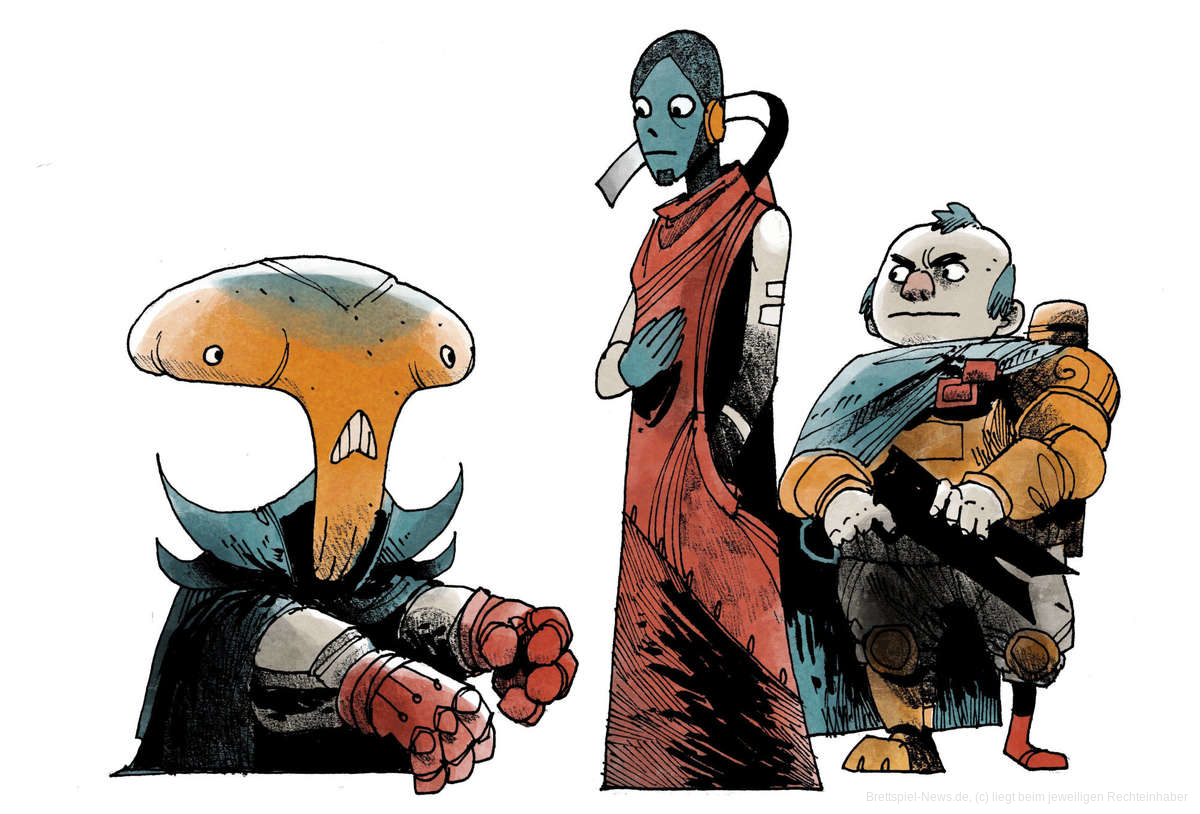
From left: Oddball-Touchstone, Straight Shooter, Wild Card

OMITB doesn’t look like your standard two-act Partners show but Martin and Short are absolutely the stick in the mud and the loose cannon. And Mabel is a combination of Oddball and Touchstone, or if you like, a second Straight Shooter. The core rules of Partners says to take turns with who sets the shot up and who concludes it, but you can just as easily pass the jobs around in a circle. Any participant can set up a question and anyone can resolve it. Or, for an OMITB feel, have the third player describe the architecture, set dressing or costuming in the scene, before or after the crime takes place. I’d do perhaps three scenes per “episode”, then break, and doing the finale in one final episode, for a five part series. It’s always a bit shorter in an RPG – no room for montages or lingering shots or extra jokes added in the “punch-up” (actually those are the jokes your friends do around the edges, of course).

(Don’t worry if your show gets too silly. It might another great show about an old TV detective solving mysteries, like Lookwell)

If you want some extra tables to get you in the OMITB mood, you can substitute this one below to get your Victim and the one following to get your four Suspects. You might also find inspiration in the Teatime Files, the expansion by Cameron Hays which focusses on cosier murder settings and styles.

CardVictim
AFellow tenant
2Annoying friend
3Super/landlord/coop head
4Busybody/gossip/stalker
5Family member
6Podcaster/Amateur Detective
7TV Detective
8Real Detective
9Famous Actor
10Not So Famous Actor
JBackstage Worker
QAngry Producer
KTortured Artist
CardRelationship with Victim
ANeighbour
2Relative
3Co-Star
4Rival
5Enemy
6Financially Entangled
7Boss or Employee
8Support Staff/Fan
9Lover
10Partner
JDraw again, ignoring court cards, add “Ex-“
QDraw again, ignoring court cards, add “-to-be”
KDraw again, ignoring court cards, add “Secret”

The Devil’s Game Designer’s Dictionary

Ambrose Bierce was one of the 19th century’s greatest minds and sharpest wits and his most prominent legacy was his Devil’s Dictionary. Not only does it continue to delight readers, it has also prompted others of the passing 120 years since it was published to add entries in a similar style, so I thought I would have a go today with some new entries. I encourage you to add or email me your own.

Asymmetrical: A magic word that helps dispel the wrath of Playtesters (q.v).

BGG Rating: A device fitted to a game by a website to announce how impressive the owner of the game is.

Broken: A state occupied by games which you do not own.

Complexity: A device fitted to games by a website that announces how clever the owner of the game is.

Expansion: A way to solve the problem that game prices are too small by making game rules too big.

Heavy: a game too complex for your tastes. The opposite is Light, a game too simple for your tastes.

Kickstarter: an alchemical process that turns buckets of cold cash into BGG hotness.

Luck: A demon trapped in games by wicked designers that causes you to lose and your opponent to win. Not to be confused with Skill, which does the opposite.

Max Player Count: a number equal to one less than the number of people at the game table.

Multiplayer Solitaire: A situation where your inability to make small talk is now a game designers fault.

OP: A demon that is associated with Luck (q.v.). Always possessed of items used by your opponent but is entirely the fault of the game designer and suggests the existence of Broken (q.v.).

Playtime: an imaginary number, bearing no relationship to reality.

Playtester: A creature that is rewarded with attention every time it complains and as such has learned to somehow find fault in absolute perfection.

Prototype: a miraculous item that always arrives by mail the day after the trade show or playtest event

Publisher: Individual who does not design, test, illustrate, lay out, print, ship, market, promote or sell your game and takes fifty percent for this service. The other fifty percent goes to the Distributor.

Quarterbacking: A situation where your inability to discuss things is a game designers fault.

Replayability: A key factor in determining the BGG Rating of a game that will never be played in the first place.

Solo Mode: A situation where your inability to make friends is now a game designers fault.

Sleeves: Plastic sheathes sold to prevent wear and tear occurring to cards that are never used more than once.

Winning Strategy aka Strat: A numbered item. If a game has too many of them it is a Point Salad. If it has too few it is Broken. If it has the right amount, it is Solvable, which is another kind of Broken (q.v).

Unbalanced: A state occupied by games you own, but do not win.

Why I Hate Cole Wehrle

I think most of us know and resonate with the prayer of seeking the strength to change the things we can, and the serenity to accept the things we cannot and the wisdom to tell the difference. Few remember that it was coined by Reinhold Niebuhr, a prominent 20th century American theologist and political thinker who was trying to construct a kind of middle way for liberal Americans, one that was socialist in its ideas that poor people were not inherently evil and did not need better angels above them in society to direct them, but also one that repudiated the ideas of communism and liberal reforms like anti-segregation movements. You can view him as a fence-sitter emblematic of the worst parts of neo-liberal deference to what they demand is realpolitik, or as an idealist trying to find a straight path in a bent world. I think the fact that he is confounding to some analyses is probably why people like the prayer: stuff feels complicated, and the individualistic sentence of trying to be perfectly moral has never felt harder than today. Our new versions might be “check your privilege” and “there is no ethical consumption under capitalism”.

Anyway, to get back to games, I think we are always in danger of equivocating and saying “it’s complicated” when it comes to semiotics, and yet often seem to need to. Stuff IS complicated, and never more so than when it comes to signs and signals. Everyone comes to an idea with their baggage and we cannot change that baggage, no matter how hard we wish it were not there. My partner is a lawyer, and Australian judges do not use the term Ms; she cautions her female students that if that is the battle they want to fight, it will be difficult to win, noone will flock to your banner and it will be costly no matter the outcome. She tries to model a positive view but without neglecting the terrain the women will be entering. I tend to have the maxim that you should never believe anyone who tells you something cannot change, they are almost always arguing for their own cowardice. A few years ago I was arguing hard that the term “serious games” was a terrible one and needed to change; a friend of mine said the infamous thought-terminating cliche of that ship having sailed. He was, I was happy to say, 100% wrong, and “games for change” is catching on. He was also the same person who looked at my post about how games don’t have to be competitions and remarked that once again I seemed to be tilting at windmills, and trying to ice-skate uphill, when I should just accept that it do be that way sometimes and it is what it is.

I have another friend who designed a game for the Salvation Army designed to built an understanding of how villages in poor agricultural areas can build themselves out of poverty. I asked him why it wasn’t competitive; his answer was that nobody understands cooperative games. Not in the audience he is trying to reach. He’s right. It hurts me, but he’s right. And I guess that’s what this is all coming back to: we are in a watershed moment in games and that involves dealing with the things that, right now, we cannot change. With the hand we are dealt, to use a gaming metaphor.

Image
Me, trying to explain why everyone else sucks but me

I’m lucky enough to have lived through the revolution in comics when the western world finally caught on that just because a comic had Batman in it didn’t mean it couldn’t be literature. I also have enough historical connection to the 1960s to remember the same arguments being made about rock and roll and stand up comedy. All of them invariably started with a very similar argument: that the art form being derided as not serious was ancient. Ancient neanderthals drew words and images together on cave walls; they played music around the fire; they told stories to make each other laugh. The idea of this was to create a kind of ritual significance with two ends: to help a thing that felt knew seem less new to the mainstream, but also to calm down the academics at the sidelines. Yes we know, academics, that comics aren’t new, and nothing they are doing is new, but we have to PRETEND it is new because to the maintstream audience, it FEELS very new.

The people who remembered the newspaper strips about Peter Parker’s married life and the POW! BAM! of the Batman TV show were having a kind of cultural shock to see people going “no, this shit matters, and is good and is politically and culturally significant”. Some of that was amazement, a wondrous suprise to find more adult depth in old concepts. Similarly, a lot of people’s experience with board games is “we played them as kids and they were kind of … bad?” or “we played them as kids and then we grew out of them”. Wondrous day then, to find games have “suddenly” somehow “grown up” and become “good” or socially acceptable. More and more I see gamers use the term “modern” meaning “good”, with their particular choice of cut off naturally being “a few years before I started getting into the hobby”. Naturally, as someone who knows games have always been here and who has always been here myself, I object loudly from the kitchen. But I get it: for them, the world has jumped a great distance. The first animes (is that the plural?) I ever saw were Astro Boy and Battle of the Planets, the very next one I saw was Ghost in the Shell; that felt like a bullet to the brain and a very silly thing to say they were the same thing, and confusing to me how one got to B from A. Then people tried to “get me into anime” and all failed because it was super hard to get context and nobody inside was very good at giving me context.

I think, more than most folks, I need that context and a sense of a critical language to understand a medium, so I tend to want to offer all of that to those newly arrived. I have always prided myself on being what I call a dragoman. The term is one I stole from colonial history: a dragoman was the man you, a European, hired when you went to the Middle or Far East, who understood the local world and could introduce you to it safely. (A near equivalent is the term indian agent but it has historical problems.) I often remark at conventions how people from one fandom are totally lost when they encounter another, and I love to be the person stepping up to fill that gap. I love being a teacher and an explainer – not least because that’s how I interact with the universe myself. But it is also worth noting to myself that not everyone needs this. The kids are alright going straight to Ghost in the Shell or Wicked City, and it does not matter to anyone that they think the board games now are COOL because they have HOT CHICKS (or I guess trick taking mechanics, in games) and the old ones are FOR BABIES because they don’t.

But it DOES matter as a game designer, because our audience is vast, and expanding, and shifting. But also because games, even more perhaps than comics and cartoons, depend on interpretation. Games need to be swiftly understood and internalized which means the symbols and signification we use has to work with the software available, and that software is the human brain. It is true that a lot of people react violently to the idea of a cooperative game, or any other kind of ideas outside their view of what a game is. We can change that, but slowly; we have to acknowledge a lot of where we are to begin with. I hate that people think games are competition, and I am driving hard to change that, but I also (grudgingly, with no serenity at all) accept that this is a long ongoing process.

At the same time as our audience is opening up, there is also going to be an urge to not have to keep starting from scratch. Previously the game industry was so small and broken up it was difficult to have a conversation about games in game design. It had to happen instead in a critical space or the academic space. I’d argue that Friedmann Friese probably created one of the first real salvos of games about games with Copycat, so-called because he wanted to acknowledge that he hadn’t invented anything in making it. 504 was then the natural extension thereof, a game that was 504 games in one, just add your own theme. I’d also argue that the problem with both games is they didn’t really make sense to anyone but someone deeply immersed already in that conversation about innovation and euro-game mechanics. Games, because they are so dependent on understanding a shared language, are at great risk of iterating ON that language, until it becomes indecipherable to the new player. Of course everyone knows that red is life points and blue is mana points, and so on.

Here’s the thing: although all art exists in conversation with other art and its time and its context, I’d argue that really great art can and should transcend that and be universal and timeless. It’s true that Watchmen is about superheroes as they were as a storytelling medium and corporate property, but I wasn’t reading comics at the time and I can understand Watchmen perfectly without that context. It operates on many many levels. Shakespeare doesn’t always translate but so much of what he writes does, even when he was flipping scripts and commenting on other works around him. Compare that to Undertale: a video game where when you get stuck a kindly character comes and helps you pass a level. That joke only works if you’re immersed in what video games are; worse still, I could not get to that point of genre-interrogation in Undertale because I couldn’t get past the earlier levels. As interesting as a critique as Undertale was, it was not just unintelligible to the average person, it was unreachable. And that’s with nearly 50% of people regularly playing video games.

At one point I spent a few years checking which games explained that AWSD were how to move around. Almost none of them did. That had become assumed language. I wonder if we’re really close to making the same mistakes in board games.

And that – at last -brings us to why I hate Cole Wehrle. Cole, amazingly, brilliantly, is having a deep conversation about wargames and dudes-on-a-map games, and history games. But the problem I have with him is with each new game he makes, he goes further down a line of conversation that started with some central assumptions about what a war game is and why it exists. And every time he iterates on that, the conversation gets further and further away from me, because I don’t have the experience OR ABILITY to keep up with the kinds of games he makes. (Ability is of course something for a whole other column, but I need to wrap this up at least for this instalment). None of it is approachable or accessible. All of it feels like it’s about things I barely understand. At the same time, I love that he’s asking these questions and iterating over and over further down into those questions. I just wish it was about some other part of gaming that I could relate to understand. It’s frustrating to see someone clearly doing great work in this space and not being able to go with it; but more than that it makes me fear that we might, like video games did, end up in a world where we are so busy congratulating ourselves on subverting the dominant paradigms that we’ve forgotten that those paradigms have become walls that the outsiders can’t get over.

Some might look at that and go well, we’re not designing for those people, and that’s fair enough. It is what it is, and some people can’t be convinced to like a thing. I will never be able to understand the games Cole makes and I’m sure he’s okay with that, and certainly I should be. I also don’t mind when people miss the subtle levels in my fiction or game design writing…but I also want to make sure that, to some extent, they have a way in. I pitch high, but I also don’t want to be very careful not to push away. Not that setting a game at any giving difficulty is inherently pushing away! It’s also probably fine to make games where people attack other people with dudes on a map. I’m only worried about going down the silo too hard. And that designers might occasionally forget that not everyone “gets” the idea of a war game. I tried to play Arcs and immediately I was hit with the idea that the setting didn’t give me any reason to attack anyone. The mechanics did (although not strongly), but I still didn’t want to do it. Shut Up and Sit Down talk about Arcs makes its own lore for you; but at least when I’m being the space turtles I know that I’m supposed to hate those barony guys. Of course, not everyone cares about setting as much as I do, either. Twilight Imperium isn’t a better game because of this element. I think my point is, we should always remember that our audience may be seeing this thing for the first time. We can’t always design for that, if we want to go deep, but, like a memento mori, we should keep it in mind. And maybe I’m weird because I don’t want to attack people in games, but I can tell you like I said in the first article in this series: THE MAIN REASON PEOPLE DON’T WANT TO PLAY GAMES IS LOSING MAKES THEM FEEL STUPID AND WINNING MAKES THEM FEEL MEAN.

And I bring that thought to every game I design, and try to design with that as the hand I am dealt. That doesn’t mean I want Cole to stop being Frank Miller; it just means I think we need some Scott McClouds as well.

And of course I don’t actually hate Cole at all. The fact that he’s talking about this stuff in his games is amazing. I just used that title because although I hate clickbait, I also have to deal with the internet as it is. I don’t have the strength to retrain your brains not to click on outrage, and I hopefully have the serenity to forgive myself for playing to it.