-

-
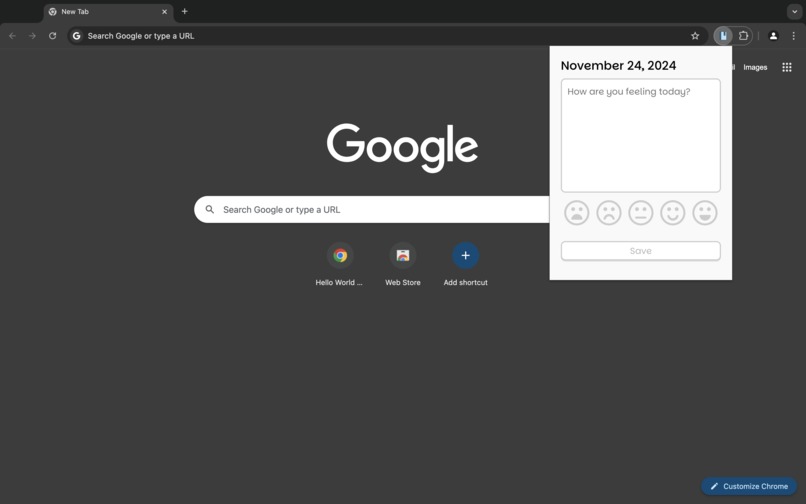
Chrome extension
-
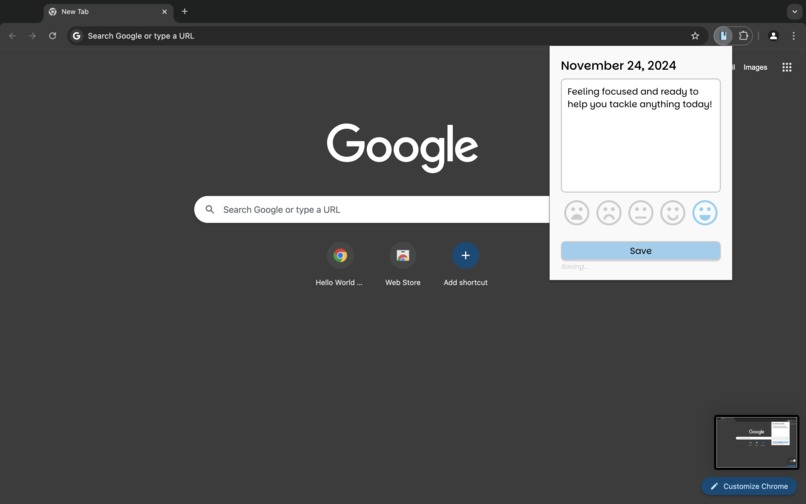
Feeling focused
-
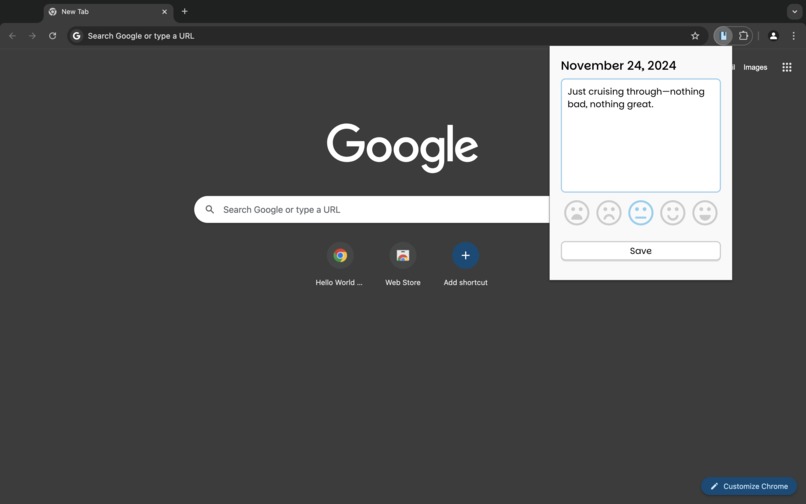
Just cruising
-
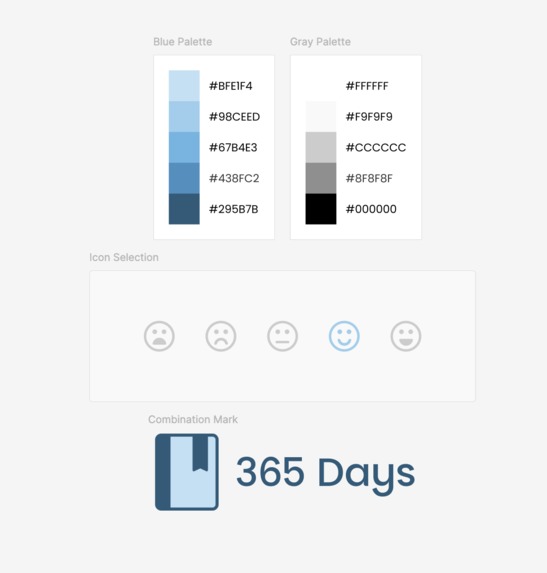
Color palette
-
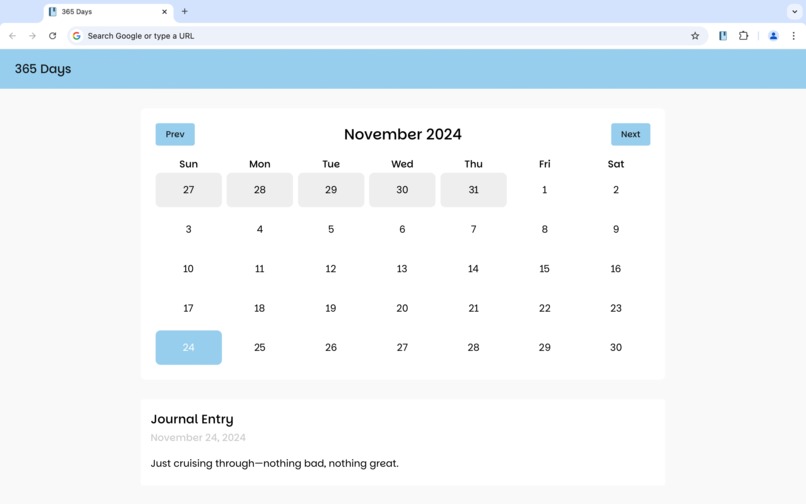
Calendar view
-
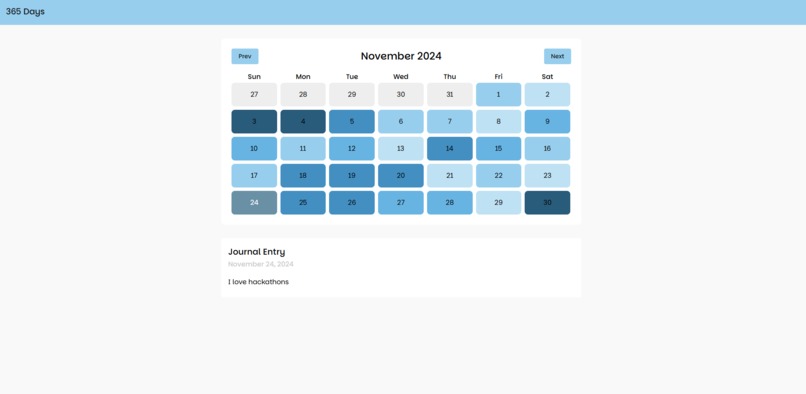
Calendar filled-in
-
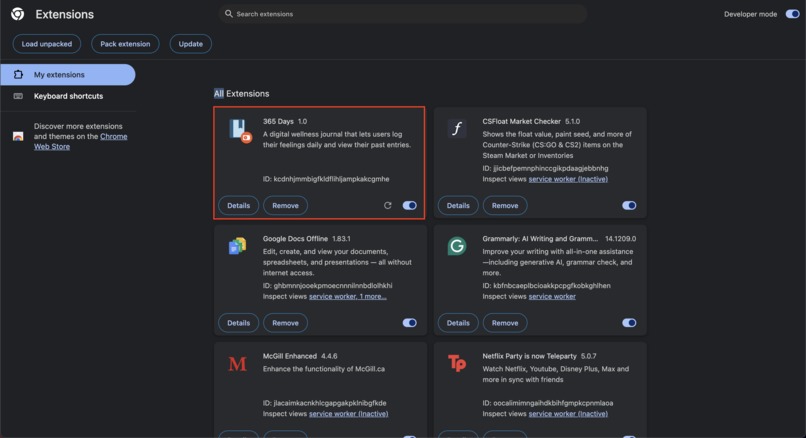
Chrome extensions page


Inspiration
The inspiration behind 365 Days came from our desire to create a simple, digital tool for personal wellness. It is a platform where users can track their emotions and thoughts on a daily basis, allowing them to build mindfulness and reflect on their mental health journey over time. The journal is designed to encourage regular self-check-ins, fostering better emotional awareness.
What it does
365 Days is a digital wellness journal that:
- Allows users to log their daily emotions through a mood tracker with five options (Very Bad, Bad, Okay, Good, Very Good).
- Provides a text box where users can jot down how they feel each day in up to 160 characters.
- Saves these entries, enabling users to revisit and reflect on their past moods and journal entries.
How we built it
The app is packaged as a Chrome extension that users can access directly from their browser, with a popup interface for daily entries.
The extension frontend was built with HTML, CSS, and JavaScript. It includes a clean and responsive design with intuitive UI elements like radio buttons for mood tracking using custom icons for mood options and a polished, minimalist style.
Additionally, a webpage was created for users to be able look back on their past journal entries. This was created using React. Users are able to visualize the changes in their mood over the past months using the webpage, which displays a heatmap of their moods over the past month.
The backend was built using Python and FastAPI for managing journal entries, storing user data, and ensuring persistence across sessions.
Challenges we ran into
- Limited Experience with React: As newcomers to React, we encountered a steep learning curve while building our application.
- Deciding on a Database Solution: Choosing the right database was a challenge due to the variety of options and our indecision on the most suitable one for our needs.
- Frontend-Backend Integration: With limited experience in connecting frontend and backend components, we faced hurdles in ensuring seamless communication between the two.
Accomplishments that we're proud of
- Building a fully functional Chrome extension with an engaging user experience.
- Developing a robust backend for managing journal data, ensuring scalability and persistence.
What we learned
- Best practices for creating and deploying Chrome extensions.
- How to integrate a Python-based backend with a JavaScript frontend.
- Importance of UI/UX design in creating user-friendly digital wellness tools.
What's next for 365 Days
- Feed View: Create a feed view for all the journal entries in reverse chronological order.
- Data Visualization: Add visual analytics, such as mood trends, to help users track their emotional patterns.
- Cross-Platform Support: Expand to include mobile and web versions for broader accessibility.
- AI Integration: Analyse journal entries to provide insights or suggest mood-boosting activities.


Log in or sign up for Devpost to join the conversation.