-
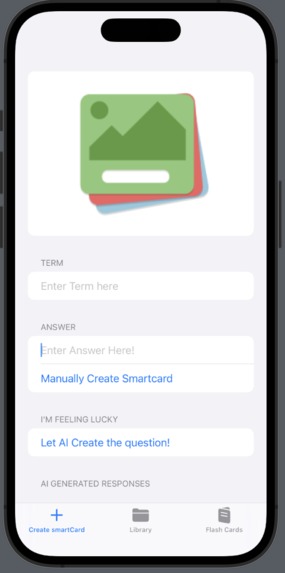
Home Screen of the flashcard application
-
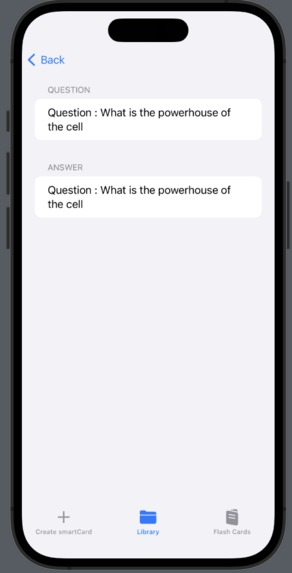
Flashcard editing screen of the mobile application
-
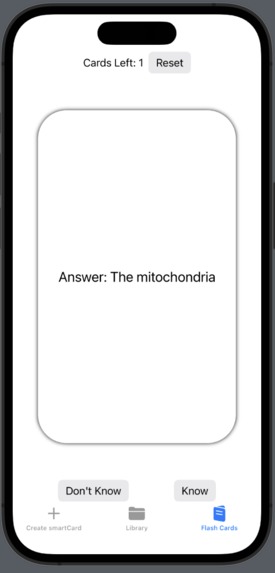
Studying flashcard portion of the mobile application
-
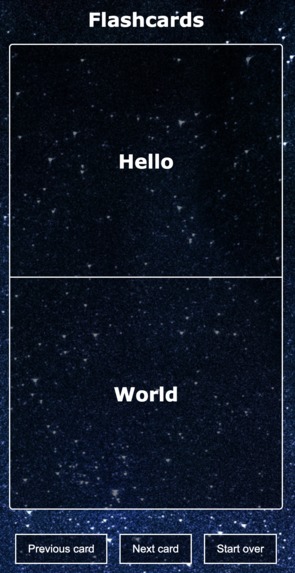
Studying flashcard portion of the web application
-
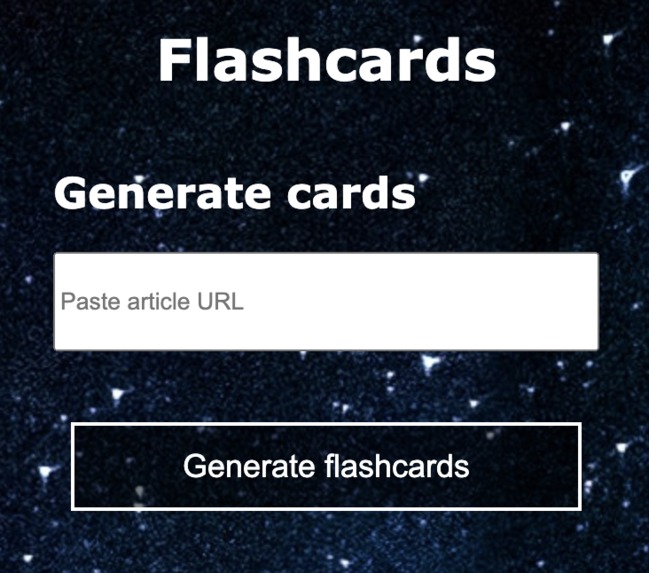
Screen to generate flashcards from url


Inspiration
Our inspiration for this project came from websites such as Quizlet, which allow users to create flashcard sets and study them engagingly. Unfortunately, many of these sites now require payment to access their features. Thus, we aimed to develop our version of Quizlet, which is both easy to use and accessible to all. We were also intrigued by ChatGPT and quickly integrated it into our project.
What it does
Our project includes two mediums for creating and studying flashcards. The first is a mobile application that can be downloaded and offers manual creation of flashcards by inputting both the question and answer. Additionally, students can create flashcards by entering a question and using ChatGPT to generate a response automatically. The mobile app also allows students to view all flashcards, edit them if needed, and sort them into piles for studying or mastery. In addition to the mobile app, we developed a website with three tabs - Add cards manually, Generate cards, and Study all. The first tab allows users to create flashcards with a front and back side and lists all created cards. The second tab prompts ChatGPT to generate a set of flashcards on a particular topic. The third tab displays one flashcard at a time, with a click revealing the other side. The tab also includes navigation buttons to move forward and backward to view all cards in the set.
How we built it
We began by identifying each team member's areas of expertise and assigning specific roles. Luis, Stefan, and Ryan had prior experience in backend and web development. So, they started by creating basic HTML/CSS code for the website's visuals and integrating ChatGPT into it. On the other hand, William had significant experience in iOS development, so we tasked him with building the mobile iOS application from the ground up.
Challenges we ran into
One of our biggest challenges during the project was deploying ChatGPT onto both the website and mobile application. It required extensive research and testing to determine how to make reliable API calls and ensure the model's accuracy. However, we were ultimately successful in deploying the API and were able to obtain multiple answers for improved accuracy. Additionally, we implemented a training process to refine the model over time within the program locally.
Accomplishments that we're proud of
We take great pride in our ability to create a highly functional and engaging user interface for both the mobile application and website within the short time frame we had. Despite being new to the Svelte framework, we quickly learned how to use it and create an aesthetically pleasing website. Additionally, successfully deploying ChatGPT onto the website was a significant accomplishment. As for the mobile application, we dedicated much time to thorough bug testing and ensuring a flawless user experience. Despite initial concerns about meeting the deadline, we proudly say that the application now functions as intended.
What we learned
One of the most valuable things we learned was a unique insight into working as a team. This hackathon was the first for most of us, so many of these skills were new. Undoubtedly, though, these skills we learned will be helpful to us in the future. Additionally, by attending various seminars that HooHacks offered, we learned more about AI and its role in our evolving world. Having a tool like ChatGPT at our fingertips for our project was a one-of-a-kind opportunity, and it would've been impossible to conceive something like this without it. Undoubtedly, as computer science students, we will enter the world of AI, so it's good to get some insights into it now.
What's next for AI Flashcards
One potential update that we have in mind for the AI Flashcards is to enable seamless data syncing between the web and mobile platforms. This feature would allow users to access their flashcards and study progress across multiple devices without manually transferring data. Additionally, we are considering adding user accounts to the mobile application, enabling users to store their data securely in the cloud and access it from anywhere. This additional functionality would also allow for more personalized and customized studying experiences for individual users.


Log in or sign up for Devpost to join the conversation.