-
-
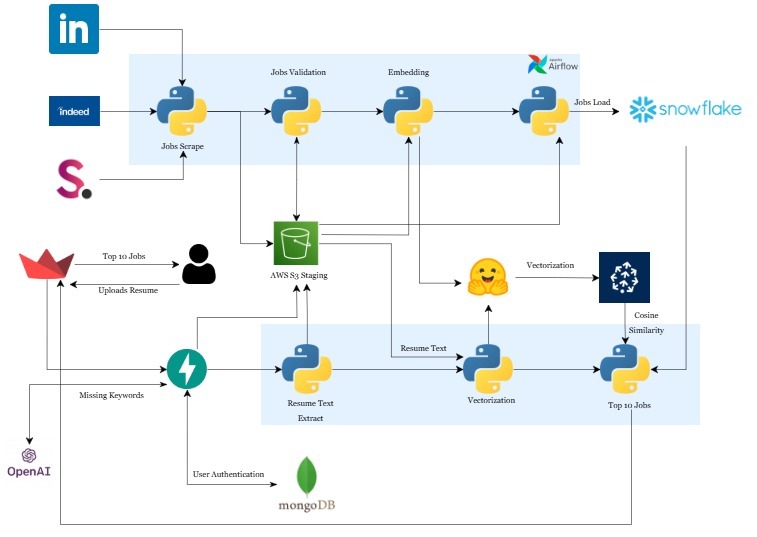
Architecture Diagram
-
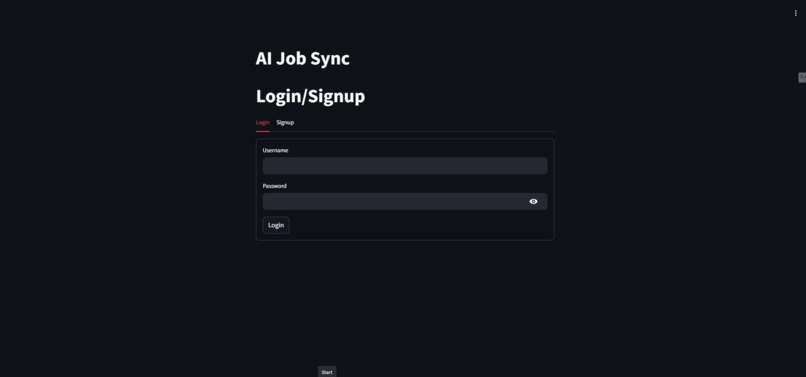
Login Page
-

Upload Resume
-
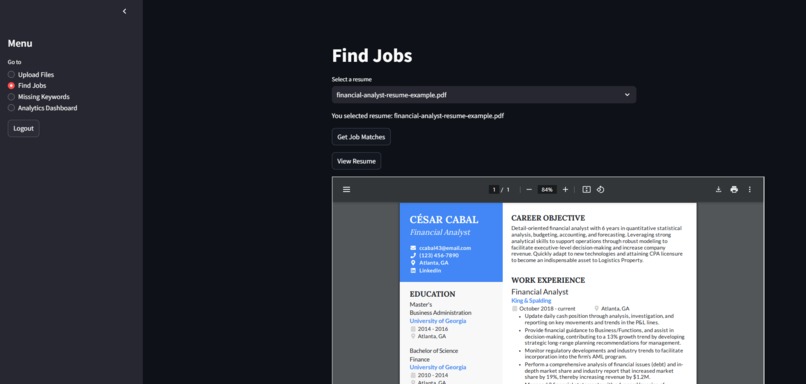
View Resume
-
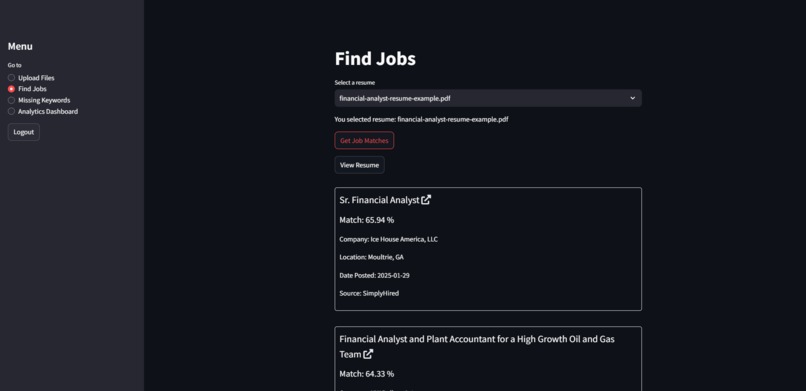
Get Job Recomendation
-
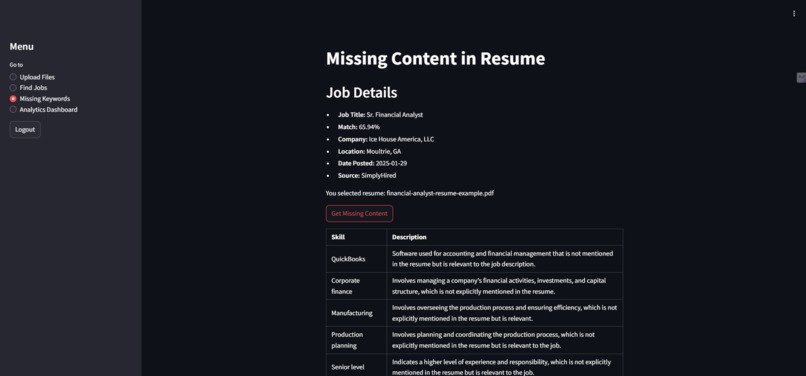
View Missing Keywords
-
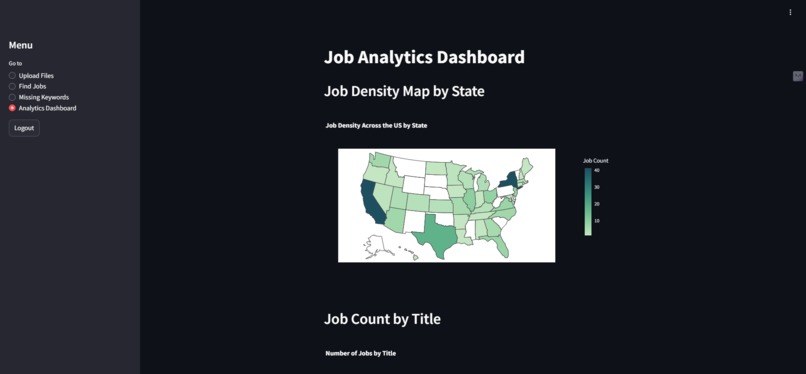
View Job listing Analysis
-
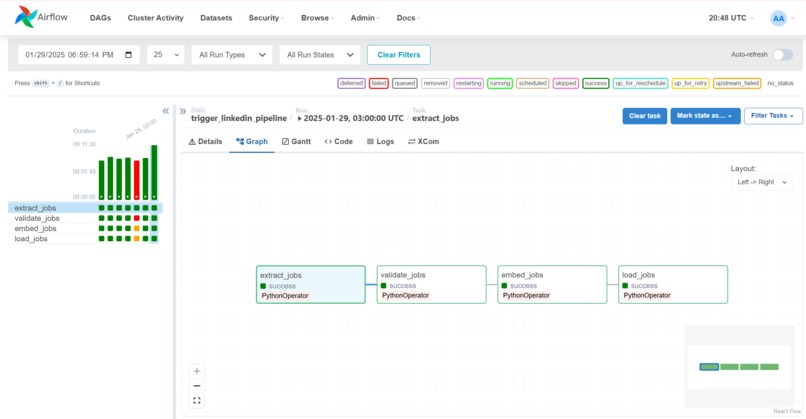
Airflow Data Pipeline


AI Job Sync: Revolutionizing the Job Search Process
Inspiration
The traditional job search process often involves manually browsing through multiple job boards, applying to numerous positions, and struggling to identify the most relevant opportunities. To address this challenge, we aimed to create a solution that streamlines the job search experience by providing personalized recommendations based on individual skills and preferences. We believe that AI-powered tools can significantly improve the job search process for both job seekers and recruiters by automating tasks, identifying optimal matches, and enhancing overall efficiency.
What it Does
AI Job Sync performs the following key functions to optimize the job search process:
- Gathering Job Listings: Collects job listings from popular platforms such as LinkedIn, Indeed, and SimplyHired.
- Resume Parsing: Analyzes user-uploaded resumes to extract key skills, experience, and qualifications.
- Job Matching: Matches user profiles with relevant job openings based on skills and experience.
- Resume Optimization: Provides recommendations for missing keywords or skills to improve the applicant's resume for specific job opportunities.
How We Built It
The solution consists of three primary components: Data Pipeline, Backend API Service, and User Interface.
1. Data Pipeline
- Orchestration with Airflow: We used Airflow to orchestrate the ELT (Extract, Load, Transform) operations. Job listings were extracted from three distinct sources, transformed into a standardized format, and vectorized.
- Vectorization with Pinecone: Job listings were vectorized and stored in the Pinecone vector database for efficient search and retrieval.
- Data Storage: The actual job listings were stored in Snowflake data warehouse for long-term storage and analysis.
2. Backend API Service
- FastAPI for Endpoints: We leveraged FastAPI to provide endpoints for various services:
- User Authentication: Verified user credentials using MongoDB.
- Resume Upload: Allowed users to upload resumes, storing the file in Amazon S3 and metadata in MongoDB.
- Job Matching: Provided a list of 10 job openings that best matched the user’s profile.
- Missing Keywords Detection: Identified missing keywords in the user's resume to optimize it for the job search.
- Job Analysis: Provided detailed analysis of jobs scraped from the three sources.
3. User Interface
- Streamlit for UI: We built an intuitive user interface using Streamlit, which seamlessly integrated with the FastAPI backend, ensuring a smooth and easy-to-navigate experience for users.
Challenges We Ran Into
While building this solution, we encountered the following challenges:
- Data Quality and Consistency: Handling inconsistent and noisy data from various job boards proved to be a significant challenge.
- Resume Parsing Accuracy: Achieving high accuracy in extracting relevant information from a diverse range of resume formats was a critical hurdle.
- Scalability and Performance: Ensuring the system could handle large volumes of data and user requests efficiently without compromising performance was essential.
Accomplishments We’re Proud Of
We are proud of the following accomplishments:
- Functional Job Recommendation System: Successfully developed a fully operational job recommendation system.
- High Accuracy in Resume Parsing: Achieved high accuracy in parsing resumes and matching them with relevant job openings.
- Valuable AI and Cloud Experience: Gained hands-on experience with AI, machine learning, and cloud technologies.
- Effective Missing Keywords Identification: Successfully implemented a system to identify missing keywords in resumes, helping users optimize their applications.
- User-Friendly Interface: Created an intuitive and user-friendly interface that enhances the overall user experience.
What We Learned
- The importance of data consistency and how it affects the performance of AI models.
- The complexities of resume parsing, especially when dealing with varied formats and structures.
- The significance of scalability and performance optimization in handling real-time data and user requests efficiently.
What’s Next for AI Job Sync
We have several exciting plans to take AI Job Sync to the next level:
- Integrate with More Job Boards: Expand our reach by integrating with additional job boards, including niche job boards and company websites.
- Enhance Resume Parsing Capabilities: Improve the accuracy and robustness of resume parsing to handle more complex and varied formats.
- Explore Advanced AI Techniques: Investigate the use of advanced AI models, such as deep learning and reinforcement learning, to enhance job recommendations.
- Recruiter Recommendation System: Develop a recommendation system to assist recruiters in finding the best candidates for their open positions.



Log in or sign up for Devpost to join the conversation.