-
-
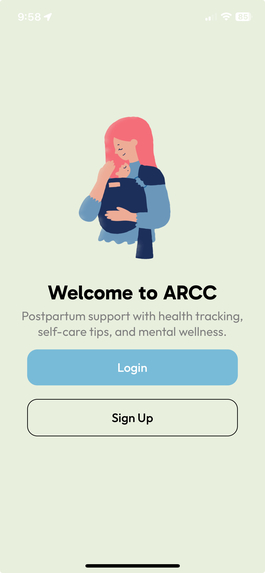
Opening Page
-
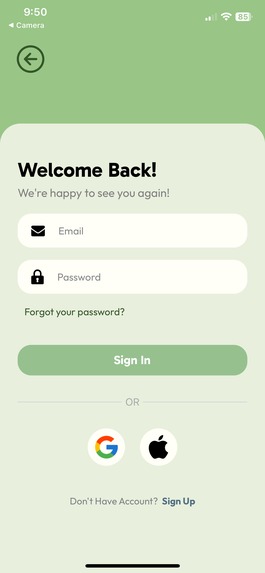
Login Page
-
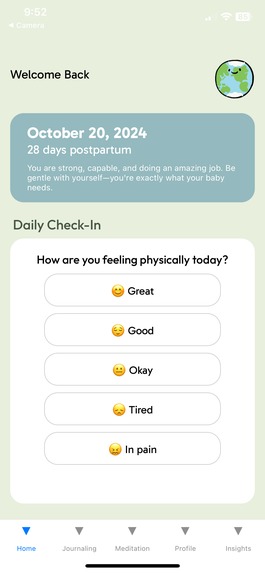
Home/Daily Check-In Page
-
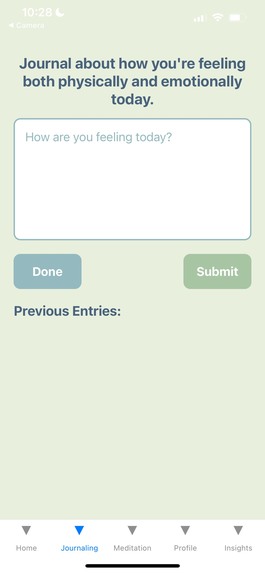
Journal Page
-
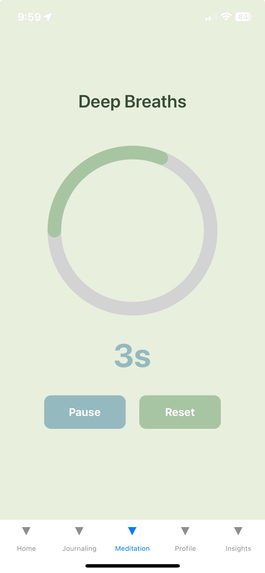
Meditation Page
-
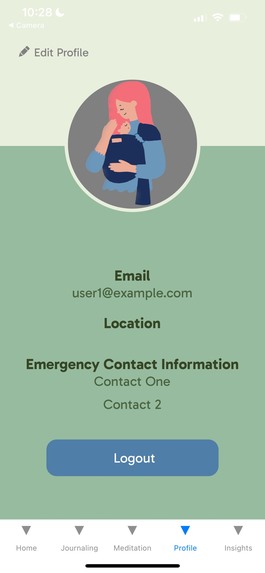
Profile Page
-
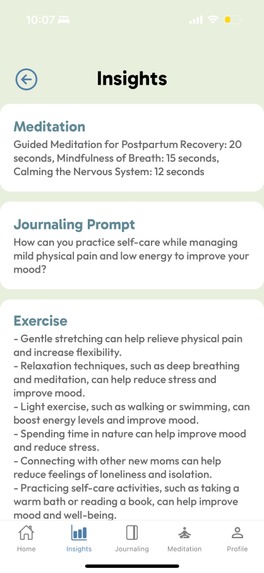
Insights Page


Inspiration
We were inspired to create a solution for postpartum depression after coming across numerous personal stories and discussions online. Many people shared their struggles with postpartum depression and how it profoundly affected their mental health, daily lives, and overall well-being. This highlighted for us just how serious and widespread this condition can be.
Postpartum depression can develop after giving birth, leaving new mothers feeling overwhelmed, isolated, and emotionally drained. Despite how common this issue is, it often goes undiagnosed or unaddressed due to societal stigma, lack of awareness, or inadequate mental health resources.
According to John Hopkins, up to 85% of mothers experience varying degrees of postpartum depression (https://www.hopkinsmedicine.org/health/wellness-and-prevention/postpartum-mood-disorders-what-new-moms-need-to-know), ranging from mild baby blues to severe cases requiring intervention. Yet, there’s still a lack of accessible tools and support systems specifically designed to help mothers during this vulnerable time. In fact, only 41% of mothers feel they are supported, and the numbers lower even more for moms of color, with only 22% and 32% for AAPI and Black mothers, respectively (https://www.babycenter.com/presscenter/babycenter-emily-oster-postpartum-support-survey-press-release_41001496).
Seeing this gap, we wanted to create something that not only brings awareness but also offers practical support to those affected. Our goal was to provide an easy-to-use platform where mothers could seek help, track their emotional well-being, and access resources tailored to their individual needs.
What it does
Our app, ARCC, tackles a critical need for support when it comes to mothers dealing with postpartum depression. ARCC offers a simple daily check-in and mood tracker, providing valuable insights into their mental state. We’ve also included a journaling feature with randomized prompts to encourage mothers to express their thoughts and feelings—because sometimes, it's just good to get things off your chest.
Additionally, we integrated deep breathing exercises and meditation to help mothers relax and manage stress. These features are linked to their profile, where they can add an emergency contact for extra peace of mind. To further support their well-being, we included practical tips on sleep, exercise, and other self-care practices to help mothers take out some time for themselves.
How we built it
Our project utilized a tech stack comprising React Native, Express, MongoDB, and Expo for both the frontend and backend, with each team member playing a key role in ensuring our primary focus remained on supporting mothers experiencing postpartum depression.
- Angelina conceptualized the project, identifying a crucial gap in addressing postpartum depression. She integrated Google Gemini into the app, enabling personalized insights, meditation exercises, and other tailored content to support new mothers.
- Clarissa led the backend development. She designed and implemented the MongoDB user model schema, wrote functions to handle HTTP requests, and integrated the backend with the frontend to ensure seamless data flow between the screens and the database.
- Rachel focused on user authentication, developing the login, signup, home, and profile screens. She also established the app’s visual design, creating a cohesive and user-friendly aesthetic.
- Cher worked on one of the app’s central features, the journaling tool, which allows users to express their thoughts and feelings. She also enhanced the user experience for the meditation feature, ensuring it was intuitive and supportive for new mothers.
Challenges we ran into
We frequently ran into issues with platform compatibility. Since half of our team used Macs and the other half used Windows, we experienced issues with React Native version discrepancies which required extra troubleshooting, platform-specific adjustments, and, at times, parallel development paths.
Additionally, we ran into challenges with dependency management as some third-party packages we integrated were either outdated or incompatible with the latest versions of React Native and Expo. This caused unexpected crashes and slowed down our development process, especially since React Native isn’t as user friendly for developers due to the lack of specificity in the errors raised.
We also had issues regarding utilizing Git. Sometimes some of us would have conflicts when trying to merge our changes. This was challenging because different team members needed to change one line in App.js or Login.js in order to work on their parts of the project, but everybody changing that one line in the same files often led to conflicts in shared files. This situation made it difficult to integrate everyone's work seamlessly, as frequent changes to the same lines inevitably led to conflicts.
Accomplishments that we're proud of
We’re especially proud of building a fully functional version of our app in just 24 hours. Given the time constraints and our limited experience with app development, this was definitely a learning curve for us. Although we couldn’t fully realize every aspect of our vision, we’re proud of what we accomplished within the short timeframe and excited about the potential our app holds and how we can help out an underrepresented community.
What we learned
During the 24 hours of the Designathon, we learned a great deal about integrating various technologies and overcoming the challenges of app development. While we had some experience with React Native, each team member came in with different levels of familiarity, so there was a learning curve. We had to continually share new approaches and collaborate on how to implement features, which became a key part of our learning process. Expo and GitHub also presented their own set of difficulties, teaching us valuable lessons about managing and troubleshooting development environments. Working with Express and Node.js for server-side logic gave us a deeper understanding of setting up APIs and connecting them to the MongoDB database. Lastly, integrating Gemini AI to generate prompts and personalized tips was a new challenge that we tackled together, teaching ourselves along the way.
What's next for ARCC
Moving forward, we want to improve the overall user experience of our app. We weren’t able to fully bring our vision to life within the time constraints, such as creating a fully customized meditation screen and allowing users to view their previous journal entries to track their mental progress. We also plan to enhance the insights board, providing more detailed stats and helpful information.
In addition, we would love to add a professional feature, such as therapy matching assistance, to connect mothers with mental health professionals who can offer personalized support. Our ultimate goal is to make mothers feel safe, seen, and supported through our app, ensuring they have the tools they need to take care of their mental health.
Moreover, we would like to provide a page that allows users to connect with each other, so that they may become a community that provides support to one another. This would address the essential need for a support system when suffering from postpartum depression. Additionally, we want to offer the option to send updates to an emergency contact so that users can be sure they are being cared for and checked in on by someone who is near them in real life.


Log in or sign up for Devpost to join the conversation.