-
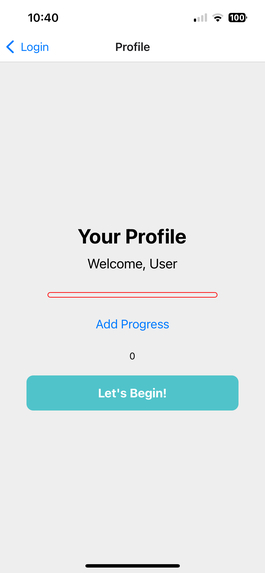
After logging in, the user has their profile shown and the amount of 'aura' they have at the moment and their level.
-
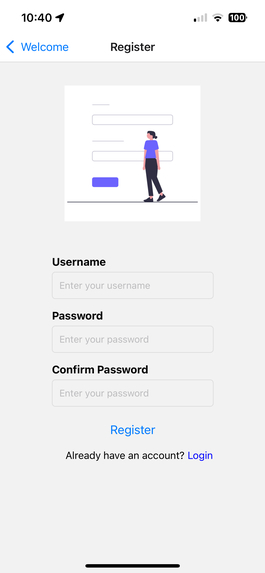
After the welcome screen, the register screen is showed
-
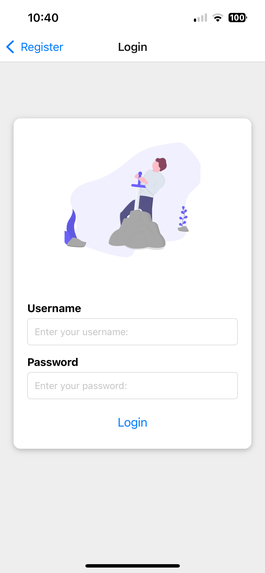
Both registering or clicking the login button will redirect to the login page.
-
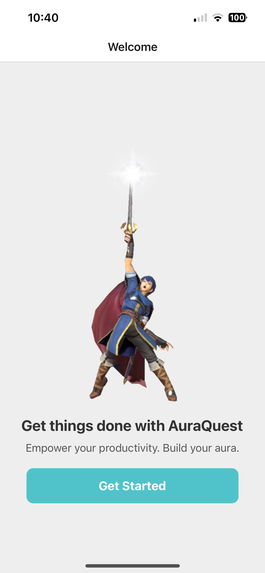
Welcome Screen - first thing seen when launching the app


Inspiration
When the prompt was shown to us, we had an agreement that we wanted to do a mobile application. We all experienced difficulty focusing on our work in the past, and wanted to brainstorm ideas for a way to combat that in the future. We wanted a way that would be fun, easy to access and something that everyone can use to track their productivity. After many discussions, we landed on a mobile that integrates a to-do list and a quest like system to track progress of the quests throughout the week.
What it does
Our phone application, named AuraQuest, is a game-like productivity tracking app that takes in the user's inputted things to do into three different categories. After registering and Firstly, a weekly task that would require the week to fully finish. Secondly, a daily task that would be repeated everyday for that week and lastly, a "side quest", which are any tasks that users can add in on the day of. Completing any of these tasks would reward the user with experience in a currency called "aura" that would build up over time and will have users level up after certain thresholds, unlocking new titles and customizations for the app.
How we built it
This project was built by our team through react-native and we used GitHub to collaborate with each other and work together on large portions of this code. With many different JavaScript files, each of them building off another, we built this using a combination of GitHub and self learning on react-native language.
Challenges we ran into
While developing this project, we had many difficulties with the GitHub repository, either it be merge conflicts or members missing packages or dependancies. It took us a few hours to get accustomed to react-native and mobile app development, as it was everyone's first time dealing with this type of development. However, with better use of incremental and collaborative programming, we were able to help each other on things we didn't understand and work together to create something close to our vision.
Accomplishments that we're proud of
We are very proud of how the UI looks for the application so far, especially because this was our first time dealing with react-native and working on a large project with such a large number of people. We are proud of how much we were able to finish by the deadline, including the menu bar, the register and login page and the homepage with the pulldown bar for quests for the user. We are proud that we were able to overcome most of our challenges and come together to collaborate on a large scale project like this.
What we learned
We learned a great amount while developing this project together, because for every one of us, this was our first time creaiting any type of mobile application. Not only was it our first time using react-native and working on a project like this, we learned how to style applications and link different JavaScript files together. We also learned a lot about how to code for cross platforms and the difficulties with cross-platform app development. We learned how to navigate through files in the complex react-native language.
What's next for AuraQuest
We still have many things we want to develop for this app, including a streak system that gives more 'aura' every day the streak continues. This streak system would incentivize users to keep using the apaplication to keep their streak alive. We also need to implement a dark mode function for users who prefer dark mode and apply the dark mode throughout the whole app. One more thing we want to work on is the database that holds all the registrations and login information. With a little more time, I'm sure we'll be able to accomplish these goals that we set for ourselves. streaks, databse for logina nd register, dark mode


Log in or sign up for Devpost to join the conversation.