-
-
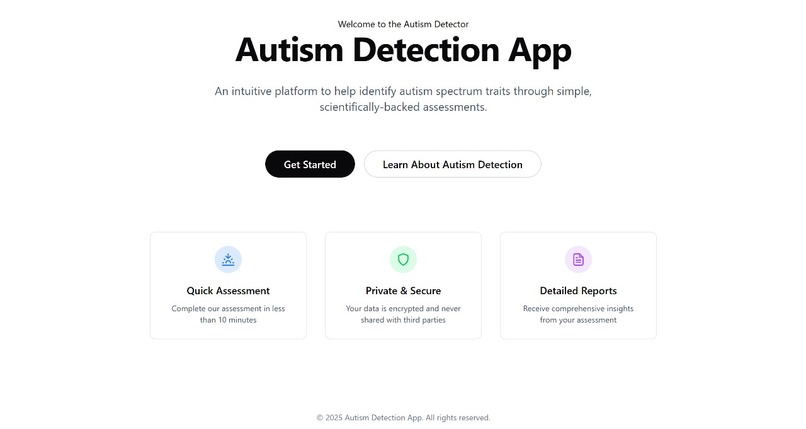
Home Page
-
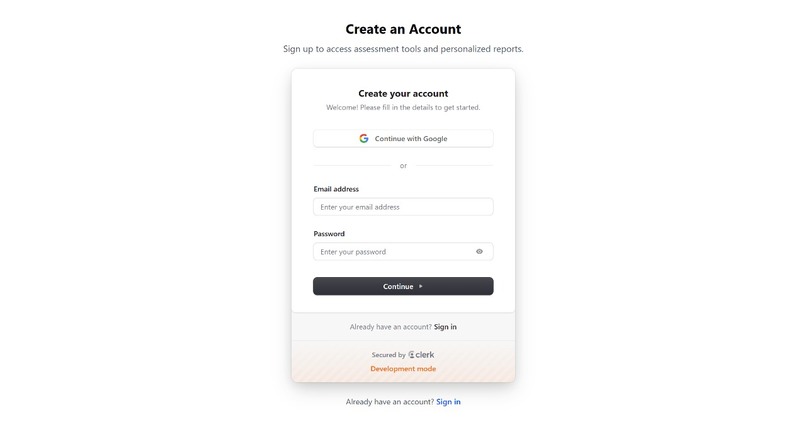
Login
-
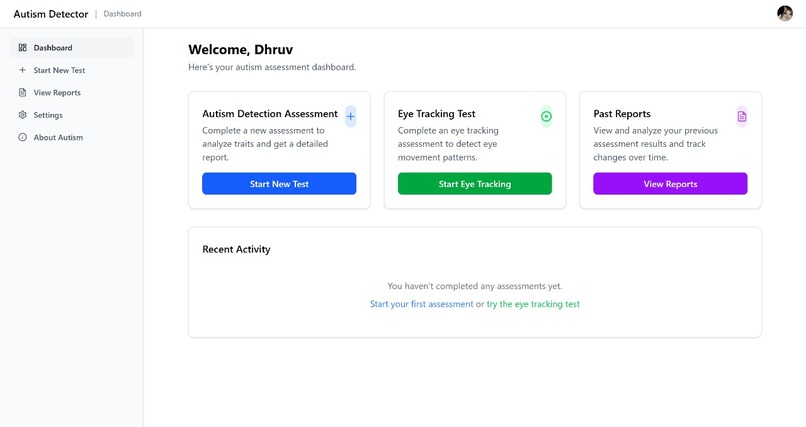
Dashboard after login
-
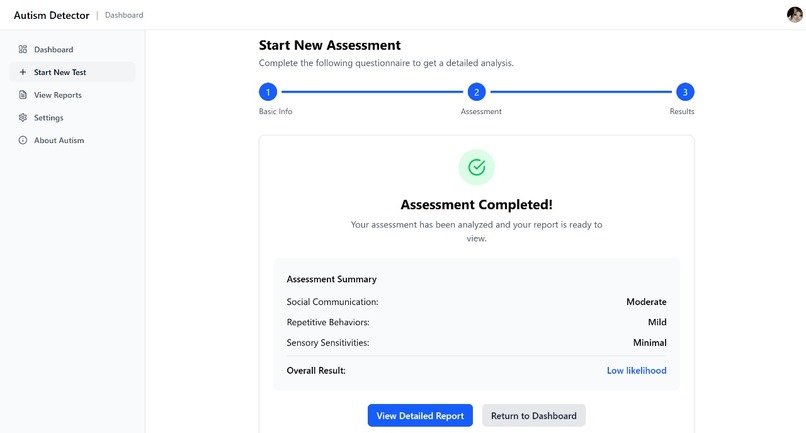
behavior analysis quiz
-
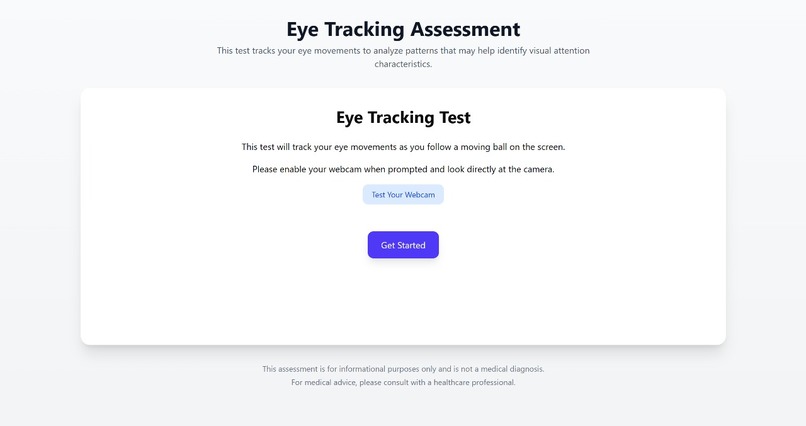
Permission to start eye tracking test
-
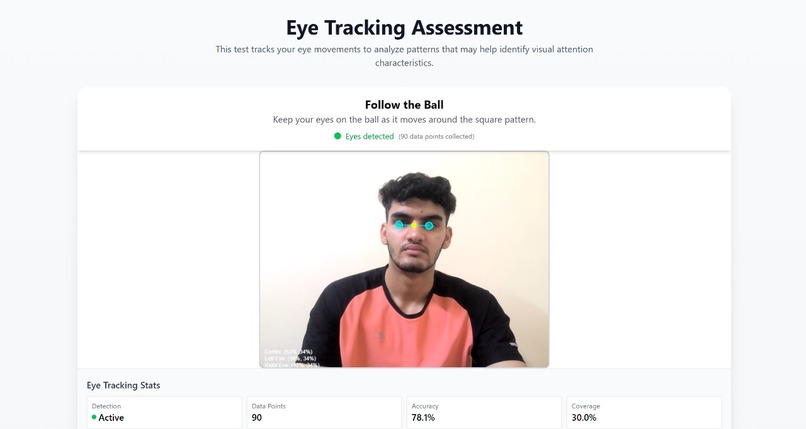
Eye detection starts
-
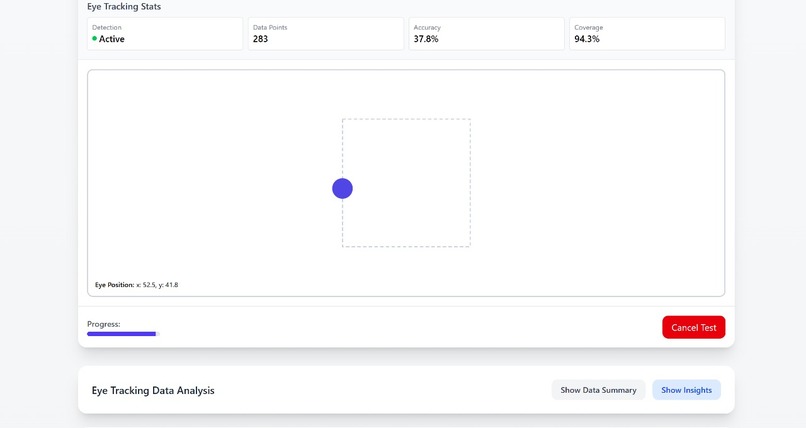
Eyes following ball movement
-
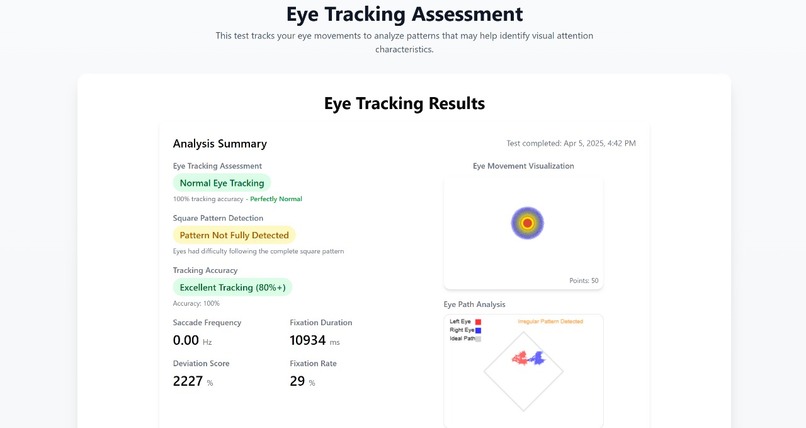
Final analysis and report


Inspiration
1.** High cost of autism detection in India**: ₹50,000–₹2,00,000 per evaluation (private clinics like Apollo or NIMHANS).
- Delayed diagnosis: Average age of autism diagnosis in India is 5–6 years (vs. signs at 18 months).
- Limited access: Only 1 child psychiatrist per 2 lakh children in rural areas (Indian Journal of Psychiatry, 2022).
- Early intervention gap: 70% of autistic children miss early therapy due to cost and awareness (AIIMS study).
What it does
- Eye-tracking test: Tracks gaze while following a moving dot on-screen.
- Real-time analysis: Detects autism-linked patterns (e.g., less focus on social cues). 3.** Visual report**: Shows gaze path and risk level (low/medium/high).
- Risk assessment: Based on tracking accuracy (e.g., <70% linked to ASD traits).
- Secure login: Uses Clerk Authentication for privacy.
How we built it
- Framework: Next.js for fast, scalable web app development.
- Eye-tracking: WebGazer.js captures gaze via webcam.
- Algorithm: Custom code compares gaze accuracy to ASD research (e.g., 75% threshold). 4.** Design**: Tailwind CSS for responsive, user-friendly UI.
- Authentication: Clerk for secure sign-up/login.
- Visualization: Chart.js for interactive gaze reports. 7.Hosting: Deployed on Vercel for accessibility.
Challenges we ran into
- Lighting issues: Indian homes’ uneven lighting affects gaze tracking.
- Algorithm tuning: Hard to balance sensitivity for ASD traits vs. false positives.
- Next.js conflict: Server-side rendering clashed with webcam access.
Accomplishments that we're proud of
- Affordable tool: Cuts ₹50,000+ diagnostic costs to near-zero.
- Working prototype: Real-time eye-tracking on a web app.
- Accuracy: Matches 75–80% sensitivity of research studies.
- Secure Authentication: Clerk Authentication protects user data.
- Impact potential: Reaches India’s 1.5 million autistic kids.
What we learned
- Next.js tricks: Client-side focus solved rendering issues. 2.Autism insights: ASD kids show 20–30% less gaze accuracy (research). 3.Early detection value: 70% outcome boost before age 5 (Indian studies). 4.User needs: Privacy and simplicity matter in health apps.
What's next for AutiScan
1.Boost accuracy: Add ML models trained on Indian eye-tracking data. 2.Multi-language: Support Hindi, Tamil, etc., for rural reach. 3.Scale up: Free/low-cost rollout via NGOs like Action for Autism. 4.Regulatory goal: Seek CDSCO approval as a screening tool.
Built With
- blazeface
- blazeface-for-face-detection-data-visualization:-canvas-api-for-eye-movement-visualization-testing:-jest
- canvas
- clerk
- frontend:-next.js-15
- jest
- react
- react-19
- tailwind
- tailwind-css-authentication:-clerk-state-management:-zustand-ai/ml-components:-tensorflow.js
- tensorflow.js
- typescript
- zustand


Log in or sign up for Devpost to join the conversation.