-
-
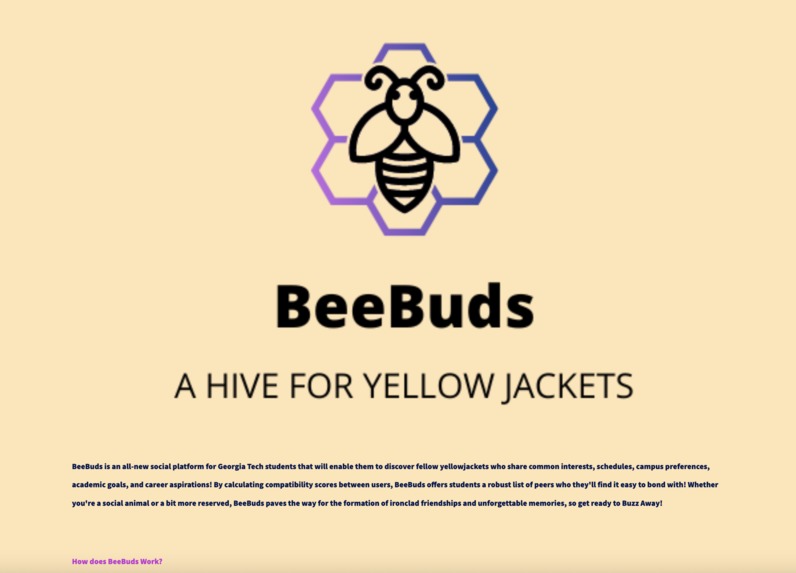
Home Page
-
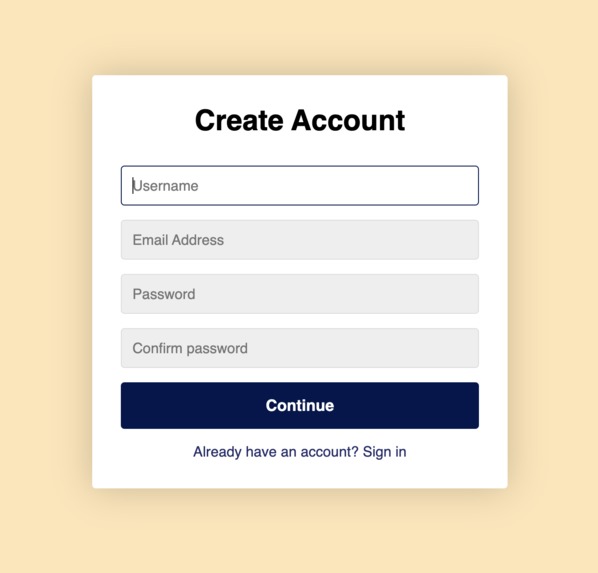
Create Account Page
-
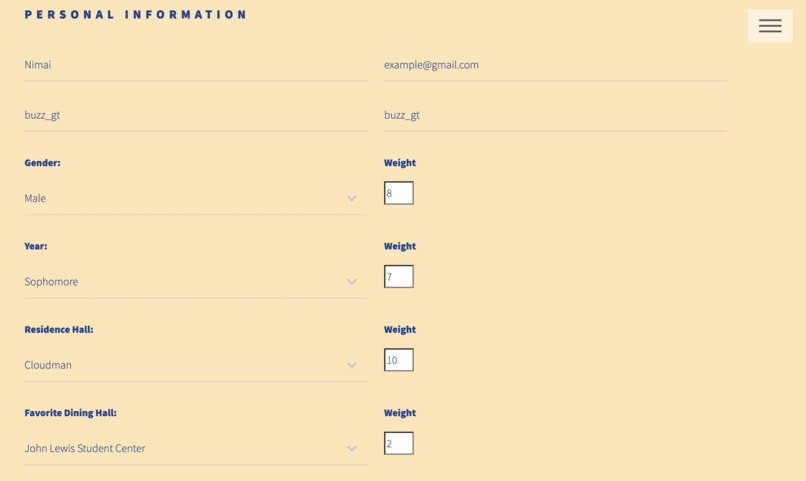
Profile Creation part 1
-
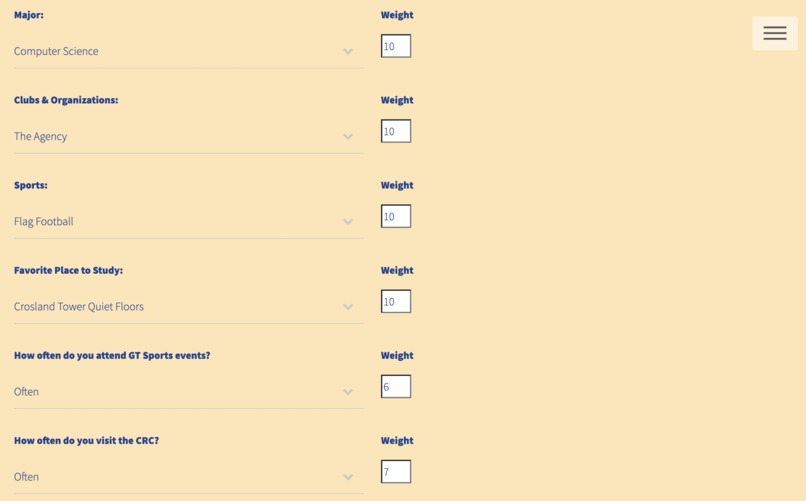
Profile Creation part 2
-
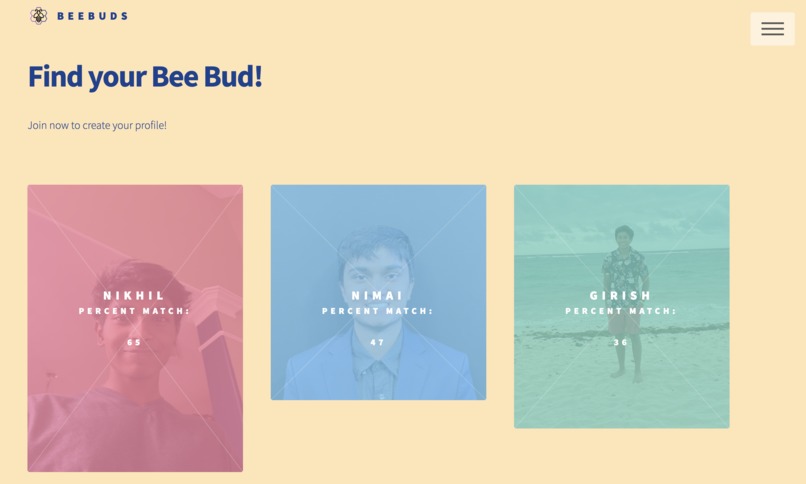
Dashboard Page with Matches
-
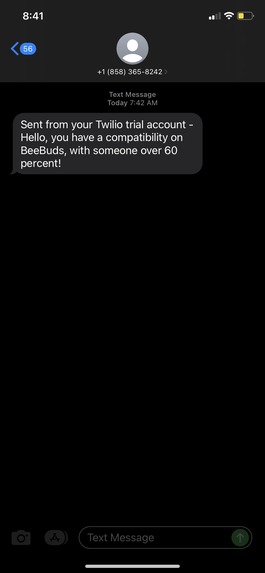
Twilio SMS Messaging Functionality


Inspiration
It is evident that in the status quo, certain individuals are faced with unfading feelings of loneliness, which causes a variety of physical and mental health issues. College students especially have been subject to greater signs of loneliness, especially after the pandemic when many students were forced to stay indoors for education. In a study by the Student Lifestyle Survey, it was found that over 53% of college students across the United States feel lonely, which has directly been linked to negative effects such as depression and anxiety. This is further supported by various Reddit posts by current Georgia Tech Students and concerned Parents on social media platforms like Facebook. Our hackathon project, BeeBuds is designed to directly confront the negative impacts of loneliness by promoting a more interconnected community at Georgia Tech. As students ourselves, we have had first-hand experience with individuals who are alone, whether it be due to their choice or simply due to introversion. In order to provide students with a friendly and accessible way to connect with fellow yellow jackets, BeeBuds matches students to other students to foster connection and collaboration amongst the Georgia Tech community.
What it does
BeeBuds is an all-new social platform for Georgia Tech students that will enable them to discover fellow yellowjackets who share common interests, schedules, campus preferences, academic goals, and career aspirations! Bee Buds, exclusively catered to the Georgia Tech student body, makes it easy for people to meet those who have similar lifestyles and interests and gives them a sense of reassurance that they will likely kick it off with their top matches. By calculating compatibility scores between users through user-inputted values, BeeBuds offers students a robust list of peers who they'll find it easy to bond with! Whether you're a social animal or a bit more reserved, BeeBuds paves the way for the formation of forever friendships and unforgettable memories, so get ready to Buzz Away! BeeBuds allows users to assign a significance value (from 0 to 10) for a variety of matching categories such as pop culture interests to their favorite dining halls. From there, we run a weighted average algorithm that places more precedence on the categories that a user deems as more important. Finally, a weighted percentage is calculated that acts as a compatibility score that will then be used to match yellowjackets! From there, students can view their matches based on their compatibility score on the dashboard portion of our page.
How we built it
In order to implement the Sign-In and Login interface for a user, we utilized JavaScript to read inputs from the user and implement additional security measures for creating a strong username and password when signing up. Our team also looked towards Twilio, which would provide an email verification when each user attempts to log in; However, we found a better use case for Twilio, which entailed sending an SMS text to a user if the compatibility score with another individual is >= 60%. Furthermore, all aspects of our web application were implemented with HTML and CSS, which helped organize our tabs while adding to the dynamic nature of our web application. To merge all of our group members' work, we utilized GitHub to commit all changes and centralize all files related to the project.
Challenges we ran into
In order to implement the Sign-In and Login interface for a user, we utilized JavaScript to read inputs from the user and implement additional security measures for creating a strong username and password when signing up. A technical challenge we ran into was ensuring that all users' login info was stored in an external database. In order to try and combat this issue, we first attempted to create a HashMap to store key-value pairs for each user. Since this HashMap was localized to each computer, it was not efficient enough to host users from various platforms. Our team also looked towards Twilio, which would provide an email verification when each user attempts to log in; However, we found a better use case for Twilio, which entailed sending an SMS text to a user if the compatibility score with another individual is >= 60%. Furthermore, all aspects of our web application were implemented with HTML and CSS, which helped organize our tabs while adding to the dynamic nature of our web application. To merge all of our group members' work, we utilized GitHub to commit all changes and centralize all files related to the project.
Accomplishments that we're proud of
- Building an interactive web app with complete user functionality
- Integrating Twilio SMS messaging system to alert users about potential matches
- Learning about file handling and utilizing GitHub commands
- Incorporating HTML, CSS, and JavaScript simultaneously to make our web app aesthetically appealing and interactive
- Empowering GT students to expand their social circle and ensure that no student will feel alone on the campus
What we learned
As most of the members of our team had little to no prior experience doing front-end and back-end web development, this hackathon was a transformative experience as all of our members were able to get a taste of each for designing web pages and creating novel algorithms to power our features. We were able to learn how to implement HTML, CSS, and Javascript languages when integrating web development. Furthermore, we learned more about APIs by using Twilio's SMS messaging service API. We learned about the delicate balance between design and functionality and how to connect front-end and backend platforms.
What's next for Bee Buds
Our team aspirations include creating a direct chat communication to connect BeeBuds with one another, hosting our website with AWS or Github Pages and deploying our project with the domain name beebuds.tech, and ultimately extending our project to other colleges so they can personalize the BeeBuds process for their campuses.


Log in or sign up for Devpost to join the conversation.