-

We are Trojan ResCues
-
-
-
-
-
Technologies


Inspiration
We were inspired by millions of people around the world coming together to help with the Australian wildfires, so we wanted to create something to tackle this problem and issues related to natural disasters.
What it does
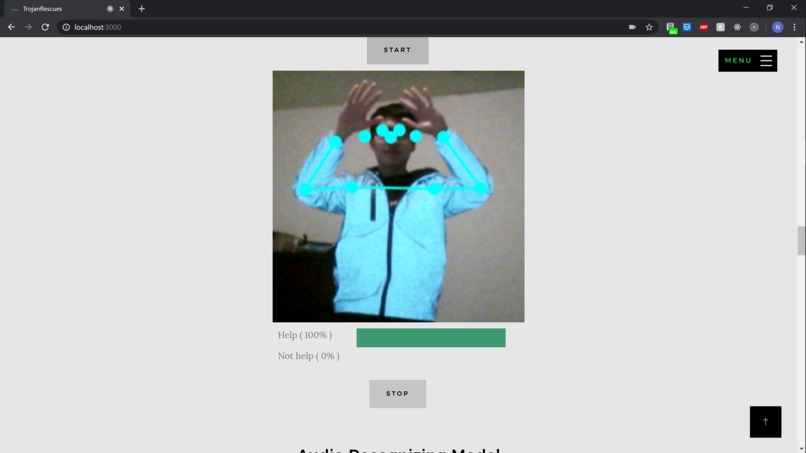
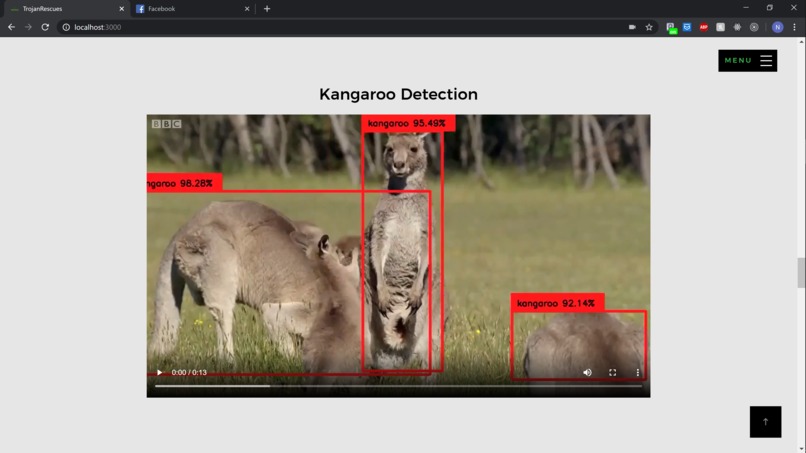
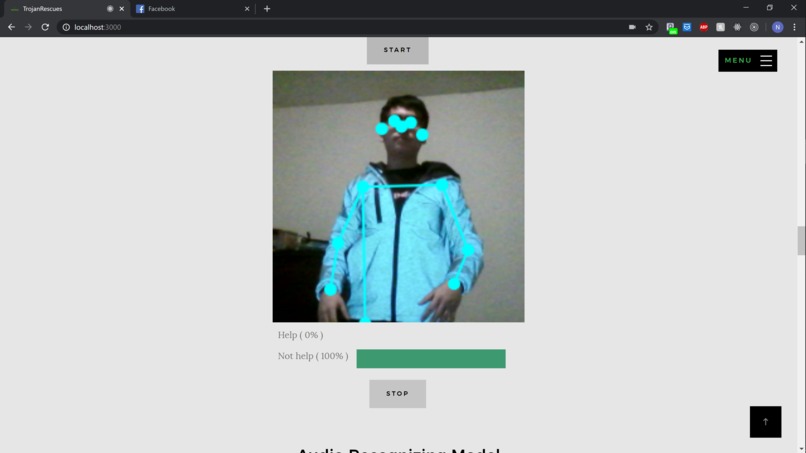
Our ML software will detect people in need of help by looking at their arms position, it will analyze audio tracks live and determine if someone needs aid, it will locate people (or animals) and drop care packages containing first aid kits, water, food as well as many more amenities.
How we built it
For the backend, we mainly used Python, TensorFlow, OpenCV, and other ML libraries. Whereas for the frontend, we put together a demonstration website by using HTML, CSS, JavaScript, and Node.js.
Challenges we ran into
The hardware component for the drone that we need to test our software in is expensive and it can cost up to $2000 for a viable product.
Accomplishments that we're proud of
Our team was very supportive of each other and help one another with different tasks. We were able to exploit each member's talent to work on different sides of this project through effective communication.
What we learned
We learned more about complex ML models and their implementation as well as new hardware code written in new languages.
What's next for Trojan ResCues
Trojan ResCues does not end today. We would love to exhibit our product globally to help to fight against other natural disasters around the world and provide solutions to firms.
Built With
- css
- drone
- html
- javascript
- machine-learning
- node.js
- opencv
- python
- tensorflow


Log in or sign up for Devpost to join the conversation.