-
-
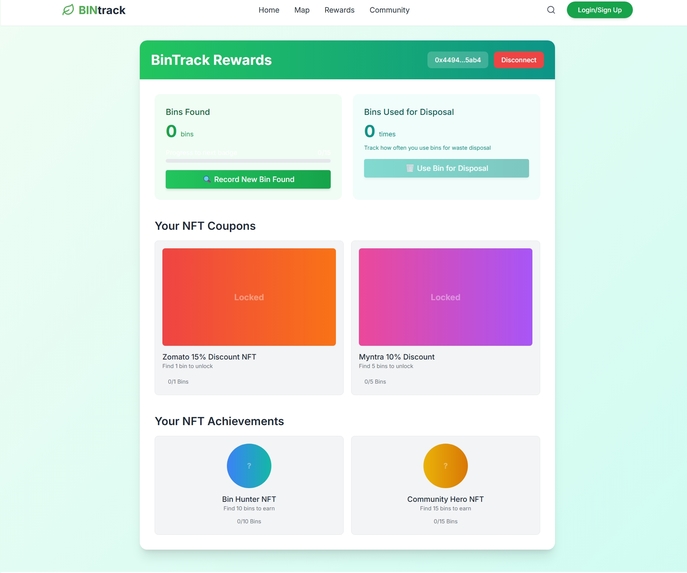
Reward Page
-
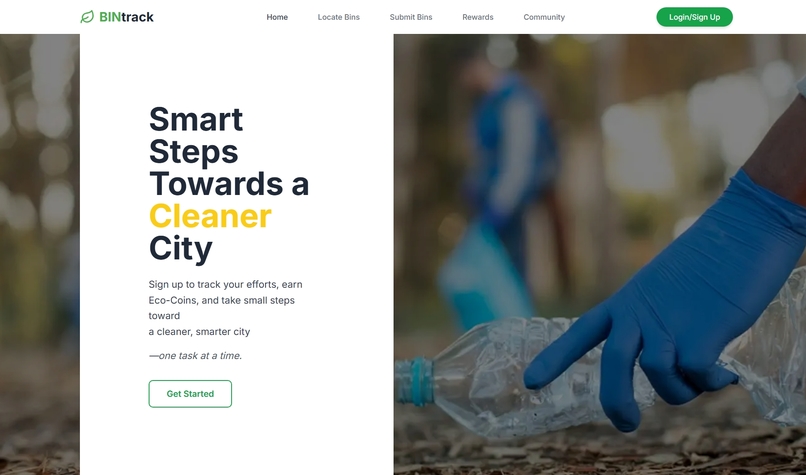
Landing Page
-
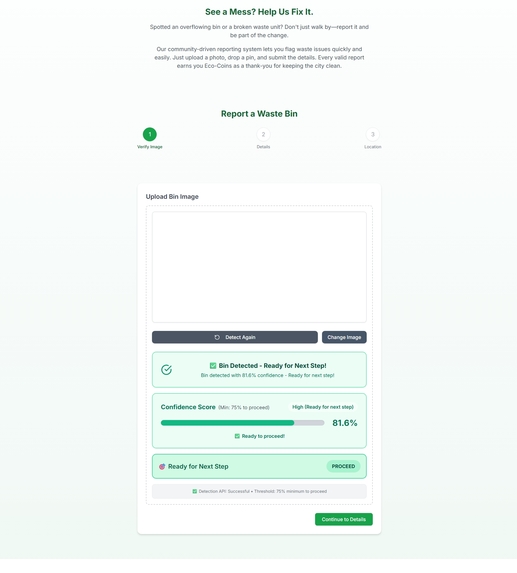
AI Dectection Model
-
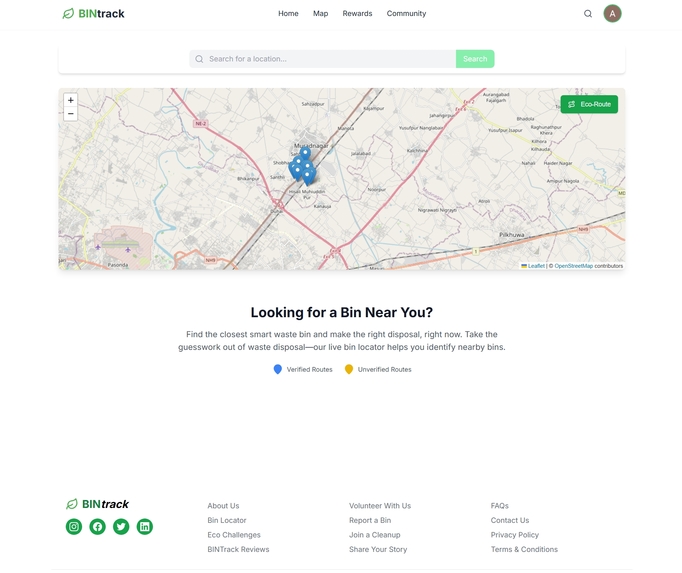
Locate a bin Page
-
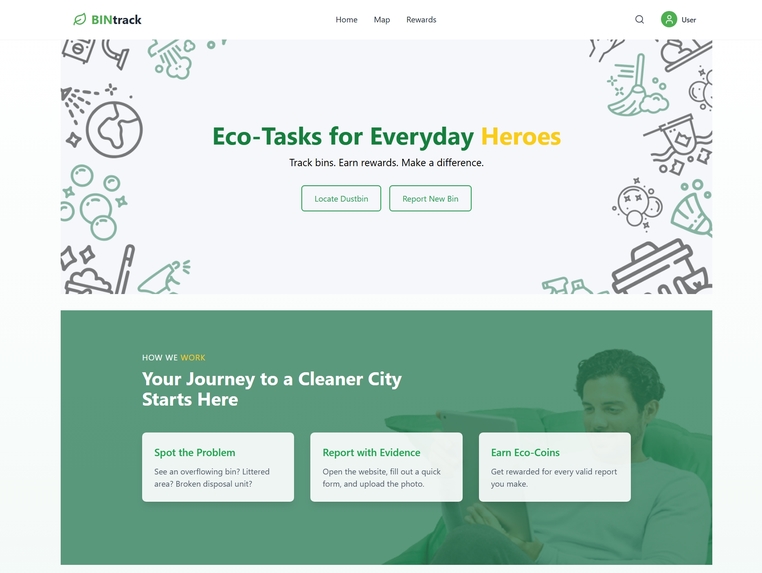
Home Page
-
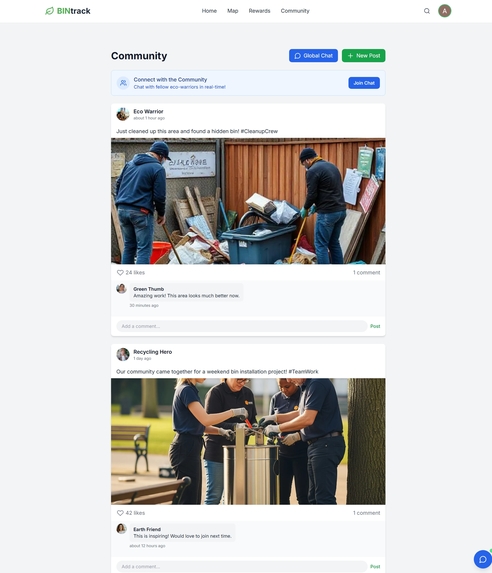
Community Page


🗑️ The Problem Bintrack Solves
We are building a Smart Waste Management System that makes waste disposal more responsible, accessible, and rewarding. Here’s what we’re creating:
- A web app where users can:
- Locate nearby dustbins
- Report new bin locations in their area
- Every bin reported by users will be verified through AI-based image analysis before being added to the map.
- Once verified, the user will receive virtual coins via blockchain as a reward.
- Users who dispose of garbage using mapped bins also earn rewards, encouraging sustainable behavior.
- We use AI to plan optimized waste collection routes, saving time, fuel, and operational costs.
🚧 Challenges We Ran Into
One of the biggest hurdles we faced was seamlessly integrating multiple technology domains—AI for bin verification, blockchain for rewards, IoT for real-time bin monitoring, and web/mobile interfaces—into a cohesive system.
Each component had its own complexities, and making them work together required extensive debugging and middleware development. For example:
- Syncing the AI model's output with blockchain transactions involved creating custom APIs to bridge Python-based ML services with our Node.js backend and Solidity smart contracts.
⚡ Blockchain Hurdles
Managing gas fees on the Sepolia testnet was a major pain point. While developing the NFT reward system, we encountered:
- Unpredictable spikes in transaction costs
- Slow and expensive testing
Mitigation strategies:
- Optimized smart contracts by batching user rewards
- Used off-chain signature verification for minor actions
- Settled only critical transactions on-chain
- Built a gas fee estimator to alert users during high network congestion
📶 Connectivity & API Reliability
Connectivity issues caused crashes, especially during real-time bin tracking.
Solutions included:
- Retry mechanisms with exponential backoff for failed requests
- Implemented WebSocket fallbacks when REST APIs timed out
- Added local caching to ensure app functionality even with spotty internet
🧪 Deployment Struggles
Deployment on Vercel was tricky due to:
- Serverless function timeouts during blockchain interactions
💡 Lessons Learned
Despite these challenges, we persevered through:
- Smart optimizations
- Better error handling
- Sheer determination
This experience taught us invaluable lessons in:
- Cross-domain system design
- Resource management
- Teamwork under pressure
Built With
- javascript
- mongodb
- next.js
- node.js
- react.js
- socket.io
- solidity
- typescript
- vercel


Log in or sign up for Devpost to join the conversation.