-
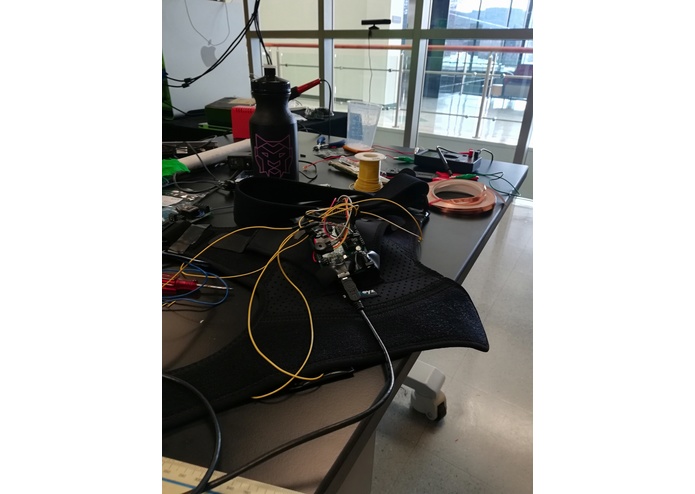
The brace
-
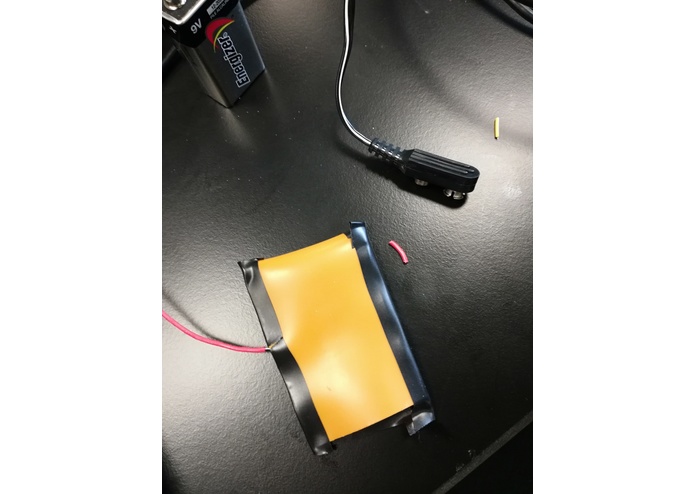
A sensor


Inspiration
After injuring my shoulder, I've had to wear a shoulder brace. While it has helped prevent further damage, the product could be improved, perhaps by collecting movement data (to be used to plan future workouts), or even restricting/warning the user about his/her movement.
What it does
The brace that we designed collects and logs pressure data from three points around the shoulder area. It logs this data in a .CSV file, and can display real time output while tethered. The Matlab script also calculates various important parameters from the CSV data.
How we built it
We created our own pressure sensors from velostat, rubber, copper tape and wires, and attached them to the brace. We then calibrated and measured the resistance of these sensors using an arduino microcontroller. We also attached an SD card component so that we could log the data.
Challenges we ran into
We were originally planning on using an arduino nano (to minimize the size of electronics on the brace), but the cheap Chinese knockoff required new drivers that were unavailable from trustworthy sources, so we ended up using an arduino uno. The creation and soldering of the sensors was also difficult as it required extreme precision.
Accomplishments that we're proud of
Making functional and accurate pressure sensors from scratch, for literal pennies per sensor.
What we learned
Velostat as a material is an absolute pain to work with, but if done correctly, it is very efficient and can be quite accurate.
What's next for BraceBioData
Adding wireless integration through Bluetooth. This would enable the user to visualize data in real time without a tether. If we had electroactive polymers, perhaps a brace that could vary it's stiffness over time, and under different stress patterns.

Log in or sign up for Devpost to join the conversation.