-
-
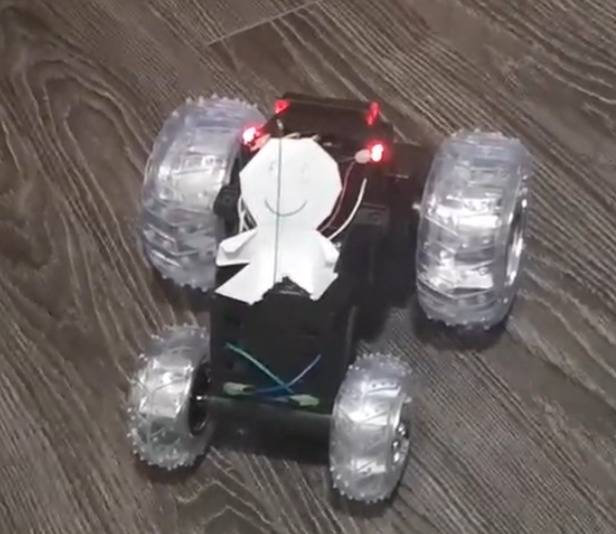
RC car
-
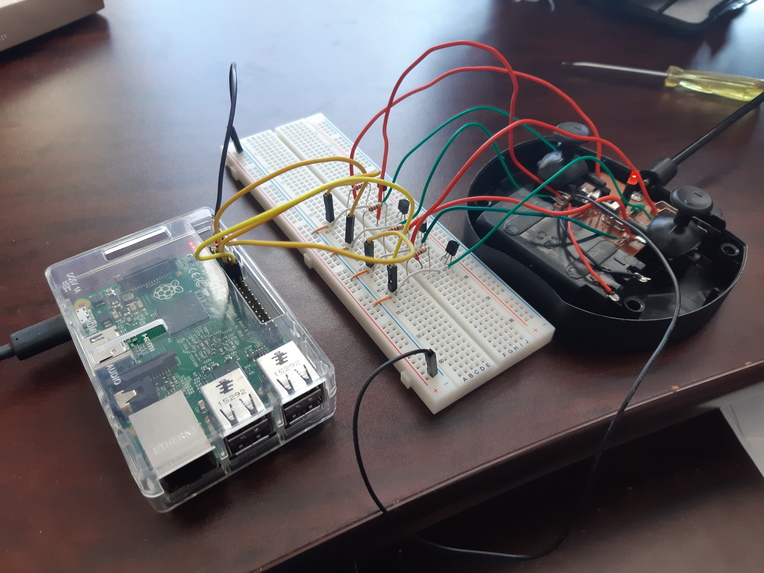
Raspberry-pi connected to the controller


Inspiration
More than 2 million people in the United States are affected by diseases such as ALS, brain or spinal cord injuries, cerebral palsy, muscular dystrophy, multiple sclerosis, and numerous other diseases that impair muscle control. Many of these people are confined to their wheelchairs, some may be lucky enough to be able to control their movement using a joystick. However, there are still many who cannot use a joystick, eye tracking systems, or head movement-based systems.
Therefore, a brain-controlled wheelchair can solve this issue and provide freedom of movement for individuals with physical disabilities.
What it does
BrainChair is a neurally controlled headpiece that can control the movement of a motorized wheelchair. There is no using the attached joystick, just simply think of the wheelchair movement and the wheelchair does the rest!
How we built it
The brain-controlled wheelchair allows the user to control a wheelchair solely using an OpenBCI headset. The headset is an Electroencephalography (EEG) device that allows us to read brain signal data that comes from neurons firing in our brain. When we think of specific movements we would like to do, those specific neurons in our brain will fire. We can collect this EEG data through the Brainflow API in Python, which easily allows us to stream, filter, preprocess the data, and then finally pass it into a classifier.
The control signal from the classifier is sent through WiFi to a Raspberry Pi which controls the movement of the wheelchair. In our case, since we didn’t have a motorized wheelchair on hand, we used an RC car as a replacement. We simply hacked together some transistors onto the remote which connects to the Raspberry Pi.
Challenges we ran into
- Obtaining clean data for training the neural net took some time. We needed to apply signal processing methods to obtain the data
- Finding the RC car was difficult since most stores didn’t have it and were closed. Since the RC car was cheap, its components had to be adapted in order to place hardware pieces.
- Working remotely made designing and working together challenging. Each group member worked on independent sections.
Accomplishments that we're proud of
The most rewarding aspect of the software is that all the components front the OpenBCI headset to the raspberry-pi were effectively communicating with each other
What we learned
One of the most important lessons we learned is effectively communicating technical information to each other regarding our respective disciplines (computer science, mechatronics engineering, mechanical engineering, and electrical engineering).
What's next for Brainchair
To improve BrainChair in future iterations we would like to:
Optimize the circuitry to use low power so that the battery lasts months instead of hours. We aim to make the OpenBCI headset not visible by camouflaging it under hair or clothing.
Built With
- arduino
- brainflow
- openbci
- python
- raspberry-pi


Log in or sign up for Devpost to join the conversation.