-
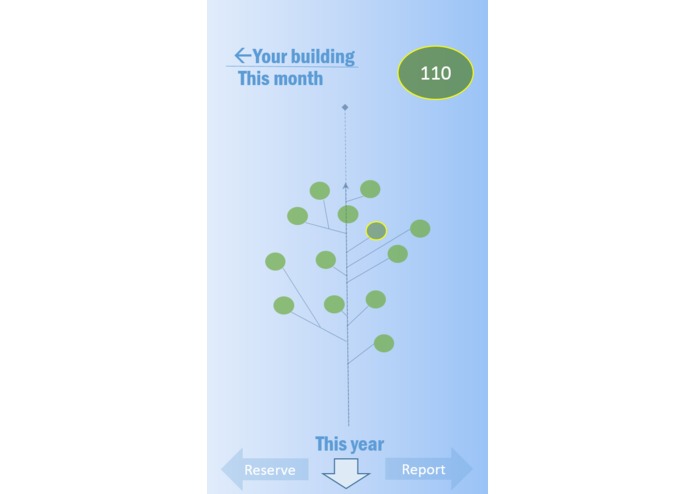
Good employee standings
-
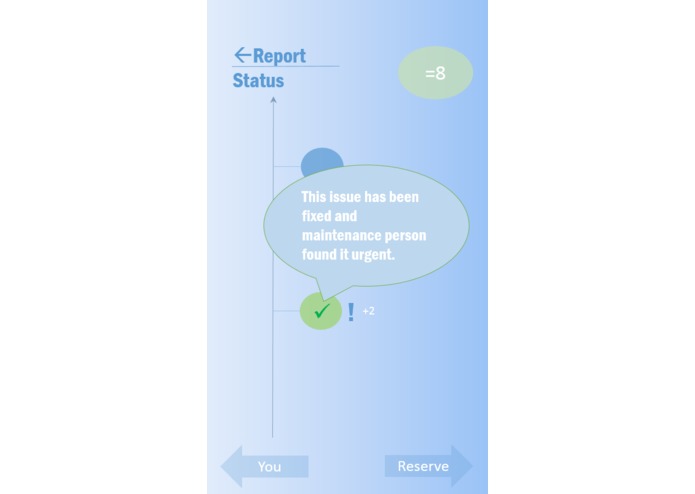
Report status and good employee reward
-
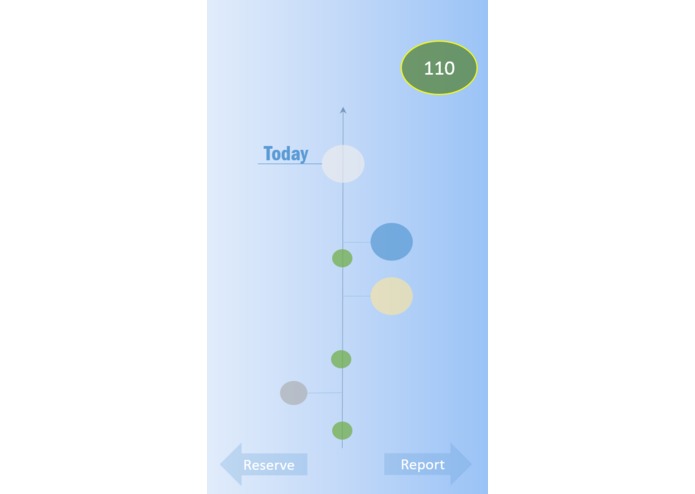
Personal timeline of reports, room reservations and use of transportation
-
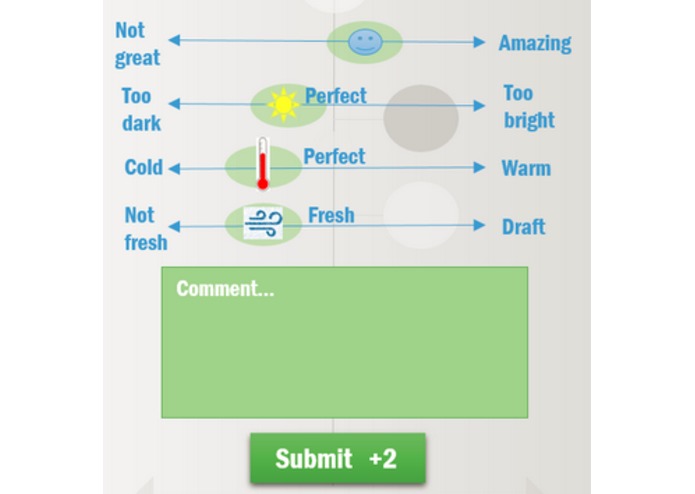
View of satisfaction to the building/room conditions


Inspiration
We were inspired by Tieto's large amount of sensors and a wide portait of concepts they had visioned. Our mixed background in lighting and power application and interior modelling gave us a wide spectrum of ideas to improve the experience inside a building in spite of who you are.
What it does
First, the working model would gather feedback from occupants about the overall satisfaction and perceived satisfaction of lighting, temperature and feeling of draft. The building would then adjust those features related to the space the feedback is given in, while also optimizing building energy consumption.
Second, the application would have reporting tool for easy and rewarding reporting of issues related to, for example, the maintenance. The user would simply write down the issue, estimate its urgency, take a picture of the issue and simply submit. The application would by default mark the location of the issue unless the user specifies a different location than where he submits the issue. Later on, the maintenance, cleaning personnel, etc. would navigate with the application to the issue.
Third, the occupants would gather Good employee pointswhile they gave their feedback, reported issues or came by public transport/bike/walking. Also other sensor data, such as used amount of paper would be weighted. Basically, if the person didn't come by a private car, he would earn a point. In the end of each month, the most environmentally conscienous and most active person would get the Good employee award. In simple terms, this is a gamification feature
Fourth, the application provides a simple few click reservation of a meeting room from our dynamic room management system. At the initial time when the reservation is done, the user would estimate the number of persons attending. During the final hour, the application would ask from the host (or each participant of the meeting if specified). From this refreshed data, the app would assign a room best suited for the new participant amount. Also, if knowing the participants and their location, an optimal location could be identified in terms of, for example, distance or estimated energy consumption. The room temperature and lighting level would also be dynamic and react to for example on the monitored/expected number of people in the room.
Overall, the application would improve energy efficiency and also increase the satisfaction of all users of the building.
How we built it
First, were thinking to just sharpening a concept of our app and present a mock-up. But with the increased team size and coding skills we thought of going further. We ended up an having a mock-up and a very limited online test bench with UI built as WebGL (developed in Unity). The build has a lot of buried knowledge (scripts) not yet utilized in the UI.
Challenges we ran into
Mostly project management related issues. What to do, when, and how. Though we had discussed before, the team composition and focus went through drastic changes just before the hackathon and also every day of the hack.
Accomplishments that we're proud of
All the things we learned by not giving up.
What we learned
Some of us learned to code in a new language and in a new environment. Mostly, we learned about the ins and outs the life at hackathons. Everything is possible.
What's next for BuildingEnchancer
We will keep improving the logic and UI/UX. Also the application should be interfaced to the sensors and actuators.


Log in or sign up for Devpost to join the conversation.