-
-
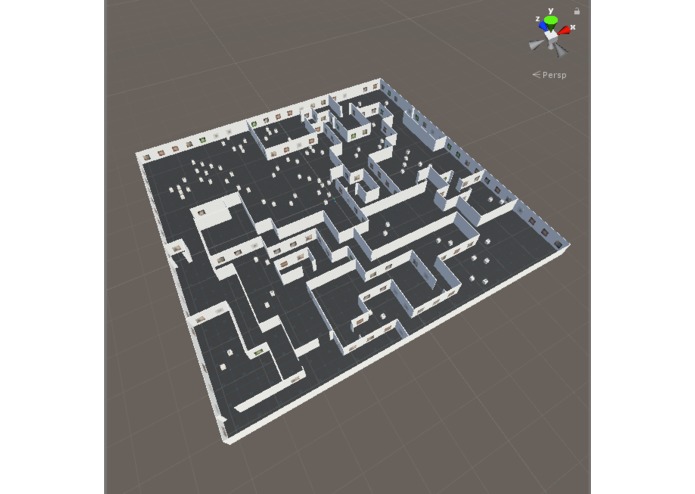
A generated museum layout
-
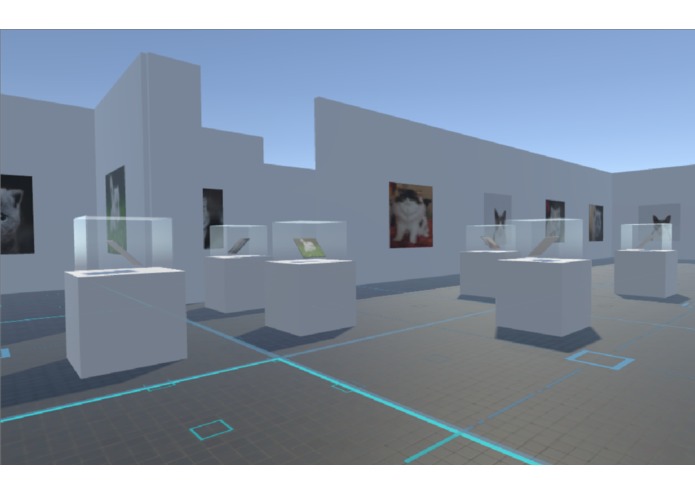
Closer look at the exhibits


Inspiration
We wanted to create a fun and interactive way to view web content. Our image searches say a lot about us, so it was only fitting to use that data to create a museum of all your searches.
What it does
Our current iteration of the project relies on prefetched data only. A procedurally generated museum is created and populated with random "artworks" from the fetched images. The images are displayed as paintings on walls or small artifacts in display cases scattered across the museum.
How we built it
We used Unity as our game engine of choice to develop for the HTC-Vive. We wrote C# scripts to randomly generate the layout of our museum and the placement of artworks.
Challenges we ran into
Our biggest challenge had to be just getting familiar with the SteamVR API for the Vive. The lack of documentation and tutorials online definitely made development a challenge. Figuring out a good algorithm for generating the museum was difficult too, and we eventually settled on a modified algorithm for generating mazes.
Accomplishments that we're proud of
We're definitely proud of how the procedural generation turned out. The museum feels like it has more order and space than a maze, but definitely produced some unique rooms that are fitting of an art exhibit.
What we learned
Learning new technologies is hard, but it's definitely worth pushing through. We got a lot more familiar with scripting in Unity and the challenges of navigating virtually.
What's next for Cat Museum
Actually fetching data during runtime is a definitely the next step. We were unfortunately unable to develop a means for fetching search results from Google Images, so having that completed would finally round out our application.


Log in or sign up for Devpost to join the conversation.