-
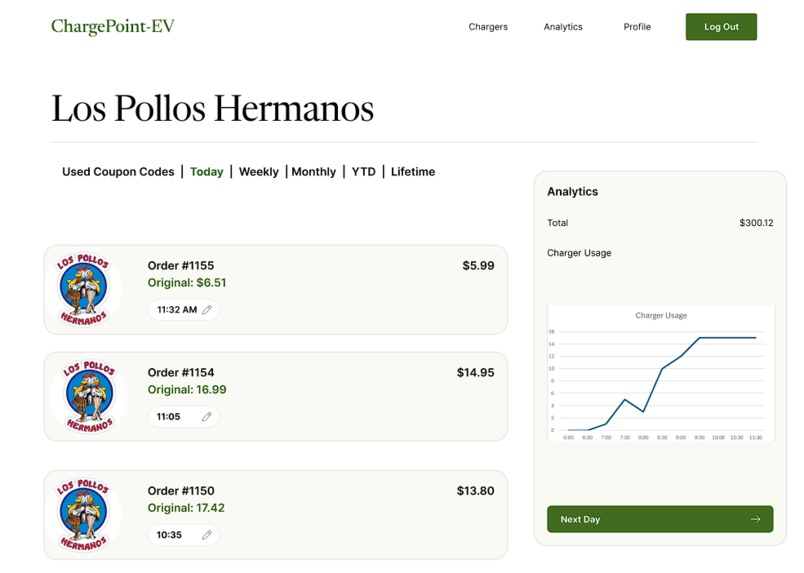
Business Side Website UI
-
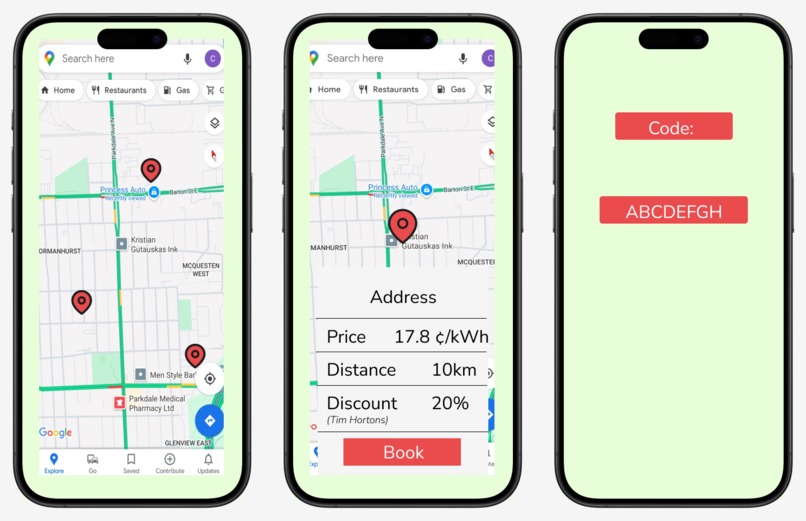
Consumer Side App UI


Inspiration
The electric vehicle (EV) market has been growing rapidly and is expected to continue expanding in the years ahead. In Canada, the government is committed to phasing out sales of gas-powered vehicles by 2035, aiming for all new vehicles sold to be electric. This surge in EV adoption, combined with ongoing technological advancements, highlights the urgent need for smarter EV charging solutions.
When EV drivers need to recharge, they typically search for the nearest charging station, with their primary goal being to get their vehicle powered up. However, the time spent waiting for the car to charge often feels unproductive. With no structured way to utilize this downtime, we saw an opportunity to make this time more meaningful and beneficial—not just for drivers, but for businesses as well.
What it does
Our solution focuses on city centers, where rising EV usage is already starting to strain charging infrastructure. We provide tools for businesses to identify areas with high EV traffic but limited charging stations by analyzing traffic and location data. This allows businesses to sponsor the installation of charging stations on their properties.
In return, these businesses can advertise directly to EV drivers using our platform, offering perks like discounts or exclusive benefits for customers who shop at their store while charging their vehicle. For example, EV owners could enjoy priority charging over non-customers. It’s a win-win: businesses attract more foot traffic, and drivers make the most of their waiting time.
How we built it
We used Figma to create a prototype of the platform and brainstormed ideas for potential implementation in Python. 😱 While we didn’t build the full solution in this phase, Figma allowed us to clearly visualize our vision for the app and its functionalities.
Challenges we ran into
This project turned out to be much larger in scope than we initially expected. Gathering and processing vast amounts of traffic and location data, integrating with businesses, and enabling features like coupon distribution and usage tracking were major challenges. Since verifying that a user actually shopped at a location adds an extra layer of complexity, we decided it wasn’t feasible to build all these features within the given time. Instead, we focused on creating a solid concept and visual prototype.
Accomplishments that we're proud of
We’re incredibly proud of the concept itself. We believe our idea has real potential to address a growing need in the EV market and offers a solution that benefits both drivers and businesses. Taking the first step to envision a practical and impactful app is something we’re excited about.
What we learned
This experience taught us how to critically analyze a market, identify inefficiencies, and brainstorm innovative solutions to address these gaps. We also gained valuable insights into how EV charging infrastructure could evolve to meet future demands.
What's next for ChargePoint-EV
Looking ahead, we want to take this concept further and turn it into a fully functioning product. Our next steps include:
- Building the app: Developing mobile applications for iOS (Swift) and Android (Kotlin) that are both interactive and user-friendly.
- Leveraging data: Using tools like Google Maps APIs to gather and analyze traffic and location data to refine our algorithms for station placement and pricing.
- Enhancing features: Adding robust user authentication and identity verification to secure the platform.
- Collaborating with businesses: Strengthening partnerships with companies to offer tailored perks and encourage EV users to engage with local stores.
We believe ChargePoint-EV could transform the EV charging experience and transform it into a more accessible, efficient, and user-friendly experience.
Built With
- figma
- google-cloud
- python


Log in or sign up for Devpost to join the conversation.