-
-
Cogno Bento Light
-
Cogno Bento Dark
-

Dark icon
-
Light icon
-
Home dark
-
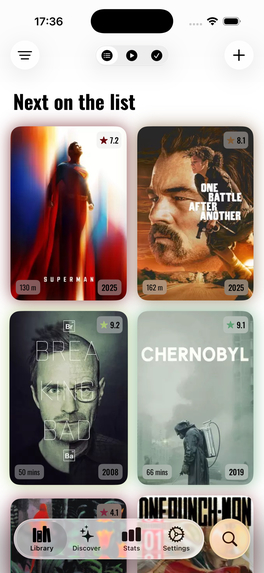
Home light


Inspiration
I’ve always wanted to build a media tracker. I actually made some mockups more than 10 years ago, and now—with the help of AI models—it finally felt like the right time to bring that idea to life. I even dug up my old Sketch file and used it as inspiration. Despite its age, I wanted to preserve the same core values: minimalism, ease of use, and a design that highlights the content in a beautiful way.
I know there are countless movie and book trackers out there, but I wanted Cogno to feel different. Beyond paying close attention to design details, I worked on introducing features I haven’t seen in similar apps before—which I’ll dive into in the next section.
What it does
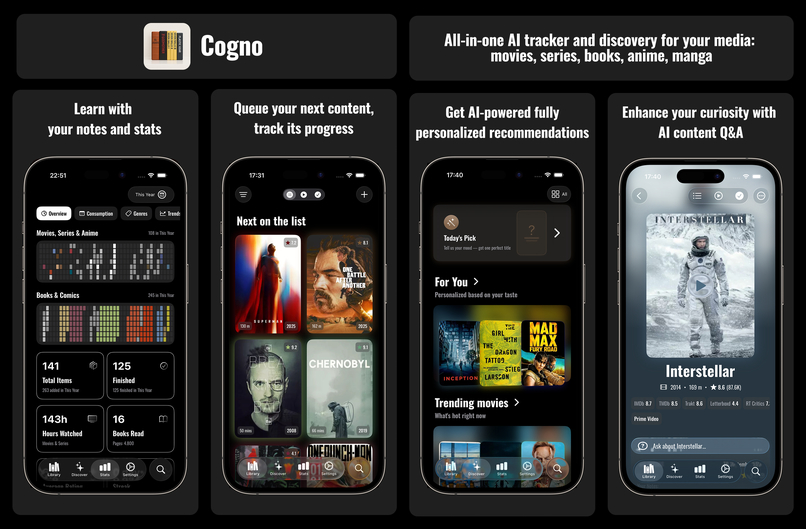
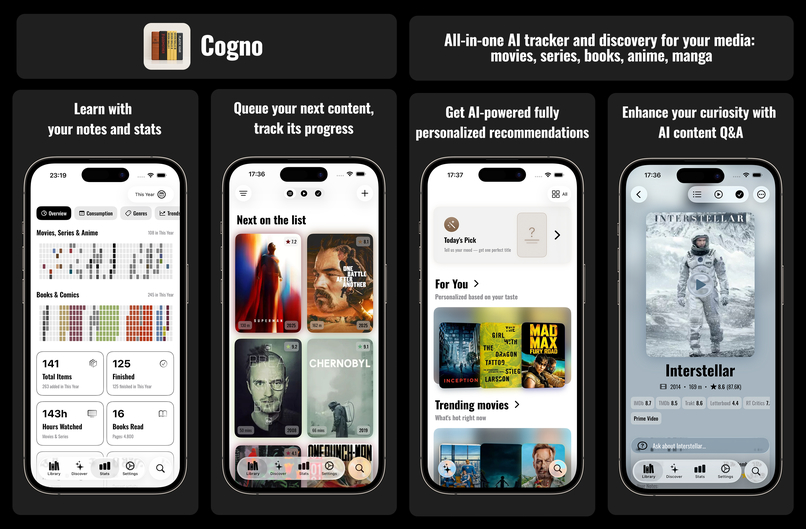
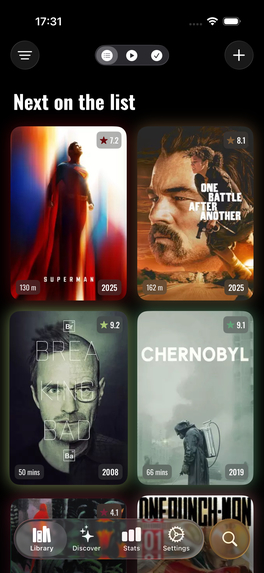
Cogno is an all-in-one AI-powered tracker and discovery platform for your media: movies, series, books, anime, and manga. But I don’t want it to be “just another tracker.” Cogno aims to chart your personal learning path through all the media you consume, and adapt to recommend what’s best for you. For now, it includes: • Tracking: organize your media into wishlist, ongoing, and finished lists, while adding personal notes and ratings optionally using your voice and AI summaries. • AI content Q&A: ask questions about the content and get AI-powered answers. • For You & Today’s Pick: personalized recommendations based on your history, preferences, mood, and more. • Discovery: explore trending and popular content. • Stats: visualize your habits and see what you’re learning from your media journey.
How we built it
The last three weeks have been intense. I used AI tools (mainly Claude Code and Codex) to accelerate development, while still relying on manual coding for the design and fine-tuning. It’s been long days and late nights, but even if the competition is tough, the effort has already paid off—it feels like the beginning of something much bigger.
Challenges we ran into
The biggest challenge: time and resources. I’m a solo maker, so building everything alone in such a short window is exhausting. On the technical side, I had to research and test several APIs to fetch content, and choosing the right ones wasn’t easy.
For AI features, relying on Apple’s Foundation Model proved limiting—it wasn’t accurate enough. I spent a lot of time refining prompts to improve recommendations, and while being better, I have to add an external API model to deliver better results (also compatible with non-Apple intelligence models).
Accomplishments that we're proud of
Most importantly: the first version of Cogno is live. I know there are rough edges and plenty of room for visual improvements, but I’m proud of what I managed to achieve in such limited time. This is a project I’ve dreamed about for years, so seeing it in the App Store is incredibly rewarding.
What we learned
A lot! A few key takeaways: • If possible, build with a partner. It’s not just about sharing workload—it’s about combining minds to make the product stronger. • Work hard, but rest harder. If you don’t give your body and mind proper breaks, they’ll find a way to force them on you.
What's next for Cogno
Cogno comes from "cognoscere" in Latin, which means "to learn", "to get to know". My vision is for Cogno to become a knowledge hub—a place where you can track not just what you watch or read, but everything you consume: video games, music, podcasts, and more. More importantly, I want Cogno to help you learn from it all, turning entertainment into a lasting habit of growth.
That’s still a long road ahead, but first, let’s make this version truly shine. 😀
Built With
- animelist
- appintents
- apple-icloud
- apple-push-notifications
- appleintelligence
- charts
- firebase
- foundationalmodel
- ios
- mdblist
- mixpanel
- openlibrary
- shortcuts
- swift
- swiftui
- trakttv
- watchos
- widgets


Log in or sign up for Devpost to join the conversation.