-
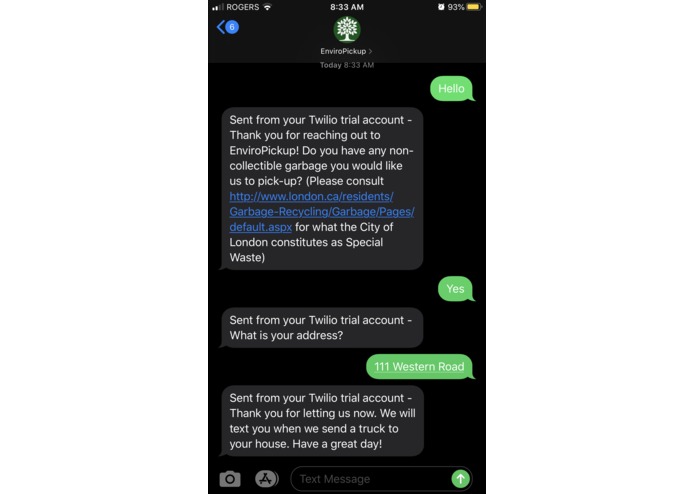
An example conversation using Twilio API of someone who is interested in the service.
-
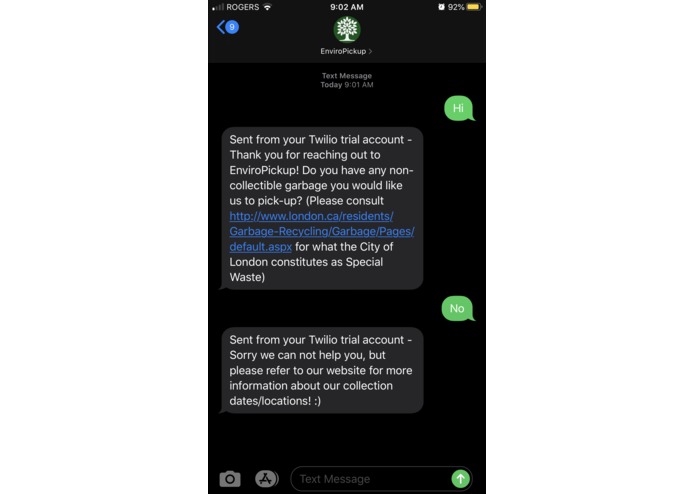
An example conversation using Twilio API of someone who is NOT interested in the service.
-
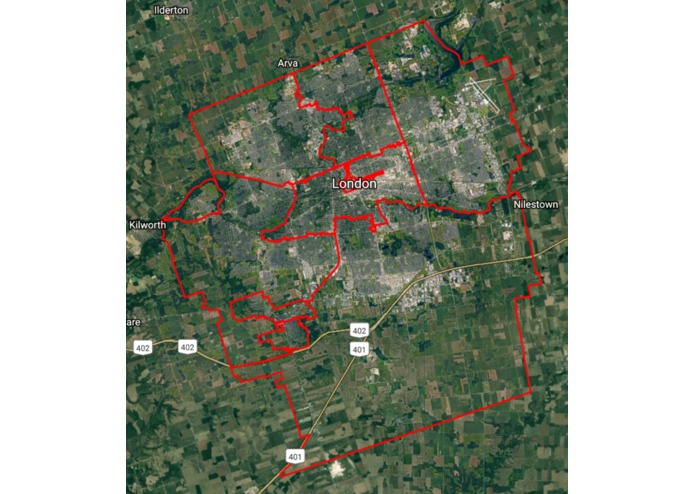
Route optimization is used for pickup route determination
-
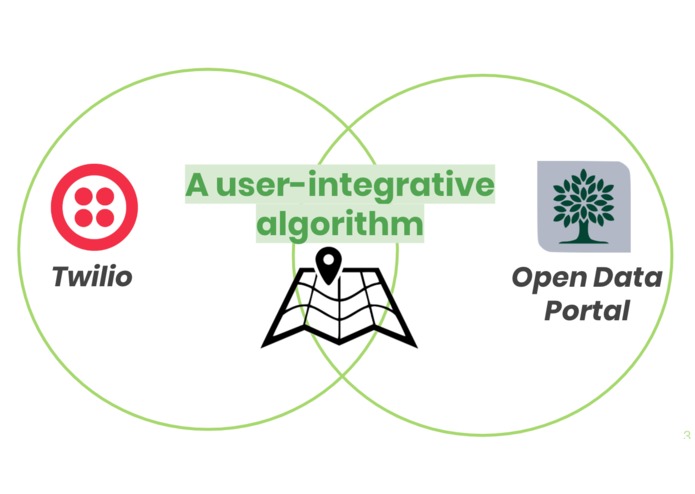
We used both Twilio and the Open Data Portal


Inspiration
Waste management is an often overlooked and underappreciated yet vital part of a city’s operations. There is relatively little innovation in the waste management industry, so we aim to change that by suggesting ways to improve efficiency and cost-effectiveness of existing programs.
What it does
Our goal is to make disposal of non-standard waste (e.g. oversize trash such as old couches or refrigerators) more efficient. We integrated London’s open source data into our maps to categorize sections of the city into zones. This categorization will optimize waste collected per distance travelled by trash collection agencies, increasing fuel efficiency and reducing operating costs. We are using Twilio to facilitate communication between our clients’ mobile devices and trash collection agencies to make it convenient for people to request waste pickup as needed. Clients can contact our service and the automatic response system will determine what kind of waste is being collected and notify residents of the time of the next scheduled pickup. When the number of residents in each zone that need waste pickup reaches a threshold level, the city can send collectors to retrieve the waste.
How I built it
We used the Twilio API to program an infrastructure that allows clients to use SMS messaging to contact a waste collection service. The system automatically keeps track of the number of residents in each zone that need non-standard waste pickup. These zones were taken from the City of London Open Data website. When the number of waste pickup requests reaches a threshold level, the waste collectors can go pick up several neighborhoods’ worth of waste.
Challenges I ran into
We ran into challenges integrating a counter into our program to keep track of the number of residents that need non-standard waste pickup. Meeting a specified threshold of residents should lead to the automatic text message sent to the residents in the zone to notify them that a truck will be sent out to their neighborhood on a specified date. Integrating the Twilio with the map algorithm was hard.
Accomplishments that I'm proud of
Learning to use all the tools was very rewarding when it came together. It was also really rewarding to work as a team and troubleshooting all the code was a good challenge.
What I learned
We learned how to use Python to program Twilio for SMS messaging, how to use the Open Portal Data of London, GeoSpatial libraries, and algorithms to find the shortest most efficient path.
What's next for EnviroPickup
This could potentially expand to include garbage route optimization to determine the most fuel efficient path for pickup. We could also integrate a chatbot that can respond to all different sorts of inquiries so that the program is not limited to yes/no questions and preprogrammed waste categories.


Log in or sign up for Devpost to join the conversation.