-
-
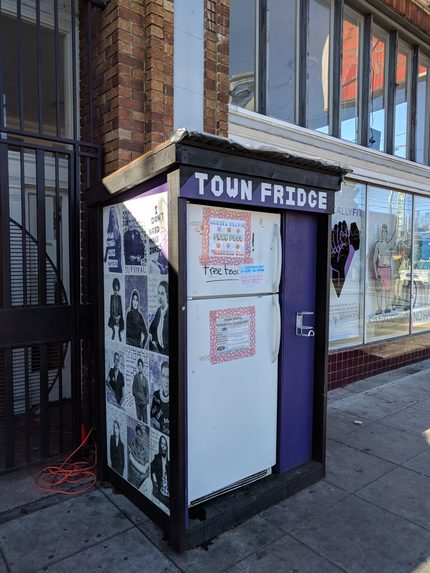
Freedges1
-
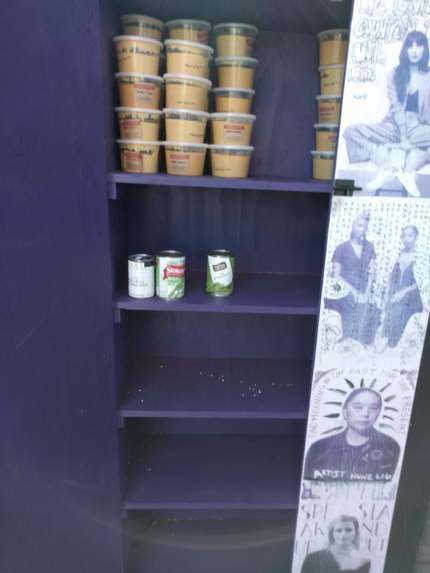
Too much food of certain types.
-
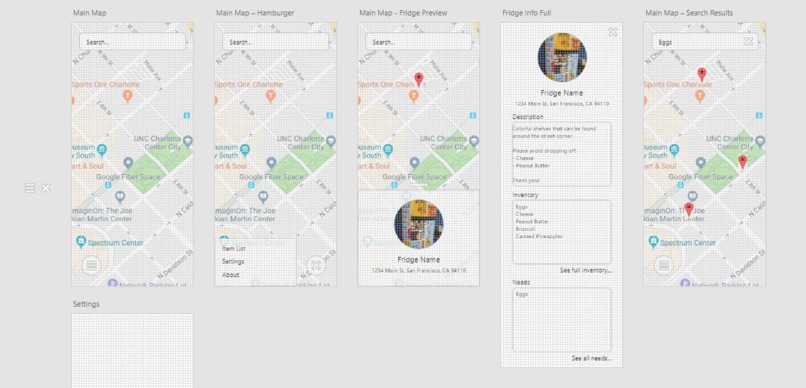
Wireframes
-
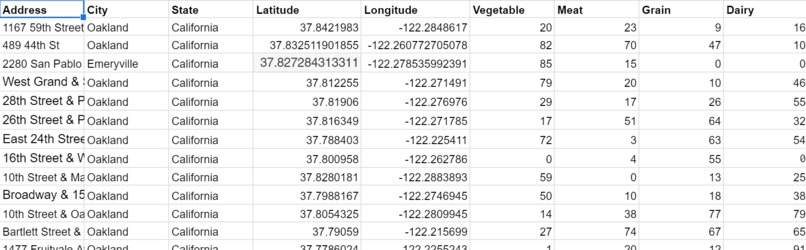
JSON geospatial and inventory data set
-
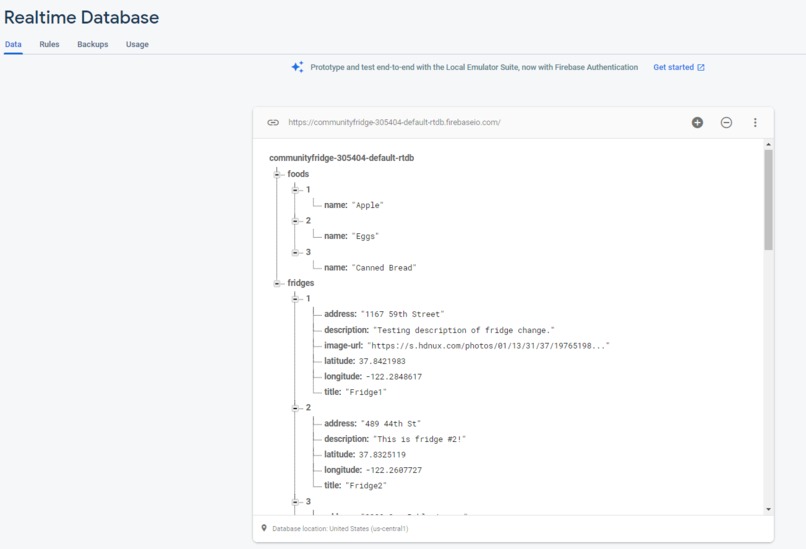
Realtime database
-
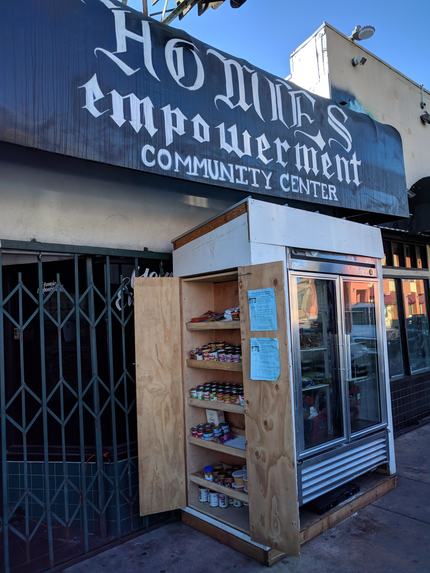
Freedges2
-
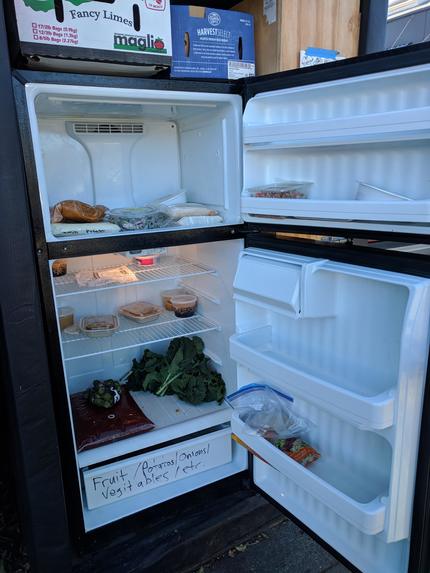
Perishables


Inspiration
Donating food should be easy and convenient, but it was difficult to locate and fill up Community Food Fridges with culturally appropriate foods. For MLK Day of Service, several of my friends and I collected food from our neighbors for the Community Food Fridges or Freedges in Oakland. Because Freedges are locally organized and developed as an immediate response to the increasing food insecurity following the pandemic, the information about it was passed on through word of mouth. Also, it was difficult to know what types of foods were needed at the Freedges since there was no inventory. We created FoodMap, a mobile app that identifies the nearest Community Food Fridges and informs potential food donors of 0 or least quantity of specific food items that they hope to donate. Using the app, donors can quantify and itemize the type of food they wish to donate. The app tracks the food inventory and informs users of the nearest Freedges that have specific items that suit their dietary needs. In doing so, we hope to reduce wasting of food and the possibility of accumulating less popular food items from one neighborhood Freedges and identify and locate the nearest Freedges that need these items the most.
More about Food Insecurity & Community Fridges
Food insecurity impacts college students, the unsheltered homeless, and families that earn below the poverty line. Further, the pandemic worsens food insecurity in major cities. As a result, we have seen growing efforts among grassroots organizers and neighborhoods voluntarily set up and fill up Community Food Fridges or Freedges. Freedges in Oakland were on extension cords that depended on the electricity from residents or local grassroots organizations; Donors and donees upkept the fridges and shelves so that they did not block the sidewalk for pedestrian’s safety. Freedges are strategically placed near homeless encampments and in neighborhoods that food pantries do not reach. In Los Angeles, California the LA Community Fridges had a picture of the refrigerator, the address location, and the types of foods that were needed. However, many major cities lack the information about the Freedges. Limited information was provided by local organizations in San Diego @SDCommunityFridge, Oakland @TownFridge, and Albany, NY - Free Food Fridge.
What it does
FoodMap makes it easier and convenient to donate food to Community Food Fridges. It educates potential donors and donees about the inventory of the Freedges that reflects the needs of the neighborhood served; it also conveniently identifies the nearest active Freedges. It takes inventory of food items in the Freedges based on voluntary information from donors and donees. We envision that someday, the information we learn from the Freedges can help us better understand the culturally relevant foods that reflect in the neighborhoods.
How we built it
We gathered information from local organizations to research the preexisting Freedges location. We converted the location into geospatial data on Google Sheets. To add the database onto the server, we converted the Sheets to JSON to add onto the Firebase server.
We decided to use Google Maps API with React Native for frontend layouts. We implemented map markers through a secure backend Firebase server for real-time updates. We pulled from the React Native Maps GitHub to add features and component APIs to map-based Android apps. We used an Android emulator to test and demonstrate our map functionality.
We kept track of Git for the backend processes. Adobe Xd was used to design the wireframes. Trello was used as a project timeline tracker.
Challenges we ran into
Because each team member came from different backgrounds, it was challenging to initially communicate across disciplines. However, we found that the Team Building event helped us break the ice. Quickly, we became conducive to creating and managing the tasks based on our specialized skills.
We initially used Bing Maps, but we didn't find enough documentation to implement on React Native. Instead, we used the Google Maps API. Because Java and Javascript programming was not our strength, we encountered many roadblocks. However, we reached out to many mentors to guide us through.
We attempted to add frontend features by styling webpage for popups that survey the user for information; implement more wireframes.
Because of the shifting Freedges available, it was challenging to determine the reliable agencies to update the information on the real-time database. Nonetheless, we hope to create an app that would be easy and intuitive even for those with limited technological literacy.
Accomplishments that we're proud of
Overall, participating in the Hackathon was our greatest achievement as a team. We learned new tools and some of us wrote the longest contribution to GitHub. Some of our team members discovered new tools for collaboration, visualization, and full-stack development, namely Discord, Trello, Adobe Xd, Google API, etc. Last but not least, we are proud that the FoodMap was operational with the desired features that we hoped to achieve through the weekend. We benefited from effective teamwork as a result of each team member’s leadership. We are grateful for having the opportunity and resources to ideate an innovation to address the food insecurity that impacts our immediate communities.
What we learned
Working front end with React Native and mobile app development was challenging, but we learned a lot. Using firebase was also new to most of us and we learned a lot about using a secure relational database structure that pulls real-time data from the database through the backend.
What's next for FoodMap
We plan to add more features such as registering nonprofits and community organizer volunteers to add their Freedges as a marker on the map. We also hope that they can easily manage the database and inventory through the app. We also plan to flesh out the app's design aspects and put it on the Google Play Store.
Additional features to the platform.
We would like to fortify the app’s map to launch the navigation apps from the mobile device following the identification of the Freedges location. We would like to extend the platform to automate food detection using API. For example, expanding the accessibility feature using Google Vision API Label Detection to detect food items or food labels into text. We would like to add registered users and add reputations so that they can add new, update, and remove obsolete Freedges locations.
Partnership.
We envisioned introducing FoodMap to ease and automate the inventory for the Food Pantries across the California University campuses. Leveraging our network with the University of California and California State University, where campuses champion and host Food Pantries on their campuses to address Food Insecurity facing the students and families in their immediate communities, we hope that FoodMap can offer convenience for Food Pantries coordinators and those who benefit from them.
In addition to expanding the food list on our database, we would like to partner with local organizations to coordinate food donations that are culturally appropriate for the neighborhoods. We hope that FoodMap can reach the food donees who live in the most vulnerable communities through our partners.
Thus, we can introduce the platform to local students and families from the immediate regions. Partnerships with local organizations to obtain updated locations.
- San Diego: https://linktr.ee/sdcommunityfridge
- Oakland: https://twitter.com/townfridge
- New York: https://freefoodfridgealbany.com/find-a-fridge
- Los Angeles: LACommunityFridges
- We also welcome partnerships with Whole Foods Market, Feeding America, and the Food Banks managed by the counties may have the capacity to donate on a large scale.
Other applications.
We imagined that similar automation can be used to improve automated warehouse and retails inventory management systems. The information from FoodMap can be used to help us understand what food donations are culturally appropriate for the neighborhoods.


Log in or sign up for Devpost to join the conversation.