-
-
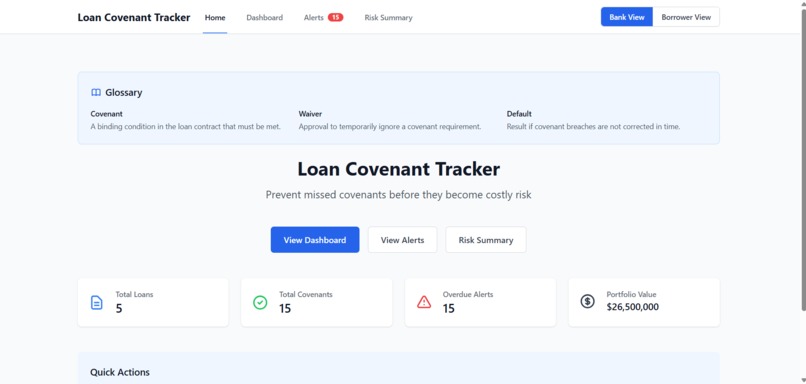
Home Page-Landing page showing summary of loans, glossary, and high-level metrics for the bank.
-
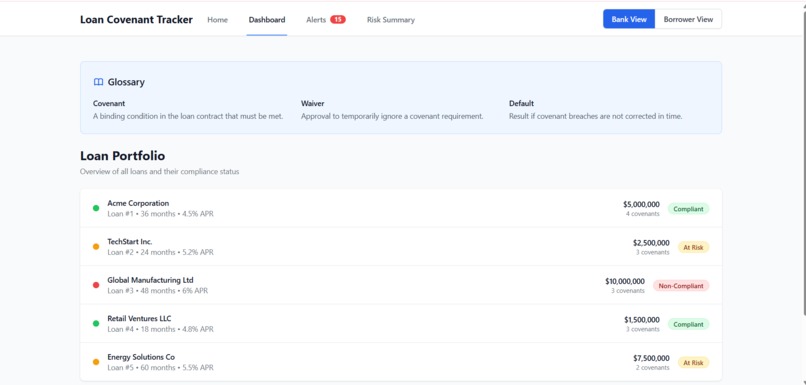
Dashboard (Loan Portfolio)-Bank dashboard displaying all loans with compliance status (Compliant, At Risk, Non-Compliant).
-
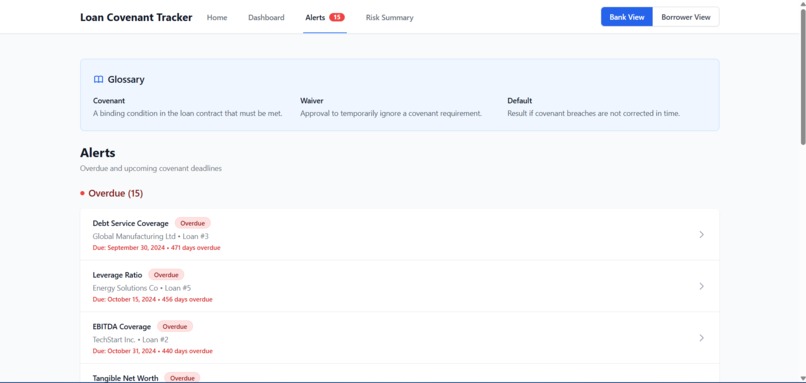
Alerts Page-Overdue covenant alerts with days overdue, helping banks prioritize high-risk items.
-
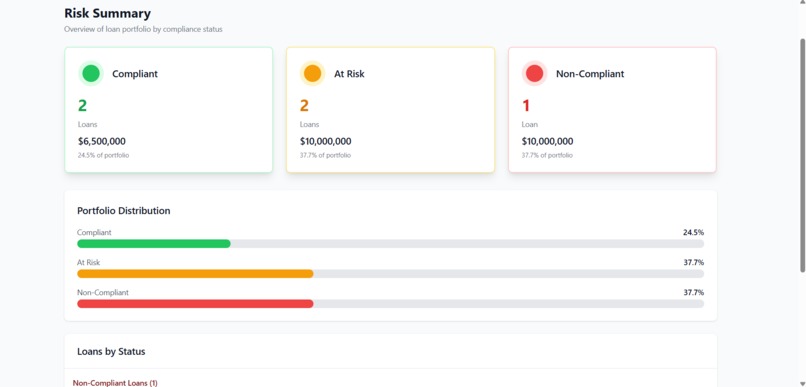
Risk Summary-Portfolio risk overview with distribution of compliant, at-risk, and non-compliant loans.
-
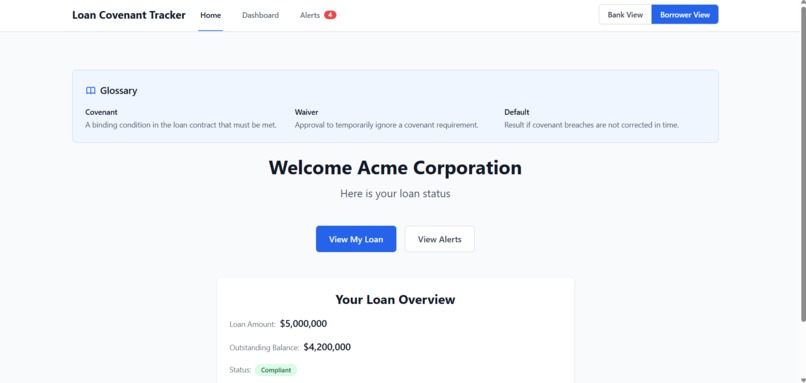
Borrower Home-Borrower view showing personalized loan status and next required actions.
-
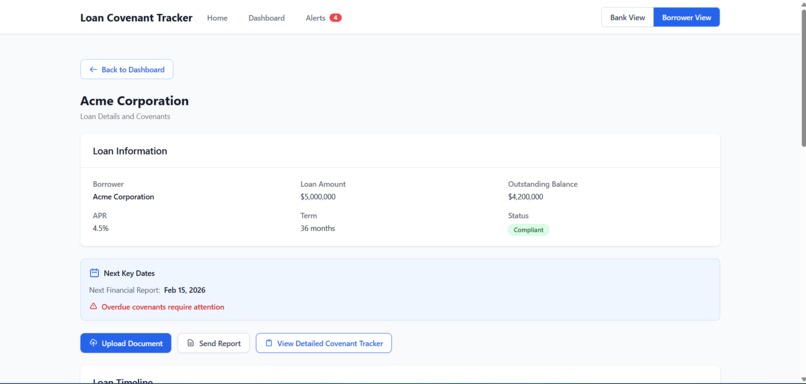
Loan Detail Page-Detailed breakdown of loan amount, term, outstanding balance, and required documents.
-
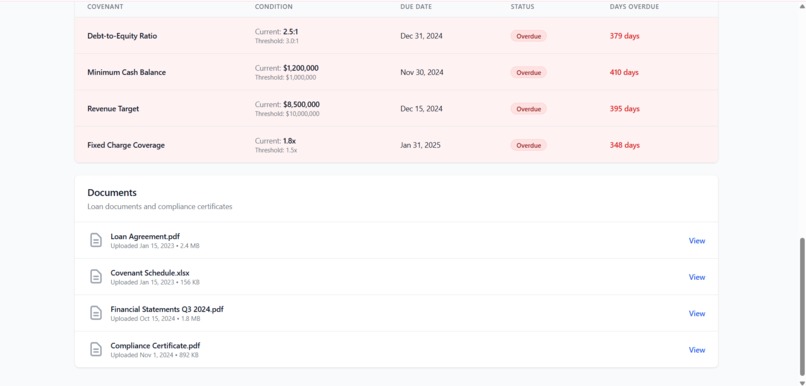
Document Upload / Actions-Borrower tools to upload financials, send reports, and stay compliant.
-
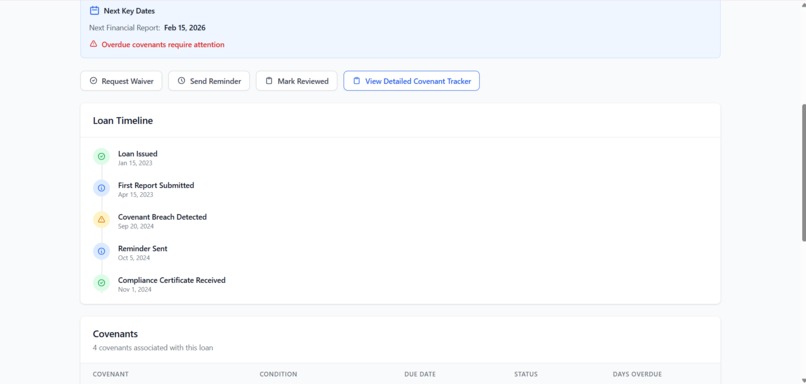
Loan Detail Page-Detailed breakdown of loan amount, term, outstanding balance, and required documents.


Inspiration
Banks still track loan covenants — reporting dates, ratio checks, and compliance status — using Excel spreadsheets and email reminders.
This creates delays, human errors, and missed deadlines that can escalate into costly defaults.
When I read the LMA Edge challenge theme, I realized there was a clear need:
A simple, transparent way to keep loans on track for both banks and borrowers.
What it does
CovenantWatch is a desktop-friendly web platform that helps lenders:
- Monitor all loans in one dashboard
- Track covenant status using a traffic-light model (Compliant, At Risk, Non-Compliant)
- Identify overdue obligations early
- Drill down into individual loan details
- Review reporting deadlines and risk summaries
Borrowers see only their own loan. They can:
- View required documents
- Upload reports
- Check next deadlines
- Avoid falling out of compliance
The platform brings both parties onto the same page — literally.
How I built it
The app was designed and developed as a browser-based web interface:
- Built using React + Vite for a fast front-end experience
- Styled with Tailwind CSS and clean dashboard layouts
- Uses JSON data to simulate loan portfolios and covenant timelines
- Implements routing to separate Bank and Borrower views
- UI logic simulates report status, alerts, and breach detection
Challenges I ran into
- Translating financial concepts like covenants, waivers, and breaches into clean UI language
- Balancing clarity for bankers (detailed) vs borrowers (simple)
- Designing two role-based experiences from the same dataset
- Making the UI look clean and professional under time pressure
Accomplishments I am proud of
- Created a clear dashboard that bankers can understand in seconds
- Built a borrower portal that hides complexity
- Moved beyond a single screen prototype into a multi-page platform
- Delivered a complete user journey from overview → risk → detail
What I learned
- Financial products don’t need heavy backend logic to demonstrate value
- UX clarity matters more than technical depth in risk monitoring
- Crafting the narrative (problem → workflow → impact) is just as important as writing code
What's next
If developed further, CovenantWatch could:
- Integrate with bank loan systems via API
- Automate covenant checks in real time
- Trigger email reminders and scheduled alerts
- Track covenant ratios directly from uploaded financials
- Provide full audit history and reporting exports
Built With
- css
- frontend
- javascript
- json
- router
- tailwind
- vite


Log in or sign up for Devpost to join the conversation.