-
-
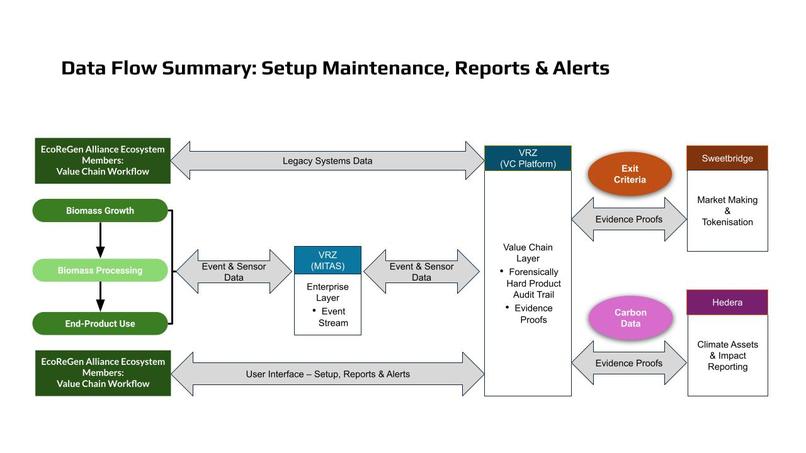
This shows the interactions between our partner platforms
-
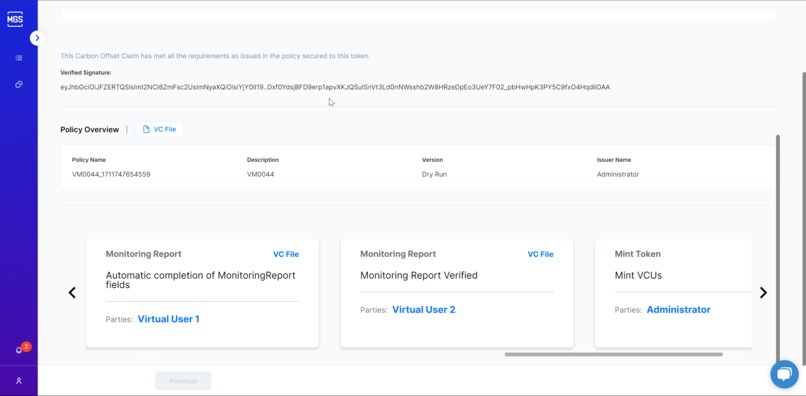
This shows an example of the minted token data and audit trail
-
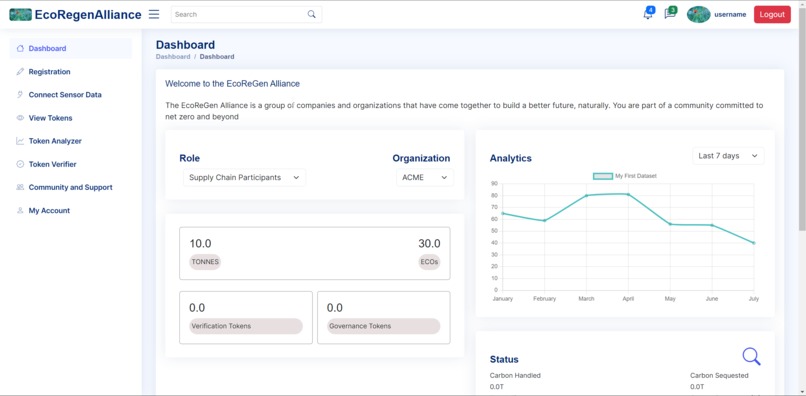
This is the dashboard where node users can view their tokens and apply for financing
-
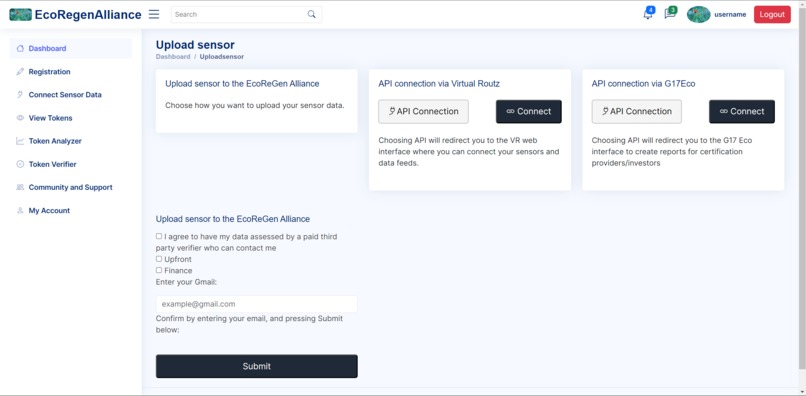
This is where node users can upload and connect in their sensor data
-
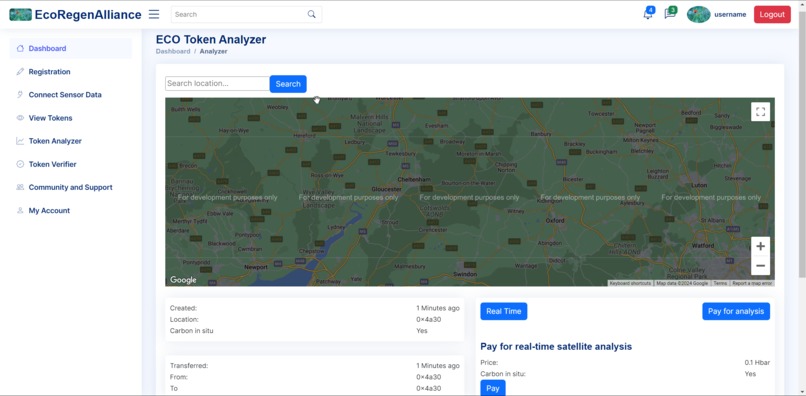
This will allow more detailed information on given tokens, allowing real-time analysis of the status of batches that tokens are twinned with
-
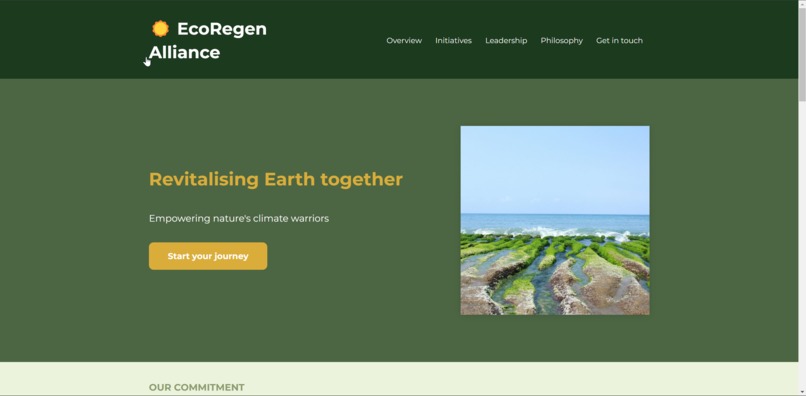
This is our website - ecoregen.earth
-
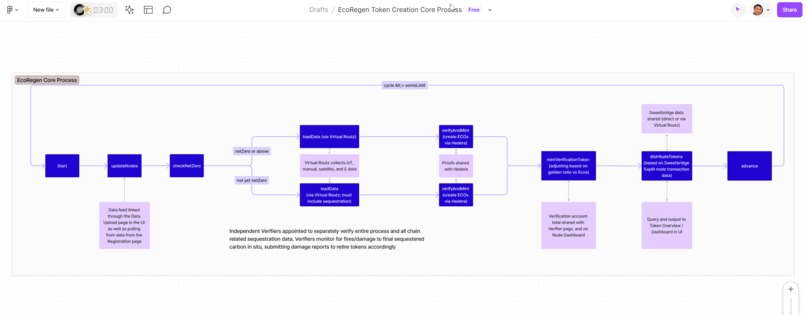
This is our master workflow, in which the interaction with GMS/Hedera is shown


Inspiration
The project was initially inspired by one of our team members, who, along with his children, watched a series of lectures on climate change by the Royal Institution on television. These lectures brought to light the significant role algae has played in cooling the planet on at least two occasions over the last billion years. Algae, being a major source of the oxygen we breathe, is also up to 400 times more effective in absorbing CO2 compared to trees. This revelation underscored the potential of algae and similar nature-based solutions in combating climate change. It became apparent that if we could find modular and scalable ways to harness these natural solutions, they could significantly contribute to achieving net zero and reversing the effects of climate change.
What It Does
Our system is designed to facilitate the rapid growth of algae supply chains to accelerate large scale planetary level carbon capture using sequestration. This includes those utilizing open ponds and algae reactors to capture CO2 and generate waste biomass. This biomass can then be converted into a range of carbon sequestration products (CSPs), starting with biochar. The biochar is then placed in fields or other final resting sites. Other CSPs over time could include bio-concrete for buildings, nanocarbon technologies being researched for use in electric mopeds, and even graphene for making chips.
Our partner platform, Virtual Routez, is equipped to collect essential information using manual methods, satellite imagery, and IoT sensors. This data spans various metrics, including weight, temperature, and CO2 levels, and will incorporate leakage data. Additional manual data, such as sources of electricity, is also integrated. This comprehensive dataset is then processed through our system and algorithms. It is sent to Hedera through the Guardian system, as well as to our wallet provider, Sweetbridge.
Currently, our methodology, which draws inspiration from Verra VM0044, allows for the minting of tokens on Hedera using the combined supply chain data. These tokens are associated with sequestered carbon and are fractionally distributed among the nodes within the supply chain responsible for the sequestration. The distribution is proportional to the monetary investment each node has made in processing the carbon as reported using percentages provided via Sweetbridge. Alongside the primary token, known as the ECO, we also mint VECOs. These tokens reward those providing finance, as well as individuals involved in verifying the supply chain data. The fees collected from nodes participating in the system fund these rewards.
Over time, nodes accumulating ECOs qualify for lower financing rates for their operations, inventory purchases, and infrastructure, supported by the ecosystem itself and its financing partners. The issuance of VECOs will decrease annually, reducing each cycle by the golden ratio, providing an incentive for early adoption and ensuring the integrity of verifiers. These verifiers, who may be self-directed or tasked to perform their role as outsourced by VECO holders, are essential for maintaining the credibility of our carbon sequestration efforts.
To prevent overshooting net zero and potentially triggering a runaway ice age, our system envisages including algorithms that reward the controlled, mitigated, emission of CO2 by entities such as food, bio-fuel, and bio-plastic producers. This ensures the global CO2 level remains at an optimal level after net zero has been achieved, to avoid a runaway cooling scenario being incentivised in the coming centuries.
Our adaptation of the Verra 44 methodology includes mechanisms for reporting damages, such as field fires detected by Virtual Routez satellites. This allows for the investigation and potential retirement of (V)ECO tokens if the biochar cannot be verified. Future research aims to enable specific biochar batches to be identified through chemical signatures, enhancing the system's integrity.
How We Built It
Our team, assembled for a hackathon, initially collaborated through GitHub. We divided our efforts, focusing on different aspects such as the landing page, dashboard interface, and configuring Virtual Routez to gather node data. One of our team members, with mentorship, learned to navigate the Guardian system and augment the adapted VM0044 methodology within it. Despite the complexity and extensive effort required, we have made significant progress, culminating in a demonstrative document and video compilation of our work.
Challenges We Ran Into
Our team faced limitations in backend database development skills, which restricted our ability to automate and integrate APIs fully. Our current system largely relies on manual processes for data simulation and transfer with a lot of functionality still to be built. Additionally, learning to use the Guardian's workflow tool was challenging, slowing our progress.
Coordination was complicated by our team's distribution across multiple time zones and other commitments. Technical issues, such as downtime on the Guardian site and server problems, further hindered our efforts. Despite these obstacles, we have managed to develop a conceptual framework for our system, though full implementation and verification token (VECO) creation remain incomplete.
Accomplishments That We're Proud Of
We take pride in developing what we believe is the first tokenization system for carbon sequestration from nature-based sources that also mitigates against future runaway cooling. Our system is designed primarily to incentivize the expansion of related supply chains to help grow the market of circular products made from algae and other renewable sources instead of fossil fuel, whilst eventually also enable old legacy infrastructure to be integrated and made more circular. We are particularly proud of our focus on sequestration, leaving nodes to benefit from carbon credits and related tokens for their mitigation efforts. Our project holds the promise of testing with a real algae farm and supply chain in the UK.
What We Learned
Our experience highlighted the importance of data aggregation and the challenges it presents in terms of data protection and competition. We also recognized the potential environmental impact of unchecked energy consumption, as seen with Bitcoin and the possible carbon implications of General AI. We learned a lot about the Guardian system and the push to develop robust and transparency systems for compliance and reporting, and how these can be incorporated into our future plans for growth.
What's Next for EcoRegen Alliance
Our immediate goal is to implement our solution with a partner algae farm in the UK and their emitter client, completing the system build and integrating verification tokens and workflows, before rolling out further. We plan to engage the broader Hashgraph and Hedera community for support and refinement. Our efforts will extend to securing financing and partnering with verification entities, aiming for a comprehensive, community-supported approach to carbon sequestration and climate change mitigation.
Built With
- chatgp
- clipchamp
- figma
- guardian
- javascript
- musho.ai
- pictory.ai
- react
- sharex
- ukpilot.ai
- visual-studio


Log in or sign up for Devpost to join the conversation.