-
-
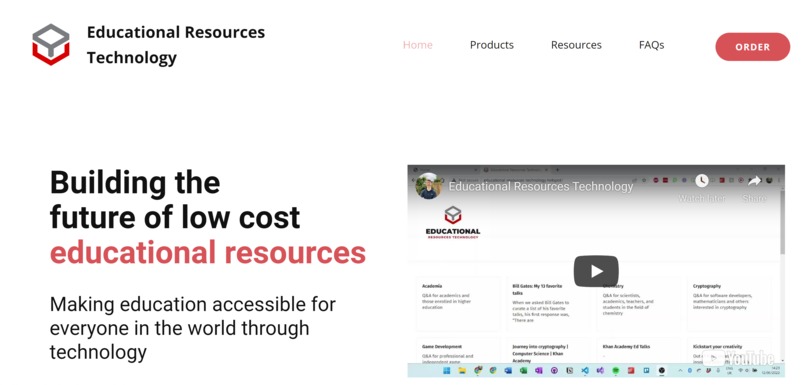
Landing page
-
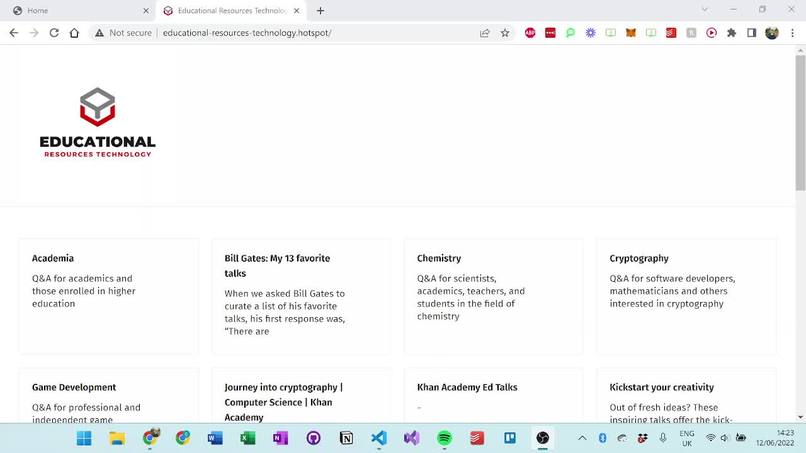
Hub software homepage
-
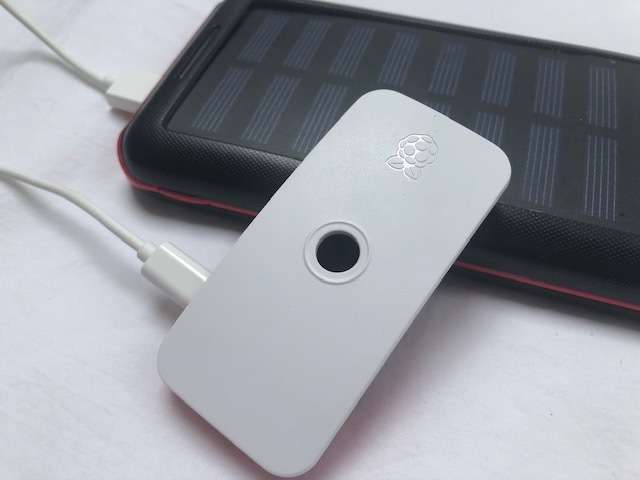
Hub model hardware
-
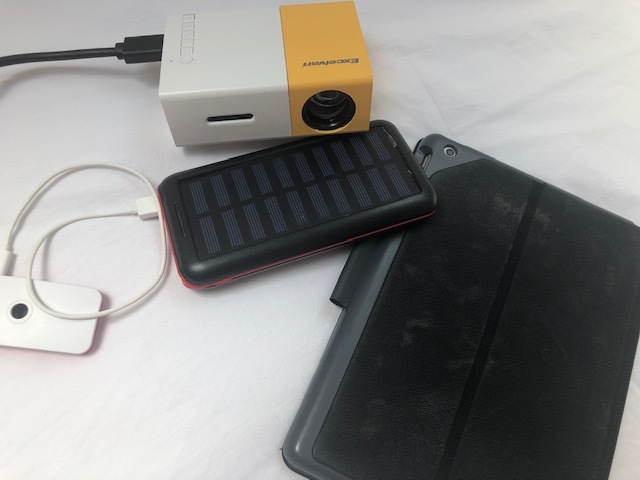
Digital classroom hardware


Inspiration
As a student, I often think about the world of education - for me, many aspects of it are great, but there are certainly some improvements to be made. I love designing innovative solutions for problems and perhaps I could play a part in improving some aspects of education?
As I thought more about it, I began to realise that the part of the education system I wanted to target would be people who have limited or no education (which is a huge percentage). Doing some research, I came across a few charities working on making education more accessible and they looked really interesting.
Being a computer scientist, I decided that I could combine my passion and skills around technology with my desire to make education accessible to everyone across the globe. That's what really sparked the idea for this hackathon - developing low-cost technological tools to help make education more accessible.
What it does
There are two models that I have been developing during this hackathon: the hub and the digital classroom. The hub has been my focus for this hackathon and it is a Raspberry Pi device allowing local users to connect to it and view a vast array of educational resources (Wikipedia, Wikibooks, Khan Academy, TED...) - all while being offline. The purpose of this project is to provide users access to educational resources without the need for internet access (such as in remote areas or when people cannot afford it). It is powered via a solar-panelled portable charger to be both sustainable and affordable.
The second aspect I have been developing is the digital classroom, which is a suite of technology tools to improve the quality of education within the classroom (once again does not require internet access). Currently, it consists of a device, a projector, and the hub, connected together as if teaching in a classroom.
How we built it
For the website, I used a tool called Nicepage to help design and develop the website in HTML, CSS and JS.
For the hub, I used a Raspberry Pi Zero 2 W, loaded it with around 20GB of educational resources (including Wikivoyage, TED Talks, Wikiquote...), and used Kiwix, dnsmasq and many other tools to create a local network for devices to connect to and access the educational resources.
And for the digital classroom, I set up the projector with my device and connected the device to the hub, allowing the use of the hub's resources for teaching.
Challenges we ran into
Throughout this process, I have come across several challenges while coding but particularly with configuring the Raspberry Pi - allowing other devices to connect to it, hosting the resources, installing the large amounts of educational resources... As with any hackathon, the major constraint has been time, which has been stressful at times (such as when I am worrying if I have enough time to complete the project).
These challenges have mostly been expected and I have managed to overcome them and learned a huge amount along the journey.
Accomplishments that we're proud of
The website, which is one of the best websites I have developed. Working with hardware has also been very enjoyable, particularly combining that with my passion for software.
Most importantly, I am incredibly proud that I was able to develop this whole project in the short timeframe of this hackathon and am very excited to begin sharing and using the technology to help make education more accessible. I am incredibly passionate about education and solving problems through technology, which I believe this project has the potential to do.
What we learned
As usual, I have learned an enormous amount during this hackathon, particularly since this is my first hackathon with an element of hardware. During this hackathon, I have improved my UI skills, explored and experimented with my Raspberry Pi Zero 2 W, debugged tonnes of errors (with the website and with the software for the hub), improved my project/time management skills and learned more about the world of education.
What's next for Educational Resources Technology
In the future, I would like to achieve funding and begin collaborating with charities globally to fund the construction and installation of our hub and digital classrooms. I would like to further improve the hub and digital classroom, adding more educational resources and adding new features.




Log in or sign up for Devpost to join the conversation.